When “Oh, Grow Up!”, “That’s Ridiculous” and “You Need Help” Are Appropriate Responses

Oops...I forgot the trigger warning...

Oops…I forgot the trigger warning…

Columbia University’s descent into madness continues.

Columbia University’s student newspaper recently featured four members of the school’s student Multicultural Affairs Advisory Board demanding that professors consider their students’ delicate sensibilites when teaching intense, violent or otherwise provocative material. This will give you a flavor of what the students advocate:

“Ovid’s “Metamorphoses” is a fixture of Lit Hum, but like so many texts in the Western canon, it contains triggering and offensive material that marginalizes student identities in the classroom. These texts, wrought with histories and narratives of exclusion and oppression, can be difficult to read and discuss as a survivor, a person of color, or a student from a low-income background…Students need to feel safe in the classroom, and that requires a learning environment that recognizes the multiplicity of their identities. The MAAB has been meeting with administration and faculty in the Center for the Core Curriculum to determine how to create such a space. The Board has recommended three measures: First, we proposed that the center issue a letter to faculty about potential trigger warnings and suggestions for how to support triggered students. Next, we noted that there should be a mechanism for students to communicate their concerns to professors anonymously, as well as a mediation mechanism for students who have identity-based disagreements with professors. Finally, the center should create a training program for all professors, including faculty and graduate instructors, which will enable them to constructively facilitate conversations that embrace all identities, share best practices, and think critically about how the Core Curriculum is framed for their students.”

I take a lot of criticism on the blog for not expressing false respect when someone espouses a position that is cultural cyanide, or, in some cases, just plain stupid. This argument by the Columbia students would qualify. Some affirmatively bad ideas should not be pampered, mollycoddled or treated as if they deserve sustained attention and debate. It just encourages them. Long ago I feared that the multi-culturalism and diversity movements would run amuck, and indeed they have. Being literate,respectful and tolerant, as well as open-minded, toward other cultures is healthy and essentially American. Nevertheless, nations, societies and communities require a consistent culture, as well as the cultural values that a dominant culture contains. Ethics, among other critical features of a healthy society, is impossible without this, and chaos is inevitable. Continue reading

Atrocious People, Part II: Harry Reid Thinks Pandering To Political Correctness Is More Important Than Upholding Honesty And Integrity

This is Harry Reid, but I just can't stand looking at the man any more, so I put a bag over his head....

This is Harry Reid, but I just can’t stand looking at the man any more, so I put a bag over his head….

[It’s Atrocious People Day at Ethics Alarms, and no Atrocious People Day would be complete without Harry Reid.]

“I find it stunning that the National Football League is more concerned about how much air is in a football than with a racist franchise name that denigrates Native Americans across the country,” Senator Harry Reid said on the floor of the Senate.

Well, of course he does! After all, Harry thinks that cheating is great, if it works! He justified falsely accusing Mitt Romney of not paying taxes, confident in the laziness and gullibility of the American voter. “Why, he’s the Senate Majority Leader, Mildred! He wouldn’t lie to us!” And, as Harry pointed out, it worked—Romney lost, so Harry did the right thing. No wonder Reid doesn’t see why the NFL would care about Tom Brady pressuring low-level employees so they would help him cheat by secretly make the footballs easier for him to throw in a play-off game—after all, it worked! He won! Brady lied about it? So what? Reid approves of that, too. The statement above is a typical Reid lie: the NFL showed that it was concerned about cheating, lying, sportsmanship and integrity, not “the air in a football.”

But for the lawful owner of a business to be able to keep its 80 year old name that an entire city has cheered, worn on jerseys and caps, and made part of its culture, even though professional political correctness profiteers claimed to be grievously offended by the name because they wanted to be? That, to Harry Reid, is outrageous.*

What isn’t outrageous to Harry—just fair-minded, ethical Americans who understand such concepts as why it is wrong for the government to chill individual rights and the dangers of abuse of power by elected official—-is a U.S. Senator using his high office to attack and harass private citizens who are doing noting illegal, and only doing wrong according to Harry Reid’s Bizarro World values. Continue reading

Comment of the Day: “Now THAT Was A Rape Culture…”

Blogger and esteemed commenter here Rick Jones shares my passion for theater and is also, like me, a stage director, but seldom has a chance to weigh in on that topic. My post about the troubling lyrics in “Standing on the Corner,” the best known song in Frank Loesser’s “The Most Happy Fella” gave Rick a chance to swing at a pitch in his wheelhouse, as the baseball broadcasters like to say, and he didn’t disappoint.

I want to clarify something from the original post. Having noted the lyrics, I was no way  criticizing them or the song, or the musical itself. Older shows are valuable and fascinating in part because they serve as windows on past cultural values and attitudes—that was one of the reasons for the ambitious, important and doomed mission of the theater I have been artistic director of for the last two decades. Such politically incorrect references should never be excised in performance.

“The Most Happy Fella” is a slog, however. Ambitious, sure, but too long, too sentimental, and with too many unavoidable “wince points,” as I call them, to make the show worth the huge investment in talent, money and time that it takes to produce competently. Any time the best songs in a musical are the ones that have nothing to do with the plot (“Standing on the Corner,” “Big D,” and “Abondanza!”, which in in the clip above) it’s ominous. The 1925 Pulitzer Prize-winning hit play this pseudo-opera was based on, “They Knew What They Wanted” by Sydney Howard, is much better.

Here is Rick’s Comment of the Day on the post, “Now That Was A Rape Culture…”: Continue reading

Unethical…But Funny!

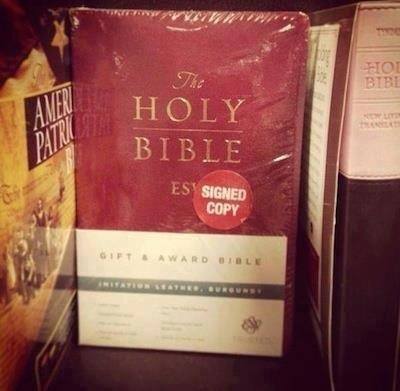
Signed Copy

How this is unethical, however, is a matter of dispute:

  • It might be a hoax. The guy who put it on Facebook swears he saw it in a book store. If not, he’s lying.
  • If this was done by a book store staff member as a gag, it’s disrespectful to the book’s market. Such irony is misplaced in a book store, when a religious book is the prop. I’d call it a firing offense.
  • If this is false advertising, that is also unethical.

And if someone slapped the sticker on the wrong book and isn’t educated enough to realize that this is one book that can’t have a signed copy, that’s unethical incompetence and ignorance for a book store employee.

How Listening To Democrats Spin Shamefully To Excuse Hillary Clinton Makes Me Think Of Sir Thomas More…

Today’s Sunday Morning spectacle of Democrat spin-meisters using deceitful rationalizations to make the untenable case that Hillary Clinton’s  violating her own agency’s policies to allow her the power to redact and hide her communications as needed prompts in me, in addition to disgust, a reflection on my favorite ethics drama and film. To paraphrase but slightly one of the more memorable lines from Robert Bolt’s play and screen play, “A Man For All Seasons,” delivered by the doomed martyr Sir Thomas Moore:

“It profits a man nothing to give his soul for the whole world… but for Hillary Clinton?”


The Petraeus Deal and Justice In America

broadwell

I’m in a rush to get ready for a law firm seminar, so I’m going to mostly let Ken White at Popehat do my work for me, as he is very qualified to do in this case. In his comments on the David Petraeus plea deal, Ken quite appropriately raises questions of why such serious crimes as the acclaimed general and former CIA head engaged in do not warrant prison time, and he answers thusly: Petraeus is rich, famous and has powerful friends.

Ken obvious believes those aren’t good reasons, and I agree with him. Nor are the other rationalizations that the general has suffered enough, that he isn’t really a criminal, that the nation owes him, or that he is a valuable resource for the nation that we are better served by not storing behind bars.

I believe that Petraeus has less excuse for his conduct than the typical defendant, and that as a celebrity, war hero and tole model, his defiance of the law is more serious, and more deserving of punishment, than the majority of non-violent criminals who go to jail. Indeed, Petraeus had styled himself as a moral exemplar. I read yesterday—I don’t have time to find the link—that Edward Snowden’s lawyers sent a cheeky message to prosecutors that Snowden would be happy to accept a similar deal to Petraeus’s.  Exactly.

These incidents do terrible damage to the public’s trust in the justice system’s fairness, and they should. Plea deals like this, bought with lawyer fees, bias and influence, are unequivocally wrong.

The Political Correctness Snake Swallows Its Tale On The Yellow Brick Road

Looks like genocide to me!

Looks like genocide to me!

 The runner-up for the title of this post was “Consistency In Stupidity Is Not A Virtue”

Much as I enjoy seeing political correctness bullies turn on each other, the controversy over the new casino in Chittenango, New York is a nauseating mix of censorious meddling, hindsight bias and ignorance.

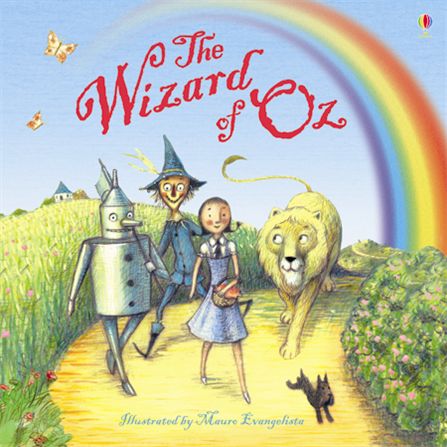
Not that the Oneida Indian Nation doesn’t deserve to be a victim of exactly the kind of harassment it is best known for inflicting on others. For this is the tribe that has sought publicity and skin in the victim-mongering power game by claiming that the Washington D.C. pro football team, whose name only means “the Washington D.C. pro-football team”  and that was never intended as a slur—and that nobody who isn’t looking to be offended takes as one—-should be forced to abandon its logo, mascot, team song and identity, at a cost of millions of dollars, as a pointless sacrifice on the altar of political correctness. I am speaking, of course, of the Washington Redskins, a business and sports enterprise which, in a free country, can call itself anything its owner chooses. Since it is a free country, those who are offended by its name, or, as is really the case, have chosen to claim offense for political gain, can address their own hyper-sensitivity by following another team, another sport, or the Yellow Brick Road.

Which reminds me… Continue reading

Comment of the Day: “Ethics Alarms Encore: ‘Aesop’s Unethical and Misleading Fable: The North Wind and the Sun”

AESOPSFABLNever let it be said that we aren’t eclectic on Ethics Alarms! Today’s Comment of the Day is a thoughtful response to my objections to Aesop’s “The North Wind and the Sun,” a 2011 post that I republished this week in fascination over how it continues to draw traffic. The thread here and on the original has touched on many diverse topics, including theology; commenter Rich (in CT), however, just submitted the most interesting analysis yet.

Here is his Comment of the Day on the post, Ethics Alarms Encore: “Aesop’s Unethical and Misleading Fable: The North Wind and the Sun:

”The comparison of God and Satan in Job to the Sun and Wind is an apt comparison, because the fable relies on “divine privilege”. An exercise of divine privilege should not be taken as an example of behavior that non-divine entities should emulate. Rather, they are external parameters that set up a hypothetical environment to illustrate the lesson of the story.

I specifically say “lesson”, because the objective of the story need not be a superficial “moral”. The “moral” that was selected here was a lazy plot device by an author who attempted to pigeon-hole the fable into his limited definition of a fable. While the particular moral in the version you share is useless, the fable perhaps might better illustrate both the use of strategic thinking and well as illustrate the role of moral luck in one’s success. A more apt “moral”, if any, might be to be clever, but acknowledge the limit of cleverness.

Ethical behavior never takes place in a vacuum, but must balance certain principles with the current circumstances. In the fable, an arbitrary task is selected, and the two actors use the tools at their disposal to attempt to achieve the task. The wind has two tools: blow hard or soft; the sun has analogous tools: beat hard or soft. Given the task, arbitrarily set up as a competition, only one had tools that could creatively solve the task.

The tale here thus illustrates a few important principles that are of value to a child; creative use of ones tools can lead to success, and that not everyone has a every tool available. A non-lazy author might use the fable to teach the value of cooperation, pooling a group’s tools to complete a task.

The particular task is irrelevant, and is set up as an exercise of divine privilege. Mere mortals have no right to manipulate the weather, but the fable’s embodiment of the solar rays and moving air manipulate these elements in an ethically neutral manner. The selection of a mere mortal as a target of task, might be to lead the reader indirectly, through empathy, to the conclusion that some circumstances are arbitrary and beyond one’s control. The objective might be to teach humility, that one is never entirely responsible for one’s success, no matter how clever one might be.

I thus agree that the particular version of the fable shared is unethical. This is, however, the result of a lazy author. The premise, if used wisely, is ethically neutral; Aesop, or some other interpreter, could use the premise of the story to teach a valuable lesson if so desired.


Ethics Alarms Encore: “Aesop’s Unethical and Misleading Fable: The North Wind and the Sun”

north-wind-and-the-sun-story-oil-painting

[ I vowed that the next time I got a comment on this post, I would publish it again. It hails from four years ago, when  Ethics Alarms got a quarter of the traffic it gets now. I confess that I wrote it on a whim, having been talking with my wife about how Aesop’s Fables were joining Mother Goose stories,  Edward Lear limericks and American folks song in the Discarded Bin of our culture and then stumbling upon a fable I had either never read before or forgotten about.  To my surprise the post attracted intense criticism from fans of the story—I even had to ban a commenter who got hysterical about it—and the post joined a very eclectic group of early essays here that get considerable and consistent readership every week. Apparently there are a lot of Sun-worshipers out there. Anyway, since you probably missed it the first time, here it is.]

Today, by happenstance, I heard an Aesop’s Fable that I had never encountered before recited on the radio. Like all Aesop’s Fables, at least in its modern re-telling, this one had a moral attached , and is also a statement of ethical values. Unlike most of the fables, however, it doesn’t make its case. It is, in fact, an intellectually dishonest, indeed an unethical, fable.

It is called “The North Wind and the Sun,” and in most sources reads like this:

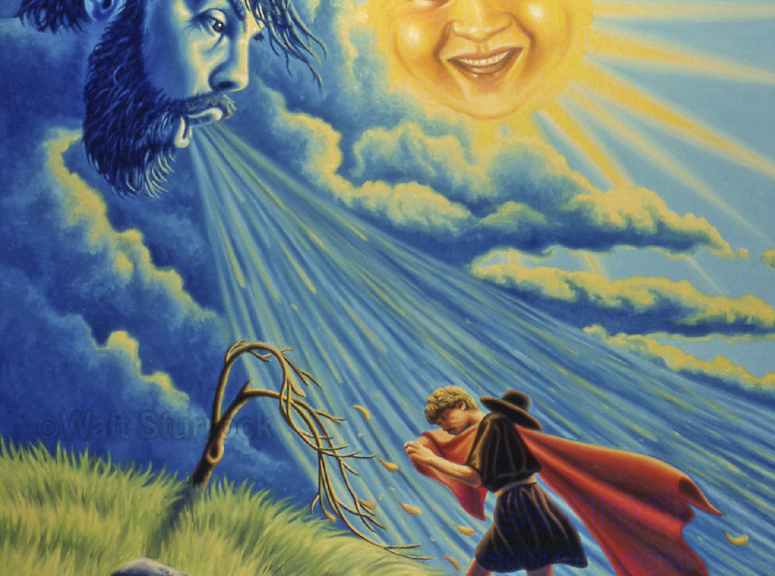
“The North Wind and the Sun disputed as to which was the most powerful, and agreed that he should be declared the victor who could first strip a wayfaring man of his clothes. The North Wind first tried his power and blew with all his might, but the keener his blasts, the closer the Traveler wrapped his cloak around him, until at last, resigning all hope of victory, the Wind called upon the Sun to see what he could do. The Sun suddenly shone out with all his warmth. The Traveler no sooner felt his genial rays than he took off one garment after another, and at last, fairly overcome with heat, undressed and bathed in a stream that lay in his path.”

The moral of the fable is variously stated as “Persuasion is better than Force” , or “Gentleness and kind persuasion win where force and bluster fail.”

The fable proves neither. In reality, it is a vivid example of dishonest argument, using euphemisms and false characterizations to “prove” a proposition that an advocate is biased toward from the outset. Continue reading

Ethics Alarms Mail Call: Mt. Holyoke Ditches “The Vagina Monologues” As “Non-Inclusive,” and the Misuse of Kindness

VaginaI’m an ethicist who often writes on college controversies, and I make no secret about my double life in professional theater, so it figures that my inbox would include more than one query about Mt. Holyoke College’s decision to end its annual student performance of Eve Enlser’s “The Vagina Monologues” on the grounds that it is now admitting women without vaginas—I know, it’s confusing–who would feel excluded from what was supposed to be an inclusive experience and statement for the all-women’s school.

From Campus Reform:

The annual production of the play is part of a country-wide tradition to perform Eve Ensler’s Vagina Monologues on Valentine’s Day to raise awareness about gender-based violence and usually coincides with the V-Day campaign. The proceeds are donated to sexual assault prevention organizations or women’s rights organizations. This year, however, Mount Holyoke’s Project Theatre Board is defying tradition by permanently retiring the play. In a school-wide email from the Theatre Board, a representative from the group, Erin Murphy, explained the problems with the play and the reasoning behind its discontinuation.

“At its core, the show offers an extremely narrow perspective on what it means to be a woman…Gender is a wide and varied experience, one that cannot simply be reduced to biological or anatomical distinctions, and many of us who have participated in the show have grown increasingly uncomfortable presenting material that is inherently reductionist and exclusive,” the email, obtained by Campus Reform, said.

Replacing the play will be Mount Holyoke’s own version that will be trans-inclusive and fix the “problems” supposedly perpetuated by Ensler. Murphy also claims that there are problems with race, class, and “other identities” within the play. The new production, comprised of students’ monologues, will be performed in a fashion reminiscent of the feminist classic. The program will be performed alongside the College’s Peer Health Educators, an on-campus student-led group that provides education and workshops for students, including a workshop on how to use sex toys properly.

Continue reading