Ethics Quote Of The Day (Christmas Confusion File): Jonathan Turley

“Best wishes to everyone celebrating Christmas.”

—- Law Professor and blogger Jonathan Turley, wishing at least some of his readers a merry Christmas.

Get ready to duck, Fred!

Get ready to duck, Fred!

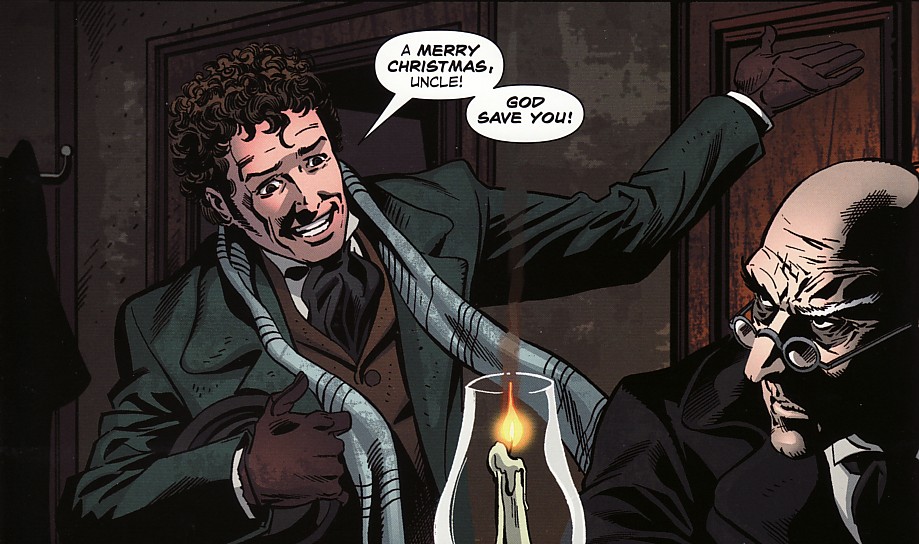
Prof. Turley is a lawyer, of course, and trained to express himself with precision. Thus I have to ask: what the heck is he trying to say here?

Is he wishing good tidings only those who, like his family, are celebrating Christmas, and rotten times to the rest? Is he editing the humanist message of Christmas to “Peace on Earth, and good will to those who are putting up Christmas trees and giving gifts, other wise you’re on your own”?

Or, as I fear greatly, given the fact that he is part of the U.S. education establishment and thus prone to have a spine of cream cheese, just observing the trendy political correctness that infects our times, and bowing to those who contrive to take offense when anyone smiles at them and offers a greeting that only says, at minimum, “We’re all in this together, so let’s try to be as good to each other as we can, OK?” Continue reading

Unethical Quote of the Week: Dick Cheney

Hello, I'll be your torturer today. Now, if you are innocent, please understand, on balance this works.

Hello, my name is Skug, and I’ll be your torturer today. Now, if you are innocent, please understand, on balance this works.

“I’m more concerned with bad guys who got out and released than I am with a few that, in fact, were innocent.”

—Former V.P. Dick Cheney, giving his reactions on “Meet the Press” regarding the Senate’s critique of the Bush Administration and the CIA’s interrogation methods.

I try to be fair to Dick Cheney, whose character has been distorted beyond all recognition by his partisan foes. Sunday, however, he was apparently attempting to validate all the most terrible things anyone has said about him, as well as providing future students of ethics real life examples of ethical fallacies.

The one quoted above is the pip: so much for the jurisprudential principle that It is better that ten guilty persons escape, than that one innocent suffer.”   Chuck Todd reminded Cheney that 25% of those detained were apparently innocent. The Cheney variation: “It is OK if some innocent persons are unjustly punished as long as the bad guys get what they deserve.”

It is hard to pick the most unethical assertion, however; there are so many horrible statements to choose from. Such as: Continue reading

The Wall Street Journal’s Uncultured Culture Critic

Joanne Kaufman was here...

Joanne Kaufman was here…

In a jaw-dropping essay for her employer, The Wall Street Journal, alleged culture critic Joanne Kaufman proudly and candidly disabuses readers of any misconceptions they might have had regarding her qualifications for her job. She is not merely unqualified, but willfully, shamelessly, spectacularly unqualified. In a smug screed in which she admits to habitually walking out on Broadway shows at intermission, Kaufman reveals herself as lazy, arrogant, disrespectful of artists, and most crippling of all, to be afflicted by the attention span of the average Twitter addict.

“Don’t ask me what happened during the second acts of “Matilda,” “Kinky Boots,” “Pippin” and, reaching back a few seasons, “Boeing-Boeing” and “Billy Elliott, ”  Kaufman boasts.  “Really, I have no idea. But I am nothing if not cosmopolitan in my tastes, or distastes—French farces, English musicals set in gritty industrial cities, and American entertainments involving Charlemagne ’s Frankish kin.”

You can read her entire piece here; if the Journal doesn’t fire her, it is run by fools. “I’m of the “brevity is the soul of wit” school and of the belief that only a few bites are required to determine that you just don’t like a particular dish,” she happily admits. “My ideal night in the theater runs 90 minutes without an intermission (it is best not to put temptation in my path), which means that Shakespeare and I don’t tend to see a lot of each other.” This is the culture writer, remember. Yet she is admitting to membership in the lazy, sound-bite, bumper-sticker, multi-processing, distracted, ADD-addled public that has caused writers, playwrights, producers, book publishers, film-makers and song-writers to dumb down, redact, trivialize and simplify entertainment in an accelerating death cycle: plots don’t make sense, explosions start early, subtlety is forbidden, and no issue, thought or topic that can’t be fully explored in the time it takes to do a load of laundry is going can find its way on stage or screen. The Journal’s culture writer doesn’t have the time or interest to sit through King Lear, Hamlet, The Ice Man Cometh, or Death of a Salesman,  or to view all of “Seven Samurai,” “A Man for All Seasons” or “Gettysburg”—hey, a movie about one of those short Civil War battles for Joanne, please: she’s got a 15 minute segment of “Robot Chicken” to catch. Continue reading

For You, Dad.

Jack Marshall Sr Army portraitI lost my dad, Jack Marshall, Sr., five years ago today, and for some reason the loss feels especially sharp right now. This has been another miserable birthday, but not so miserable as that one, and I found myself once again revisiting my father’s favorite poem, which was a personnel credo for him and which has often served me well in hard times too. It is linked in the “Inspiration” section on the  Ethics Alarms home page, as well as quoted in my post here on the day my father was buried in Arlington National Cemetery.

Nonetheless, I am going to post Rudyard Kipling’s “If” once again. My father’s favorite line was…

If you can meet with Triumph and Disaster
    And treat those two impostors just the same;   
That was Dad to the core. He never looked back, never cursed his luck, never thought too highly of himself (or anyone else), always believed in tomorrow, and that no victory was final, and no defeat was forever. And I know he was right, though it doesn’t often feel like it. So this is for you, Dad. Thanks for everything.

“If”

If you can keep your head when all about you

Are losing theirs, and blaming it on you,

If you can trust yourself when all men doubt you,

But make allowance for their doubting too;

If you can wait, and not be tired by waiting,

Or being lied about, don’t deal in lies,

Or being hated, don’t give way to hating,

And yet, don’t look too good, nor talk too wise:

If you can dream – and not make dreams your master;

If you can think – and not make thoughts your aim;

If you can meet with Triumph and Disaster

And treat those two imposters just the same;

If you can bear to hear the truth you’ve spoken

Twisted by knaves, to make a trap for fools,

Or watch the things you gave your life to, broken,

And stoop, and build ’em up, with worn-out tools:

If you can make one heap of all your winnings

And risk it on one turn of pitch-and-toss,

And lose, and start again at your beginnings

And never breathe a word about your loss;

If you can force your heart and nerve and sinew

To serve your turn, long after they are gone,

And so hold on when there is nothing in you

Except the Will which says to them: “Hold on!”

If you can talk with crowds and keep your virtue,

Or walk with Kings – nor lose the common touch,

If neither foes nor loving friends can hurt you,

If all men count with you, but none too much;

If you can fill the unforgiving minute

With sixty seconds’ worth of distance run,

Yours is the Earth and everything that’s in it,

And—which is more—

You’ll be a Man, my son!


Ethics Dunce and Unethical Facebook Post of the Month: Elizabeth Lauten, Spokeswoman for Rep. Stephen Fincher (R-Tennessee)

Elizabeth Lauten, communications director for Republican Congressman Stephen Fincher, decided that she is authorized to give parental advice to First Offspring Sasha (13) and Malia (16) Obama. She was deeply troubled by the young ladies looking bored in photographs she saw online, so she posted this jaw-dropper on Facebook:

Facebook lecture

Wow. What a Thanksgiving feast of unethical features! Let’s see: Continue reading

Comment of the Day: “Make Voting Compulsory, Because We Can’t Let THAT Happen Again”

Maybe Ruth Marcus would like this system better...

Maybe Ruth Marcus would like this system better…

Theories of democracy and political science, Robert Heinlein, minimizing bias from self-interest, scientist suspicion, GIANT BUGS…okay, it doesn’t quite get to the bugs. But what’s not to like about texagg 04’s reflections and exposition sparked by the post on Ruth Marcus’s plug for compulsory voting? Here is his Comment of the Day on the post, Make Voting Compulsory, Because We Can’t Let THAT Happen Again: Continue reading

“Bang The Drum Slowly,” My Old Friend, and Me

The American Century Theater's "Bang the Drum Slowly"

The American Century Theater’s “Bang the Drum Slowly”

I haven’t mentioned it here, but we are ending the 20 year adventure of my intentionally out-of-fashion theater company, The American Century Theater, after next season. One of the things I will miss most about it is that working so closely with the great works of stage literature we produce causes their wisdom and life observations to stick with us. Since I tend to choose works that involve ethical dilemmas, this has had professional as well as personal benefits.

I was thinking about the Mark Harris play (and novel, and movie) “Bang The Drum Slowly” in May, when I wrote about the kindness shown to Pasco High School student Vanessa Garcia, who was dying of cancer, because we were performing it at the time.  The story involves a baseball team and how it responds to a third-string catcher who is dying of Hodgkin’s Disease. It is about kindness and the Golden Rule, and the ways the impending death of someone in our life often brings into sharper focus the importance of kindness and our shared obligations on this perplexing journey to oblivion we all must travel together. But I really wasn’t thinking about “Bang The Drum Slowly” yesterday. Yesterday, I was just having a wonderful time talking about baseball, politics and family with my old friend from law school, who happened to be in a hospice. Continue reading

Oh, NO!!! “The Mikado” Ethics Again (Political Correctness Division)!

[Here…listen to this while you read the post.]

I am apparently the official protector of Gilbert and Sullivan’s “The Mikado” from ridiculous accusations of ethics offenses, so once again, I will charge into the breach. No thanks needed, Mr. Gilbert, Sir Arthur—I owe you debts that can never be repaid.

In a brain-endangering op-ed for the Seattle Times, expresses the opinion that the operetta is a “racial caricature,” and thus “every snap of the fan was a slap in the face.” The nature of the complaint has old origins: the original show in 1885 nearly caused an international incident, as Japan registered an official complaint to Great Britain claiming a grievous insult to its people. W.S. Gilbert, who was skilled at such things (a few years later he stifled French indignation over a song in “Ruddigore” that pretended to make fun of the French while actually ridiculing British bravado), explained that “The Mikado” in no way ridicules anything about Japan or its people, but is entirely a witty and original satire on everything British. This was true then, and is true now. Then, however, people, including the Victorian era Japanese, were able to see distinctions, and were not seeking victim status and leave to play public censor under the authority conferred by political correctness. Today, people like Ms. Chan are not so easily calmed.

Thus is art harmed, entertainment stifled, laughter stilled and music forgotten. A good argument could be made that “The Mikado” is the greatest musical comedy entertainment ever written.* It certainly caused the biggest international sensation (the closest rival is another Gilbert and Sullivan classic, “H.M.S. Pinafore”): it is estimated that by the end of 1885, at least 150 companies in Europe and the U.S. were producing the satire. As recently as the 1960s, it was credibly claimed that a “Mikado” was going on somewhere in the world every minute of the day.

The show is fun in every respect: comedy, music, lyrics, satire, characters. It is also fun to act in and produce, for children as well as adults. Unfortunately, several factors have led to the gradual scarcity of productions in recent years, from the cyclical (Gilbert and Sullivan go out of style, but always come back) to the ridiculous ( it seems like every production has to cope with some absurd controversy, like the 2011 Montana production that was accused of threatening Sarah Palin’s life). Political correctness aversion has been the biggest factor in making the very best G&S show rare while productions of Broadway musical junk flourish, however. Since the characters are supposedly “Japanese,” shouldn’t all the singers be Asian? Isn’t Asian make-up offensive like blackface? Oh, hell, let’s just do “The Pirates of Penzance.”

From Ms. Chan: Continue reading

A Proposed Guide To Spoiler Ethics

"It SINKS??? You spoiled the ending!!!"

“It SINKS??? You spoiled the ending!!!”

I was just admonished on Facebook by a friend (a real friend, not just the Facebook variety), for referencing the end of the last episode of Season One of “Orange is the New Black.”  He hadn’t finished viewing the season yet, and this was a breach of spoiler ethics. Or was it?

Ever since I encountered for real someone who was angry with me for “spoiling” the end of “Thirteen Days,” ( “Yes, World War III started and everybody died”), I have been dubious about spoiler etiquette. The advent of DVDs and Netflix has made this all the more annoying. If I’m in a group of five, and one individual hasn’t kept up with “House of Cards,” are the rest of us obligated to censor our discussion? As a devotee and fanatic devourer of popular culture, I admit that my first instinct is to say, “Keep up, get literate, or pay the price.” If I actually live by that rule, however, I will be a walking, talking, writing, spoiler machine.

Chuck Klosterman, “The Ethicist” in the world of the New York Times, recently pronounced himself an anti-spoiler absolutist:

“I’m an anti-spoiler fascist. I don’t believe that any conversation, review or sardonic tweet about a given TV show is more valuable than protecting an individual’s opportunity to experience the episode itself (and to watch it within the context for which it was designed). I’ve never heard a pro-spoiler argument that wasn’t fundamentally absurd.”

Even Klosterman, however, excepted sporting events (the question posed involved mentioning World Cup scores to a friend who was annoyed that the game had been “spoiled” for him) from his fascism, writing, reasonably:

“I must concede that live, unrehearsed events are not subject to “spoiler” embargoes A live event is a form of breaking news. It’s not just entertainment; it’s the first imprint of living history. …Because this guy is your buddy, you might want to avoid discussing the games’ outcomes out of common courtesy — but not out of any moral obligation. It’s his own responsibility to keep himself in the dark about current events.”

For once I agree with Chuck. But what are reasonable ethics rules for dealing with the other kind of spoiler, involving literature and entertainment?

Luckily, this is not new territory, though it is evolving territory. The underlying ethical principles include fairness, trust, consideration, compassion, and empathy, which means that the Golden Rule is also involved.

Back in 2010, an erudite blogger calling himself The Reading Ape proposed a draft “Guide to Responsible Spoiling.” That blog is defunct; the promised successor is not around, and so far, I haven’t been able to discover who the Ape is. Whoever he is (Oh Aaaaape! Come back, Ape!) , he did a very good job, though some tweeks might  improve his work, especially in light of the emergence of Netflix.  (I have edited it slightly, not substantively…I hope he doesn’t mind, or if he does, that he’s not a big ape.) His approach is to frame the problem as an ethical conflict, in which two competing ethics principles must be balanced. I think that’s right.

Here is his “draft”—what do you think?

“A Brief Guide to Responsible Spoiling”

by The Reading Ape (2010)

The objective is to balance two ethical principles:

I. The Right to Surprise: The inherent right of any viewer or reader to experience the pleasure of not knowing what’s
going to happen next.

II. The Right to Debate: The inherent right of any viewer or reader to engage in public discourse about the content of
a given work of narrative art.

Part 1: When Spoiling is Fair Game

In the following circumstances, one can discuss crucial plot details and reveal endings with a clear conscience. Continue reading

The Obama Outhouse Float: Not Racist, Just Wrong

Racist float? Why not? Well, a) Bill Clinton's not black b) it's not a 4th of July parade, c) this is in Germany and d) it's not Obama.

Racist float? Why not? Well, a) Bill Clinton’s not black b) it’s not a 4th of July parade, c) the parade is in Germany and d) most important of all, it’s not President Obama.

It was almost a year ago that a rodeo clown donned an Obama mask, and the NAACP demanded that the Secret Service investigate him, and the clown lost his job. It is considered acceptable that in the nation’s capital, five people in  big-headed costumes depicting the Mt. Rushmore Presidents (and William Howard Taft) race around a baseball stadium as the crowd laughs at their antics, but any mockery of the current President of the United States will be immediately attacked as “racist.”

Thus an appallingly stupid, tasteless and inappropriate float in a Norfolk, Nebraska Independence Day parade is further straining already damaged race relations in this country, because it depicted a distressed man coming out of an outhouse labelled the  “Obama Presidential Library.” The Norfolk Odd Fellows Lodge, which coordinates the annual parade, is defending the float, which was entered as political satire (it even won an award). Others, however, have condemned it as, you guessed it, racist.  Here it is:

Obama float

It isn’t racist. Although many media reports have described the zombie-like figure exiting the outhouse as a representation of the President, it clearly isn’t. Does President Obama use a walker for support? The float’s designer, Dale Remmich, who does use a walker and dresses like the figure on the float, explained that the figure was meant to be Remmich himself, tinged green out of disgust for, among other things, the Veterans Administration fiasco. As for portraying Obama’s future library as an outhouse, that’s not racial imagery, though it is obviously a statement communicating criticism and disrespect. The same imagery would not have puzzled anyone if it had been used to criticize any other recent President; nobody would have looked at the exact same float except with the label “George W. Bush Presidential Library” on the outhouse and said, “I don’t get it. Bush isn’t black.” That’s because it isn’t the design of the float that makes it racist, just as it wasn’t the use of a mask that made the rodeo clown’s act racist, in the eyes of those making the accusation. What makes it racist is the criticism and the mockery, its target. Criticism and mockery of other Presidents went with the territory. Criticism of the first black President is by definition racist. Continue reading