On the bright side, I suppose its reassuring to know that The Great Stupid is even worse “across the pond” than it is here…
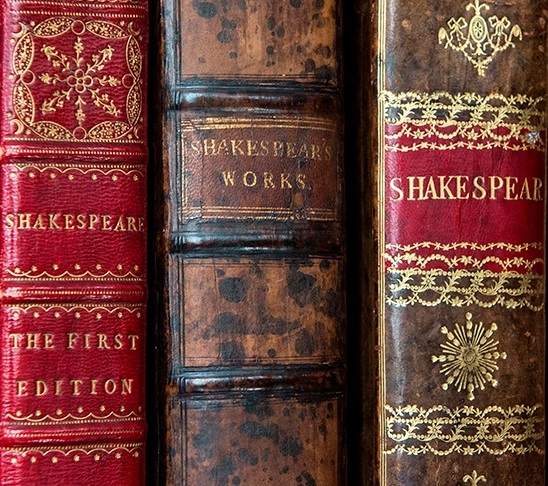
Shakespeare’s Birthplace Trust, which cares for buildings in the immortal playwright’s home town of Stratford-upon-Avon, has announced that it wants to “create a more inclusive museum experience.” Therefore, the center of Great Britain’s essential public appreciation of the fact that it was so fortunate to be the birthplace of the greatest writer the world has ever known (unless the Bard was really a visitor from another planet, which has been my personal theory since I had to study “King Lear” in detail in order to direct a production of it) will seek ways to act on the diagnosis that Shakespeare’s works have been used to advance white supremacy.
Yes, these are morons. The legacy of one of the most vital catalysts of Western civilization is in the hands of morons. Now what?
“The Nelson,” the Ethics Alarms designation for very special episodes of swell-earned schadenfreude, was introduced in 2023 in a post about…Disney’s live-action reboot of “Snow White and the Seven Dwarfs,” the 1937 animated film that began building the Disney entertainment empire. Thus it is nicely symmetrical for Nelson to give his trademark “Ha ha!” to the trailer of this slow-motion disaster, which has set what is believed to be a YouTube record with, as of yesterday, 40,383 “likes” and 1,012,299 “dislikes.” The film is hitting theaters in March. Ethics Alarms warned Disney about what was bound to happen if and when this botched project ever got out of the cutting room. I wrote in part,
The ethics value defied here is competence, and what we are seeing is the classic sunk costs fallacy in its classic form. The Vietnam War was the most painful example of this breach of life competence and common sense, which holds that devoting a lot of time and/or resources to a failed project argues for devoting more of the same, lest those “sunk costs” go to waste. In reality however, what is being missed is that fact that whether or not one has invested a great deal in a lost cause, its status as a project that has proven itself unworthy of investment is unaltered. Doing what Disney is doing with the “Snow White” project is called “throwing good money after bad.” It is bad business—incompetent, wasteful, and irresponsible.
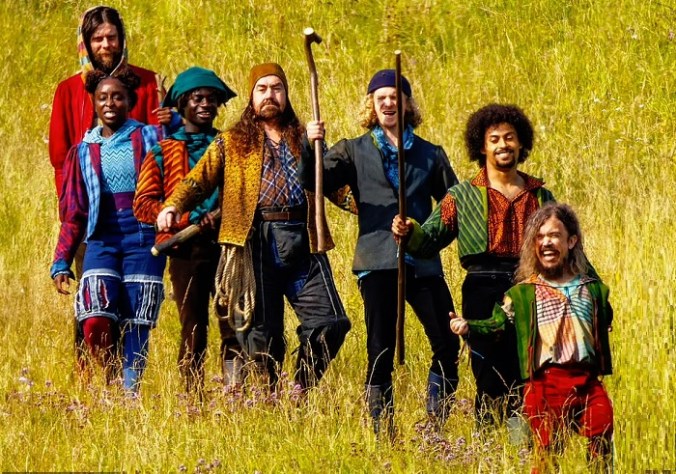
First, Disney woke fanatics thought it made sense to cast a Snow White-of-Color, which makes no sense since the story makes such a big deal about how “fair” the heroine is. Then, because a single au courant little person actor complained about the dwarfs in the classic fairy tail, Disney eliminated them in favor of these dorks…
Does anyone say “Color me X” any more? Oh hell, I don’t care: Color me unimpressed with “MAGA Granny” rejecting her pardon from President Trump for her role in the January 6 Capitol riot that was the worst thing to happen to the United States since 9-11. Or Pearl Harbor. Or the Civil War.
She’s the retired 72-year-old drug and alcohol counselor from Boise, Idaho who pleaded guilty in January 2022 to a misdemeanor for entering the Capitol during the riot and was sentenced to 60 days in prison and three years of probation. She was one of those “rioters” who was basically walking around. The Axis media is singing her praises because she announced that she says won’t accept the pardon.
Hemphill said in an interview this week that she was turning President Trump’s gift down. “It’s an insult to the Capitol Police, to the rule of law and to the nation,” she said. “If I accept a pardon, I’m continuing their propaganda, their gaslighting and all their falsehoods they’re putting out there about Jan. 6.” She now says she doesn’t support Trump or (in the words of the New York Times) “believes his lie that the 2020 election was stolen.” (For the thousandth time, that is not a lie but an opinion that cannot be proven or disproven). A therapist had helped her change her view of the episode, you see. Now she realizes, she says, that the “Stop the Steal” movement. “was a cult, and I was in a cult.”
Winston Smith knows just how she feels.
I wonder if that therapist put a cage of hungry rats on her face to prompt Pam’s epiphany?
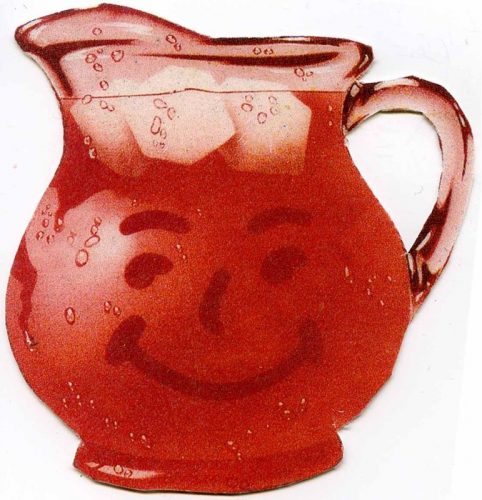
The Daily Mail headline is beyond stupid—-“People are only just realizing the dark origin of ‘drinking the Kool-Aid’ phrase”—-but sharp-eyed commenter Other Bill was quite astute to draw it to my attention (Thanks, OB) with an email this morning.
Apparently several historically and culturally illiterate whipper-snappers on social media expressed surprise at the “dark origin” of the common phrase “he (or she) drank the Kool-Aid” to describe someone who has been gulled into believing something false or dangerous. Yet this gap in the younger generations’ knowledge shouldn’t be surprising. Oh, there was a movie about the horrible incident and it is one of the best examples of the dangers of cults. But the Jonestown mass suicide of the 918 American followers of cult leader Jim Jones in Guyana occurred almost 50 years ago, in 1978. As unusual and shocking as it was, the poisoned powered drink massacre is not the kind of event likely to be covered in history courses: schools barely cover World War I. How would someone under the age of 50 come to know about the event?
The commentariate on EA always surprises and delights me, and the response I got to an off the wall post inspired by an AP story about “biblically correct” angels was a perfect example. The resulting thread was a veritable primer on anglelology, with Ryan Harkins weighing in with three substantive posts and several others contributing valuable insight as well.
I don’t deserve you.
One more Christmas tradition that I left fallow this year—like almost all of them—in the absence of my wife was our Christmas Eve reading aloud of the children’s book “The Littlest Angel,” by Charles Tazwell. Grace loved the story so. She would always cry at the place where the Littlest Angel gives his most cherished possession, a simple wooden box where he kept his earthly treasures when he was a child on Earth, as his gift to the soon-to-be-born son of God:
“The Littlest Angel trembled as the box was opened, and there, before the Eyes of God and all His Heavenly Host, was what he offered to the Christ Child.And what was his gift to the Blessed Infant?
“Well, there was a butterfly with golden wings, captured one bright summer day on the high hills above Jerusalem, and a sky blue egg from a bird’s nest in the olive tree that stood to shade his mother’s kitchen door. Yes, and two white stones, found on a muddy river bank, where he and his friends had played like small brown beavers. And, at the bottom of the box, a limp, tooth-marked leather strap, once worn as a collar by his mongrel dog, who had died as he had lived, in absolute love and infinite devotion.”
Somehow, it doesn’t work quite as well if one is thinking of the Cherubim as having eyeballs all over his wings or three heads.But that’s just me…
“Christmas is built upon a beautiful and intentional paradox; that the birth of the homeless should be celebrated in every home.”
—G.K. Chesterton.
“It’s Christmas Eve. It’s the one night of the year when we all act a little nicer, we smile a little easier, we cheer a little more. For a couple of hours out of the whole year we are the people that we always hoped we would be.”
—Frank Cross (Bill Murray) in “Scrooged”
CHARLIE BROWN: I guess you were right, Linus. I shouldn’t have picked this little tree. Everything I do turns into a disaster. I guess I really don’t know what Christmas is all about. Isn’t there anyone who knows what Christmas is all about?
LINUS: Sure, Charlie Brown. I can tell you what Christmas is all about. Lights, please?
“And there were in the same country shepherds abiding in the field, keeping watch over their flocks by night. And lo, the angel of the Lord came upon them, and the glory of the Lord shone round about them. And they were sore afraid. And the angel said unto them, ‘Fear not, for behold, I bring you tidings of great joy which shall be to all people. For unto you is born this day in the City of David a savior, which is Christ the Lord.’ And suddenly there was with the angel a multitude of the heavenly host, saying, ‘Glory to God in the highest, and on Earth peace, goodwill toward men.’”
That’s what Christmas is all about, Charlie Brown.
—Charles M. Schulz
“Our hearts grow tender with childhood memories and love of kindred, and we are better throughout the year for having, in spirit, become a child again at Christmas-time.”
—Laura Ingalls Wilder
“Then the Grinch thought of something he hadn’t before!
What if Christmas, he thought, doesn’t come from a store.
What if Christmas…perhaps…means a little bit more!”
—Dr. Seuss, “How the Grinch Stole Christmas”
“Want to keep Christ in Christmas? Feed the hungry, clothe the naked, forgive the guilty, welcome the unwanted, care for the ill, love your enemies, and do unto others as you would have done unto you.”
— Steve Maraboli, in “Unapologetically You: Reflections on Life and the Human Experience”
“My idea of Christmas, whether old-fashioned or modern, is very simple: loving others. Come to think of it, why do we have to wait for Christmas to do that?”
— Bob Hope
“I heard the bells on Christmas Day Their old, familiar carols play, And wild and sweet The words repeat Of peace on earth, good-will to men!”
—Henry Wadsworth Longfellow
“There are many things from which I might have derived good, by which I have not profited, I dare say,’ returned the nephew. ‘Christmas among the rest. But I am sure I have always thought of Christmas time, when it has come round—apart from the veneration due to its sacred name and origin, if anything belonging to it can be apart from that—as a good time; a kind, forgiving, charitable, pleasant time; the only time I know of, in the long calendar of the year, when men and women seem by one consent to open their shut-up hearts freely, and to think of people below them as if they really were fellow-passengers to the grave, and not another race of creatures bound on other journeys. And therefore, uncle, though it has never put a scrap of gold or silver in my pocket, I believe that it has done me good, and will do me good; and I say, God bless it!”
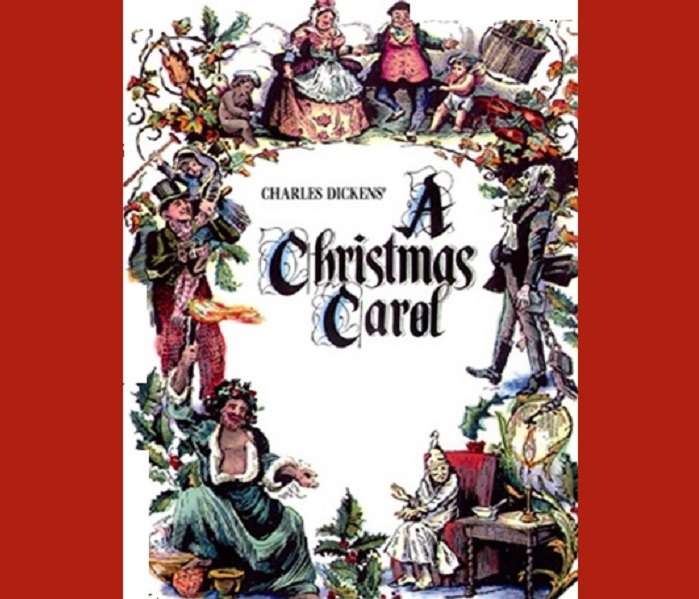
—Fred, Scrooge’s Nephew, in Charles Dickens’ “A Christmas Carol”Continue reading →
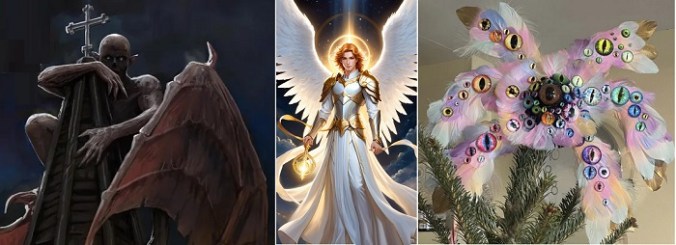
Above you will see three interpretations of what angels—you know, those benign, heavenly creatures we hear on high and observe, “Hark! They sing!,” the celestial guardians like the funny little old man who shows Jimmy Stewart that he’s really led a wonderful life, the kind of immortal being that appeared to Mary to tell her she was going to bear the Son of God, you know, those things?—really look like. The version on the left is from the Mike Flanagan horror series “Midnight Mass.” It’s a scary angel, but not as scary as the ones that show up in Robert and Michelle King’s scary TV series “Evil,” which look like this…
Yikes.
The version of Gabriel in the center is pretty much how I had been taught and told and shown how angels look for most of my life, and I assumed that was how they are represented in the Bible. Now, this is at least partially my own fault for not knowing the Bible better than I do, but when artists, churches, Sunday school teachers, movies, tree ornaments, Christmas cards and children’s books all show angels as friendly-looking Scandinavians with big, white, fluffy wings, I think I can be excused for assuming that there is at least as much authority for those representations as there is for anything else in the Bible—-an assertion to which Carnac the Magnificent (oh, look it up, ye of pop culture deficit!) would say to me, “You are wrong, Ethics Breath!”
I finished a seven hour deposition late yesterday (the lawyer grilling me was a Red Sox fan, so it was okay), and from here until after New Year’s Day, I have nothing on my calendar…no, not even Christmas. I am giving gifts to the two families on my cul de sac, my long-time neighbors the Wests who have been so supportive this year, and the absurdly perfect young couple next door with their three adorable children, who warm my cold heart every time I see them riding bikes together, creating adventures, and generally making me feel like I was a crummy father. Unfortunately, the season is reminding me both of wonderful times long gone and last year’s grim, painful holidays, so everything is causing me crippling cognitive dissonance. I can’t wait for it all to be over on January 2.
Nevertheless, I am going to read “A Christmas Carol” to Spuds out loud, and of course watch at least two of the dramatic versions, the 1984 George C. Scott version, and, of course, “Mr. Magoo’s Christmas Carol.” I like all the “Christmas Carols” except the horrible musical starring Albert Finney and Patrick Stewart’s weak entry. No, I don’t count Bill Murray’s “Scooged,” but I do enjoy it if I’m in the right mood. I favor George’s version, first, because he was one of my favorite actors and I miss him, second, because the rest of the cast contains many of my other favorites like Edward Woodward and David Warner, and the creepiest Marley by far. I also admire the adaptation.
The entire text of “A Christmas Carol” is and has been for a long time listed under Inspirations on the Ethics Alarms homepage. I often wonder if anyone uses the Ethics Alarms links, which now reminds me that its time to cull, revise, and update the collection. I use them.
Last year I noted that the last time I directed a professional theatrical production that wasn’t my own, it was a staged reading of “A Christmas Carol.” I miss directing greatly, but if was my last hurrah, I can live with that. “A Christmas Carol” is, after all, the greatest ethics story of them all.
I worry that this Christmas the neighborhood is looking at me as Scrooge: mine is one of the few homes in the neighborhood with no lights, and no decorations, and I have been walking Spuds wearing a black Santa hat that reads “Bah Humbug.” It’s a joke, but maybe people think it’s my real attitude. Nothing could be further from the truth. I love Christmas; I always have and always will. This year, I hope for the last time, it doesn’t love me.
[This is Jack:Yikes! I didn’t realize that EA had been Curmie-less for a full four months!The second Ethics Alarms featured columnist has been both busy and seeking respite from politics, which unfortunately has been disproportionately rampant here during the Presidential campaign drama and related horrors. I’m hoping Curmie can leads us out of the dark into the light. Welcome back, Curmie!]
I’m not sure if this is sufficiently ethics-related for this blog, but since Jack posted it, so be it.
I retired from full-time teaching in August of 2021. It was August instead of May because I was hoping—to no avail, as it turns out—to do one more iteration of a Study Abroad program in Ireland; the trip had already been postponed from the previous summer. I did teach one course per semester in the 2021-22 academic year, but then not at all for two years.
I assumed that I’d never be in a classroom again except for an occasional guest appearance to be, apparently, the local authority on absurdism. But then a colleague got a one-semester sabbatical to work on her book. It would be extremely unlikely to find someone who had both the ability to teach all the courses in question and the willingness to move to small-town East Texas for a one-semester gig at crappy pay. The powers-that-be then decided to try to staff those courses locally. I suspect I was the only available qualified person in a 75-mile radius, so I was asked if I’d teach Theatre History I and II this semester. I agreed.
There were a lot of changes for me, completely apart from the two-year hiatus. I’d taught both courses numerous times, but never in the same semester, and always on a Monday/Wednesday/Friday schedule; this time it was Tuesday/Thursday. Back in the days when I was the only person teaching these courses I could insist that one of the research papers be on a certain type of topic; that’s no longer a requirement. And I ditched the expensive anthology I’d used for years, switching to things that were available online. This also allowed me to choose the plays I wanted to teach instead of necessarily the ones in the anthology: critics may agree that the The Cherry Orchard is Anton Chekhov’s best play, for example, but there is absolutely no question that The Seagull is far more important to theatre history, so I used that.
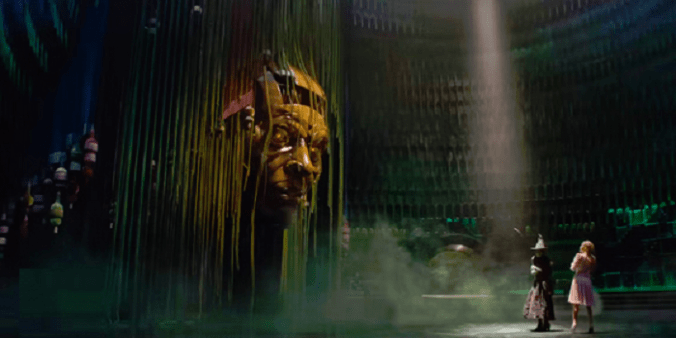
Gregory Maguire’s “Wicked: The Life and Times of the Wicked Witch of the West” became a critical and financial success by merging the Frank L. Baum children’s series with contemporary issues and values, notably discrimination, prejudice, the abuse of power, and corruption. The still-running Broadway musical “Wicked” softened the preaching and propaganda a bit, but it has come back with full force in the movie adaptation now playing at inflated prices in theater near you. (I purchased a box of Junior Mints and regular size coke. They cost 15 bucks.)
In the novel and the musical, the witch-to-be is born green, leading to a life of being the victim of hate and discrimination. The movie cast not just a black woman in the role, but one with pronounced African features (in contrast to, say, Halle Berry) making it nearly impossible not to experience the plot as a thinly veiled Critical Race Theory brief. Though there are black actors and actresses in Oz here and there, only the white characters are seen to be repulsed or frightened by Elphaba (Maguire gave her a name), because the director correctly calculated that in his film, the character is as much black as green. We see her rejected and cast aside (to be raised by a bear) by her father the moment he sees her skin shade, so it is clear where this is going: Elphaba is going to be forced to fight against the cruel culture that rejected her. Thus we know that she is a personification of the Black Lives Matter riots within the first ten minutes of the movie.
Just as early in the movie we know we are in the grip of sensitive wokism obsessions when we we find ourselves in Munchkinland and the Munchkins pretty much look like anyone you know. The movie “Wicked” is obsessed with, the 1939 classic “The Wizard of Oz,” had the Munchkins played by the Singer Midgets, a little people performing group. In the Baum book that started it all, they are described as being about the same size as Dorothy, who is about 10, but one way or the other, we know the Munchkins are small. Ah, but Disney’s endlessly delayed “Snow White” movie got into trouble after the most famous acting dwarf, Peter Dinklage, declared that the whole idea of portraying the Little People of the familiar fairy tale was offensive, so Disney eliminated the dwarfs entirely. That was also attacked by Little People activists—erasing them, you know. Similarly, Peter Jackson got in trouble for using computer magic to make a full size actor look like he was a a yard or so tall in the “Lord of the Rings series.” So “Wicked” director Jon M. Chu punted and just made the Muchkins normal size and boring. And that wasn’t all: to make sure Dinklage didn’t find some reason to take shots at his movie, the Little Actor was hired to provide the voice of a talking goat.
This is DEI at its silliest. The film gets credit for hiring an “under-represented minority” who was personally responsible for the film not hiring many more members of the same minority. Furthermore, while I like Dinklage (who became famous in “Game of Thrones”) as much as anybody, the only reason he’s a star is because he’s so short. Sure, he plays lawyers, doctors, gangsters, but no matter what he plays, he plays it as a dwarf. That’s the only thing that distinguishes him from hundreds of other equally able actors. It makes no sense at all to hire Peter Dinklage as a voice actor. His unique feature can add nothing to such a gig. The film took away another talented vocal actor’s job so it could be “inclusive” and hire a dwarf for his voice alone.



 Ethics Alarms