“The Ethicist” Finds a Rationalization! Welcome #64 A: “It Didn’t Mean Anything”

Rationalization #64 A, The Cheater’s Defense or “It Didn’t Mean Anything” is a rather narrowly applicable addition to the list: it arises when a half of a supposedly committed couple has sexual relations with a third party. I have entered it as a sub-rationalization to the infamous Yoo’s Rationalization (“It isn’t what it is”) because betraying a spouse, partner or lover does mean something, probably many things.

The Ethicist received a question from, as always, “Name Withheld,” whose partner had cheated on her and used that phrase, “It didn’t mean anything.” She asks, years after the event, “I still don’t understand why cheaters use the phrase ‘‘(She/he) didn’t mean anything to me.’ How does one even respond to a statement like that?”

Kwame Anthony Appiah, in his usual measured fashion, says that the line “is how cheaters try to reassure their partners that their infidelity wasn’t going to lead to a serious relationship and needn’t spell the end of their existing one; that a fling was ‘just sex.’’’ But that still doesn’t translate to “It didn’t mean anything.” Having sex out of one’s committed relationship probably means, among other things,

  • The cheater isn’t as committed as he or she had led the betrayed partner to believe.
  • The cheater cannot be trusted.
  • The cheater has a drinking or substance abuse problem.
  • The cheater has some apparent needs that the supposed love of his or her life isn’t supplying
  • The cheater lacks some degree of impulse control.
  • The cheater is an easy mark for an aggressive come-on from an attractive member of the opposite sex (in other words, the cheater is a typical heterosexual male.)

Of course it meant something. The statement, like many rationalizations, is a lie. “The Ethicist” concentrates on what the use of the rationalization means: that the cheater, in addition to cheating, is manipulative jerk. “Cheaters demean the people they cheated with by dismissing them as meaningless, demean their partner by implying their pain is unjustified and demean their relationship by saying that they betrayed their beloved’s trust for a liaison they insist was insignificant,” he concludes.

Yeah, that too.

Pro Ethics Tip: If Your Boyfriend Asks You To Be The Bride In a “Fake Wedding,” Run Away

An Australian woman had been dating her husband-to-be for a few months in Melbourne after meeting him on a dating app. Then he invited her to a “white party” in Sydney, telling her to bring a white dress to fit the theme of the event. When she arrived at the party venue, the only other people there were the boyfriend, a photographer, the photographer’s friend, and a marriage officiant. The friend explained that he had planned a fake wedding to increase his social media following (he has 17,000 followers on Instragram) and he needed her to play the bride.

She is, I should interject here, an idiot, because she shrugged and said, “Ok!” She did call a freind to ask if there were any risks to being a bride in a “fake wedding,” and the friend said, “Nah! Go ahead!” Here’s another pro tip: if you are an idiot, the chances are high that your friends are idiots too.

Continue reading

Reflections On The Ethical Holiday


“Christmas is built upon a beautiful and intentional paradox; that the birth of the homeless should be celebrated in every home.”

—G.K. Chesterton.

“It’s Christmas Eve. It’s the one night of the year when we all act a little nicer, we smile a little easier, we cheer a little more. For a couple of hours out of the whole year we are the people that we always hoped we would be.”

—Frank Cross (Bill Murray) in “Scrooged”

CHARLIE BROWN: I guess you were right, Linus. I shouldn’t have picked this little tree. Everything I do turns into a disaster. I guess I really don’t know what Christmas is all about. Isn’t there anyone who knows what Christmas is all about?

LINUS: Sure, Charlie Brown. I can tell you what Christmas is all about.  Lights, please?

“And there were in the same country shepherds abiding in the field, keeping watch over their flocks by night. And lo, the angel of the Lord came upon them, and the glory of the Lord shone round about them. And they were sore afraid. And the angel said unto them, ‘Fear not, for behold, I bring you tidings of great joy which shall be to all people. For unto you is born this day in the City of David a savior, which is Christ the Lord.’ And suddenly there was with the angel a multitude of the heavenly host, saying, ‘Glory to God in the highest, and on Earth peace, goodwill toward men.’”

That’s what Christmas is all about, Charlie Brown.

—Charles M. Schulz

“Our hearts grow tender with childhood memories and love of kindred, and we are better throughout the year for having, in spirit, become a child again at Christmas-time.”

—Laura Ingalls Wilder

“Then the Grinch thought of something he hadn’t before!

What if Christmas, he thought, doesn’t come from a store.

What if Christmas…perhaps…means a little bit more!”

—Dr. Seuss, “How the Grinch Stole Christmas”

“Want to keep Christ in Christmas? Feed the hungry, clothe the naked, forgive the guilty, welcome the unwanted, care for the ill, love your enemies, and do unto others as you would have done unto you.”

— Steve Maraboli, in “Unapologetically You: Reflections on Life and the Human Experience”

“My idea of Christmas, whether old-fashioned or modern, is very simple: loving others. Come to think of it, why do we have to wait for Christmas to do that?”

— Bob Hope

“I heard the bells on Christmas Day
Their old, familiar carols play,
And wild and sweet
The words repeat
Of peace on earth, good-will to men!”

—Henry Wadsworth Longfellow

“There are many things from which I might have derived good, by which I have not profited, I dare say,’ returned the nephew. ‘Christmas among the rest. But I am sure I have always thought of Christmas time, when it has come round—apart from the veneration due to its sacred name and origin, if anything belonging to it can be apart from that—as a good time; a kind, forgiving, charitable, pleasant time; the only time I know of, in the long calendar of the year, when men and women seem by one consent to open their shut-up hearts freely, and to think of people below them as if they really were fellow-passengers to the grave, and not another race of creatures bound on other journeys. And therefore, uncle, though it has never put a scrap of gold or silver in my pocket, I believe that it has done me good, and will do me good; and I say, God bless it!”

—Fred, Scrooge’s Nephew, in Charles Dickens’ “A Christmas Carol” Continue reading

An Ethics Movie Where The Ethical Choice Is Clear But The Hero Doesn’t Make It

Netflix has a Christmas movie (well, if “Die Hard is a Christmas movie, this is) about a TSA agent caught up in a diabolical scheme to kill all the passengers on a commercial airplane for some reason or another—that part doesn’t really matter. In “Carry On,” our hero stumbles into the plot and is made the unwilling pawn of the villains, who are ubiquitous, brilliant and high-tech. Through an earpiece, the agent learns that the love of his life who is also pregnant is being watched by the bad guys and will be murdered at any second if he doesn’t use his position to get a piece of luggage containing a device that will release nerve gas through security screening. Suspense, thrills and unexpected twists ensue.

Continue reading

I Know, I Know: “The Heart Wants What the Heart Wants.” Tough. Grow Up.

Norfolk Southern’s board has fired CEO Alan Shaw after an investigation found that he has been “engaging in a consensual relationship with the company’s chief legal officer,” the colorfully named Nabanita Nag. She was also canned from her positions as executive vice president corporate affairs, chief legal officer and corporate secretary.

Those are the lovebirds above.

Because this is a firing for cause, Shaw might have lost millions of dollars in what otherwise would be a “golden parachute.” This kind of vertical messing around is always stupid and unethical (but so romantic!), but it is particularly reckless for a CEO who is on metaphorical thin ice already, for then the “King’s Pass” is not going to be in play.

His two-year tenure included bitter labor negotiations that nearly resulted in an economy-crippling strike and the horrific derailment in East Palestine, Ohio that released tank cars full of toxic materials. This was not a good time for the company’s chief executive to go all Woody Allen.

But there is never a good time. When Cupid’s dart strikes, the only professional, ethical decision is to suck it up and resist, or play Edward the Eighth and abdicate “for the woman you love.”

The fact that Shaw was married to someone else should have giving him a strong hint that his ethics alarms should be ringing.

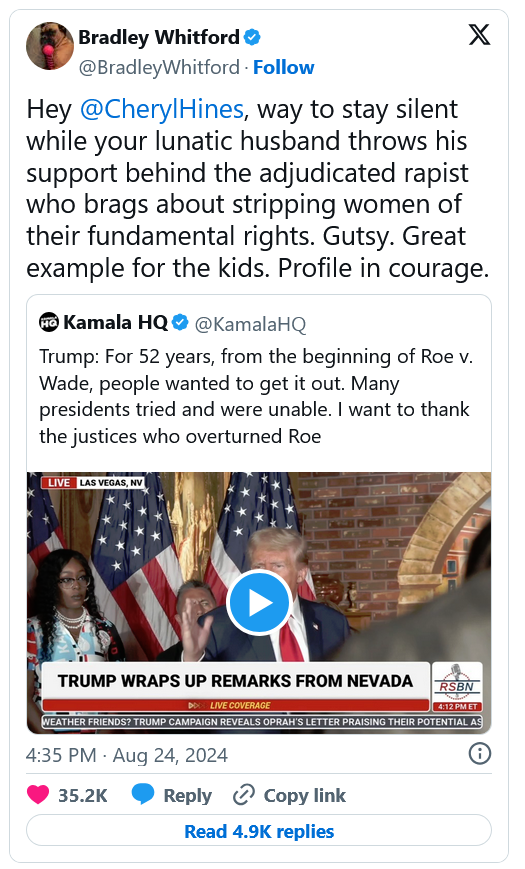
Unethical Tweet of the Month: Actor Bradley Whitford

Just remember, the Ethics Alarms position is to strive as much as possible to remain unbiased regarding a performer’s art regardless of his or her demonstrated political orientation or revealed personal character flaws. I enjoy Bradley Whitford as an actor.

But only an unethical, bullying asshole would write a tweet like that.

Continue reading

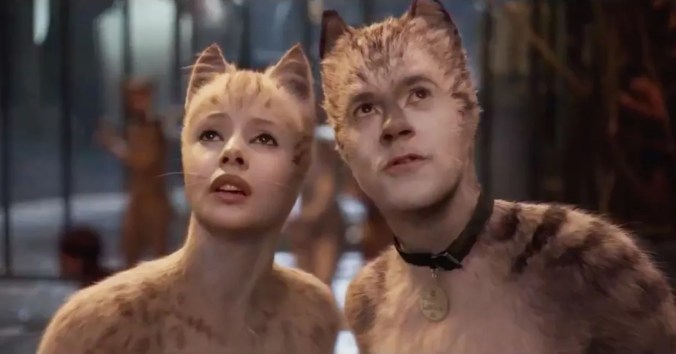
From the Toxic Popular Culture Files: Smalls Cat Food

J.D. Vance’s much maligned “cat ladies” snark , like many furiously slammed comments by conservatives and Republicans are, may have focused attention on to a societal trend seriously threatening the health of American society. (If only he could have articulated it better.)

Lately I have been bombarded with TV ads for Smalls cat food. The promotions and commercials claim that it is “human grade” cat food, and why not, since the TV spots feature disturbed individuals male and female, not just proclaiming these animal companions as their surrogates for children, but literally stating that they are children. “He’s my son,” a young woman says in one ad, speaking of her cat. “She’s literally my baby!” says some guy, also talking about a feline “fur-baby.” Literally!

This would be funny in a mordant way if it were not so ominous. I can’t blame cat food companies for taking advantage of the apocalyptic collision of progressive anti-family attitudes in the U.S. and pet mania: so many people do come to regard a dog or a cat as cheaper, more predictable, less demanding equivalent of a child. What is disturbing about the Smalls commercials is that they represent this mindset as healthy and normal.

Continue reading

Ick, Unethical, or Illegal? The Fake Scarlet Johanssen Problem

This is one of those relatively rare emerging ethics issues that I’m not foolhardy enough to reach conclusions about right away, because ethics itself is in a state of flux, as is the related law. All I’m going to do now is begin pointing out the problems that are going to have to be solved eventually…or not.

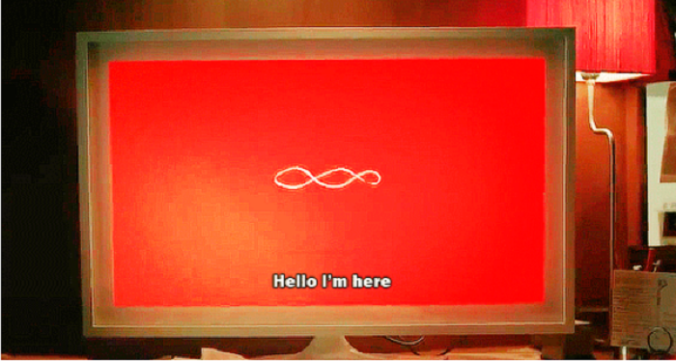
Of course, the problem is technology. As devotees of the uneven Netflix series “Black Mirror” know well, technology opens up as many ethically disturbing unanticipated (or intentional) consequences as it does societal enhancements and benefits. Now we are all facing a really creepy one: the artificial intelligence-driven virtual friend. Or companion. Or lover. Or enemy.

This has been brought into special focus because of an emerging legal controversy. OpenAI, the creators of ChatGPT, debuted a seductive version of the voice assistant last week that sounds suspiciously like actress Scarlett Johansson. What a coinkydink! The voice, dubbed “Sky” evoked the A.I. assistant with whom the lonely divorcé Theodore Twombly (Joaquin Phoenix) falls in love with in the 2013 Spike Jonze movie, “Her,” and that voice was performed by…Scarlett Johansson.

Continue reading

Did Oscar Hammerstein Jr. Have an Ethics Problem?

A series of random events have caused my mind to wander over to “Carousel,”the second musical by the legendary team of Richard Rodgers (music) and Oscar Hammerstein II (book and lyrics), following their ground-breaking “Oklahoma!” The 1945 work was adapted from Ferenc Molnár’s 1909 play “Liliom,” and although it is a favorite of most critics (declared by TIME as the best musical of the 20th Century, for example, but what does TIME know?), its plot and characters become more troubling the longer one thinks about them. Rodgers said it was his favorite of his musicals with Oscar, and he was definitely in top form; I think his Overture to “Carousel” may be the best thing he ever wrote.

For the “hero” of the musical, Billy Bigelow, is a thug, a dolt, and a domestic abuser. I found the musical hard to take even as a kid for those reasons. When, in his justly famous song “My Boy Bill” after learning that he is going to be a father, Billy suddenly realizes that he might end up with a daughter instead (this only occurs to the big dummy two-third of the way through), his immediate conclusion is that he’ll rob and steal if that’s what it takes to raise her. Sure enough, that’s what he does: ultimately Billy gets himself mixed up in a dumb robbery scheme that goes sideways, and he is killed. The whole show is about his bad decisions and an ultimate opportunity given to him by God (or someone) to leave Purgatory (where everyone has to polish stars) and go back to Earth for a day to try to clean up the mess he’s made.

Continue reading

Oh NO! I Missed “Black Love Day”!

The New York Times, which when it isn’t using its reputation and influence to promote leftist agenda items and Democratic politicians can still be a source of useful information, explained a new black holiday that I had been mercifully unaware of until now. Meet “Black Love Day,” February 13:

On Feb. 13, 1993, Ayo Handy-Kendi, a community organizer and native of Washington, D.C., created the holiday to celebrate communal love and pride in being “unapologetically Black.” …Handy-Kendi…felt compelled by a higher power to bring her community together, she said in an interview with The New York Times…A decade prior, Ms. Handy-Kendi founded the African American Holiday Expo in Washington to promote Black businesses and the observance of holidays celebrating Black history, like Kwanzaa. She then created the African American Holiday Association, a nonprofit that encourages the celebration of alternative holidays focused on Black history and the preservation of Black culture, in 1989. In 1993, “the [C]reator,” Ms. Handy-Kendi told The Times, instructed her to organize the first Black Love Day. She hosted the event, which resembled the expo’s gathering of Black vendors and artisans, at Mayor Sharon Pratt Dixon’s office in the Northwest quadrant of Washington, D.C., drawing from her own experiences and the history of the Black community…Black Love Day and its rituals are guided by the original five tenets: love for the creator, love for self, love for the Black family, love for the Black community and love for Black people.

Celebrating Black Love Day is about acknowledging those tenets throughout the day, Ms. Handy-Kendi said, and can involve a ceremony to honor Black love and relationships. “It’s not where you go on Black Love Day, it’s what you do on Black Love Day,” she said. “The Black Love Book” by Ms. Handy-Kendi outlines ways to practice those values…

You can read the rest if you want, but you get the idea.

Continue reading