Where Do You Get The Idea That It’s OK To Insult My Dog?

Rugby2

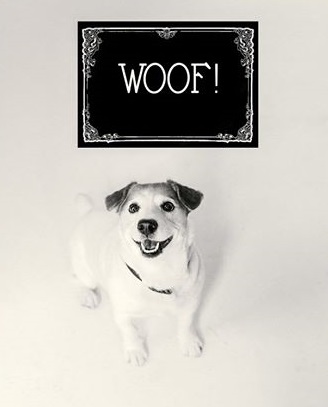
I was walking Rugby yesterday—that’s him above from a recent commercial photo-shoot–and ran into a young woman walking her West Highland Terrier. I like Westies, as does Rugby (but then, he also likes mail carriers, squirrels, my sister and once wagged his tail at a cockroach…), and I made some positive comments about the breed.

“Well, your dog certainly looks like he hasn’t missed many meals!” was her response. The ethicist programming blocked me from saying what first popped into my head, which was, “Well, neither do you, bitch,” and instead I attempted to enlighten her by saying, in a moderate tone,

“Actually, Rugby is an authentic, Jack Russell Terrier Association-certified Jack Russell, meaning that he is not the long-legged, faux monstrosity the AKC calls a “Parson Russell Terrier,” nor the much smaller toy-like version it calls the “Russell Terrier.” Jack Russell Terriers of the Irish, as in genuine variety, are certified by their personality and hunting traits, and not by looks alone. Thus they vary more in physical traits than AKC breeds, bred for show, and since the bulldog is part of the strange and wonderful alchemy that makes these dogs the bundles of joy they are, some Jacks, like Rugby and his still mourned predecessor Dickens, have a thick bulldog build, with a broad chest and stocky body. They are all muscle (“unlike your simpy terrier”–the ethicist filter blocked this too), and you may be surprised to learn, given the fact that he is at this moment acting more lively than your young dog, that Rugby is just short of 13 years-old, and thus just a bit heavier, but not much, than he was in his youth when the vet said he was as perfect a specimen of the breed as he has ever seen. Val Kilmer or Kirsty Alley he isn’t. He remains unslowed by time, and those meeting him for the first time often mistake him for a puppy, which is undoubtedly how he sees himself.”

She just walked on, hearing little of it.

Why do people think that making gratuitously critical comments about a stranger’s pet is any less rude and disrespectful than insulting a child or anything else that the individual obviously cares about? Continue reading

An Urgent And Probably Futile Call For Empathy And Compassion For The Victims Of Cultural Whiplash

north-carolina-protest-transgenderIt is sobering to read  the hateful and contemptuous comments from so many of my Facebook friends about the legislators of Georgia, Indiana, North Carolina, Mississippi and other states that have either passed or have tried to pass laws allowing citizens to opt out of the cultural freight train that gives them the option of boarding or getting crushed. Whether these are “religious freedom” laws or “bathroom laws,” aimed at transgendered interlopers in the once orderly realm of public bathrooms, or whether they are designed to fight for the definition of marriage as “between a man and a woman,” these laws, every one of them unwise and unethical, and probably unconstitutional too, need to be regarded as the inevitable and predictable result when human beings are forced to absorb cultural shifts in a matter of years or less that properly would evolve over generations

Culture–what any society, country, region, religion, business, organization, club, family, secret society or tree house agrees over time as how they do things, think about things, what is right and what is wrong, what is remembered and what is forgotten–is a constantly evolving process. Efforts to freeze it inevitably fail, because human beings as a species can’t stop themselves from learning. Efforts to rush the installment of major changes, however, can be disastrous, even when there seems like no alternative but to rush.

Laws don’t automatically change culture. They are part of the process, both reflecting and facilitating cultural shifts, as well as institutionalizing them. They do not even mark the end of such shifts. Nobody should be surprised, angry or abusively critical when those who have been raised to believe in certain values and practices feel betrayed and mistreated, and see the need to resist when their sense of what is right is suddenly proclaimed as not only wrong but the sign of a character deficiency and a cause for denigration and disrespect. Continue reading

Considering the Retrograde Mississippi Freedom of Conscience from Government Discrimination Act, This Shouldn’t Be Surprising At All…

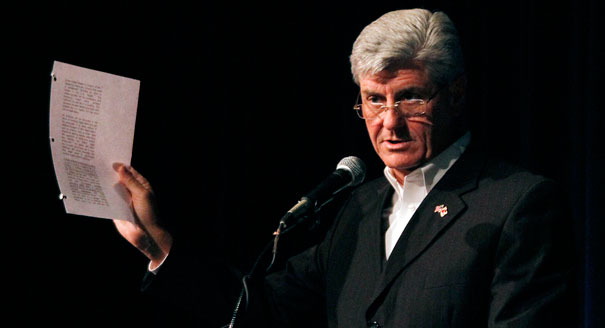
110204_phil_bryant_ap_605

Erica Flores Dunahoo and Stanley Hoskins have complained that the owner of a recreational vehicle park near Tupelo, Mississsippi. refused to rent a space to them earlier this year because of the colors of their skin. They say that Gene Baker accepted a $275 rent check, gave Erica a hug and invited her to church. The next day he called her and said, not quite as friendly, “Hey, you didn’t tell me you was married to no black man!”

Is that a problem, she queried?  “Oh, it’s a big problem with the members of my church, my community and my mother-in-law. They don’t allow that black and white shacking.”

Ah. So you are a moron, then, am I correct, sir? Yet why would Baker not believe this is completely fair and reasonable, since the current culture of his state, recently defined by the freshly signed Freedom of Conscience from Government Discrimination Act, is that religion allows citizens to behave like bigoted, meddling jackasses as a matter of conscience?

The new law, one of a flurry of such foolish, divisive and destructive measures popping up in states determined to embarrass Republicans and Protestants while causing Founding Fathers to do backflips in their graves, allows those who object to same-sex marriages or an individual claiming to be a gender other than what was “objectively determined by anatomy and genetics at birth” to use “conscience” as justification refuse to provide services.

I call these “right to be an asshole” laws. They are of dubious constitutionality, but their ethical status isn’t dubious at all.  They assert the right to interfere with the autonomy, lives and free choices of other law abiding citizens, denigrating, inconveniencing, stigmatizing  and marginalizing them in the process, because they believe religion justifies their doing so. Continue reading

Loyalty Drama: The Strange, Sudden, Ethical, Unethical Retirement Of White Sox First Baseman Adam LaRoche

chi-adam-laroche

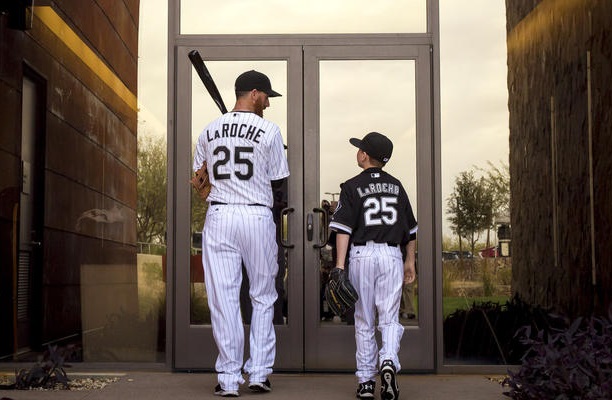
Yesterday,  baseball’s Spring Training was shaken when Chicago White Sox first baseman Adam LaRoche unexpectedly announced that he was retiring, effectively giving up his guaranteed 13 million dollar salary. LaRoche had suffered a down year in 2015, but he was healthy, and assured of a place in the ChiSox line-up. The reason for the precipitous decision was mysteriously and ominously reported as caused by a “personal matter.”  Was there dire illness in the family? What would make a healthy athlete walk away from his team mates and so much money?

Today, the club revealed the surprisng answer. Last year, LaRoche’s son, Drake, 14, spent most of the season with his father and the team and even had his own locker in the home clubhouse at U.S. Cellular Field. Drake was with also with the team in this year’s spring training. White Sox executive vice president Ken Williams told LaRoche that he would have to limit the amount of time his son spent in the clubhouse this season, and in response, LaRoche announced he was quitting.

Again, the threshold question to so much ethical analysis is crucial: What’s going on here?
Continue reading

The Ethics Of Judges In Love

gavel heart

When  attorney Joe Foley represented a client in a matter before Judge Scott Drazewski in early 2011, he was unaware that the married judge was involved a year-long secret romantic affair with Judge Rebecca Foley, the attorney’s wife.

Now both Illinois judges  have been disciplined by state legal ethics authorities for failing to reveal their romantic relationship and violating multiple ethics rules as a result. The ethics commission imposed a four-month unpaid suspension on Drazewski for “egregious” judicial ethics violations, and censured Judge Foley for assisting, aiding, abetting, and not reporting his violation or their affair. Continue reading

The Manager, The Hot Reporter, Conflicts and Professionalism

moranfarrell

It’s nice of my favorite baseball team to supply me with ethics stories, don’t you think? This one has management ethics, relationship ethics, journalism ethics, sexual harassment and professionalism.

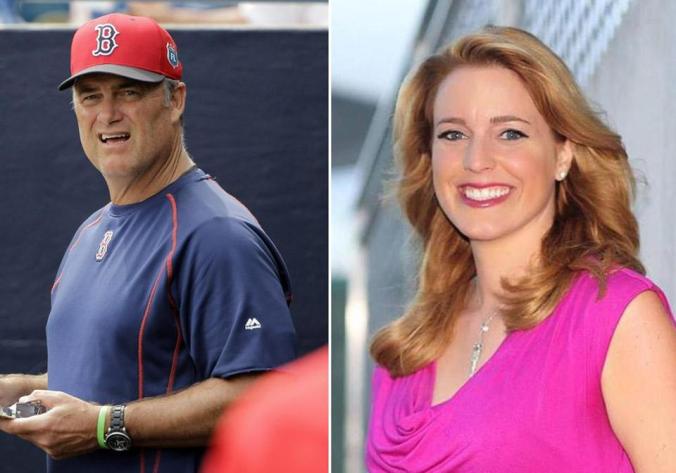
The Boston Globe reported last week that Boston Red Sox manager John  Farrell and Comcast SportsNet New England reporter Jessica Moran, who covered the team,  were romantically involved. Moran promptly resigned. This quickly degenerated into the usual ethically muddled discussion by members of the public who watch George Stephanopoulos interview Hillary Clinton and see nothing amiss, and have been so badly taught the ethics basics that they couldn’t identify a conflict of interest if they tripped on one, and members of the news media, who, if anything, are worse.  Among the questions being floated, and their somehow elusive answers…

These are consenting adults. Why aren’t they free to have a relationship?

Because they are professionals, with special duties to their constituencies and stakeholders, and the relationship between a reporter and her subject undermines independence, loyalty, trust and competence.

Why is it always the woman the one who has to lose her job?

It isn’t. The journalist has to lose her job, because the journalist breached the basic ethics of the profession. The baseball manager’s conduct is wrong,  but comparatively tangential to his duties at worst. It is still seriously unethical, however, and undermines team culture and the status of other women who have duties involving the team.  Farrell, by dating Moran, was sending a message to his players and other team personnel that these women are legitimate targets for sexual courtship rather than workplace colleagues.  The relationship may have constituted third party sexual harassment, making other women feel as if team leadership had sent the message that they weren’t to be taken seriously as professionals.

Why is everyone making a big deal about this? She’s a beautiful young woman, covering a team of men. Isn’t this to be expected? Continue reading

The Seventh Annual Ethics Alarms Awards: The Best of Ethics 2015, Part II

DavisHand

The Awards continue (Part I is here)….

Most Important Ethical Act of the Year:

The US Supreme Court’s Decision in  Obergefell v. Hodges in which the Supreme Court considered whether states had to recognize a right to same-sex marriages, and narrowly decided that they must. The prejudice against homosexuality is ancient, deep, and complex, mixed up in confounding ways with morality and religion, and deeply divisive. Nonetheless, I felt that the opinion should have been unanimous; it’s a shame that it was not, but in the end, this will not matter. The result was preordained from the moment gays began coming out of the shadows and asserting their humanity and human rights. Since the Stonewall riot, the nation and the culture has learned a great deal about the number of talented and productive gay men and women in our society and our history, the pain, ostracizing, discrimination and mistreatment they have suffered, and the falseness of the myths and fears that lead to this suffering.  In the end, as Clarence Darrow said about blacks, it is human beings, not law, that will make gays equal. No topic immediately causes such emotional and intense debate, on this blog or in society, as this one, but the Supreme Court’s decision is a major step toward changing the ethical culture, by asserting  that gay men and women have the same rights,  in the eyes of the state, to marry those they love and want to build a life with, and by implication, that the beliefs of any religion regarding them or their marriages cannot eliminate that right.

Outstanding Ethical Leadership

Senator Rand Paul.   I am neither a Rand Paul supporter, nor an admirer, nor a fan.  However, his June filibuster-like Senate speech against National Security Agency counter-terrorism surveillance was a brave, principled,  important act, and a great public service. The point Paul made needs to be made again, and again, and again:  there is no reason to trust the NSA, and no reason to trust the current federal government either. The fact that on security matters we have no real choice is frightening and disheartening, but nevertheless, no American should be comfortable with his or her private communications, activities and other personal matters being tracked by the NSA, which has proven itself incompetent, dishonest, an untrustworthy.


Parent of the Year

Tonya Graham

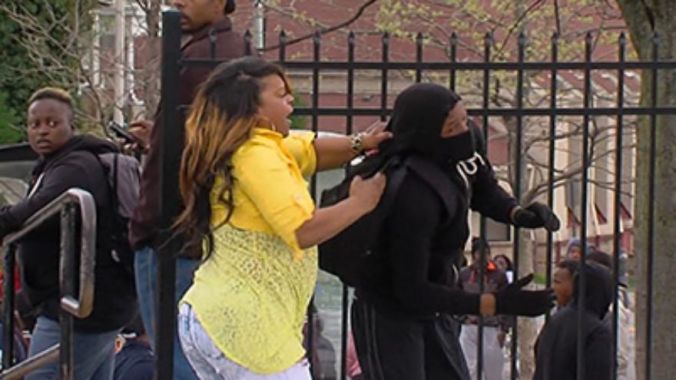
Toya Graham, the Baltimore mother caught on video as she berated and beat on her son in the street for participating in the Freddie Gray rioting and looting. Continue reading

The Seventh Annual Ethics Alarms Awards: The Best of Ethics 2015, Part I

Sweet Briar montage

Welcome to the Seventh Annual Ethics Alarms Awards, our blog’s retrospective of the best and worst in ethics over the past year, 2015.

It was a rotten year in ethics again, it’s fair to say, and Ethics Alarms, which by its nature and mission must concentrate on episodes that have lessons to convey and cautionary tales to consider probably made it seem even more rotten that it was. Even with that admission, I didn’t come close to covering the field. My scouts, who I will honor anon, sent me many more wonderfully disturbing news stories than I could post on, and there were many more beyond them. I did not write about the drug company CEO, for example, who suddenly raised the price of an anti-AIDS drug to obscene levels, in part, it seems, to keep an investment fraud scheme afloat. (He’ll get his prize anyway.)

What was really best about 2o15 on Ethics Alarms was the commentary. I always envisioned the site as a cyber-symposium where interested, articulate and analytical readers could discuss current events and issues in an ethics context. Every year since the blog was launched has brought us closer to that goal. Commenters come and go, unfortunately (I take it personally when they go, which is silly), but the quality of commentary continues to be outstanding. It is also gratifying to check posts from 2010 and see such stalwarts who check in still, like Tim Levier, Neil Dorr, Julian Hung, Michael R, and King Kool.  There are a few blogs that have as consistently substantive, passionate and informative commenters as Ethics Alarms, but not many. Very frequently the comments materially enhance and expand on the original post. That was my hope and objective. Thank you.

The Best of Ethics 2015 is going to be a bit more self-congratulatory this year, beginning with the very first category. Among other virtues, this approach has the advantage of closing the gap in volume between the Best and the Worst, which last year was depressing. I’m also going to post the awards in more installments, to help me get them out faster. With that said….

Here are the 2015 Ethics Alarms Awards

For the Best in Ethics:

Most Encouraging Sign That Enough People Pay Attention For Ethics Alarms To Occasionally Have Some Impact…

The Sweet Briar College Rescue. In March, I read the shocking story of how Sweet Briar College, a remarkable and storied all-women’s college in Virginia, had been closed by a craven and duplicitous board that never informed alums or students that such action was imminent. I responded with a tough post titled “The Sweet Briar Betrayal,” and some passionate alumnae determined to fight for the school’s survival used it to inform others about the issues involved and to build support. Through the ensuing months before the school’s ultimate reversal of the closing and the triumph of its supporters, I was honored to exchange many e-mails with Sweet Briar grads, and gratified by their insistence that Ethics Alarms played a significant role in turning the tide. You can follow the saga in my posts, here.

Ethics Heroes Of The Year

Dog Train

Eugene and Corky Bostick, Dog Train Proprietors. OK, maybe this is just my favorite Ethics Hero story of the year, about two retired seniors who decided to adopt old  dogs abandoned on their property to die, and came up with the wacky idea of giving them regular rides on a ‘dog train” of their own design.

Ethical Mayor Of The Year

Thomas F. Williams. When the Ferguson-driven attacks on police as racist killers was at its peak (though it’s not far from that peak now) the mayor of Norwood, Ohio, Thomas F. Williams, did exactly the opposite of New York Mayor Bill de Blasio in response to activist attacks on the integrity of his police department. He released a letter supporting his police department without qualification. At the time, I criticized him for his simultaneously attacking activists as “race-baiters.” In the perspective of the year past, I hereby withdraw that criticism.

Most Ethical Celebrity

Actor Tom Selleck. In a terrible year for this category, Selleck wins for bravely pushing his TV show “Blue Bloods” into politically incorrect territory, examining issues like racial profiling and police shootings with surprising even-handedness. The show also has maintained its openly Catholic, pro-religion perspective. Yes, this is a redundant award, as “Blue Bloods” is also a winner, but the alternative in this horrific year when an unethical celebrity is threatening to be a major party’s nominee for the presidency is not to give the award at all.

Most Ethical Talk Show Host

Stephen Colbert, who, while maintaining most of his progressive bias from his previous Comedy Central show as the successor to David Letterman, set a high standard of fairness and civility, notably when he admonished his knee-jerk liberal audience for booing  Senator Ted Cruz

Sportsman of the Year

CC Sabathia

New York Yankee pitcher C.C. Sabathia, who courageously checked himself into rehab for alcohol abuse just as baseball’s play-offs were beginning, saying in part,

“Being an adult means being accountable. Being a baseball player means that others look up to you. I want my kids — and others who may have become fans of mine over the years — to know that I am not too big of a man to ask for help. I want to hold my head up high, have a full heart and be the type of person again that I can be proud of. And that’s exactly what I am going to do.”

Runner-up: MLB Commissioner Rob Manfred, who dismissed the ethically-addled arguments of Pete Rose fans to reject his appeal to be have his lifetime ban for gambling lifted.  For those who wonder why football never seems to figure in this category: You’ve got to be kidding.

Ethics Movie of the Year

SpotlightTIFF2015

“Spotlight”

Runner-up: “Concussion”

Most Ethical Corporation

Tesla Motors, the anti-GM, which recalled all of its models with a particular seatbelt because one belt had failed and they couldn’t determine why. Continue reading

Reflections On The Ethical Holiday

Christmas


“Christmas is built upon a beautiful and intentional paradox; that the birth of the homeless should be celebrated in every home.”

—G.K. Chesterton.

“It’s Christmas Eve. It’s the one night of the year when we all act a little nicer, we smile a little easier, we cheer a little more. For a couple of hours out of the whole year we are the people that we always hoped we would be.”

— Frank Cross (Bill Murray) in “Scrooged”

CHARLIE BROWN: I guess you were right, Linus. I shouldn’t have picked this little tree. Everything I do turns into a disaster. I guess I really don’t know what Christmas is all about. Isn’t there anyone who knows what Christmas is all about?

LINUS: Sure, Charlie Brown. I can tell you what Christmas is all about.  Lights, please?

“And there were in the same country shepherds abiding in the field, keeping watch over their flocks by night. And lo, the angel of the Lord came upon them, and the glory of the Lord shone round about them. And they were sore afraid. And the angel said unto them, ‘Fear not, for behold, I bring you tidings of great joy which shall be to all people. For unto you is born this day in the City of David a savior, which is Christ the Lord.’ And suddenly there was with the angel a multitude of the heavenly host, saying, ‘Glory to God in the highest, and on Earth peace, goodwill toward men.’”

That’s what Christmas is all about, Charlie Brown.

—Charles M. Schulz

“Our hearts grow tender with childhood memories and love of kindred, and we are better throughout the year for having, in spirit, become a child again at Christmas-time.”

― Laura Ingalls Wilder

“Then the Grinch thought of something he hadn’t before! What if Christmas, he thought, doesn’t come from a store. What if Christmas…perhaps…means a little bit more!”

― Dr. Seuss, “How the Grinch Stole Christmas”

“Want to keep Christ in Christmas? Feed the hungry, clothe the naked, forgive the guilty, welcome the unwanted, care for the ill, love your enemies, and do unto others as you would have done unto you.”

― Steve Maraboli, in “Unapologetically You: Reflections on Life and the Human Experience”

“My idea of Christmas, whether old-fashioned or modern, is very simple: loving others. Come to think of it, why do we have to wait for Christmas to do that?”

― Bob Hope

“I heard the bells on Christmas Day
Their old, familiar carols play,
And wild and sweet
The words repeat
Of peace on earth, good-will to men!”

― Henry Wadsworth Longfellow

“There are many things from which I might have derived good, by which I have not profited, I dare say,’ returned the nephew. ‘Christmas among the rest. But I am sure I have always thought of Christmas time, when it has come round—apart from the veneration due to its sacred name and origin, if anything belonging to it can be apart from that—as a good time; a kind, forgiving, charitable, pleasant time; the only time I know of, in the long calendar of the year, when men and women seem by one consent to open their shut-up hearts freely, and to think of people below them as if they really were fellow-passengers to the grave, and not another race of creatures bound on other journeys. And therefore, uncle, though it has never put a scrap of gold or silver in my pocket, I believe that it has done me good, and will do me good; and I say, God bless it!”

― Fred, Scrooge’s Nephew, in Charles Dickens’ “A Christmas Carol” Continue reading

An “Awww!” Ethics Dunce: Vidal Valladares

vidal

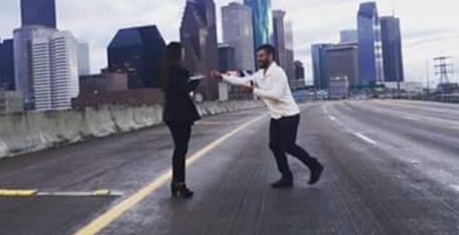
People who stage elaborate public ambush proposals of marriage in sports stadiums, using airplanes and other instrumentalities are inherently unethical, as well as narcissistic  jerks who warrant embarrassing rejections but never get them. This figures, since the women have been dating these tools and are usually jerks themselves. Few such stunts are quite as audacious in their jerkishness as that planned and executed by Vidal Valladares, 24, who shut down the Gulf Freeway, one of the busiest thoroughfares in Houston, to propose to Michelle Wycoff, 23, in the middle of the highway.  The Houston Chronicle, local TV station KTRK and other media outlets treated the stunt with a sympathetic “Awww!”—Ain’t love grand? Who could criticize these love birds, who, but for the vagueries of moral luck, could have caused one or more accidents and  death and destruction, hopefully just to them and not innocent commuters, but you never know.

Reportedly traffic was stopped for less than a minute as Valladares  got down on bended knee to propose (to his ex-wife whom he divorced in June) while the automobiles waited. “I never really thought about causing an accident,” Valladares told a local  paper. “I thought about my girlfriend.”

Awww!

How romantic!

You’re an idiot.

The Harris County District Attorney’s Office is charging the couple with “obstruction of highway, a Class B misdemeanor.

Good.

_______________________

Pointer, Source, and Graphic: Houston Press