When Ethics Alarms Don’t Ring Dept: Planet Fitness

header-2

There’s nothing substantively wrong with the fitness chain Planet Fitness’s new philanthropic program to combat bullying. However, one has to question the ethics alarms and basic English comprehension of a company that sees nothing wrong with naming a campaign “The Judgement Free Generation.” I just saw a TV ad that was a teaser for the program. The announcer ended by saying “Now Planet Fitness is creating a Judgement Free Generation.”

Judgement is not a bad thing. Judgement is a good thing. So is making judgements. Society without constant judgements of all kinds cannot possibly have or maintain standards. Without standards, there can be no ethical guidelines and boundaries.Nobody with any concept of what ethics are and why they are essential to civilization would every want to eliminate judgement. Judgement and bullying are not synonymous, not even close.

What some copywriter at Planet Fitness has done is to launch a national campaign that frames “judgement” as something to be avoided. Nobody in the hierarchy there perceived anything wrong with that. This isn’t being “judgement free,” this is just bad judgement, as in incompetent.. To the extent that it advances the culture’s increasing tendency to discourage negative judgements against any conduct, even objectively destructive conduct, leading to purely subjective ethics (that is, no ethics at all), the campaign’s message is irresponsible.

Besides, based on what I’ve seen of late on college campuses, Bernie rallies and anti-Trump freakouts, we may already have a judgement-free generation.

At least one.
From The Ethics Alarms Mail Bag: A Reader Asks, “Is The Verizon Wireless “Can You Hear Me Now?” Guy Unethical For Going Over To Sprint?

Question: Is the former Verizon Wireless spokes-character  whose tag line was “Can you hear me now?” unethical to star in commercials for Verizon competitor Sprint?

Answer: No, because that character, “the Test Man,” wasn’t real.

The real actor who played him, Paul Marcarelli, was playing a character and reading a script. He was acting the role of someone who told the audience how good the Verizon Wireless network was. He didn’t have to believe what he said was true. His loyalty extended no farther than his contractual obligations. The actor wasn’t ethically obligated to use Verizon Wireless, like it, understand it or believe in it, any more than Dos Equis’s “most interesting man in the world” has to really be interesting. Once the first ad series was dropped, he was a free agent.

Verizon could have included some kind of non-compete provision in the contract, forbidding Marcarelli from doing ads for a competitor, at least for a while.  It definitely could have prevented him from playing the same character as he played in the Verizon commercials, because that character is owned by Verizon. However,  Marcarelli uses his real name, Paul, in those Sprint ads, so he can argue that he’s not playing the Verizon character, but himself, and he owns the rights to “Paul Marcarelli.”

However, I do think the Sprint ads are unethical, and so obviously dishonest that they reflect poorly on Sprint. Continue reading

Along With All The Other Critical Issues Ignored In This Presidential Campaign, What Completely Neglected Crime Robs American Consumers Of An Estimated $25 billion A Year?

fish2

Why it’s fish fraud, of course!

Ethics Alarms covered the problem way back in 2011, in a post called “Getting Scrod in Boston: The Ravages of Seafood Fraud. I just checked: almost nobody has read it, and those who have almost certainly have 1) forgotten about it and 2) been ripped off buying seafood since.

Now the guys at “Stuff You Should Know” have done an excellent  podcast about the issue. It really is infuriating that with all the regulations we pay for, and all the attention the government focuses on fads, politically correct crusades (how many Americans are affected by limitations on which public rest rooms can be openly used by transgender citizens?) , and out-and-out trivia, something like this goes not only unaddressed by officials, but ignored as well. The news media, meanwhile, would rather use its limited daily space to tell us how Stephen Colbert just skewered Donald Trump last night than to warn us about our pockets being picked.

Well, not me: I almost never buy seafood unless it’s raw oysters, whole shrimp or crab,  and if I’m in New England, Ipswich clams and lobster, all hard to fake. Continue reading

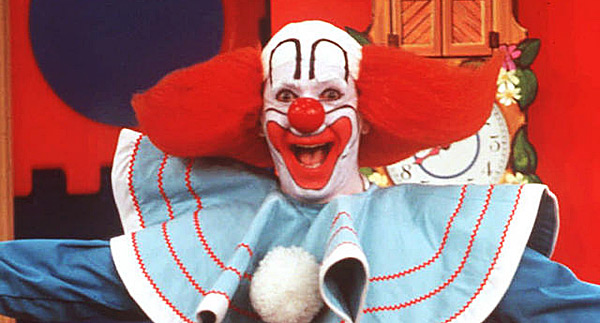
More Clown Ethics: The County That Banned Bozo

bozo

An alternate title was “The County Run By People So Ignorant Of The Constitution That They Think You Can Tell People How To Dress And Who Will Be Easy Pickings When The Democrats Decide To Ban What They Decide Is “Hate Speech,” but I thought it was a little too long.

The mass Ethics Dunce in question is Mississippi’s Kemper County, which in response to the evil clown hysteria embarrassing the nation almost as much as the evil Presidential candidates hysteria, enacted a clown ban this week, forbidding people from dressing as clowns until after Halloween. Anyone caught in public wearing a clown costume, mask or makeup will face a $150 fine.

This is, of course, ironic, since any elected officials voting for such a ban are, by definition, clowns themselves.

County supervisors president Johnny Whitsett justified this overly broad law and per se violation of the Constitution as a matter of public safety because, he said, people “could react badly if they get scared by a clown in their yard.” Wait: how does my wearing clown shoes and a red nose in my yard scare someone in their yard?

Boy, I can’t wait until I am retired, rich, and at leisure to go down to future Kember Counties and get arrested for being dressed like Bozo.

In these tiny, trivial, stupid examples of elected officials proving themselves ignorant of our rights and protections are the seeds of the destruction of American liberty.

Meanwhile, non-government entities, which are legally free to reject the principle of free expression but not ethically free to get away with it, at least on this little corner of the Internet, have revealed their own censorious clown DNA. Target, for example, has removed clown masks from its stores and website. “Given the current environment, we have made the decision to remove a variety of clown masks from our assortment, both in stores and online,” the Big Box chain announced through a spokesman.

This is consistent with the current reasoning of the increasingly totalitarian left on guns and other commodities, that if a small minority of citizens abuse a product or right, the rest of us have to do without. Again, I look forward to my future career as the Ethics George Soros, funding nation-wide Scary Hair Dryer User  hoaxes to see if Target will ban hair dryers too.

KABOOM! Just…KABOOM!

atom-bomb-cloud

Now I think understand why Ann Althouse, an intelligent, rational lawyer and law professor, has begun holding a “Most Loved Rat” contest on her blog to see which of her rat doodles are most popular. I’m less creative, I guess (though I also draw good rat cartoons!)—my head just explodes. It exploded last night.

It’s hard to explain exactly what did it.  Here I was, watching a series of baseball play-off games (since the Red Sox had been eliminated by the Cleveland Indians the day before), and Neil Patrick Harris appeared yet again to tell me that “Heineken Light makes it OK to flip another man’s meat.” (I wrote about the gratuitous vulgarity of this ad here. Apparently this makes me a homophobe.)

Wait…isn’t flipping another man’s meat sexual assault? What is the difference, in lack of respect and sexual assault ethics, between grabbing a woman by the pussy, as Donald Trump so eloquently put it, because you’re a rich celebrity, and flipping another man’s meat because…of beer? 
Continue reading

“Is Your Dog’s Halloween Costume Sexist?” No, It’s Just Cruel And Stupid…

dog-costumes

In an article in its business section that screams desperation, the Washington Post examined the earth-shattering issue  of whether PetSmart sells sexist dog costumes for Halloween. I suppose an argument can be made that this really is newsworthy, since the fact that some feminists and those in the throes of end-stage political correctness mania have actually registered objections about this does confirm the theory, bolstered by our current Presidential campaign, that the nation is losing its collective mind, and not all that slowly, either.

Apparently PetSmart places gender labels on its Halloween dog costumes, so firefighter and police officer outfits are for male dogs, while the owners of female dogs must choose between “a pink cowgirl costume and pink loofah.” On the website BaxterBoo.com, female canines are pointed towards the “sweetheart nurse” garb or the ever-popular “French maid.”

Never mind that: who wants to be caught dead doing anything on a website called “Baxter Boo”?

Scott Lawrie, who co-hosts a gender-focused podcast called, “She will not be ignored,”’ told the Post,

“It seems silly on the surface, but this is part of a larger message we’re sending, that there are certain jobs for men, and certain jobs for women. The career options for women — and dogs — need to go beyond pink loofahs and pink cowgirls.”

No, Scott, it’s silly all the way down: Continue reading

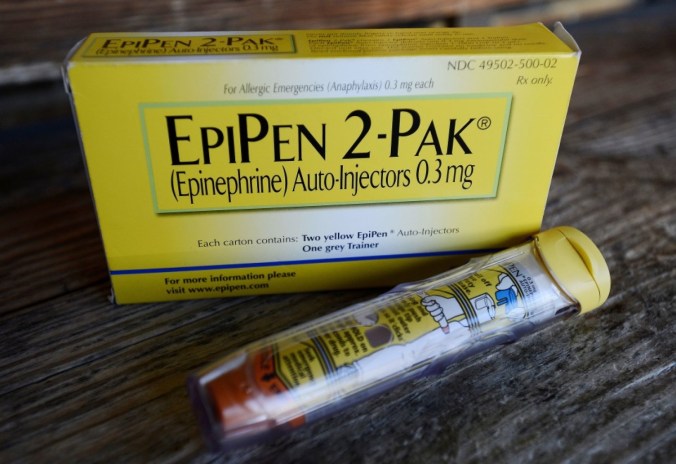
The Discouraging Mylan Epipen Ethics Breakdown

epipen

My economics professor in college was the late John Kenneth Galbraith, a best-selling author, New Frontier favorite and celebrity, to the extent that an economist can be a celebrity. One of the foundations of his fame was his theory that big corporations were becoming the successors to nations. They were, he said, on the way to becoming more powerful than nations, and the working people of the world would begin being more loyal to them than nations or religions.There were a lot of economic and management consequences of this, but it was the ethical implications that most interested me.

Corporate cultures would increasingly steer individual beliefs and behaviors, and strong forces would push these industrial giants to be less driven by profits and more ethically reponsible, since employees would want to be a “citizens” of a corporate state in which they could take pride. Similarly, stockholders wanted to be able to be proud of their holdings, as well as make money with them. His book explaining this theory, “The New Industrial State,” was a sensation. Part of the motive behind the book, my professor being a big government advocate too, was to lay the foundation of the case that these new “states” had to be carefully guided and regulated lest one go rogue and abuse its power to disastrous effect. Still, the position of the book was optimistic: the new giant corporations were scary, but there were forces at work that would make them want to be good and do good while making all that money.

Well, so much for that college course. The unfolding ethics mess that is the Epipen fiasco shows us an ugly company with an unethical culture run by an unethical CEO and invested in by people who don’t give a damn that the company is despicable, as long as they make money. The regulatory system that could have been built on Galbraith’s fantasy has failed utterly.

To make a long, complicated and depressing story shorter, here is a summary with some links at the end. Continue reading

Ethics Quiz: Disney’s Maui Costume

maui

It’s a bit early for Halloween costume controversies , but the outrage machine is ever vigilant, and has provided a provocative ethics quiz, though not a difficult one if one isn’t the Headless Horseman.

Disney released a Halloween costume for kids that will allow tykes to dress up as the Polynesian demi-god Maui, a character in its new animated movie “Moana.” This is classic Disney cross-marketing, what Wells Fargo would call “cross-selling,” and what Elizabeth Warren would call “evil,” because it makes money for a big corporation. The difference is that Disney allows customers to actually purchase such products intentionally, while Wells Fargo charges customers for products without their knowing it.

Wait, how did I get off on Wells Fargo and Warren? Right: the next post. Sorry.

Back to Maui: The costume features a body-suit with thin brown material covered by traditional Polynesian tattoos, as well as a grass skirt and a plastic bone necklace. As soon as it was released on the web, the costume was attacked as racist (it’s the equivalent of blackface, critics say) and an example of cultural appropriation. Marama Fox, co-leader of New Zealand’s Maori Party, said that selling the costume is “no different to putting the image of one of our ancestors on a shower curtain or a beer bottle” while Pasifika news site Samoa Planet described the release as “cultural appropriation at its most offensive worst”.  The New Zealand Human Rights Commission issued a statement calling on Disney to “listen to the views of the communities and people whose cultures their movie is based upon.“ Translation: “Bend to our will, or else.”

Activist Chelsie Haunani Fairchild argued on Facebook that Disney was encouraging a children to wear “the skin of another race.”

“Polyface is Disney’s new version of blackface. Let’s call it like it is, people,” Fairchild argued in a video.

Oh, let’s!

Your Ethics Alarms (Ridiculously Early Halloween) Ethics Quiz of the Day is this:

Is there anything genuinely unethical about making, advertising, selling or wearing the Maui costume?

Continue reading

“Flipping A Man’s Meat” Ethics

Is this what the culture has accomplished with its hard won respect for and acceptance of gay Americans? Really?

Neil Patrick Harris has done a series of quirky, benign spots  for Heineken Light, perhaps to lure us into a false sense of ease.  For in his most recent commercial,  Harris notes, as he stands next to a man grilling barbecue, that Heineken Light makes it OK “to flip another man’s meat.”

This is another in a long and growing list of TV ads based entirely on the assumption that adults think it’s hilarious to suggest obscene or vulgar innuendos. I’ve written about this phenomenon before, which is merely the normalization of crudeness in our discourse, nothing more, but nothing less either. So now we have gay sexual innuendo  by an openly gay actor to advertise beer. Isn’t that great? Boy, Heineken must be so proud.

The grill guy replies to the puckish—or flirtations?—former-Doogie that no man can do that, but late,  Harris asks him: “Can I flip your meat?”

Wow, that’s just hilarious! Why is it hilarious? Because it’s naughty? Because it’s daring? It’s certainly not clever, and if virtually defines the word “gratuitous.” It it a challenge to viewers, daring them to question the taste of joking about “flipping a man’s meat” when they routinely accept gross commercials with vulgar and gratuitous—you know, like this —heterosexual double entendres?  Is the assumption that gays will giggle, guffaw and slap each other on the back when they see this! “Good own, Neil!” Really? How insulting.

I can’t wait for the masturbation double-entendres in credit card and bank commercials. Continue reading

From The “When Ethics Alarms Don’t Work” Files: The 9-11 Mattress Sale Ad

How many people were involved with this ad for Miracle Mattress?? How did it get on the air without someone with a brain cell twitching pointing out that it was so offensive that it would spark significant, indeed company-threatening backlash on social media? The company owner has apologized abjectly, but this is a serious management botch. Unless he is lying in his apology and didn’t know about the ad or see it before it was launched, he has hired a bunch of incompetent who are given far too much power.

The woman who starred in the commercial is the San Antonio store’s manager. She, at very least, has proven herself to be an incompetent fool. It might help business recover if in addition to her being fired, her head was placed on a pike outside the store…but that would be wrong.

On the bright side, maybe Colin Kaepernick  will buy a mattress there.