American Idol Ethics, Group Day, 2012

Johnny Keyser

American Idol’s Group Day is the one stretch of the show that is more reality show than competition, and it usually delivers the best ethics dramas of the season. Last year, for example, the Group Day chaos—all the Idol wannabes have to form combos and rehearse an a capella number in harmony, often fighting, crying or collapsing in the process—produced a moment of courage and character when Scotty McCreery, the eventual winning Idol, stepped up and took full responsibility for the rotten conduct of his group, which had tossed out another young man at the last minute to take McCreery in.

This year there were ethics heroes and dunces, but mostly dunces. A real gem was the awful stage mother of competitor Brielle Von Hugel, who was filmed in rehearsals complaining how weak a singer her daughter’s fellow group member Kyle Crews was. After Crews crashed and burned in the performance, and was the only member of the group cut, Mrs. Von Hugel was shown insincerely telling him what a “good voice” he had. Kudos to Idol’s director for immediately re-running her backstage slamming of the kid’s voice in the previous episode. Continue reading

America Is Severely Confused About Domestic Abuse

John Wayne paddling his wife (Maureen O'Hara) in "McClintock!" I love ya, Duke, but this isn't funny any more....if it ever was.

Violence inflicted by one partner in a relationship upon another is absolutely unethical, yet it is one of those embedded cultural habits from the bad old days that still flourishes. Over at the Whitney Houston post, where I am being over-run by the drug-legalization zealots, sicced on me by a sad website where people indulge their dreams of legally de-braining themselves on a regular basis, there is widespread contempt for the concept  that cultural norms of what is right, wrong and worthy of shame controls our worst impulses. That contempt is as crippling as it is ignorant, for controlling behavior is what cultures do, and why they are essential. And our culture is still giving confusing signals about domestic abuse. Two recent examples: Continue reading

Ethics Quote of the Week: George Clooney

“I think it’s a stupid thing. I think it’s stupid for anyone, whether they’re celebrated or not, I don’t believe their 911 calls should be broadcast around the world.” 

"Poor Demi! The public has a right to hear us humiliate her."

—-Actor George Clooney, speaking during Sunday night’s Screen Actors Guild Awards.  He was referring to the release and subsequent airing of a 911 call from a woman summoning rescue workers for actress Demi Moore, who, the caller said, was convulsing and had lapsed into semi-conscious.

Good call, George.

911 calls are considered public, but that doesn’t mean that the public needs or has to hear them, or that sleaze-factories like TMZ should put them online when their only purpose is titillation and to embarrass celebrities. There may be special circumstances that justify making a recording of a 911 call, rather than a  transcript, available to the public, but those should be exceptions. In cases like Moore’s, playing them is unfair and unkind, a clear Golden Rule violation, not that TMZ, or most journalists for that matter, would know about that.

If the media can’t control itself when it comes into possession of a 911 call that will embarrass someone who already has enough problems to deal with, then we need laws to keep 911 calls out of irresponsible hands…in other words, the news media’s hands.
.


Celebrity Encounter Ethics

You're welcome. But now I'll never know what Eddie Murphy is really like!

I run into a lot of celebrities when I travel. I assume everybody does who travels very often; I know that I am better at recognizing them than the average person because my celebrity knowledge spans multiple generations, I have a good memory for faces, and I have always watched way, way too much television. And it happened again today: I was having my usual battles with an airport self-service check-in kiosk, this one in Atlanta, when I realized that the traveler enduring similar annoyances (“We have no record of your itinerary. Please enter the code that we call something other than what it is called on your ticket receipt before you get frustrated and have to wait in line to speak with an agent, because you know that’s what is going to happen.”) was the young actress-singer, Raven-Symone.

She was traveling alone, and it seemed clear that nobody around us had any idea who she was. Strange: doesn’t everyone watch “The Cheetah Girls,” “Dr. Doolittle 2” and re-runs of “That’s So Raven” on the Disney Channel? The encounter immediately sent me into Marshall Celebrity Recognition decision mode: what is the ethical way to treat the rich and famous if you are insignificant and lowly, and close enough to assassinate them? Continue reading

The Corruption Problem

“Maybe, just maybe, the legislative and judicial systems have been corrupted, by, dare I say it, corporations?”

—Ethics Alarms commenter and OWS warrior Jeff Field, in his comment regarding the weekend post, The Marianne Gingrich Ethics Train Wreck

I don’t know how Jeff reaches the conclusion that the judicial system has been corrupted by corporations. Judges, unlike legislators, do not grow rich as a result of their inside knowledge and corporate connections. Judges, unlike revolving-door Congressional staffers and lawyers, do not generally come from corporate backgrounds. The fact that a judicial decision benefits the interests of some corporations, and many do not, does not mean that the decision was not just or was influenced by more than persuasive legal arguments. Those who believe that begin with the biased and untenable position that any decision that benefits a corporation must be, by definition, wrong.

So let me put that dubious assertion aside as the result of excessive reformer’s zeal and crusader’s license, and deal with the general proposition that corporations corrupt the legislative system, and society generally. Well, sure they do, but the statement is misleading, and, I would argue, meaningless because it places disproportional importance on the corrupting influence of this one, admittedly important, societal force.

Yes, corporations can be corrupting influences. So can government, and the lure of public office. The news media is a corrupting influence on the legislature, and upon society generally. Religion corrupts; as does popular culture, with its celebration of empty celebrity, glamor and wealth. Non-profits and charities are corrupted by their tunnel vision of specific worthy objectives to the neglect of others; the civil rights movement corrupts, as does feminism and all other advocacy efforts, which often, if not usually, succumb to an “ends justify the means” ethic, which is unethical. Indeed, freedom corrupts, as does dependence. Cynicism corrupts, and corrupts with a vengeance. Ignorance corrupts; so does the belief, however well-supported, that one knows it all. Ideological certitude and inflexibility corrupts.

Education, and the cost of it, corrupts. Sports, both professional and collegiate, corrupt people, students, and institutions. Science corrupts; technology corrupts. Heaven knows, the internet corrupts. Leisure and success; triumph and defeat; wealth and poverty, love and hate, desperation, patriotism; kindness, loyalty, sex, lust; intellectual superiority, beauty, physical prowess, passion. Talent corrupts. Kindness and sympathy too.

Self-righteousness. Fear. Worry. Envy. Stupidity. Zealotry.

And, as we all know, power and the love of money.

All of these and more corrupt human beings and the institutions, organizations and governments that they make up. If individuals are corruptible, something will corrupt them, as sure as the sun rises and the quinces ripen. To focus upon any one of the limitless and abundant sources of corruption and to say, “This, above all, is the cause of our problems” is naive and unfair. By all means, we must seek ways to limit the opportunities for corruption and the damage it can do, but we must also recognize that the ability to corrupt does not mean that something or someone does not or cannot contribute much good to society as well. Heroes can corrupt, as we saw in the tragedy of Joe Paterno, but we need heroes. Leaders can corrupt, and often do, but we still need leaders.

Ultimately,  the best way to stop people and things from corrupting us is to understand what corruption is and how easy it is to be corrupted. Our inoculation is ethics, understanding right and wrong and how to recognize both, and learning to recognize when we are biased, conflicted, or being guided by non-ethical or unethical motivations. Shifting the blame for corruption away from ourselves is comforting, but intimately counter-productive. We have the power to resist corruption, just as it is within out power to select public servants who are not likely to be corrupted. It is our responsibility to do so.


Stephen Colbert’s Comedy Terrorism

This was a lesson for me. I fell into the trap of looking past unique unethical conduct because it resembled harmless conduct I had seen many times before, a close cousin of using “everybody does it” to excuse and invalidate the inexcusable. Thank goodness Washington Post columnist Colbert King was paying attention.

In King’s column today, he catalogues the activities of Comedy Central’s Stephen Colbert’s faux presidential run. I had already commented on Colbert’s gag earlier this week, but the target of my criticism was George Stephanopoulos, who devoted a ridiculous amount of time to a pointless interview with the comedian at the expense of real news. I assumed Colbert was just another in a long line of comedians who have used a presidential election year as a prop, and thus harmless….and I stopped paying attention to his antics. But as King ( his first name is pronounced KOHL-bert; the comedian’s name is Kohl-BARE) points out, Colbert has moved beyond satire into something akin to comedy terrorism, actively attempting to warp and influence the presidential selection process for laughs, and casualties be damned. King writes: Continue reading

Lindsay Lohan Dethroned As “All-Time Most Outrageous Excuse” Champion!

Linday Lohan, the former title-holder, and the new champion, Michael West

Back in 2007, I awarded Lindsay Lohan the championship for most brazen and manifestly ridiculous excuse ever. She had just been arrested for driving intoxicated and possession of cocaine, which had been found in the pocket of her jeans; Lindsay’s profession of innocence was that 1) she wasn’t driving her own car and 2) the pants belonged to somebody else. I noted at the time that she hadn’t yet claimed that the body she was in at the time wasn’t hers, but absent that, the “these aren’t my pants (TAMP)” excuse might well stand for all time.

In retrospect, that was rash. For one thing, many celebrities then as now already employed the Pazuzu Excuse, just a hair less ridiculous than TAMP, in which an offensive and career jeopardizing utterance is explained by the utterer as being inexplicable, that for some presumably supernatural reason—like being possessed by the demon who used Linda Blair as his ventriloquist dummy in “The Exorcist”—the individual has said something he or she not only didn’t believe, but never had even thought. The most recent purveyor of the Pazuzu Excuse noted here was Kobe Bryant; other infamous possessed have included Mel Gibson, Helen Thomas, and Michael Richards. That’s uncomfortably close to “it wasn’t my body.”  A few months ago, Newt Gingrich attributed his serial adultery and his habit of dumping his beloved wives when they got sick to his extreme patriotism; still short of TAMP, but getting close. Then, just this week, a strong contender nearly grabbed the title from Lindsay when  the chicken-hearted drunk who piloted the Costa Concordia cruise ship onto the rocks claimed left the capsizing vessel before his passengers because the he “fell into a life boat.” Uh-oh. Clearly, Lindsay’s title was teetering.

And quickly it fell. The Smoking Gun reports that in Wisconsin on Sunday, police responded to a domestic abuse call to find Mrs. Michael West bleeding from her face and saying that her husband Michael beat and tried to strangle her. Confronted by the officers, Mr. West explained that he was innocent.

A ghost did it.

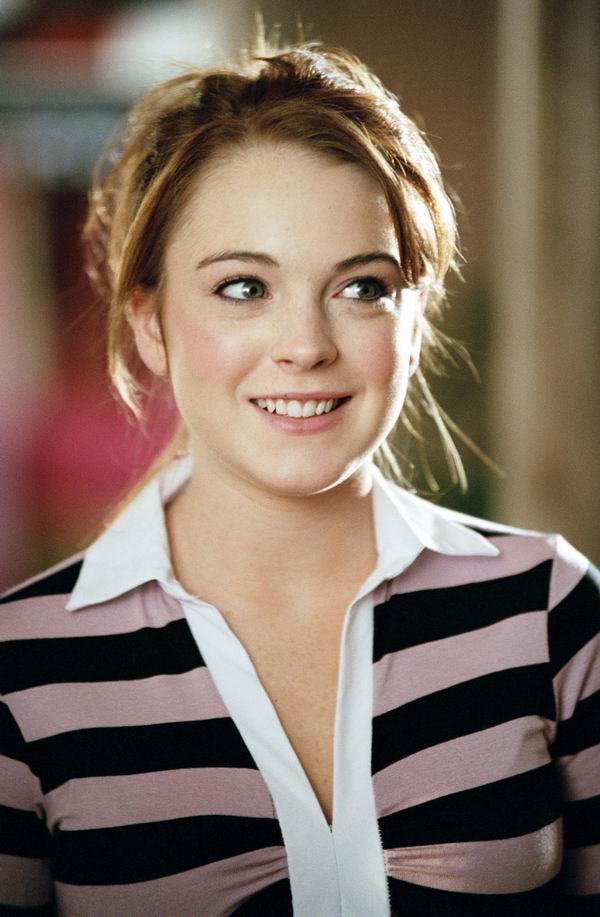
Well, Lindsay’s one remaining accomplishment since “Mean Girls” is history. The new champion for “All-Time Most Outrageous Excuse” is Michael West.

This time, I’m not making any predictions. It’s crazy out there.

________________________________

Epilogue: As I re-read my Ethics Scoreboard post from 2007 about Lindsay Lohan’s ridiculous episode, I found myself becoming depressed. In 2007 she was just 21 years old and looked it; she had a career, she was obviously talented, and despite the arrest, had plenty of time to turn things around and get what had once looked like a charmed life back on track. She never did. In the intervening years leading up to 2012, she has had multiple stays in rehab and two stints in jail. She had to stand trial for grand theft, and is still on probation. This month she is featured posing nude in Playboy, usually the last ditch recovery vehicle for fading actresses who are too unstable or unpopular to get on “Dancing With the Stars,”  have too much pride to sign on to “Celebrity Rehab with Dr. Drew, and are not fat enough for “Celebrity Boot Camp.”  As she sheds her dignity in Hugh Hefner’s anachronistic soft-porn glossy, looking far older than her years, Lohan’s over-shadowed cast-mates from “Mean Girls,” Amanda Seyfried, Rachel McAdam and Tina Fey, have all become respected, bankable and still rising stars.  Her supposed teen rival from years ago, Hillary Duff, has a singing and acting career, a husband and a baby on the way. Lohan is still only 26; many people have sunk far lower than she has with fewer assets to draw on and pulled their lives out of  tailspins to be happy, successful, and productive. I hope she can too. Right now, however, her life is a cautionary tale about how a badly-parented young woman who was never taught responsibility, accountability, respect for authority or self-control can find life unmanageable despite possessing all the gifts that American society foolishly admires more—youth, beauty, riches, talent and fame.

And it makes me sad.

Creating Captain Costanzas

Metaphor

I think I stopped finding George Costanza funny when I saw the “Seinfeld” episode in which he panicked at a kids party after smelling smoke and trampled the children rushing to be the first out the door. (His callous reaction to his fiancée’s death from licking envelopes had paved the way for my inability to laugh at George.) The thought of a real-life George Costanza, the most unethical character on a show about unethical characters, serving as the captain of an imperiled ship full of passengers is horrifying, but that’s basically what befell the unsuspecting tourists on board the cruise ship that tipped over after hitting a rock off the coast of Italy. Having caused the accident, it appears, by irresponsibly changing course, captain Francesco Schettino hit the life boats before most of his passengers, and claimed to be directing the evacuation from the relative safety of a lifeboat as he defied orders from the Italian Coast Guard to return to the ship. Continue reading

Snafu Ethics

A persnickety Washington Post reader recently reprimanded that paper for using the term “snafu,” which, he said, is but an acronym for “Situation Normal, All Fucked Up” and therefore inappropriate in a “family paper.” Leaving aside whether there actually is such a thing as a family paper any more, the letter once again raised the ethics and civility issue of whether a stand-in for an uncivil word is less uncivil than the word itself. The reader actually agrees with the position I have taken in the past, though he reaches some conclusions from it I would not. Continue reading

Ethics Quiz: Is This Racism, or Just Business?

The Mother Jones headline is designed to provoke a gasp: George Lucas: Hollywood Didn’t Want To Fund My Film Because Of Its Black Cast.

The headline is literally accurate. Lucas tells the magazine that he had trouble finding backers for “Red Tails,” his upcoming film about the fabled Tuskegee airmen, because the studios told him that films without white protagonists didn’t draw a wide enough audience, especially overseas, to make his film a good investment for them. Presuming that the film-makers know their business—and presuming their real reason for rejecting Lucas was not that the movies he’s produced lately were god awful, —Lucas’s story raises this Ethics Alarms Ethics Quiz Question, which you may answer if you dare:

Is a studio that refuses to fund a movie with an all-black cast engaging in racism, or just practicing business responsibly? Continue reading