Ethics Quiz: “The Graduate” Variation—Illegal Yet Ethical?

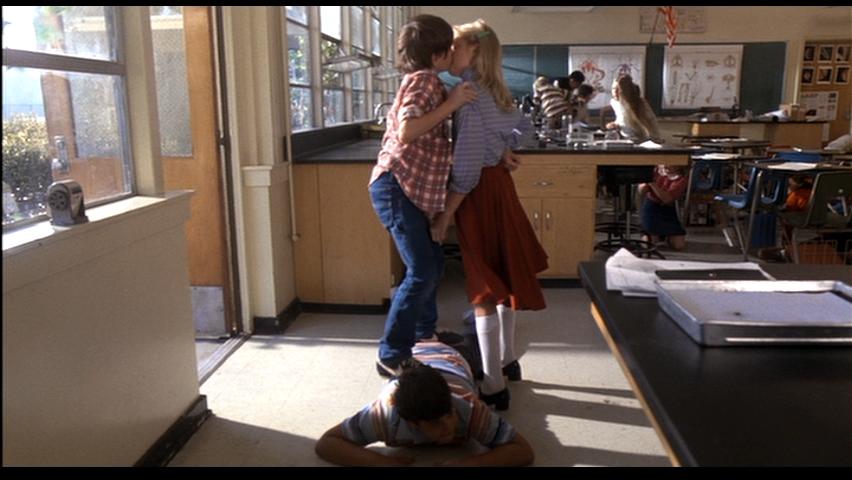
Except in THIS version of "The Graduate," it's Benjamin Braddock's MOTHER banging on the window. Come to think of it, Dustin Hoffman couild play her, too!

For your weekend Ethics Quiz, Ethics Alarms asks your assessment of a situation that may be that rarity, conduct that is illegal but ethical, by far the rarest in the spectrum that is…

Legal and EthicalLegal and Unethical—Illegal and EthicalIllegal and Unethical

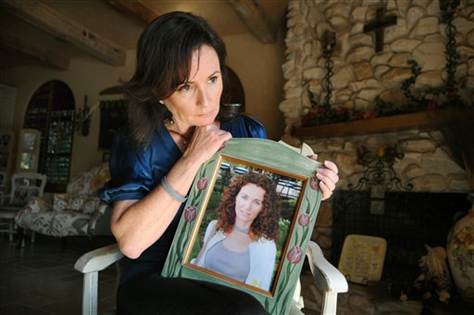
In Nevada, Justin Lew Harris’ wedding at the Carson Valley United Methodist Church was underway when his mother burst on the scene, Dustin Hoffman-style, and loudly objected to the ceremony. As she protested, Harris physically carried her out of the church, which constitutes battery. Mom’s tactic worked, though: that stopped the wedding, at least for now.

Now Harris, 35, faces misdemeanor charges  for disorderly conduct and coercion, presumably being pressed by his loving mother. He was released from the Douglas County Jail on his own recognizance.

No doubt about it: his conduct was pretty clearly against the law. But was it ethical? Continue reading

Hilary Swank Gets Nelly Furtadoed. And It’s Still Wrong

What's that, Mr. Kadyrof? You want me to give you a private ethics seminar for a half-million bucks? What!!! I am outraged! I spit on your filthy lucre! KIDDING!!!!!

I seriously considered taking the Ethics Alarms post on singer Nelly Furtado posted here in March and substituting actress Hilary Swank’s name for Furtado, and Chechen despot Ramzan Kadyrov for now-deceased Libya dictator Muammar Gaddafi. It is the same controversy and issue with the same result: an American performing artist sells her performing talents to a brutal foreign leader, and is bullied and shamed by human rights advocates and media critics into apologizing profusely and donating the large fee ( a million dollars in Furtado’s case, a reported half-million for Swank) to charity.

This was wrong in March, and it’s wrong today.

Earlier this month, Swank and other celebrities attended Kadyrov’s birthday bash in Chechnya. She was working. But while every other corporation and contractor, as well as the United States itself, can do business around the world without being held to the impossible standard of only accepting morally exemplary customers, Swank, like Furtado, Mariah Carey and others before her, was targeted for not doing the bidding of human rights activists and sacrificing her livelihood to be their billboard. The bully in this case in the Human Rights Foundation, which unethically brutalized Swank to achieve publicity for its own mission—a worthy one to be sure, but not so worthy that it justifies a PR mugging with a $500,000 loss to its victim. Continue reading

Ethics Hero: Robert Downey, Jr.

Superhero on the outside, Ethics Hero on the inside.

Show business Ethics Heroes are about as rare as credible presidential candidates; after all, Hollywood is one of two environments where the ethical culture is even more warped and cynical than Washington, D.C. (The other: the Columbia drug cartels.) Yet a genuine Ethics Hero emerged at the 25th annual American Cinematheque Award gala, when honoree Robert Downey, Jr., now a major star and industry power player, threw his prestige and influence behind a genuine industry pariah, Mel Gibson, in an act of kindness, gratitude, and reciprocity.

After Downey accepted his award before a cheering crowd of important performers and artists, he unexpectedly devoted his moment in the spotlight to recall how Mel Gibson, when Downey’s career had been devastated by habitual substance abuse and Gibson was a megastar, constantly supported him, encouraged him and refused to give up on him, though the Hollywood community had. The “Iron Man” star explained how Gibson, in 2003, gave Downey a starring role in “The Singing Detective,”  which had been developed for Gibson himself, because nobody else would give the troubled actor another chance.  Gibson even paid the insurance premiums for Downey, because the studio would not accept the risk of hiring him, given his history of drug addiction and legal problems. All  Mel asked in return, Downey recalled, was that Downey resolve to help out the next actor who had hit bottom and had no friends in the Town Without Pity. Continue reading

Ethics Dunce: Innovative Legal Marketing

Would "Seinfeld's" Jackie Chiles be a worse spokeperson for lawyers than Arnie Becker? Hmmmm...

L.A. Law’ Actor Corbin Bernsen, whom we originally got to know as priapic divorce attorney Arnie Becker on the old TV lawyer series  “L.A. Law,” was recruited in 2009, fifteen years after “L.A. Law” went to re-run heaven, to serve as the paid spokesperson for Innovative Legal Marketing, a Virginia-based company providing marketing services for lawyers and law firms. Now Bernsen has filed a lawsuit claiming he’s owed more than $668,000 after the company allegedly breached its contract and dropped him.

I have no idea whether Bernsen or the marketing firm has the law on its side in the suit, but I do know this: for a legal services marketing firm to recruit the actor who played Arnie Becker to promote legal services is an implicit insult to the legal profession and the intelligence of the public. Continue reading

Unethical Quote of the Week: Rep. Michele Bachmann…Again

Bachmann doesn't kid about this.

“When you take the 9-9-9 plan and you turn it upside-down, the Devil’s in the details.”

—-Rep. Michele Bachmann, concluding her critique of rival Herman Cain’s “9-9-9” tax plan during the Bloomberg GOP presidential candidates’ debate.

Throughout her campaign, as she has throughout her political career, Rep. Michele Bachmann has been sending coded messages to her Evangelical Christian base, usually through Bible references that most Americans don’t recognize. But most of us have seen “The Omen.” When an Evangelical like Bachmann suggests, with a big smile of course, that a black Presidential rival named Cain is pushing a plan that becomes the Mark of the Beast when turned upside-down, she’s not joking….indeed, I have never seen any evidence that Michele Bachmann is capable of joking. Continue reading

Roger Williams, Consequentialism, and “Born Free”

Roger Williams in his 80's. Take THAT, Drake!

Roger Williams, the pianist whose hit renditions of songs like “Autumn Leaves” and “Born Free” are pop culture generational touchpoints, died this week. One item in his obituary has double ethical significance:

“While majoring in piano at Drake University in Des Moines, he began developing a style that was a fusion of jazz, classical and pop. When a school official overheard him playing the tune “Smoke Gets in Your Eyes,” he was expelled because the school had a “classics-only” policy…”

It is both encouraging and depressing to learn that school administrators were just as doctrinaire, unreasonable, unfair, incompetent, stupid and willing to abuse their power while playing with the lives of young people back in the 1940’s as they are today—encouraging, because that generation seems to have come through it pretty well; depressing, because this field appears to have a flat learning curve.

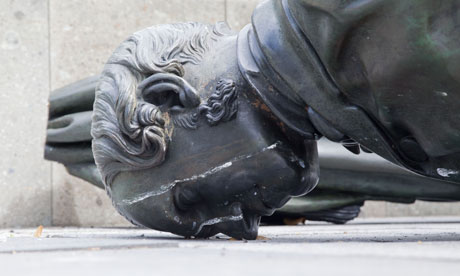
Mainly, however, Williams’ run-in with music snobs at Drake beautifully illustrates what is wrong with the consequentialist argument that we should assess the ethical nature of an act based on its consequences. Continue reading

Ethics Confusion in Ken Burns’ “Prohibition”

I enjoy all of Ken Burns’ documentary series, and I am grateful for them. They do a better job of teaching history than the schools, and they are always thought-provoking and, of course, beautifully executed. At the same time, I am aware of the limitations in Burns’ approach, beginning with his genre. Documentaries are inherently misleading works, more misleading in the hands of some, like Michael More, than others. The sifting of which material to use, how to balance issues, choices of photographs and film footage and even the inflections of voice betrayed by narrators (To his credit, Burns has all of his narrators deliver their script in the exact same measured and deliberately-paced tones; I found myself wondering how many times Burns forced “Prohibition” narrator Peter Coyote to listen to previous Burns stand-ins David McCullough and John Chancellor in “The Civil War” and “Baseball” until he sounded as much like their clone as they sounded like identical twins) unavoidably slant the final product, sometimes unintentionally, but usually with a motive. To the extent that viewers realize this, it is an ethical medium, but for most, especially those unfamiliar with the subject matter and with no independent knowledge to draw on, it is not.“Prohibition,” Burns’ latest PBS series that debuted last week, has a more obtrusive agenda supported with more dubious logic than his previous documentaries, reminding me, at least, that his historical conclusions should always be taken with a measure of skepticism. Continue reading

Hank Williams, Jr.: Victim of a Political Correctness Mugging

Wait---Hank Williams Jr. thinks Obama is like Jennifer Aniston?

On the Fox News morning couch-fest, country singer Hank Williams, Jr. had this exchange with the hosts:

HANK WILLIAMS: Remember the golf game?

    STEVE DOOCY: Boehner?

    HANK WILLIAMS: That was one of the biggest political mistakes ever.

    CO-HOSTS: Why?

    HANK WILLIAMS: That turned a lot of people off. You know, watching, you know, it just didn’t go over.

    GRETCHEN CARLSON: You mean when John Boehner played golf with President Obama?

    HANK WILLIAMS: Oh, yeah! Yeah. And Biden and Kasich, yeah. Uh-huh.

    GRETCHEN CARLSON: What did you not like about it? It seems to be a really pivotal moment for you.

    HANK WILLIAMS: Come on. Come on. It would be like Hitler playing golf with Netanyahu, OK?

It wasn’t OK, apparently. Headlines sprouted up like weeds claiming that Williams had “compared Obama to Hitler,” or “said Obama was like Hitler.” So because ESPN figured much of its audience would think that Hank Williams compared the President to Adolf Hitler, since the media was reporting his words that way, ESPN, that paragon of courage, fired Williams as the voice of Monday Night Football. No longer will his song introduce the festivities. Continue reading

Ethics Hero: David Letterman

No Free Speech weenie he. Yale, take note.

I stopped watching David Letterman years ago, when I learned that he was an unapologetic serial sexual harasser.  I don’t like to patronize the work of professionals, however talented, who should have been fired and would have, if their employers had any integrity. As a result, I missed Letterman’s ascent into ethics hero territory. It pains me to admit this, since I neither like nor generally respect him, but that is where David Letterman belongs.

On the June 5, 2011 edition of “The Late Show with David Letterman,” the host smilingly pulled his finger across his throat to note the U.S. military’s reported killing of Ilyas Kashmiri, an Islamist terrorist who was one of the organizers of a deadly attack in India that killed and wounded hundreds of innocent civilians. On a roll, Letterman made a joke about Osama bin Laden’s death as well.A group of radical Islamists took offense, and in a posting on the Islamist web forum Shumukh al-Islam, called for Letterman’s murder, urging the eventual assassin to cut out Letterman’s tongue.

Continue reading

Unethical Quote of the Week: University of Wisconsin-Stout Chancellor Charles W. Sorensen

"Oh, HELP me, University administrators! A poster says that a fictional space cowboy from a TV series that isn't on anymore might kill me, or someone, under certain conditions!"

“UW-Stout administrators believe strongly in the right of all students, faculty and staff to express themselves freely about issues on campus and off.  This freedom is fundamental on a public university campus. However, we also have the responsibility to promote a campus environment that is free from threats of any kind—both direct and implied. It was our belief, after consultation with UW System legal counsel, that the posters in question constituted an implied threat of violence.  That is why they were removed. This was not an act of censorship.  This was an act of sensitivity to and care for our shared community, and was intended to maintain a campus climate in which everyone can feel welcome, safe and secure.”

—-

, one featuring a humorous quote from a cult TV science fiction series, the other a satiric poster opposing fascism, as in cases where speech-censoring university administrators remove harmless pop culture references they don’t understand. Continue reading