Unethical Quote of the Week: Kim Kardashian

Whatever.

“After careful consideration, I have decided to end my marriage. I hope everyone understands this was not an easy decision. I had hoped this marriage was forever, but sometimes things don’t work out as planned.”

—-Kim Kardashian, reality star and cornerstone of the ongoing famous-for-being-famous Kardashian family media scam, announcing her sudden divorce filing –apparently explained to the celebrity gossip site TMZ before being revealed to her soon-to-be ex—-from husband Kris Humphries, to whom she had been married for 72 days.

In the dark days of the Great Depression, unscrupulous promoters held dance marathons across the country, the first “reality shows” since Nero fed Christians to lions for sport in the Roman Colosseum. Desperate people stayed on their feet dancing with only brief rest periods for thousands of hours, with participants getting meals for their suffering and the last couple standing getting a cash prize. Sadistic Americans paid admission fees to watch the carnage. One of the most popular gimmicks in the marathons was the fake wedding, in which the MC would proclaim that two of the courageous contestants had fallen in love, and would be married right on the dance floor. Continue reading

Donna Brazile Opens An Ethics Can Of Worms On “The Good Wife”

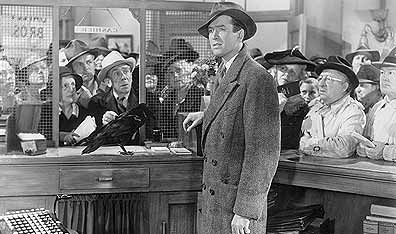
Is this the real Donna Brazile or the fake one?

The increasingly common practice of using real political figures playing themselves in dramas made me queasy from the beginning, and now I know why.

“The Good Wife,” CBS’s excellent legal drama now highlighting that network’s Sunday nights, has made such blurring of the real and fictional something of a trademark, featuring such real-life political power-player as Fred Thompson and Vernon Jordan in past episodes, not merely in cameos, but participating in substantive scenes as their real-life selves. Last night, Democratic Party strategist Donna Brazile, who had earlier in the day participated in Christiane Amanpour’s roundtable on ABC, played herself in the episode’s fictional meeting between her and  Eli Gold (Alan Cumming), the ethics-free campaign manager for the Good Wife’s Creepy Husband, Peter Florrick (Chris Noth). I must say, Donna Brazile made an extremely convincing Donna Brazile. She has a future in acting, as long as she can play herself. The problem is what fictional Donna Brazile told fictional Eli Gold, and the immediate, and confusing real life ethical issues it raises. Continue reading

Time For The Government To Say Good-Bye To Religious Holidays

I'd rather celebrate Ganesh's birthday than L. Ron Hubbard's, but that's just me.

South Brunswick, New Jersey schools have announced that they will henceforth close for two days every year in honor of…Diwali. Quick—what religion celebrates Diwali? The answer is the Hindu faith.

That does it, I think. The canary has officially croaked, and there is no way to sugar-coat it, not that anyone wants a sugar-coated dead canary anyway. State, local and national governments need to cut all ties with religious holidays now, before Americans who observe  Gantan-sai, Dia de los Reyes, Maghi, Timkat, Imbolc, L. Ron Hubbard birthday,  Ostara,  Khordad Sal, Ramayana,  Visakha Puja,  Declaration of the Bab, Ascension of Baha’u’llah and somebody’s god somewhere knows what else start suing every city council in sight, Bill O’Reilly starts screaming about the war on Christianity, and Michele Bachmann gives speeches about how everyone knows America is a Christian nation, because the Founders, you know, like Charles Dickens, Abraham Lincoln and Jerry Falwell, wanted it that way. Continue reading

Ethics Quiz: “The Graduate” Variation—Illegal Yet Ethical?

Except in THIS version of "The Graduate," it's Benjamin Braddock's MOTHER banging on the window. Come to think of it, Dustin Hoffman couild play her, too!

For your weekend Ethics Quiz, Ethics Alarms asks your assessment of a situation that may be that rarity, conduct that is illegal but ethical, by far the rarest in the spectrum that is…

Legal and EthicalLegal and Unethical—Illegal and EthicalIllegal and Unethical

In Nevada, Justin Lew Harris’ wedding at the Carson Valley United Methodist Church was underway when his mother burst on the scene, Dustin Hoffman-style, and loudly objected to the ceremony. As she protested, Harris physically carried her out of the church, which constitutes battery. Mom’s tactic worked, though: that stopped the wedding, at least for now.

Now Harris, 35, faces misdemeanor charges  for disorderly conduct and coercion, presumably being pressed by his loving mother. He was released from the Douglas County Jail on his own recognizance.

No doubt about it: his conduct was pretty clearly against the law. But was it ethical? Continue reading

Hilary Swank Gets Nelly Furtadoed. And It’s Still Wrong

What's that, Mr. Kadyrof? You want me to give you a private ethics seminar for a half-million bucks? What!!! I am outraged! I spit on your filthy lucre! KIDDING!!!!!

I seriously considered taking the Ethics Alarms post on singer Nelly Furtado posted here in March and substituting actress Hilary Swank’s name for Furtado, and Chechen despot Ramzan Kadyrov for now-deceased Libya dictator Muammar Gaddafi. It is the same controversy and issue with the same result: an American performing artist sells her performing talents to a brutal foreign leader, and is bullied and shamed by human rights advocates and media critics into apologizing profusely and donating the large fee ( a million dollars in Furtado’s case, a reported half-million for Swank) to charity.

This was wrong in March, and it’s wrong today.

Earlier this month, Swank and other celebrities attended Kadyrov’s birthday bash in Chechnya. She was working. But while every other corporation and contractor, as well as the United States itself, can do business around the world without being held to the impossible standard of only accepting morally exemplary customers, Swank, like Furtado, Mariah Carey and others before her, was targeted for not doing the bidding of human rights activists and sacrificing her livelihood to be their billboard. The bully in this case in the Human Rights Foundation, which unethically brutalized Swank to achieve publicity for its own mission—a worthy one to be sure, but not so worthy that it justifies a PR mugging with a $500,000 loss to its victim. Continue reading

Ethics Hero: Robert Downey, Jr.

Superhero on the outside, Ethics Hero on the inside.

Show business Ethics Heroes are about as rare as credible presidential candidates; after all, Hollywood is one of two environments where the ethical culture is even more warped and cynical than Washington, D.C. (The other: the Columbia drug cartels.) Yet a genuine Ethics Hero emerged at the 25th annual American Cinematheque Award gala, when honoree Robert Downey, Jr., now a major star and industry power player, threw his prestige and influence behind a genuine industry pariah, Mel Gibson, in an act of kindness, gratitude, and reciprocity.

After Downey accepted his award before a cheering crowd of important performers and artists, he unexpectedly devoted his moment in the spotlight to recall how Mel Gibson, when Downey’s career had been devastated by habitual substance abuse and Gibson was a megastar, constantly supported him, encouraged him and refused to give up on him, though the Hollywood community had. The “Iron Man” star explained how Gibson, in 2003, gave Downey a starring role in “The Singing Detective,”  which had been developed for Gibson himself, because nobody else would give the troubled actor another chance.  Gibson even paid the insurance premiums for Downey, because the studio would not accept the risk of hiring him, given his history of drug addiction and legal problems. All  Mel asked in return, Downey recalled, was that Downey resolve to help out the next actor who had hit bottom and had no friends in the Town Without Pity. Continue reading

Ethics Dunce: Innovative Legal Marketing

Would "Seinfeld's" Jackie Chiles be a worse spokeperson for lawyers than Arnie Becker? Hmmmm...

L.A. Law’ Actor Corbin Bernsen, whom we originally got to know as priapic divorce attorney Arnie Becker on the old TV lawyer series  “L.A. Law,” was recruited in 2009, fifteen years after “L.A. Law” went to re-run heaven, to serve as the paid spokesperson for Innovative Legal Marketing, a Virginia-based company providing marketing services for lawyers and law firms. Now Bernsen has filed a lawsuit claiming he’s owed more than $668,000 after the company allegedly breached its contract and dropped him.

I have no idea whether Bernsen or the marketing firm has the law on its side in the suit, but I do know this: for a legal services marketing firm to recruit the actor who played Arnie Becker to promote legal services is an implicit insult to the legal profession and the intelligence of the public. Continue reading

Unethical Quote of the Week: Rep. Michele Bachmann…Again

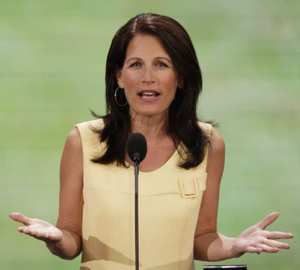
Bachmann doesn't kid about this.

“When you take the 9-9-9 plan and you turn it upside-down, the Devil’s in the details.”

—-Rep. Michele Bachmann, concluding her critique of rival Herman Cain’s “9-9-9” tax plan during the Bloomberg GOP presidential candidates’ debate.

Throughout her campaign, as she has throughout her political career, Rep. Michele Bachmann has been sending coded messages to her Evangelical Christian base, usually through Bible references that most Americans don’t recognize. But most of us have seen “The Omen.” When an Evangelical like Bachmann suggests, with a big smile of course, that a black Presidential rival named Cain is pushing a plan that becomes the Mark of the Beast when turned upside-down, she’s not joking….indeed, I have never seen any evidence that Michele Bachmann is capable of joking. Continue reading

Roger Williams, Consequentialism, and “Born Free”

Roger Williams in his 80's. Take THAT, Drake!

Roger Williams, the pianist whose hit renditions of songs like “Autumn Leaves” and “Born Free” are pop culture generational touchpoints, died this week. One item in his obituary has double ethical significance:

“While majoring in piano at Drake University in Des Moines, he began developing a style that was a fusion of jazz, classical and pop. When a school official overheard him playing the tune “Smoke Gets in Your Eyes,” he was expelled because the school had a “classics-only” policy…”

It is both encouraging and depressing to learn that school administrators were just as doctrinaire, unreasonable, unfair, incompetent, stupid and willing to abuse their power while playing with the lives of young people back in the 1940’s as they are today—encouraging, because that generation seems to have come through it pretty well; depressing, because this field appears to have a flat learning curve.

Mainly, however, Williams’ run-in with music snobs at Drake beautifully illustrates what is wrong with the consequentialist argument that we should assess the ethical nature of an act based on its consequences. Continue reading

Ethics Confusion in Ken Burns’ “Prohibition”

I enjoy all of Ken Burns’ documentary series, and I am grateful for them. They do a better job of teaching history than the schools, and they are always thought-provoking and, of course, beautifully executed. At the same time, I am aware of the limitations in Burns’ approach, beginning with his genre. Documentaries are inherently misleading works, more misleading in the hands of some, like Michael More, than others. The sifting of which material to use, how to balance issues, choices of photographs and film footage and even the inflections of voice betrayed by narrators (To his credit, Burns has all of his narrators deliver their script in the exact same measured and deliberately-paced tones; I found myself wondering how many times Burns forced “Prohibition” narrator Peter Coyote to listen to previous Burns stand-ins David McCullough and John Chancellor in “The Civil War” and “Baseball” until he sounded as much like their clone as they sounded like identical twins) unavoidably slant the final product, sometimes unintentionally, but usually with a motive. To the extent that viewers realize this, it is an ethical medium, but for most, especially those unfamiliar with the subject matter and with no independent knowledge to draw on, it is not.“Prohibition,” Burns’ latest PBS series that debuted last week, has a more obtrusive agenda supported with more dubious logic than his previous documentaries, reminding me, at least, that his historical conclusions should always be taken with a measure of skepticism. Continue reading