Typical of the free-association manner in which my brain works, a fatuous essay by a New York Times pundit about a subject he doesn’t understand (but I do)–performing—excavated an ethics memory from my childhood that hadn’t sparked a neuron in decades.
Frank Bruni, for some reason, felt it was necessary to re-hash the ancient debate over whether a movie star is really a skilled “actor,” and can be deserving of an Oscar over “real” actors. Naturally, his target was Tom Cruise and his performance in “Top Gun: Maverick,” the most popular and successful movie of the year. I don’t feel like arguing with Bruni over this; I’ve had the debate too many times. (No, Cruise isn’t going to get an Oscar for this sequel, but he has given Oscar-worthy performances before, because nobody can play Tom Cruise as well as he can). I’ll just give the short version: if an actor plays a part better than any other actor could, it is irrelevant that he can’t play any other part. As a director, I’ll cast a charismatic one-trick pony who is perfect for a particular role over a brilliant, versatile artist who could play Hamlet to cheers every time.
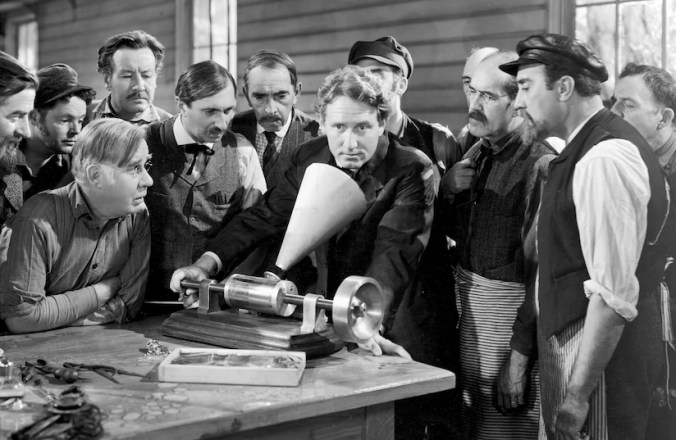
But that is neither here nor there. Here is there: Bruni’s discourse made me think of Spencer Tracy, a movie star and superb actor who had a wonderfully dismissive view of his own field, and then “Edison the Man,” the 1940 biopic, starring Tracy, about Thomas Edison. It was a black and white film that my father made a point of having me see. That film sparked my early interest in Edison, American inventors, technology and extraordinary people through history.
One scene in the movie, however, made a special impression. Edison and his research lab have been laboring on the creation of a practical incandescent light bulb day and night for months. Finally they think they have the right design, and the tungsten filament bulb to be tested is carefully assembled. The new bulb is handed to Jimmy, a teen who does odd jobs at the laboratory, and he dashes across the facility to give it to Edison. In his excitement, Jimmy trips and falls, smashing the precious bulb. Edison’s crew is furious; Edison reproaches the lad. Jimmy is devastated and inconsolable. When Edison’s men finally craft a replacement bulb, Edison calls for Jimmy and give him custody of the bulb, and asks him again to carry it to its destination on the other side of the building. Jimmy, striding carefully and slowly this time, completes his historic task.






 Ethics Alarms