Ethics Review: “Three Billboards Outside Ebbing, Missouri”

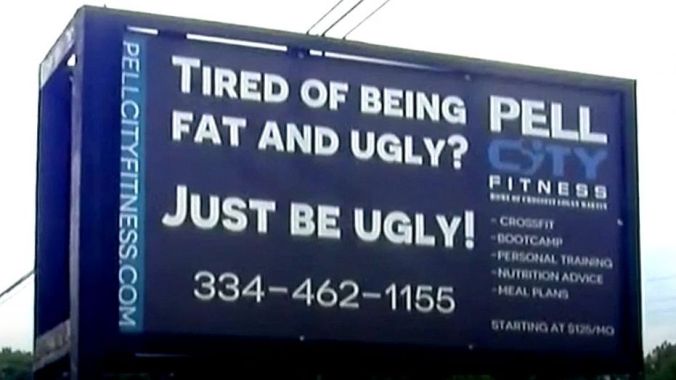
I watched last year’s “Three Billboards Outside Ebbing, Missouri,” twice, just to make sure it was the profound ethics movie I thought it was. It is. None of the reviews described it that way, of course. Here is the New York Times:

“The movie opens on low boil with Mildred behind the wheel of her station wagon near three derelict billboards…she uses the billboards to announce her crusade … a way to get things jumping (the investigators, the tale) and splash some foreboding on an outwardly pacific scene. Much of the story involves the ripples of outrage, confusion and buffoonery that the billboards inspire and that soon envelop almost everyone Mildred knows. Months after her daughter’s death, grief has walled her in; isolating and seemingly impenetrable, it is inscribed in the hardness of her gaze and in her grim new identity as a mother of a dead girl. The billboards turn that grief into a weapon, a means of taking on the law and assorted men — a threatening stranger, a vigilante dentist and an abusive ex (John Hawkes) — who collectively suggest another wall that has closed Mildred in….”

None of which addresses what is remarkable about the film, which is that it shows what causes our ethics alarms not to ring—Frances McDormand as Mildred and Sam Rockwell as Dixon, a racist and vicious deputy, in particular demonstrate  what it is like to be driven by non-ethical considerations of the darkest and most passionate sort—and more important, what causes them to start ringing again. Most reviewers described this as a dark and depressing film. The ethics alarms are mostly off again as the film ends, and that is ominous, but its main ethics message is uplifting in many ways. “Three Billboards” teaches us that even broken, ignorant, alienated human beings have the capacity to access their innate instincts for compassion, justice, forgiveness, selflessness and kindness, and even when our ethical selves seem permanently overcome and decisively defeated, they can burst out again, in control, salvaging what’s best about the species.

There is a moment early in “Three Billboards” that signals that it is not only going to show us what monsters anger and grief can transform us into, but also that what George Washington’s list of 110 Rules called “that little spark of celestial fire called conscience” is remarkably resilient.  A sheriff—the ethics compass of the story, played by Woody Harrelson— visits Mildred after her billboard messages embarrass him and roil the town. She is hard and cold as marble as he tries to explain his failure to find her daughter’s rapist/killer, even after he reminds her that he is dying of cancer. Suddenly the sheriff has a violent  spasm: he coughs up blood on himself and Mildred. And we see her fury evaporate in an instant. The compassionate and caring mother she once was emerges, if only for a few moments. ( McDormand is such a superb actress that she pulls off the sudden transition convincingly and movingly: you believe it, though it is like watching Mr. Hyde turn into Dr. Jekyll in the snap of a finger.) Later, when again her fury has been aroused, we see the same woman firebomb the police station and watch implacably as her nemesis deputy burns. A warning: just because the ethics alarms can ring doesn’t mean they are working well enough.

Sam Rockwell’s character also reveals surprisingly that his ethics spark has not been entirely extinguished, again thanks to a catalyst supplied by the sheriff. This transformation caused considerable  criticism of the film among critics and artists in Hollywood, and some attribute the film’s failure to win the Best Picture Oscar to the fact that a racist is redeemed and revealed to have an ethical core. But except for the sociopaths and psychopaths among us, admittedly a disturbingly large group, we all have that ethical core. We have the ethics alarms too, ready to be re-activated, even if they aren’t in perfect working order. Yes, this is  even true of racists. So much of our current political discourse is driven by the false construct that a single belief or a single lapse of reason marks an individual as irredeemable. Its easier to marginalize and demonize them that way. But it isn’t true.

Indeed Ethics Alarms often declares certain conduct and words as signature significance, proving that an individual is unethical because such actions and thoughts are alien to ethical human beings. “Three Billboards Outside Ebbing, Missouri” reminded me that people may be unethical–Mildred and Dixon, the deputy, could never be called ethical, for ethical people don’t set police stations on fire or throw young men out of second story windows, as Dixon does—but that even unethical individuals can find their ethics if you give them a chance.

And if they can find their ethics, so can all of us, and so can society. There is hope.

________________________

Addendum: I cannot leave “Three Billboards” without a salute to one of its most powerful scenes, when Mildred tells a priest why she doesn’t care what he has to say when he comes to her home to admonish her for the messages on the billboards:

Bingo.

When Ethics Alarms Don’t Ring: Snapchat Approves A Domestic Abuse Game Ad

On February 8, 2009, Chris Brown beat up pop megastar and then-girlfriend Rihanna. Five months later, Brown pleaded guilty to a felony assault and was sentenced to community labor, five years probation, and domestic violence counseling. Naturally, someone looking to make a buck off of the millions of ethics dunces who use social media recognized this as an appropriate basis for a game, and paid Snapchat to run their ad, which you can see above.

The “Would You Rather” ad was removed earlier this week, and Snapchat released an apology, saying “The advert was reviewed and approved in error, as it violates our advertising guidelines.” What does “in error” mean in such a case, though? It means “we have erroneously been hiring people at high levels with the ethical sensitivity of mollusks, and upon reflection, this was a miscalculation.” What  deadness of soul and mind could ever ever explain someone, indeed a chain of employees, seeing an ad mocking domestic abuse and reacting by saying, “Great! Put it up and bill ’em!”

Advertising on Snapchat is purchased through a self-serve advertising platform and subject to review,  the company says. Review by incompetents,  creeps and fools, apparently. Unfortunately, they are far from unique.

Rihanna posted a rebuke to Snapchat on Instagram, writing in part, Continue reading

Morning Ethics Warm-Up, 3/14/2018: The “Blotto From A Sleepless Night Fuming About Nobody Stopping That Puppy From Being Stuffed In The United Overhead Luggage Bin” Edition

Good Morning, United!

Where’s that whimpering sound coming from?

Grrrrrrr.

1 Don’t make America stupid, ABC. The new ABC legal drama “For The People” premiered last night, and lost me forever. I can’t trust the writers. In the final moments of the episode, a veteran female defense lawyer was consoling a young lawyer who was upset after losing a case. The older lawyer evoked the memory of a 1951 rookie for the New York Giants, who went hitless in his first Major League games and was devastated. But his manager put him in the line-up again, and he hit a home run in his first at bat, and never stopped hitting.

“Ah,” said the young lawyer, “Willie Mays. The greatest player who ever lived.” The older lawyer nodded sagely.

By no measure was Willie Mays the greatest baseball player. Is this racial politics by series creator Shonda Rhimes? I assume so: there is no other plausible explanation. The odds of two randomly selected baseball fans asserting that Mays was the greatest baseball player would only be more than miniscule if anyone who knows baseball believed that. Willie was the greatest centerfielder of all time, the greatest African-American player of all time, quite possibly the most charismatic and entertaining player to watch of all time, and very possibly the second most gifted baseball player of all time. But he wasn’t the greatest. The best player by every measure, statistical, modern analytics, WAR, JAWS, OPS, contemporary reports and common sense was, of course, Babe Ruth. He was the greatest hitter who ever lived, a great pitcher before that, and no athlete in any sport ever dominated it like Babe did in the Twenties.

Now, any individual can hold an eccentric opinion that Willie was better. But that was not how the assertion was presented. It was presented as an accepted fact that two random baseball fans agreed upon. This is irresponsible misrepresentation. I was trying to think of an equivalent: I think it’s like a TV show having someone quote the Declaration of Independence, and a listener then  say, “Thomas Jefferson. Our greatest President!” as the other individual nods sagely.

2. Four Regans, or, if you prefer, Linda Blair Heads.This is the new Ethics Alarms graphic for unethical media spin. The number of Regans can range from one to four, with four Regans signifying “spinning so furiously her head might fall off.” (If you don’t get the reference, you are seriously deficient in cultural literacy.) The four Regans go to the polar news media spinning yesterday’s special election in Pittsburgh, Pennsylvania, where Democrat Conor Lamb appears to have narrowly won a seat in a Republican stronghold, though the race is still too close to call. Continue reading

Morning Ethics Warm-up, 3/4/18: Special Academy Awards I Won’t Be Watching Edition!

Good morning!

1 One more institution falls to partisan poisoning. Tonight is the Academy Awards show, and outside of some suspense as to whether Warren Beatty and Faye Dunaway will botch the Best Picture reveal again (whoever had the idea to have them do an encore of their legendary fail is brilliant), I cannot imagine why anyone would waste their time and raise their blood pressure watching the show. I used to love the Oscars because I love movies. Except for periodic embarrassments where infamous jerks like Marlon Brando and Richard Gere defiantly injected politics into the party, it was fun, if usually too long. Now the show is just a platform for presumptuous performers to parade their ignorance and egos, virtue-signalling, grandstanding, lobbying and politicking. At this they are no better, and often worse, than plumbers, teachers and mail-carriers. What they are good at is looking good and making movies, and in most cases, not much else, including critical thought.

I watched a recent interview in which outspoken actress Jennifer Lawrence became visibly uncomfortable when she had to admit that she dropped out of middle school. It’s obvious that Lawrence is intelligent (she is also the most exciting and talented young actress to come along in a long, long time), but all of her noisy opinions are based on gut instincts. She is untrained and not very grounded in history, law or government: there is no reason for her opinions on politics or finance to be newsworthy. This is also true of her colleagues. Yet we have been informed that tonight will be “about” sexual abuse and gun control, so we will have to endure periodic outbursts all night long about “Time’s Up” and  “Never Again.”  There are side political controversies, like whether or not “woke” stars like Lawrence will snub E! red carpet host Ryan Seacrest because he has been accused of sexual misconduct by a former stylist. Never mind that Seacrest may be innocent, or that she decided to reinterpret what happened in order to join the #MeToo club. (“Oh come on!”)

We already know that the Oscar voting is now polluted by an unspoken demand that black actors and artists get their EEOC quota of honors. This year, we have the special treat of cheering for a nominated a movie that represented all white people as conspiring to make mind-controlled slaves out of blacks.

In the most bitter and divisive political climate in more than a century, institutions like Hollywood have a duty to unite us and emphasize what we have in common, which is a lot. The Oscars and the industry has abandoned that mission. Let them suffer the consequences.

2. The return of “Death Wish.”  Critics are already panning Bruce Willis’ “Death Wish” remake, which has  12 percent “Rotten” at RottenTomatoes.com.  Just from the trailer, it is pretty clear that this reboot has to be much better than the incredibly successful original and its progressively worse sequels. Here are some typical critic rants: Continue reading

Morning Ethics Warm-Up, 2/27/18: “Mrs. Miniver” Ethics, “Ick!,” And A Poll

Rugby in the morning

1 One of my favorite Hollywood ethics scenes. I watched “Mrs. Miniver” again last night, the 1942 WWII drama starring the magnificent Greer Garson. It has a wonderful ethics moment late in the film, when Lady Beldon, the wealthy town battleaxe (and the grandmother Mrs. Miniver’s recently minted daughter-in-law, soon to die tragically) presides over the English village’s annual flower show, in which she has won the coveted “Best Rose” prize every year. But beloved old stationmaster Mr. Ballard has developed a magnificent new rose (named after Garson’s character) and desperately wants to win as well. The Minivers tease their elderly relative about the near certainty that she will win as always regardless of the relative merits of her entry and “The Miniver” entered by Mr. Ballard, since the judges are terrified of her, and Lady Beldon has made it clear to all that she regards the annual prize as a virtual entitlement. After all, the prize is even called “The Beldon Challenge Cup.” Sure enough, the judges, who seemed to be having a harder time than usual concluding that Lady Beldon’s rose deserved the award, hand her a slip that places her rose in first place, and Mr. Ballard’s in second.

Lady Beldon shows the slip to Mrs. Miniver with an air of triumph.

MINIVER: This is really important to you, isn’t it?

LADY BELDON: Yes. It’s stupid of me, but there it is. I’ve won that cup for as long as I can remember.

MINIVER: Mr. Ballard’s terribly keen too.

BELDON: Well, he’s had his chance. Hasn’t he? You have such a way of looking at people. What do you expect me to do? Reverse the judges’ decision?

MINIVER: I wouldn’t put it past you. If you happened to disagree with it.

“But I don’t!” she harrumphs. She keeps looking at the two competing roses, though, and also at old Mr. Ballard (played by Henry Traverse, later to portray Clarence the Wingless Angel”in “It’s a Wonderful Life.” His look of anticipation and hope approximately mirrors the expression of a six-year-old on Christmas morning. And when it comes time to announce the winner, Lady Ballard pauses, looks at the two roses again, ponders,  crumples up the judges’ slip, and announces that “The Miniver” wins the prize.

Dame May Witty, one of the best character actors England ever produced, shows us with her face that she realizes she did the right thing as soon as she sees Ballard’s reaction to winning. And the assembled crowd gives her an even louder ovation than they give the winner. They didn’t even have to see the slip like the Minivers: they know what she did. And she knows they know.

I had a Lady Beldon moment many years ago, before I had even seen the movie. Continue reading

Comment Of The Day: “Morning Ethics Warm-Up, 2018 President’s Day Edition” [#2]

The first time I mentioned the now burgeoning effort by anti-gun advocates to turn the emotional blackmail portion of the current push to children, Chris Marschner issued a typically tightly reasoned examination of the debate ending with, “I’d be happy to discuss my ideas with any of the kids now being paraded before the public on this subject.”

I’m sure that was sincere, though, as you will see, stated with a bit of an edge, as you will soon see.None of these nascent cable news stars would be capable of discussing the topic with him, except in the most rudimentary fashion. . This is the state of affairs that sparked my previous post, making Chris’s Comment of the Day especially apt. And sharp.

Here it is, on the post Morning Ethics Warm-Up, 2018 President’s Day Edition:

I really do not know what is meant by the term “common sense gun control”. Given that it is a relatively amorphous phrase it is difficult for me to reject or accept the argument that we need even more common sense gun control.

I have no problem with background checks or even enhanced background checks but it seems to me that, given that school shootings are often committed by young people, that common sense would indicate that we eliminate the rules to seal a juvenile’s police records, their medical records, and school disciplinary actions. If we had common sense regulations that would allow government officials to ferret out socially aberrant behaviors and intervene beforehand many if not all of these shootings could have been avoided without having to infringe on the rights of law abiding gun owners.

Furthermore, common sense would tell us that if we gave the government the power to review all online posts we might be able to also ferret out cyber bullies and their victims which leads to more deaths annually than school shooters. According to DoSomething.org :

1.”Nearly 30,000 Americans commit suicide every year.
2.In the U.S., suicide rates are highest during the spring.
3.Suicide is the 3rd leading cause of death for 15 to 24-year-olds and 2nd for 24 to 35-year-olds.
4.On average, 1 person commits suicide every 16.2 minutes.
5.Each suicide intimately affects at least 6 other people.
6.About 2/3 of people who complete suicide are depressed at the time of their deaths. Depression that is untreated, undiagnosed, or ineffectively treated is the number 1 cause of suicide.
7.There is 1 suicide for every 25 attempted suicides.
8.Males make up 79% of all suicides, while women are more prone to having suicidal thoughts.
9.1 in 65,000 children ages 10 to 14 commit suicide each year.
10.There are 2 times as many deaths due to suicide than HIV/AIDS.
11.Over 50% of all suicides are completed with a firearm. ”

Think of it, one person dies at their own hand every 16.2 minutes. We need legislation to stop this. We need legislation to stop the cyber bullies. We need legislation to stop the carnage. We must think of the children. We cannot simply focus on the firearm because nearly half do not use a firearm to kill themselves. We can do more than simply control firearms. We must stop the killing by any means. Continue reading

Morning Ethics Warm-Up, 2/18/18: Sunday Potpourri

Good Morning!

1. Now THIS is a bribe…Al Hoffman Jr., a Florida-based real estate developer and a prominent Republican political donor “demanded” yesterday that the party pass legislation to restrict access to guns, and vowed not to contribute to any candidates or electioneering groups that did not support a ban on the sale of military-style firearms to civilians. “For how many years now have we been doing this — having these experiences of terrorism, mass killings — and how many years has it been that nothing’s been done?” Mr. Hoffman said in an interview. “It’s the end of the road for me.”

The only ethical GOP response is, “Bye!” Donors may not tie their support to specific legislative measures. That’s a quid pro quo. a bribe. The party should—I would prefer “must”—respond by officially and publicly telling Hoffman that its elected officials  will do what they believe is in the best interests of their constituents and the nation, and he is free to contribute to whatever he deems appropriate.

Moreover, his statement shows that he doesn’t know what he’s talking about. This is yet another “Do something!” yelp.

2. Yet more anti-gun hysteria...Could there be a more nakedly emotional and irrational headline than this one in today’s Sunday Times: “Why Wasn’t My Son the Last School Shooting Victim?”(That’s the print version…the online headline is different.)

3. I may have to put “cultural appropriation” on my list of things have to flag every time it’s used…From a New York Times article about Wes Anderson’s new animated film about dogs exiled to a miserable island in the wake of “dog flu” comes this astounding cut-line:

“Critics Address The Issue Of Cultural Appropriation In ‘Isle of Dogs'”

It seems the American director’s work here is influenced by the films of iconic Japanese director Akira Kurosawa.  The Horror. Hey, what the hell business does Japan have running  professional baseball leagues? Here’s a quick poll as a warm-up for the Warm-Up:

Continue reading

Afternoon Ethics Warm-Up, 2/17/18: Mueller And A Movie

Good afternoon..

1 Well, we have some exit poll results…on my integrity and denial question in the Mueller indictment post I started at 4 am, hence the late Warm-up. Based on the comments so far, I am going to be disappointed: the “Trump is guilty of something” crowd is, so far, arguing that an indictment statement including  “There is no allegation in the indictment that any American was a knowing participant in the alleged unlawful activity. There is no allegation in the indictment that the charged conduct altered the outcome of the 2016 election” means that the President’s election was illegitimate and that he is guilty of wrongdoing. We also have such jaw-dropping moments as a commenter praising the Mueller investigation for not leaking the indictments beforehand—wow. Leaks are unethical, and when a grand jury is involved, illegal. The leaking from the Mueller investigation and the Justice Department have been a national disgrace, and we are now at the point when government lawyers not breaking the law is deemed worthy of praise in some quarters.

Of course, we don’t know what was leaked. Since leaking grand jury testimony is so serious and always sparks its own investigation, I wouldn’t bet against reporters having been tipped off, but using the advance notice to prepare their “Trump’s still guilty!” responses.

A better example could not be found of how the the news media and the intentionally divisive partisan rhetoric of the past decade have caused a fracture in the ability of Americans to perceive facts unfiltered by confirmation bias. I find this disheartening. But exit polls are not always accurate…

2. An unexpected take on the indictments. Eccentric conservative blogger Da Tech Guy  had some interesting observations:

“Section 1 and section 24 notes that it’s against US law for “certain foreign nationals” to enter the US without a visa providing truthful and accurate information to the government. Apparently these laws don’t apply to dreamers and those who brought them…section 41 talks about identity theft including social security numbers; again, this could be a charge against the DACA kids…Section 85 completes the list, the illegality here is that they pretended to be Americans and didn’t register as foreign agents while doing activities that if done by Americans would be completely legal…Does that mean that DACA folks and illegals who have held political rallies will be indicted next?…Section 89-95 on count 2 and section 96 again notes identity theft and moving money via such theft., boy this could be an indictment of the illegal alien DACA crowd if they wanted. But they don’t.”

3. Ethics movie review! I watched Denzel Washington’s “Roman J. Israel, Esq.” twice last week, in part because it is a legal ethics movie, and in part because Washington’s portrayal of an idealistic autism-spectrum civil rights attorney whose ethics alarms get corrupted is so unusual for him. I’ll basically pay to watch Denzel play canasta. Continue reading

Ethics Quiz: The Black Panther

The Black Panther opens today, and all signs indicate that the latest Marvel superhero film—full disclosure: I am sick to death of them all—will be the blockbuster Hollywood so desperately needs. But because this is increasingly a race-obsessed, silly place, and the New York Times is its oracle, we were told a few days a go that the popularity of a black superhero will create an ethical dilemma: Can white kids ethically wear Black Panther masks, costumes, and accoutrements? Would that be cultural appropriation? A return to blackface?

Your somewhat differently conceived Ethics Alarms Ethics Quiz Of The Day query is this:

Is the Times seriously raising this issue as mind-meltingly stupid and obnoxious as I think is?

Continue reading

Morning Ethics Warm-Up, 2/16/18: Guns, Tweets And Blackberry Slingshots

Good morning everybody!

1. Oh, well if David Hogg says so… I just listened to an earnest, articulate Florida high school student named David Hogg tell a CNN reporter, his head nodding sagely, complete counter-factual garbage, with no correction, for what seemed like an eternity. “David Hogg wants Congress to act.” the screen said said as the 17-year-old was speaking. This is lousy, unethical journalism—well, it’s CNN– and irresponsible. I don’t blame the kid for believing the crap he reads and hears from people who are lying to the public, but I expect the news media to correct, not circulate, dishonest talking points. Well, maybe “expect” isn’t the right word.

No, David, “thousands of students” do not die every year. No, David, that “18 school shootings” fake stat is designed to mislead: it includes every time a gun has been discharged in or near a school, not mass or multiple shootings or even fatalities. [See Item #2]

See, David, when people talk about “mental health reform” they are often talking about pre-crime, and removing the rights of citizens before they have done anything wrong, much less criminal. But CNN’s reporter kept nodding.

These are complex issues involving rights and practical realities, and a high school student is not an authority that CNN or anyone should be presenting as an advocate. Until the anti-gun advocates stop intentionally distorting facts and trying to mislead while relying on emotion to swamp legitimate debate, there will be no serious dialogue about whether any policies could stop tragedies like the latest Valentine’s Day massacre, and bumper sticker chants like “Do something!” and “If it saves just one life…” lead away from responsible policy, not toward it.

I cross-posted this to Facebook, and can’t wait to read the reactions. At this point, posting facts qualifies as trolling. The anti-gun hysterics can’t stand it. Continue reading