Ethics Dunce: The Heisman Trust [Expanded!]

Ugh. This gets the Steve Buscemi foot-in-the-woodchipper GIF from “Fargo,” because that’s what stories like this make me want to do: dive into one and end it all.

The Heisman Trust announced today the formal “reinstatement” of the 2005 Heisman Trophy to former USC college football star Reggie Bush 14 years after he had been stripped of it. That 2010 decision was made when the NCAA sanctioned USC for multiple rules violations, which included Bush receiving “improper benefits,” as ESPN coyly puts it, during his Trojans career from 2003 to 2005.

USC and Bush cheated, you see. They cheated, and nothing has changed regarding their guilt. They broke the rules. But because the NCAA, the Heisman Trust, football, American sports organizations generally and the American public that supports them all have the approximate ethical literacy of dung beetles, Reggie’s cheating doesn’t count.

Continue reading

Ethics and Columbo’s First Name

This goes into the Maslow’s Hammer file, as in “If the only tool you have is a hammer, every problem looks like a nail.”

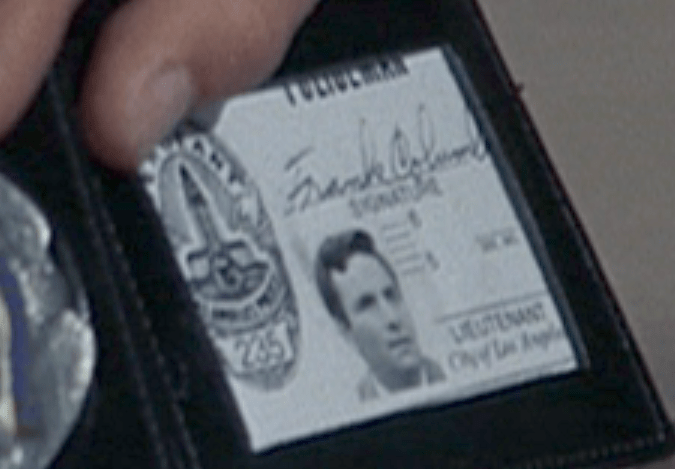
I have been watching all the original “Columbo” episodes, first because they’re still worth watching, second because Grace and I used to watch them when picking something else was too much trouble and we couldn’t agree, third because Spuds likes Columbo’s dog (a Basset Hound), and fourth, because they usually distract me from stuff I don’t want to think about and leave me relaxed for a while, unlike, say, watching the Red Sox. As I finished the seven seasons, I wondered if I had ever heard Peter Falk’s character called anything but “Columbo” or “Lieutenant” on the show. My research revealed that I had not: the character’s creators Richard Levinson and William Link deliberately kept the eccentric sleuth’s first name a secret as one of the show’s quirks, and were adamant: nobody should ever speak his first name.

This raises the question of whether a character who only exists in television episodes where his first name is never mentioned has a first name, but that’s not an ethical question. However, the saga of Columbo’s first name did tick a few ethics boxes.

Continue reading

Say Hello to Rationalization #38D, Yoda’s Annoyance or “I Was Trying My Best!”

I almost called this “Kaine’s Delusion,” because it was the junior Virginia Senator, former governor and failed Hillary Clinton running mate whose fatuous remarks made me realize that this rationalization, a frequently used one, had some how been left off the list.

Yoda’s Annoyance fits neatly among the sub-rationalizations under #38. The Miscreant’s Mulligan or “Give him/her/them/me a break!” the versatile rationalization that aims to duck the consequences of wrongful conduct by making others feel guilty about placing responsibility squarely where it belongs, by arguing that the miscreant isn’t so bad, isn’t different from anyone else, that he or she meant well, or that the critic is just being an old meanie. The closely relate #38 A.“Mercy For Miscreants, ” embodies the theory that there should be cap on criticism handed out to groups and individuals no matter how much wrongful conduct has been authored by them.

38 B: Excessive Accountability, or “He’s (She’s) Suffered Enough,” previously most often heard when a parent has negligently allowed an infant or small child to perish in a locked car, has recently been repurposed to defend parents who allow their kids to get a hold of their negligently stored firearms, killing others or themselves as a result. Finally authorities are prosecuting such parents. (Good!) Next we have #38C. Biden’s Inoculation or “I don’t deny that I do this!,” which is based on the slippery theory that bad conduct is mitigated by one’s open admission and acknowledgment that it’s a bad habit. This one is a close cousin of a two others on the list, like #19A. Donald’s Dodge, or “I never said I was perfect!” and #41 A. Popeye’s Excuse, or “I am what I am.”

38 D would have been 38 A if I had added it earlier when I should have, and not waited for Tim Kaine to make an ass of himself by saying yesterday at a “block party” at a local park in Dumfries, Virginia…

Continue reading

OK, I Know “Mary Poppins” Well Enough That When I Heard That the BBC Had Ruled That It Contained “Offensive Language,” I Immediately Knew Why

Why, that is, other than the fact that the UK has been lobotomized by The Great Stupid even more than the U.S. has.

Do you know what was “offensive” in one of my all-time favorite movies without cheating? Think, now…

Time’s up!

It’s this: Admiral Boom, a senile neighbor of the Banks family whose sole purpose in the plot is to set up a running gag showing how the Banks’ and their servants routinely deal with his shooting off a cannon (the house shakes, furniture slides around, things fall off shelves, hilarity reigns), twice refers to “Hottentots.”

The British Board of Film Classification announced that the film was resubmitted for a rating this month in preparation for a theatrical re-release. The Borad reclassified if from “G” to “PG” for discriminatory language, a spokesperson explained. “Mary Poppins (1964) includes two uses of the discriminatory term ‘Hottentots’…While “Mary Poppins” has a historical context, the use of discriminatory language is not condemned, and ultimately exceeds our guidelines for acceptable language. We therefore classified the film PG for discriminatory language.” The term was once used by the British to describe the Khoikhoi and San nomadic tribes in southern Africa—surely you remember them?

Continue reading

Did Oscar Hammerstein Jr. Have an Ethics Problem?

A series of random events have caused my mind to wander over to “Carousel,”the second musical by the legendary team of Richard Rodgers (music) and Oscar Hammerstein II (book and lyrics), following their ground-breaking “Oklahoma!” The 1945 work was adapted from Ferenc Molnár’s 1909 play “Liliom,” and although it is a favorite of most critics (declared by TIME as the best musical of the 20th Century, for example, but what does TIME know?), its plot and characters become more troubling the longer one thinks about them. Rodgers said it was his favorite of his musicals with Oscar, and he was definitely in top form; I think his Overture to “Carousel” may be the best thing he ever wrote.

For the “hero” of the musical, Billy Bigelow, is a thug, a dolt, and a domestic abuser. I found the musical hard to take even as a kid for those reasons. When, in his justly famous song “My Boy Bill” after learning that he is going to be a father, Billy suddenly realizes that he might end up with a daughter instead (this only occurs to the big dummy two-third of the way through), his immediate conclusion is that he’ll rob and steal if that’s what it takes to raise her. Sure enough, that’s what he does: ultimately Billy gets himself mixed up in a dumb robbery scheme that goes sideways, and he is killed. The whole show is about his bad decisions and an ultimate opportunity given to him by God (or someone) to leave Purgatory (where everyone has to polish stars) and go back to Earth for a day to try to clean up the mess he’s made.

Continue reading

The Super Bowl Produces an Early Nominee For Ethics Alarms “Asshole of the Year”: KC Chiefs Tight End Travis Kelce

Cowabunga! This goes beyond the mere jerkish behavior one (or at least I) expects of NFL players.

Kelce has been getting nationwide publicity because of his romance with superstar pop artist Taylor Swift. He knew all eyes would be on the couple during the annual concussion-fest that is always the most viewed single event network TV offering, the Super Bowl (won in thrilling fashion, or so I was told, by the Chiefs in only the second overtime game in SB history). So how did Kelce, fully aware that his fans young and old would be watching, handle his moment in the spotlight?

You see it above: After the Chiefs lost a fumble in the second quarter of the game, Kelce was seen on live TV yelling in Coach Reid’s face and even bumping him. In any other sport, and usually this one, the disrespectful player would be benched, fined and suspended. One NFL player, seeing Kelce’s outburst, tweeted that if he did something like that, he’d be kicked out of the NFL.

Oh no, it was all in good fun, we were informed afterwards. Even though he embarrassed his coach and taught young NFL and Taylor Swift fans that it’s just fine to treat your superiors, bosses and authority figures like dirt, “sources” on the team assured the media that the player “respects Coach Reid. It’s really just about the passion of the game. It wasn’t anything serious.”

Right. Making hostile physical contact with your boss in front of team mates on national TV is nothing serious. I remember Reggie Jackson doing something similar to Yankees manager Billy Martin in the dugout during a game in Fenway Park, and Martin had to be restrained from attacking Reggie, who was immediately suspended.

But Martin had some self-respect, and Reggie wasn’t dating Taylor Swift, I guess. And Kelce? Asked about his actions, he told ESPN. “I was just telling him how much I love him.”

Ha. Funny.

What an asshole.

To be fair to Kelce, he probably already is suffering from brain damage, so that’s something of a mitigation. He and Taylor shouldn’t worry: Donald Trump is still the odds on favorite to win “Asshole of the Year,” as he usually does.

Ethics Hero Elon Musk vs. Ethics Villain Disney

Elon Musk is weird, impulsive, sometimes hypocritical and often infuriating. He is also a national treasure: a true Ethics Hero in the culture wars.

Back in 2021, Disney fired Gina Carano, one of the stars of the Disney+ series “The Mandalorian” because her social media posts were insufficiently supportive of the progressive cant Disney is obsessed with (to its financial and cultural sorrow). The triggering tweet was one in which Carano, a conservative (can’t have that in Hollywood!) compared Nazi Germany’s anti-Jewish propaganda to efforts by the political left to demonize people based on their political beliefs. Proving her point, Disney canned her, explaining, falsely, that her “social media posts denigrating people based on their cultural and religious identities are abhorrent and unacceptable.”

Carano is now suing Disney and Lucasfilms. Her complaint can be read here. She is suing under California law, which states that
“No employer shall make, adopt, or enforce any rule, regulation, or policy: (a) Forbidding or preventing employees from engaging or participating in politics or from becoming candidates for public office. (b) Controlling or directing, or tending to control or direct the political activities or affiliations of employees.”

Continue reading

There is Hope! Part 2, The Vindication of Waylon Bailey

Waylon Bailey, the social media-user who was arrested by a Wuhan virus totalitarian idiot for making a joke and initially denied justice by a U.S. District Judge who doesn’t know the law, finally was awarded $205,000 in compensatory and punitive damages by a federal jury. It’s not enough, not even close, and the publicity the episode has received (virtually none) underlines that point.

These are the kinds of cases juries should address with $83 million in damages (just picking a number out of the air, there) to make the next Gestapo-inclined officer who considers punishing a citizen for exercising his constitutional rights think twice, or even three times. At least, however, Waylon Bailey was vindicated by our lately maladjusted justice system.

There is hope.

Continue reading

Observations on Media Research Center’s 2023 Political Joke Survey

The Media Research Center, a conservative “media watchdog” roughly the Right’s equivalent of Media Matters but with a much bigger job, analyzed six of the daily late night comedy shows: Comedy Central’s “The Daily Show,” ABC’s “Jimmy Kimmel Live!”, NBC’s “The Tonight Show Starring Jimmy Fallon” and “Late Night with Seth Meyers,” CBS’s “The Late Show with Stephen Colbert” and “The Late Late Show with James Corden” until its April exit, from January 3, 2023 through December 22, 2023. The results are here. The researchers counted 9,518 jokes they judged political in nature, and broke them down into categories. 1,601 targeted progressive, Democrats and figures on the left of the political spectrum. 186 aimed at people, groups, or institutions not associated with either side. 7,729 or 81% of the jokes were considered barbs at were directed at individual, organization or positions considered to be conservative. 493 targets were the objects of a single joke, with 285 of these on the right, 167 on the left, and the remaining 41 on non-partisan topics.

The unbalanced percentages are only a surprise in that they are less lopsided than I would have guessed, but still obviously showan absurdly unfair partisan bias. If, as was once the norm in all political comedy, all sides and parties were mocked relatively equally with the President in the White House taking most of the fire, political humor can be fairly categorized as entertainment with the primary objective being to make as many people laugh as possible. Distorted to this extent, however, late night comedy becomes a self-evident propaganda weapon that plays a significant part in the mainstream media mission to sway elections and manipulate public opinion.

Some telling findings:

Continue reading

The Story Of “Do You Hear What I Hear?”….And The Christmas Kick-Off Open Forum!

Last week’s forum was the deadest ever, so I’m hoping that injecting some holiday cheer into this one will spark more dialogue. After all, if the wind, a lamb, a shepherd boy, a mighty king and people everywhere can have a productive conversation, Ethics Alarms readers should be able to bring some Goodness and Light too.

As some inspiration, I’m reposting below the Ethics Alarms entry about the origins of my favorite of the modern—“modern” as in “post World War II”—Christmas songs, first sung by my favorite Christmas minstrel.

*** Continue reading