Abraham Lincoln: Good Lawyer, Bad Lawyer, Conflicted Lawyer

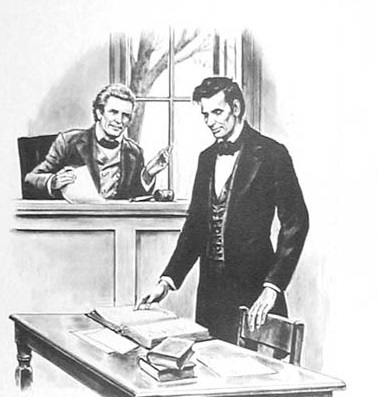
Lincoln in trialI recently quoted a fairly well-known section from some notes Abe Lincoln made for a lecture he was to present to young lawyers in 1850. Some of you asked if would post the whole document, which I am happy to do. Here it is:

I am not an accomplished lawyer. I find quite as much material for a lecture in those points wherein I have failed, as in those wherein I have been moderately successful. The leading rule for the lawyer, as for the man of every other calling, is diligence. Leave nothing for to-morrow which can be done to-day. Never let your correspondence fall behind. Whatever piece of business you have in hand, before stopping, do all the labor pertaining to it which can then be done. When you bring a common-law suit, if you have the facts for doing so, write the declaration at once. If a law point be involved, examine the books, and note the authority you rely on upon the declaration itself, where you are sure to find it when wanted. The same of defenses and pleas. In business not likely to be litigated, — ordinary collection cases, foreclosures, partitions, and the like, — make all examinations of titles, and note them, and even draft orders and decrees in advance. This course has a triple advantage; it avoids omissions and neglect, saves your labor when once done, performs the labor out of court when you have leisure, rather than in court when you have not. Extemporaneous speaking should be practised and cultivated. It is the lawyer’s avenue to the public. However able and faithful he may be in other respects, people are slow to bring him business if he cannot make a speech. And yet there is not a more fatal error to young lawyers than relying too much on speech-making. If any one, upon his rare powers of speaking, shall claim an exemption from the drudgery of the law, his case is a failure in advance.

Discourage litigation. Persuade your neighbors to compromise whenever you can. Point out to them how the nominal winner is often a real loser — in fees, expenses, and waste of time. As a peacemaker the lawyer has a superior opportunity of being a good man. There will still be business enough.

Never stir up litigation. A worse man can scarcely be found than one who does this. Who can be more nearly a fiend than he who habitually overhauls the register of deeds in search of defects in titles, whereon to stir up strife, and put money in his pocket? A moral tone ought to be infused into the profession which should drive such men out of it.

The matter of fees is important, far beyond the mere question of bread and butter involved. Properly attended to, fuller justice is done to both lawyer and client. An exorbitant fee should never be claimed. As a general rule never take your whole fee in advance, nor any more than a small retainer. When fully paid beforehand, you are more than a common mortal if you can feel the same interest in the case, as if something was still in prospect for you, as well as for your client. And when you lack interest in the case the job will very likely lack skill and diligence in the performance. Settle the amount of fee and take a note in advance. Then you will feel that you are working for something, and you are sure to do your work faithfully and well. Never sell a fee note — at least not before the consideration service is performed. It leads to negligence and dishonesty — negligence by losing interest in the case, and dishonesty in refusing to refund when you have allowed the consideration to fail.

There is a vague popular belief that lawyers are necessarily dishonest. I say vague, because when we consider to what extent confidence and honors are reposed in and conferred upon lawyers by the people, it appears improbable that their impression of dishonesty is very distinct and vivid. Yet the impression is common, almost universal. Let no young man choosing the law for a calling for a moment yield to the popular belief — resolve to be honest at all events; and if in your own judgment you cannot be an honest lawyer, resolve to be honest without being a lawyer. Choose some other occupation, rather than one in the choosing of which you do, in advance, consent to be a knave.

This is uniformly excellent, and justly cited to show Lincoln’s high ideals as a man and a professional. This quote, however, is also cited for that purpose, and I am not so fond of it. Since it comes to us second-hand, a.k.a as hearsay, from Lincoln’s law partner, friend and biographer William Herndon, I hesitate to hold it against him too much, for it may be a misrepresentation. I am more concerned with the fact that what follows is sometimes packaged with the notes above, as if they are equally worthy of emulation. No, they are not. Continue reading
Comment of the Day: “9 Observations On The Boston Herald’s ‘Racist’ Cartoon”

cartooning

In my post on the matter, I called out to Barry Deutsch, a.k.a. Ampersand, an accomplished political cartoonist and blogger who has graced this space in the past, for his professional reaction to the controversy over the Boston Herald’s Jerry Holbert suggesting, in a cartoon about the recent Secret Service debacles, that President Obama would use watermelon-flavored tooth paste. He was kind enough to register a rapid, and typically thoughtful, response.

Here is his Comment of the Day on my post, “9 Observations On The Boston Herald’s “Racist” Cartoon”: Continue reading

“Boobs on the Ground” Ethics

"we have met the boob, and it is me."

“We have met the boob, and it is me.”

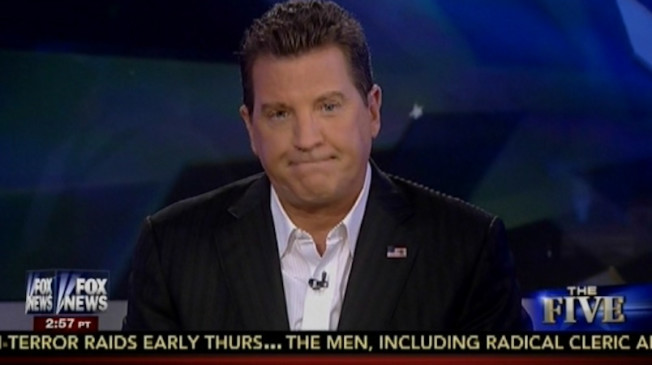
I was going to make this an Ethics Quiz, but that dignifies Eric Bolling’s crude and disrespectful comment on Fox’s “The Five” more than it deserves. Would I accept such a sophomoric “quip” at a dinner party of close friends, at a bachelor party, in a group of women who knew me and could tell when I was intentionally tweaking them, in a setting where groans and objects thrown at my head were appropriate?  Oh, probably. I’ve made worse jokes myself, knowing how bad they were, knowing they were offensive, knowing that I had the good will of my companions and that they would take them the right way. But as a presenter in a seminar? As a panel member? In an auditorium? Over the radio? On TV? Never.

Any statement is defined to some extent by the audience it was intended for (See: Sterling, Donald) For a supposed broadcast professional to say what Bolling said about the United Arab Emirates‘s first female pilot who served as the flight leader during air strikes in Syria (“Would that be considered boobs on the ground, or no?”) can’t be excused or justified: Continue reading

Slate’s Amanda Hess’s Very, Very Embarrassing Essay About Why It’s “Very, Very Stupid To Compare Hope Solo To Ray Rice”

Fa11 _WT_Hope AL Portrait_RGB.JPG

A Forbes  columnist wrote a clumsy essay that managed to make it sound like all incidents of campus sexual abuse were the fault of co-eds who can’t hold their liquor. It was almost instantly taken down, and he was sacked in disgrace, for some opinions are just not fit for open debate in politically correct America, it seems. Self-censorship is the order of the day, or fear the wrath of the War on Women Warriors. You can read the piece here: in my view, there was enough that was thought-provoking in it to allow the dumb and offensive parts to be taken care of by astute commenters, critics and bloggers. But women are the new unassailable icons right now (oh my God, I nearly wrote “sacred cows”! My career just flashed before my eyes…). It will be fascinating to see how long this delicate and fanciful balance can be maintained in the culture without someone breaking out in uncontrollable giggles: women are equal in every way to men, but are too pristine and delicate to accept or endure criticism of any kind, and if you dare offend them, you are toast.

Around the same time Forbes was declaring Bill Frezza’s essay a blight on humanity, Slate’s Amanda Hess was posting a column of at least equivalent nonsense content, and I would argue, more embarrassing. It is a desperate plea for a distaff double standard regarding domestic violence, responding to articles like mine, pointing out that soccer star Hope Solo is garnering faint condemnation for the pending charges against her, while the same sports writers and social commentators ignoring her are attacking the  National Football League and its several abusers, alleged abusers, and charged abusers with gusto. Hess calls her opus “No, Women’s Soccer Does Not Have a Domestic Violence Problem, Or, why it is very, very stupid to compare Hope Solo to Ray Rice. If this didn’t guarantee a ticket to spend a lonely weekend with Frezza lamenting the end of their gigs, nothing will. Slate disgraced itself by publishing it, because it adds nothing to the public debate regarding domestic abuse except rationalizations, excuses, and of course, the exalted double standard that women can do no wrong, or at least no wrong anyone should get upset about.

Before I expose the utter dishonesty and incompetence of Hess’s essay, let me just state for the record why I and anyone else who is objective and paying attention compares Solo to Rice (and the other NFL players recently disciplined), or to be more precise, compares the obligation of U.S. Soccer to treat its accused abusers exactly like the NFL is doing now: Continue reading

Ethics Dunce (Hyper-Partisan Hate Division): Merritt Tierce

Blood-money

I don’t think “blood money” means what she thinks it does…

Having just criticized Rush Limbaugh for one of his irresponsible uses of his influence, I think it’s an appropriate time to shine some harsh light on one of his unethical critics.

Merritt Tierce is a feminist author whose first novel Love Me Back chronicles her time at a high-end Dallas steakhouse. In a recent interview, she recounts how she twice served Rush and a guest.  Both times the radio host left her a $1,000 in tip on bills that would normally call for a fraction of that even if she had given the best service in the history of her trade. Was she grateful? Oh, no, she says. The cash felt like “blood money” to her, she explained. Since Tierce served as the executive director of the Texas Equal Abortion  Fund during her waitressing period, a non-profit group that provides financial assistance to low-income women seeking abortions, she donated the tips to her charity. “It felt like laundering the money in a good way,” she said. “He’s such an obvious target for any feminist or sane person. It was really bizarre to me that he gave me $2,000, and he’s evil incarnate in some ways.”

“You’re welcome, Merritt!” Continue reading

In Massachusetts, The Unethical Kind Of Prosecutorial Discretion

The DA explains why he's glad the law was broken. Wait...WHAT?

The DA explains why he’s glad the law was broken. Wait…WHAT?

Prosecutorial discretion is a critical aspect of the prosecutorial function. There are many good reasons for a prosecutor  to charge an individual with a crime in a particular case, and among the factors a prosecutor may legitimately consider in making this decision are, according to the American Bar Association’s ethical guidelines:

  • whether there is evidence of the existence of criminal conduct;
  • the nature and seriousness of the problem or alleged offense, including the risk or degree of harm from ongoing criminal conduct;
  • a history of prior violations of the same or similar laws and whether those violations have previously been addressed through law enforcement or other means;
  • the motive, interest, bias or other improper factors that may influence those seeking to initiate or cause the initiation of a criminal investigation;
  • the need for, and expected impact of, criminal enforcement to punish blameworthy behavior; provide specific and/or general deterrence;
  • provide protection to the community; reinforce norms embodied in the criminal law; prevent unauthorized private action to enforce the law;
  • preserve the credibility of the criminal justice system; and other legitimate public interests.
  • whether the costs and benefits of the investigation and of particular investigative tools and techniques are justified in consideration of, among other things, the nature of the criminal activity as well as the impact of conducting the investigation on other enforcement priorities and resources
  • the collateral effects of the investigation on witnesses, subjects, targets and non-culpable third parties, including financial damage and harm to reputation
  • the probability of obtaining sufficient evidence for a successful prosecution of the matter in question, including, if there is a trial, the probability of obtaining a conviction and having the conviction upheld upon appellate review; and
  • whether society’s interest in the matter might be better or equally vindicated by available civil, regulatory, administrative, or private remedies.

None of these suggest that the prosecutor’s personal sympathy with the motives of the lawbreaker is a sufficient or ethical reason not to charge when a serious crime has been committed. That, however, appears to be how Bristol County (Massachusetts) District Attorney Sam Sutter sees his role: arbiter and enabler of righteous criminal activity. Continue reading

7 Ethics Observations On The Incredibly Unethical Charlo Greene

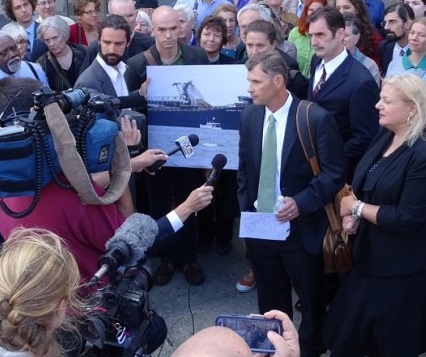
KTVA (Alaska) reporter Charlo Greene reported on the Alaska Cannabis Club, medical marijuana business, during Sunday night’s broadcast without telling the station of the viewers that she owned it. As soon as the segment was over, she announced that she was the owner, and said,

“Now everything you’ve heard is why I, the actual owner of the Alaska Cannabis Club, will be dedicating all of my energy toward fighting for freedom and fairness, which begins with legalizing marijuana here in Alaska. And as for this job, well, not that I have a choice but, fuck it, I quit.”

Then she walked off the set.

How unethical is Charlo Greene? Let me count the ways: Continue reading

Three Breasted Ethics

Three_breasted_woman

UPDATE: Snopes, the urban legend and hoax website, now thinks that this is a scam. As I noted in the post, that would not be a surprise and in fact would be a relief. In such cases, I suggest that the post be read as a hypothetical, since the ethics issues raised by the three-breasted woman remain interesting, even if the story itself turns out to be fiction.

A 21-year-old woman being identified with the alias Jasmine Tridevil ( don’t over-think it) says she paid $20,000 to a plastic surgeon to  give her a realistic third breast. She wants to  become a TV reality show star. Jasmine has hired a camera crew to follow her around Tampa, Florida, documenting the challenges she faces as a three-breasted woman.

I know what you are thinking.

I HOPE this is a hoax.

“Jasmine” was rejected by more than 50 doctors who believed they would be violating professional ethical codes. Scot Glasberg, president-elect of the American Society of Plastic Surgeons, condemned the surgery as ‘worse than unethical’ and ‘harmful to society’. ‘This violates every ethical principle not just in surgery but in medicine as well. We look to enhance the norm. This is not the norm. Nothing speaks louder than the fact that the surgeon required the patient to sign a non-disclosure form.” Continue reading

Today’s Ethics Understatement: “This Story Does Not Encourage Trust In The Legal Profession”

photoshoppinglawyer_screenshot

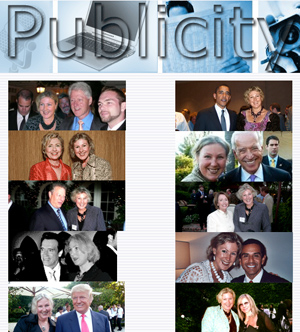
Svitlana and her fake friends

The ABA Journal informs me this morning that a California bar court judge has recommended a six-month suspension for attorney Svitlana Sangary. Oh, she has some client ethics complaints against her, but that was the least of her problems.

On her firm website, she had posted photographs showing Sangary with politicians and celebrities, including President Obama, Bill Clinton, Hillary Clinton, George Clooney, Donald Trump, Arnold Schwarzenegger, Morgan Freeman and Paris Hilton. An expert testified that most or all of the images were photoshopped, making them visual lies. A lawyer is not allowed to lie on her website, or anywhere else when it may mislead clients and the public.

Paris Hilton? Continue reading

Crotch-Grabbing Ethics: A Pitcher And An Umpire Make A Dunce/Hero Pair, And Baseball Teaches The NFL About Values

Jonathan Papelbon

I don’t know about you, but I need a break, however brief, from the NBA’s political correctness self-immolation and the NFL proving that it really has no idea what’s right or wrong when its players are violent off the field. Fortunately, Major League Baseball has its own, rather less societally significant ethics scandal for this baseball fan to focus on.

Philadelphia closer Jonathan Papelbon has been very good this year, unlike the rest of his team., but he was lousy Sunday, blowing a big lead for the last place Phillies in front of a home town crowd over the weekend. The Philly fans, as they are famous for doing, booed him lustily as he left the field, so classy Papelbon grabbed his cup and gave it a heave, as he stared down the mob. Translation: “Boo THIS!”

At this point, home plate umpire Joe West, a crummy umpire from a technical viewpoint but notable as an outspoken arbiter of the conduct of players, threw Papelbon out of the game. This was unusual, because Papelbon was almost certainly through for the day anyway. The ejection under such circumstances  didn’t mean the umpire’s usual, “You are unprofessionally challenging my authority regarding a call that does not favor your team and delaying the game, so you can’t play today any more,” but the more succinct and far more rare, “You’re really an asshole.”

Papelbon then took offense, and furiously confronted the umpire. Now Major League Baseball has suspended Papelbon for seven days, and is enjoying it, telling sports fans and the media, “See? The NFL suspends its players for a game or two when they punch women in the face and beat their kids with a log. We kick out our players for seven games just for being rude.” Continue reading