The Wall Street Journal’s Uncultured Culture Critic

Joanne Kaufman was here...

Joanne Kaufman was here…

In a jaw-dropping essay for her employer, The Wall Street Journal, alleged culture critic Joanne Kaufman proudly and candidly disabuses readers of any misconceptions they might have had regarding her qualifications for her job. She is not merely unqualified, but willfully, shamelessly, spectacularly unqualified. In a smug screed in which she admits to habitually walking out on Broadway shows at intermission, Kaufman reveals herself as lazy, arrogant, disrespectful of artists, and most crippling of all, to be afflicted by the attention span of the average Twitter addict.

“Don’t ask me what happened during the second acts of “Matilda,” “Kinky Boots,” “Pippin” and, reaching back a few seasons, “Boeing-Boeing” and “Billy Elliott, ”  Kaufman boasts.  “Really, I have no idea. But I am nothing if not cosmopolitan in my tastes, or distastes—French farces, English musicals set in gritty industrial cities, and American entertainments involving Charlemagne ’s Frankish kin.”

You can read her entire piece here; if the Journal doesn’t fire her, it is run by fools. “I’m of the “brevity is the soul of wit” school and of the belief that only a few bites are required to determine that you just don’t like a particular dish,” she happily admits. “My ideal night in the theater runs 90 minutes without an intermission (it is best not to put temptation in my path), which means that Shakespeare and I don’t tend to see a lot of each other.” This is the culture writer, remember. Yet she is admitting to membership in the lazy, sound-bite, bumper-sticker, multi-processing, distracted, ADD-addled public that has caused writers, playwrights, producers, book publishers, film-makers and song-writers to dumb down, redact, trivialize and simplify entertainment in an accelerating death cycle: plots don’t make sense, explosions start early, subtlety is forbidden, and no issue, thought or topic that can’t be fully explored in the time it takes to do a load of laundry is going can find its way on stage or screen. The Journal’s culture writer doesn’t have the time or interest to sit through King Lear, Hamlet, The Ice Man Cometh, or Death of a Salesman,  or to view all of “Seven Samurai,” “A Man for All Seasons” or “Gettysburg”—hey, a movie about one of those short Civil War battles for Joanne, please: she’s got a 15 minute segment of “Robot Chicken” to catch. Continue reading →
The Perils Of Over-Regulating The Police: A Case Study

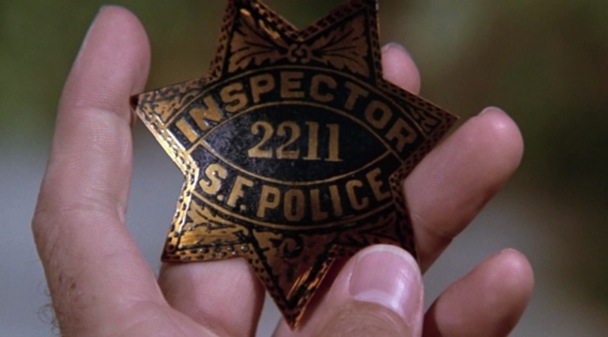
This is Dirt Harry's badge. Seconds later, he throws it into a river. Lots of other police will be doing the same.

This is Harry “Dirty Harry” Callahan’s badge. Seconds later, he throws it into a river. Lots of other police officers will soon be doing the same.

Yesterday, for the third time in my life, I was the first one on the scene after a fellow human being’s death. This time, it was a very close friend and, though it has little to do with this post, a wonderful man. I had headed out to his home because I was worried: an unusually reliable and conscientious individual, he had missed several appointments the last few days and hadn’t been answering e-mails and phone calls. When I was told about this, I immediately suspected the worst, and sadly, I was right.

His car was outside his house, and though it was mid-day and he was supposed to be somewhere else, I could see that the TV was on. In front of his door, getting soaked in the rain,  was a package: it had been delivered there on December 2. I got no response to my bangs on the door. It was time to call 911.

The police responded quickly. I’m not going to name the department, which has an excellent reputation here, and I do not fault the officers, who were diligent and polite, and who set about investigating the scene professionally and quickly. Nonetheless, after a full 90 minutes, after which they could not discern any more than I had before they came, they would not enter the house.

They told me that they could not risk being sued, and that there were elaborate policies and procedures that had to be checked off first. The officers had to track down their supervisor (it was a Saturday), and, they said, more than one official would have to sign off, to protect the department

“He could be drunk; he could be shacked up; he could just want to be alone,” they told me. “The law says his privacy can’t be breached, even by us.”

“But he’s not any of those things,” I said. “He doesn’t do any of those things, and if he were OK, there wouldn’t be a four-day-old package outside.”

“Maybe he took a trip on a whim.”

“He would have called and cancelled those commitments,” I said. “Look, you and I both know that he could be inside, on the brink of death, with every second bringing him closer. The only alternative is that he’s died already. If you won’t do it, let me break in, chase me, and you’ll find him legally as you pursue me. How’s that?”

The police weren’t sold. Finally, after a full 90 minutes, they requisitioned a ladder from a neighbor and were able to see into a second floor window. My friend was visible on the floor, and then they moved quickly, breaking down the door. They were too late by days. They might have been too late by minutes though. All those procedures and policies that forced the police to avoid taking action that in this case, under these circumstances, were prudent and that might have saved a life imperiled.

The lesson is only this: if we cannot trust police to make decisions like this, we obviously are not going to trust them to decide when to fire their weapons. Laws, rules and procedures are rigid, and have to be examined slowly; real life operates in the shadows of uncertainty, among the loopholes, gray areas and ambiguities, and it moves fast. The protests and demands in the wake of the recent police controversies will undoubtedly result in more regulations, policies and laws, but there is good reason to believe that they will also make us less safe rather than more safe, and make it difficult to find reasonable, dedicated, ethical men and women willing to serve as police, a job which, we seem to be deciding, should be subjected to strict liability whether the officer acts too quickly, or not quickly enough—judged, of course, after the results are in. Continue reading →

Are His Accusers’ Lawyers Blackmailing Poor Bill Cosby?

Poor Bill!

Poor Bill!

From ABC, as the Bill Cosby horror continues:

The 77-year-old comedian filed a lawsuit today against Judy Huth, who claims Cosby forced her to perform a sex act in 1974 at the Playboy Mansion, when she was 15.

In documents obtained by ABC News, Cosby alleges that not only is Huth lying but that she filed the lawsuit after failing to extort money from him. Cosby is asking a judge to dismiss the lawsuit and is seeking monetary damages from Huth and her attorney.

In his filing today, Cosby says Huth’s lawyer approached the comedian’s attorney, Marty Singer, last month and made “ominous references” to ‘criminal penalties.'” According to the lawsuit, Huth’s lawyer demanded $100,000 for her silence, and later increased the amount to $250,000 as additional women came forward.

“Through her lawyer, Plaintiff made extortionate claims to Mr. Cosby (through his counsel) about criminal penalties, coupled with ever-increasing demands for a six-figure payday to keep quiet about her long-since-expired claims,” the documents state.

The suit claims that after Cosby’s attorney rejected Huth’s claims and accused her of extortion, her attorney filed a lawsuit two days ago against the comedian.

In relation to this development, my indispensable story scout, Fred, asks:

“The legal profession must have some ancient and passionately held standards for how to offer a confidential settlement without sliding into blackmail, which Cosby’s lawyers accuse the plaintiff of doing. How do those work, and which side’s lawyers (if either) are most likely to be acting ethically?”

The issue is pretty ancient, all right, but it’s also murky, and has become murkier with passing years. Once upon a time, the American Bar Association had an ethics rule that said, “A lawyer shall not present, participate in presenting, or threaten to present criminal charges solely to obtain an advantage in a civil matter.” Later the provision was dropped, on the theory that it was too vague and could constrain legitimate negotiation. Some jurisdictions, like the District of Columbia, New York and Connecticut, retained it, but they also emphasize the word “solely.” That means that a lawyer who says, “Pay my client $25,000 or we’ll get you charged for rape, and that will ruin you!” has probably breached the rule, while one who says, “Look, we want to handle this as quietly as possible, but if you won’t be fair, you’ll leave us no choice but to seek a criminal indictment. Just thought you should know” has tiptoed within the rule’s bounds. What’s the difference? Not much. Continue reading →

Ethics Dunce and Unethical Facebook Post of the Month: Elizabeth Lauten, Spokeswoman for Rep. Stephen Fincher (R-Tennessee)

Elizabeth Lauten, communications director for Republican Congressman Stephen Fincher, decided that she is authorized to give parental advice to First Offspring Sasha (13) and Malia (16) Obama. She was deeply troubled by the young ladies looking bored in photographs she saw online, so she posted this jaw-dropper on Facebook:

Facebook lecture

Wow. What a Thanksgiving feast of unethical features! Let’s see: Continue reading →

If Bill Cosby Were An Incredibly Unethical Lawyer…

"Hypnotism 101" isn't required in law school, but it's recommended...

“Hypnotism 101” isn’t required in law school, but it’s recommended…

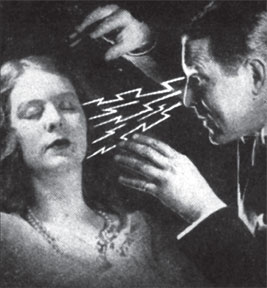
…he might be Michael Fine, 57, a Sheffield, Ohio attorney who has an even more effective method for raping women that the Cos’s drug-and-drink trick.  Police say that Fine convinced female clients to let him hypnotize them, and then had sex with them while instructing them to forget everything but their legal discussions. He  agreed to have his law license suspended temporarily while the Lorain County Bar Association and  the Ohio Supreme Court deal with the results of the police investigation, or perhaps until he can hypnotize all of them and make them forget the whole thing. Or believe they are chickens or something.

Fine allegedly told the women that his hypnotic machinations were a meditation and relaxation technique that he used to help his clients. Bear with me: I don’t want to make light of rape, but this whole story sounds like a really silly Charlie Chan movie. Unfortunately, it appears to be true. Continue reading →

The Bill Cosby Follies: Idiotic Blog Post, Atrocious Apology, Lame Justification…Thanks, “TheWrap,” For This Lesson In First Amendment Abuse

thewrap-logo

TheWrap is a web Hollywood news and gossip site. Picture TMZ crossed with Gawker.  It published an immediate candidate for the most unethical blog post of the year, always a closely contested category, a piece of cyber-offal by an industry writer named Rich Stellar that issued a combined attack on the women coming forward to prove Bill Cosby is a serial rapist, and the media’s coverage of it. I was happily unaware of Stellar, barely aware of The Wrap and definitely unaware of this utter crap until it was flagged in a Salon piece, which was in turn flagged by one of my indispensable scouts, Fred. What unfolded before me was a horrible spectacle of a despicably and dumber than a box of rocks opinion piece that no competent editor should allow to avoid the trash, a subsequent apology of sorts from the writer that shows such an ethics deficit that he should probably have a 24-hour keeper, and, finally, his editor’s defense of her wretched editorial judgment based on the theory of the First Amendment, which she appears to think means “You have to publish any garbage any fool writes no matter how poorly conceived or reasoned, or you are unAmerican.”  But I am getting ahead of myself.

The Blog Post.

Read it all if you dare. Here’s Stellar’s money quote, which distills most of the cretinism without forcing you into Hell: Continue reading →

Unthical Quote of the Week: Bill Cosby Attorney Martin Singer

lying-lawyers“The new, never-before-heard claims from women who have come forward in the past two weeks with unsubstantiated, fantastical stories about things they say occurred 30, 40 or even 50 years ago have escalated past the point of absurdity.These brand new claims about alleged decades-old events are becoming increasingly ridiculous, and it is completely illogical that so many people would have said nothing, done nothing and made no reports to law enforcement or asserted civil claims if they thought they had been assaulted over a span of so many years.  Lawsuits are filed against people in the public eye every day. There has never been a shortage of lawyers willing to represent people with claims against rich, powerful men, so it makes no sense that not one of these new women who just came forward for the first time now ever asserted a legal claim back at the time they alleged they had been sexually assaulted. This situation is an unprecedented example of the media’s breakneck rush to run stories without any corroboration or adherence to traditional journalistic standards. Over and over again, we have refuted these new unsubstantiated stories with documentary evidence, only to have a new uncorroborated story crop up out of the woodwork. When will it end?

—-Martin Singer, one of comedian Bill Cosby’s lawyers, trying to quell the public relations storm that threatens to blow the 77-year-old icon’s career and reputation apart.

Wow.

I advise lawyers not to make sweeping, emphatic statements like this, for several reasons. First, it comes very close to violating the ethical prohibition against dishonesty, misrepresentation, fraud and deceit. If the lawyer wants to say such words on behalf of his client, that’s one thing, and legitimate representation, though I would prefer to see such statements come from a publicist. For Singer to say something like this on his own behalf, however, harms all of his other clients by scarring his credibility. I don’t believe him, and when it becomes indisputable that Cosby is guilty and that his lawyers had to know, no one will be able to believe him again. Lawyers are supposed to tell the truth, and to represent even the most despicable clients without behaving unethically themselves, within the standards of the profession. That can be difficult, as in this instance. That is why lawyers get the big bucks, however. They should be able to walk that tightrope.

Singer falls right off: Continue reading →

Now THIS Is An Incompetent Lawyer

Now that's who you want defending you in your capital murder trial..Thomas Jeffer..wait, WHAT???

Now that’s who you want defending you in your capital murder trial..Thomas Jeffer..wait, WHAT???

Dennis Hawver, an Ozawkie, Kansas attorney, was disbarred last week by the Kansas Supreme Court. The court ruled that Hawver showed “inexplicable incompetence” as a defense attorney for Phillip Cheatham, charged with first degree murder and tried in a 2005.  Cheatham’s conviction was overturned and  a new trial was ordered  in 2013, on the grounds that Hawver did not provide an adequate defense and thus Cheatham did not receive a fair trial. Yes, I think that was a fair assessment, given that..

  • In voir dire, Hawver told prospective jurors that his client was “a cocaine dealer” who had “killed another cocaine dealer with a gun.”
  • During the trial, he informed the jury that his client had previously been convicted of voluntary manslaughter, even though prosecutors had agreed to less prejudicial  stipulation that the Cheatham had a “prior felony conviction” without further details.
  • Hawlor failed to present evidence that might have shown that his client that was not in the city where the murder occurred at the time it occurred. He failed to investigate alibi witnesses.
  • He didn’t track his client’s cellphone to find his location at the time of the murders.
  • During the sentencing phase of the trial, after his client had been found guilty, Hawlor said “the killer” should be executed.


  • Hawver  made the creative argument at trial that his client would never have left a witness alive if he had been the one who shot the two female victims.

Continue reading →

Now THIS Is Abuse Of Police Power

Andy and Opie

No riots are anticipated, fortunately.

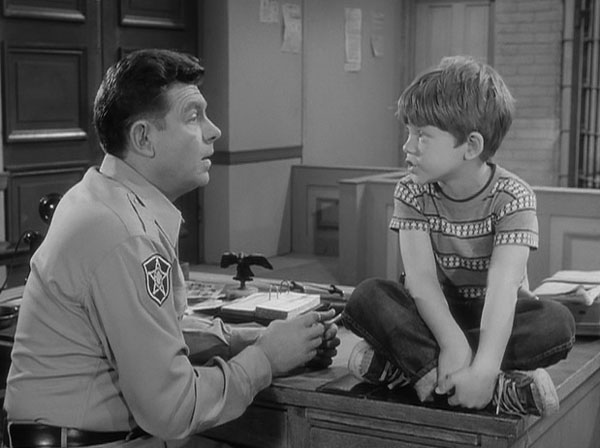
Police Lt. Brian Keller, an assistant sheriff,  used his unmarked black Dodge Charger, with emergency lights flashing, to stop a school bus so he could hand his son his lunch, which the boy left home without. The bus was not within Keller’s jurisdiction….not that his actions would be much better it it has been.

There was a complaint,  which Lake County (Illinois) officials are investigating.

This is the kind of thing Sheriff Andy Taylor might have done for Opie in little Mayberry, but such abuse of power is neither cute nor funny outside of TV Land. I don’t care if he’s a single dad (like Andy); it doesn’t even matter if the kid had crucial, life saving prescription drugs in the lunch bag—insulin, maybe. Using official authority for a personal matter like this is the sign of an untrustworthy cop who doesn’t comprehend his job. It is small wonder that police labor under the public presumption that they don’t respect the law or the limitations of their authority.

___________________

Pointer: Mediaite

Two Deceitful Non-Denial Denials And An Unethically Tardy Whistleblower

Francis

TV shows like “Lie to Me” and “The Mentalist” as well as all the profiling shows like “Criminal Minds” have done a public service by schooling viewers in the tell-tale signs of non-denial denials. Nonetheless, people continue to use them, apparently because they work. Bill Cosby’s lawyers just launched a lulu, responding to the inexplicably re-booted accusations that Cosby was a serial sexual predator in the 70’s. You can’t get more non-denial than this, from lawyer John P. Schmitt on Cosby’s website:

“Over the last several weeks, decade-old, discredited allegations against Mr. Cosby have resurfaced. The fact that they are being repeated does not make them true..Mr. Cosby does not intend to dignify these allegations with any comment.”

There is no denial of the alleged rapes to be found here. Yes, the accusations are “decades old”: So what?  So are questions about whether Lizzie Borden was guilty.  The fact that the allegation are decades old means Cosby can’t be prosecuted because of the statute of limitations, but they don’t change anything about the seriousness of the accusations against the erstwhile “America’s Dad.”

Discredited? How have they been discredited? Cosby paid a settlement in one of the cases: that generally makes the allegations look credible (See: Paula Jones/Bill Clinton; Michael Jackson). Sure: “The fact that they are being repeated does not make them true,” and it also doesn’t make them false. That Cosby doesn’t intend to “dignify” the matter with further comment is strategy and posturing. It is significant that the lawyer did not say “He didn’t do it.”

——————-

[UPDATE: Ah HA! Today that statement was taken down, with this taking its place, a joint statement from Dolores Troiani, counsel to Andrea Constand, and Schmitt:

‘The statement released by Mr. Cosby’s attorney over the weekend was not intended to refer in any way to Andrea Constand. As previously reported, differences between Mr. Cosby and Ms. Constand were resolved to the mutual satisfaction of Mr. Cosby and Ms. Constand years ago. Neither Mr. Cosby nor Ms. Constand intends to comment further on the matter.”

Translation: “Oops. That settlement with the first of Cosby’s accusers was predicated on neither party impugning or accusing the other once the money was paid, and that “discredited” comment risked getting Bill in even more hot water. Never mind!”]

                                                                                                                                  ——————-

Lawyers aren’t permitted to lie, though. Then again, they aren’t supposed to mislead the public with deceitful non-denials, either.

Then we have CNBC’s response to ex-CNBC reporter Melissa Francis, who followed Jonathan Gruber’s admissions of rigged math to get the Affordable Care Act past “stupid voters” with a relevant anecdote of her own. Francis, now a Fox Business anchor,  claims that the network “silenced” her when she questioned the merits and specifically the misleading numbers for the Affordable Care Act when it was being rammed through the legislative process. She told Fox News that she was called on the carpet by CNBC brass and told to stop, on the grounds that such criticism was “disrespectful to the President.”

A CNBC representative responded: Continue reading →