Ethics Dunce: “Johnny Football”—True, But Now What? Maybe Hollywood Had The Solution

You don't know this actress, do you? There's a reason...

You don’t know this actress, do you? There’s a reason…

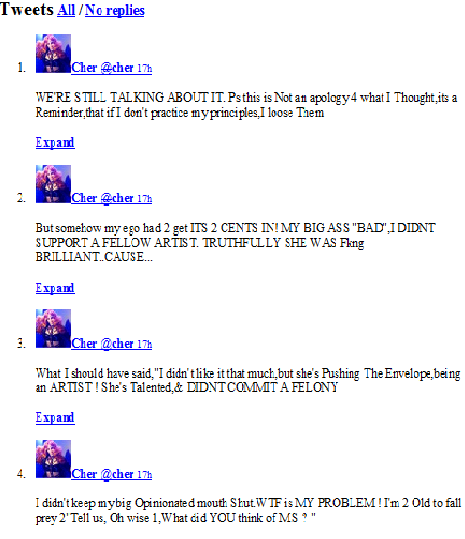
Texas A&M Aggies quarterback Johnny Manziel, a.k.a “Johnny Football,” ended last year by winning the 2012 Heisman Trophy, the first freshman ever to do so. He has spent the first 8 months of this year showing that he is an immature, arrogant kid with a dangerously inflated ego, with no sense of his obligations as a widely admired elite athlete, and little expertise in how to conduct himself responsibly and ethically.

A brief and incomplete sampling of his exploits:

  • In January, following his team’s  A&M’s Cotton Bowl win over Oklahoma, he visited the Winstar Casino in Oklahoma for some late-night gambling. He tweeted a photo with friends, waving money around. When the photo went viral on the web, sparking criticism, Manziel tweeted, “Nothing illegal about being 18+ in a casino and winning money…KEEP HATING!”
  • In March, Manziel was frustrated after throwing an interception during a spring football scrimmage, so he shoved aside a graduate assistant who happened to be in his way.
  • He was photographed with a fake tattoo of Texas A&M’s archrival Texas Longhorns, infuriating the fanatic fans of the Aggies. Continue reading

Ethics Corrupter: Yankee Third Baseman Alex Rodriquez; Ethics Dunce: Yankee Manager Joe Girardi; Disgraced: The New York Yankees

Corrupted!

Corrupted!

Today, Major League Baseball announced that it was suspending Alex Rodriquez, the New York Yankees aging superstar, for the remainder of the 2013 season and the 2014 season for  using banned performance enhancing drugs, and impeding baseball’s investigation of his cheating. This was the climax (but not the end) of a long, drawn out, messy process and investigation involving a sleazy Miami drug lab, called Biogenesis, now closed down, which had records indicating that many professional baseball players had obtained banned substances.

Former National League MVP Ryan Braun (who I keep calling “Steve”) has already been banned for the rest of the year by the evidence obtained from Biogenesis records. The process has been marred by serial leaks from MLB  (unfair to the players involved, including Rodriquez) and ugly maneuvering between Rodriguez, who has been recovering from a serious hip issue, and the Yankees, who owe him approximately a gazillion dollars (thanks to an idiotic career contract signed in 2007 after he had already admitted to using steroids once), would like nothing more than for him to vanish in a puff of smoke and sulfur.

To explain the baroque ins and outs of baseball’s steroid wars, its player union relations, and the various intersecting agreements, special clauses and other things that have an impact on Rodriquez’s suspension would take too long here and would even bore the baseball fans. What you need to know now is this: Continue reading

Ethics Dunce: Photographer Jill Greenberg


"No emoticons were upset in the writing of this post."

“No emoticons were upset in the writing of this post.”

In Slate, renowned photographer Jill Greenberg returns to the topic that gained her unwanted notoriety in May: her exhibition of photographs of children crying their little eyes out. Greenberg revealed at the time that she captured the powerful photographs by giving the very young children lollipops or something else they liked or wanted and then having family members ask the kids to return the item. Strangely,  as Drew Curtis’Fark, one of my favorite web  sources for stories is wont to say, some people had a problem with this.

Greenberg revisits the issue because she has a book of the weepy photographs coming out. Seldom does one read a more casual, “What is the matter with people?”, utterly clueless display of invalid rationalizations for unethical conduct as Greenberg belches out. Unfortunately, another tendency illustrated by the article is far more common: a news sources examination of an ethics issue without any apparent sensitivity or understanding of the ethics issues involved.

Here are Greenberg’s rationalizations, or at least the ones she gave to Slate. I’m sure she has many more.

  • The Trivial Trap, or “Don’t sweat the small stuff.” “I have two children of my own. Crying is not evidence of pain or any real suffering. It’s really just the way children communicate.” Ah. Not real suffering. Then it’s all right, then. The bottom line is that Greenberg is intentionally upsetting the children, who, it can be fairly said, are less anxious and happier when they are not crying. Children who are teased, frightened or otherwise made uncomfortable can also be said not to be in pain or “real” suffering. It’s still cruel, and an abuse of power, to treat them this way. Come to think of it, Greenberg could make the same argument about some of the models in child pornography. Would she, I wonder?
  • “Everybody does it” and the “They’re Just as Bad” Excuse. “Making children cry for a photographer can be considered mean. But I would say that making children laugh and show off their jeans for an apparel ad is just as exploitative and less natural.” And, I suppose, making a Bangladesh child cry by taking food from her to make her cry is just as exploitative  and more natural than giving her food to make her smile, because, after all, she’s usually starving anyway.
  • The Saint’s Excuse or “It’s for a good cause” a.k.a “The ends justify the means.” Slate:  “The still image continues to have a ton of strength. An image taken out of context from one fraction of a second to the next can tell a story, and if photographers are looking to tell a certain story, they can curate those slices of time to their advantage. What’s weird about the images is they seemingly can be applied to all these random disparate causes. My husband was saying they’re like emoticons.” True, Jill, but those little smiley faces don’t have to be tortured to get them to frown or cry, because, unlike babies, they aren’t real human beings.

The bottom line is that Greenberg made money and got a lot of ink by making children unhappy, so she can’t see why anyone would argue that the conduct wasn’t justified, and based on the article, neither does Slate or its writer, Jordan G. Teicher. The photographer’s methods are, of course, obviously and indisputably unethical:

  • She exploited the children for her own agendas and benefit.
  • She abused her superior power over the children to get the reaction she wants.
  • She induced anxiety in another, causing needless harm.
  • She created a product, the photo, which memorializes a form of child abuse.
  • She recruited the children’s parents into assisting in the exploitation for the artist’s purposes, rather that doing their job as parents, thus inducing a breach of loyalty and a betrayal of parental duty.
  • She created and profited from a materialization of an unethical abuse of a child, which is identical to what child pornography does.
  • She encouraged others to create similar photographs, which will be created, in some cases, with even less humane methods.

Of course her methods were unethical. She deserves every bit of criticism and hate mail that she has received. But the sophisticates, like Slate and others, just shrug off the concern as foolishness, much ado about nothing. So she made kids cry! They cry all the time! What matters is that she got some great pictures!

Many of society’s problems arise from the fact that our media can’t recognize, and thus encourages, unethical behavior, even obvious examples like making little children cry for fame and fortune.

__________________________

Pointer: Alexander Cheezem

Sources: Bored Panda, Slate, Fully M


On The NFL Player’s Slur, The MSNBC Journalist’s Lie, Words, Conduct, Reason And Proportion

If Riley Cooper were black, of course, then he would be "cool."

If Riley Cooper were black, of course, then he would be “cool.”

There are words, there are thoughts, and there is conduct. Thoughts are not unethical.  Conduct can be unethical. Words can be considered conduct when they are intended to have, or do have, material and measurable direct effects. Verbal abuse is conduct. Using a rude, vulgar or hateful word may not be verbal abuse.

Although the NFL and his team, the Philadelphia Eagles have every right, and some good reasons, to punish, suspend or even terminate Riley Cooper because a video reveals the Eagles player as saying, “I will jump that fence and fight every nigger here!” at a Kenny Chesney concert, I don’t see any conduct there, just words. He did not direct the racial slur at any individual, and there is no evidence that it was intended to harm or intimidate any African-Americans. He did not intend for the outburst to be publicized of communicated to anyone but the friends he said it to. On a pure  just punishment for harm intended or achieved basis, it is ridiculous for Cooper to be facing the loss of millions and his athletic career because he uttered a single racial slur that was captured on a video. It cannot be defended logically or as a reasonable position. Using one racial slur in that setting doesn’t prove that Cooper is a racist. It doesn’t prove hate. Even if it did, hate is not illegal or even unethical until the hater acts on it in an unethical way. And a word is just a word. We don’t, or shouldn’t, fear mere words in a rational American society. We shouldn’t have taboos, or people who “cannnot be named,” like in the Harry Potter books. The ease and certitude with which otherwise intelligent people capable of making judgments involving proportion and common sense blithely go along with the batty idea that uttering a word, only uttering it and nothing more, should result in devastating consequences, is frightening. It is a per se unethical position, because it is unfair, and incompetent, because it is essentially crazy.

Having said that, I can understand why, since so many people are irrational about words, why the NFL or the Philadelphia Eagles, as a business decision, may decide that they don’t want Cooper associated with them any more. That is a rational choice, and may even be the best choice. That is not the same as saying that he deserves that result. If the bulk of NFL fans are fanatically politically correct, then the NFL and its teams cannot afford to ignore that. Sorry Riley. Continue reading

The Persecution of Paul Ogden, The Justin Carter Of Legal Ethics

When you become a lawyer, Justin, don't do it in Indiana. Ask Paul Ogden why.

When you become a lawyer, Justin, don’t do it in Indiana. Ask Paul Ogden why.

He hasn’t been jailed like his teenaged, online-gaming counterpart, but Indiana attorney Paul Ogden is also facing government sanctions for what was an unequivocal First Amendment communication. In Ogden’s case, he may lose his right to practice law. His offense is insulting a judge…in a private e-mail.

Ogden represented a client before Superior Court Judge David H. Coleman, and was not happy with Coleman’s handling of the case. Neither were Coleman’s supervisors, who removed Coleman from the case for failing to act within an appropriate period of time, under the so-called “lazy judge” act.  Attorney Ogden, who also blogs about politics, commented to a fellow attorney in a private email that Coleman “should be turned in to the disciplinary commission for how he handled this case. If this case would have been in Marion County with a real probate court with a real judge, the stuff that went on with this case never would have happened.” 

Somebody, perhaps the original recipient of the e-mail, forwarded it to the judge (lawyers can be a back-stabbing bunch), and the judge, insulted, demanded an apology. Ogden refused (lawyers can also be stubborn and have a tendency to stand on principle even when it is going to get them in trouble). Because Ogden declined to grovel, Judge Coleman invoked Indiana Rule of Professional Conduct 8.2 and filed a grievance against him to the Indiana Attorney Disciplinary Commission. The Rule, which is essentially identical to the American Bar Association version, prohibits a lawyer from… Continue reading

“Lookism” And The Plight of the Borgata Babes

"Uh...Desiree? We need to talk..."

“Uh…Desiree? We need to talk…”

Atlantic City’s Borgata Hotel Casino & Spa calls its waitresses the “Borgata Babes,” and makes its hiring decisions accordingly. The cocktail waitresses’ job description requires part fashion model, part beverage server, part hostess, and entirely eye candy for the male of the species.  When the casino  hires a new BB, it weighs her. If her poundage increases by more than 7 percent, the casino reserves the right to suspend her until she’s back in flirting trim.

Anyone could see this lawsuit coming a mile away, and sure enough, twenty-two newly-portly babes lost a lawsuit against the casino in which they claimed sexual discrimination. (There are no male equivalents to the Borgata Babes, just the usual ugly, flabby male waiters and bartenders.) New Jersey judge Nelson Johnson ruled last week that the Babes are paid sex objects, and that the Borgata’s requirements were legal because the women were aware of them and accepted them as a condition of their employment. Johnson wrote, “Plaintiffs cannot shed the label ‘babe’; they embraced it when they went to work for the Borgata.”

Slate, in writing about the case, sees the ruling as an endorsement of weight discrimination that could spread like the flu, putting corpulent women and men on the breadlines. ” Says Slate:

[T]he ruling also raises questions about the role of babes in workplaces across the country. It’s conventional wisdom that male gamblers will keep pulling away at the slots as long as they’re lubricated by strong drinks served up by babely women. But wouldn’t some female patrons prefer to be served be hunky pieces of man candy? And couldn’t most workplaces argue that its jobs are better performed by babes, regardless of the venue? Is it OK to require that strippers be babes? Casino waitresses? How about investment bankers?”

Now there’s a slippery slope argument if I ever saw one. While it is true that physical attractiveness can be an employment asset in virtually any job—note #2 on fired TV reporter Shea Allen’s “confessions”— there are some jobs for which it is the primary, or at least a substantial and thus legitimate requirement. Strippers, of course. Fashion models. Cheerleaders. Actresses. Personal trainers. Fox newsreaders. Hooters girls, and pretty obviously, Borgata Babes. To say that a business can’t make a decision to have fantasy sex objects as part of its appeal is an excessive use of political correctness grafted to state power. Essentially, the suing Babes are arguing that they can pull a bait and switch—use their well-toned beauty to get hired, agree to maintain the high standard of visual perfection that they presented to their employer, then go to pot and sue if their employer objects. Beauty is an asset in the workplace and a tangible one: the pressure on the culture to behave as if that asset doesn’t exist (the pejorative labeling of a preference for the lovely over the hideous as “lookism” is the weapon of choice) and to prohibit employers from ever hiring on that basis in jobs where it is a substantial and relevant qualification is as unfair to the fit and comely as requiring an investment banker to look like Kate Upton.

Since the law will require, and should require, clear standards, there will need to be a legislative determination of what kind of jobs for men or women can justify termination when their occupants become unsightly. The law should also, however, permit a job applicant’s appearance to provide a legitimate and legal edge when all other qualifications are equal even when the job itself does not have any beauty or fitness requirements. I do not deny that this is an ethical and emotional minefield, implicating age and race bias, and that there are some contentious battles to be fought. I do deny that the Borgata Hotel Casino & Spa is the place to fight one.

One place where the appearance discrimination battle does need to be fought is Iowa, where the case I wrote about earlier, in which a hen-pecked dentist sought to fire his attractive and competent assistant because he found her “irresistible” and his wife was jealous, had the same ridiculous resolution last week. Yet another Iowa court ruled that her impeccable appearance was a legal justification to can her. That’s as outrageous as firing a dental assistant because she’s put on a few pounds, but being a “babe”—or not—should be irrelevant to one’s skill in flossing teeth.

It does give some hope to the ex-casino waitresses. I hear they are hiring unsexy dental assistants in Iowa.

_____________________________________

Facts: Time

Sources: Slate, UPI

Graphic: YouTube (Yikes!)

Lauren Green vs Reza Aslan Aftermath: Attack Of The Spinners

spinningThe interview Lauren Green of Fox news inflicted on her guest, Reza Aslan, was bad journalism, bad television, and just plain wrong–unfair, unreasonable, and biased. In a sane U.S., nobody would defend such a dull-edged hatchet job, which appeared to be crafted, by Green or her Dark Lords at Fox, to make the network’s conservative Christian viewers happy by accusing a scholar of religious bias for simply challenging the historical accuracy of the New Testament. But this is an insane, crazily partisan U.S., where every perceived defeat in the culture wars is cause for garment rending, so such niceties as being honest when one of your allies misbehaves is considered tantamount to surrender.

Thus along comes conservative religious scholar Matthew J. Franck, who on his blog First Thoughts hands the Christian Soldiers of the Right just the ammunition they need to rehabilitate Green. (Note: Green revealed herself as a shameless hack, and doesn’t deserve to be rehabilitated.) Naturally, the strategy is to discredit Aslan, and this he tries to do with gusto in not one, but two blog posts. His accusation: Aslan misrepresented his scholarly credentials, when he was trying repeatedly to challenge Green’s idiotic contention that a Muslim isn’t qualified to write about Jesus. This means, concludes Franck, that Aslan can’t be trusted, so Green was right all along. His book should be ignored.

Ironically enough, this calls to mind another one of Bickmore’s Laws (His First Law of Being Biased was featured in the original post about Green’s interview) , Bickmore’s Second Law of Being Biased:

Nitpicking others’ arguments is not the same thing as “critical thinking.”  That involves nitpicking your own arguments.

This applies nicely to Franck’s attack on Aslan.

Aslan said, off the cuff and while being badgered by Green, Continue reading

Ethics Quiz: Critic Ethics

How I love critics...

How I love critics…

This is a delicate one for me; the names have been omitted and details disguised to protect…well, for a lot of reasons.

Last week I posted about the mixed-gender version of “I Do! I Do!” I directed for The American Century Theater, which I co-founded and where I am the artistic director. The show met all my objectives and expectations, even surpassed them, and until today, all of the reviews have been raves.

Today, though, a non-rave came out on a local theater website. It is the kind of review I detest, where the standard of the critic is “why didn’t you do it this way? That’s what I would have done.” The answer to that is, bluntly, “Direct your own damn show, then.” Snap judgments from one-time viewers, even extremely sophisticated ones, about what they would do if they were the author, actor, director, or designer of a stage production—when if truth they never have been or could be—are inherently unfair, incompetent and also obnoxious. After considering and experimenting and testing various artistic approaches to any problem over months of preparation, meetings and  intense rehearsal with a large production and artistic team, any production deserves the respect of being assumed to have considered and rejected for cause other solutions, which for various reasons didn’t work.

This is not, of course, a professional reviewer, though a reader could only know that from the quality of the review. Among other tells, the critic misidentifies which performers sing what, and the whole concept of non-realistic sets seems to be alien to him: yes, dear, we could have afforded a four-poster bed; the director felt the show would be better without one, and in fact, it is. Okay, the reviewer is a boob: that’s fine; most theater reviewers are.  I would not make an issue about one sloppy and badly reasoned amateur review, because if I did, I’d be in a padded room.

However, after the review was published, I learned that our company had a prior experience with this reviewer: he had been on the crew of a show last year, and we had to fire him. In 17 years and over 80 productions, he is the only person to be fired from that particular job.

Your Ethics Alarms Ethics Quiz with a theatrical bent:

Does a critic who has a past relationship with a theater company whose production he or she is reviewing have an ethical obligation to disclose it as part of the published review? Continue reading

Ethics Quiz: The Braless, Blogging Reporter

Too much information?

Too much information?

Shea Allen, an investigative reporter for WAAY-TV, a Huntsville, Alabama, ABC affiliate,  was fired from her job despite what had been considered sterling work because of a post she made on her personal blog.

Titled “Confessions of a Red Headed Reporter,” it was a light-hearted list of, she thought, minor quirks and trivial transgressions.

The fateful list:

1. I’ve gone bra-less during a live broadcast and no one was the wiser.
2. My best sources are the ones who secretly have a crush on me.
3. I am better live when I have no script and no idea what I’m talking about.
4. I’ve mastered the ability to contort my body into a position that makes me appear much skinner in front of the camera than I actually am.
5. I hate the right side of my face.
6. I’m frightened of old people and I refuse to do stories involving them or the places they reside.
7. Happy, fluffy, rainbow stories about good things make me depressed.
8. I’ve taken naps in the news car.
9. If you ramble and I deem you unnecessary for my story, I’ll stop recording but let you think otherwise.
10. I’ve stolen mail and then put it back. (maybe)

Your Ethics Alarms Ethics Quiz:

Was it fair for the station to fire her? Continue reading

Ethics Mega-Dunce: The First National Bank in Wellston, Ohio

Katie Barnett, the victim.

Katie Barnett, the victim.

As I cull the news to find good topics for ethics discussions, the single thought that goes through my mind most frequently is this: “What is the matter with people?”  This is often followed by “How do people get this way?” and later, “What can we do with them?”

Most ethical decisions are not brain teasers. They are strikingly obvious, unless you are determined to do wrong, an evil super-villain, or were raised in a barn. How people of influence without a serious head injury can make the horrible decisions they do is one of the mysteries of the age, along with the fate of Judge Crater, the elusiveness of Bigfoot, and the continuing popularity of Jimmy Kimmel.

Imagine, for example, that you run a bank. The Three Stooges wannabes who you sent to repossess a home get the address wrong (the lawn hadn’t been mowed, so they “just assume”), and they trash the wrong house. They remove possessions, losing some, auctioning off others, damaging the rest. The innocent owner of the home comes to you and points out that your contractors screwed up outrageously, a fact that is beyond rebuttal. She presents you with a good faith estimate of the property that was lost—never mind the trauma of having her home emptied by strangers and the fact that she has had to live elsewhere for two weeks. What do you do?

If you are the president of the First National Bank in Wellston, here’s what you do, because you have a non-functioning ethics alarm and more than a few screws loose in other places besides: you reject her assessment, and try to low-ball her on the amount.

“What is the matter with people?”

“How do people get this way?” Continue reading