Climate Wars Ethics: Gleick’s Lie, and the Death of Trust

You cannot fight for the truth with lies. Why is this so hard to learn?

This is a big ethics story, with general ethics lessons and serious public policy repercussions in an area already muddled with ethical misconduct on all sides. I’m going to restrict Ethics Alarms to the purely ethical analysis. and, at the end, point out some of the excellent articles that the incident has inspired regarding the policy implications of it all.

Last week, leaked documents prepared for a board meeting of the libertarian think tank, the Heartland Institute, were published on various blogs and websites. The Institute is a major player in the effort to disprove, debunk or discredit scientific studies showing man-made climate change, and block the adoption of anti-climate change policies while undermining public support for them.  One of the most provocative documents was a “Climate Strategy” memorandum laying out Heartland’s secret efforts in sinister terms. The source of the documents, and the one who made them available to global-warming promoting bloggers, was a mysterious individual calling himself “Heartland Insider.”

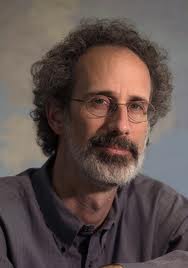
Now the source has revealed himself, and it is a prominent climatologist on the front lines of the climate change battle, scientist Peter Gleick of the Pacific Institute. Gleick explained what occurred in a column at the Huffington Post: Continue reading →

“Forget Jobs, It’s You Passing Out In Public, Stupid!”

Well, maybe there’s something wrong with Wisconsin after all.

Mayor Ryan, behaving irrelevantly

In Sheboygan, Mayor Bob Ryan, is about to face Terry Van Akkeren in the first mayoral recall election in that Wisconsin city’s history. It was prompted after Ryan was caught on tape passed out in a bar after a drinking binge last summer. More than 4,000 Sheboygan voters signed petitions to force the recall.

As one would expect, the mayor who humiliated his community, set a wretched example for his public (and their kids), showed that he has allowed his alcohol problem to render him unfit to serve, and violated a pledge he had made in 2009 (when he was running for office) that he had given up drinking for good, now argues that the incident is irrelevant. He says that what matters is who can bring the most jobs back to Sheboygan. Continue reading →

The Girl Scouts, the Loyal Wife, and “Wisconsin Sickness”

Just what I want to see on my daughter's Girl Scout troop leader's husband's website! And you?

The Girl Scouts have been going through a strange period lately. There was the controversy over a transgender troop member, a boy who identified as a girl.  Then it was revealed that the organization’s literature was promoting Media Matters as a means of civic education.  This, however, takes the cake.

Stacy Hintz, a 28-year-old mother from West Bend, Wisconsin,was removed from her volunteer position as a Girl Scout troop leader because of her husband’s website. The site is called Wisconsin Sickness, is slick, professional, unique, and 100% batty. Here is its introduction:

“Whatever the reason, there is a deep and passionate psychosis that runs through the unstable synapses of those of us from Wisconsin, land of serial killers and cannibals. And we’re proud of it. Wisconsin Sickness, a Mental Shed project, is all about bringing the independent, underground Wisconsin scene together and spreading the sickness like a virus.”

And really, that’s nothing: wait until you see the site, which, among other things, celebrates Ed Gein, the serial killer/cannibal/necrophiliac whose horrific crimes and, uh, interior decorating style inspired “Psycho,” “The Texas Chain Saw Massacre,” and dozens of lesser horror films. Continue reading →

Ethics Alarms Recap: A Long Weekend of Ethics

If the long Presidents Day weekend took you hither and yon and away from ethical dilemmas and controversies, welcome back! Here is what went on here in a lively three days:

Comment of the Day: “Ethics Quote of the Week: Yu Jie”

Michael, fortunately, focuses attention back on the actual meaning of the quote from the Chinese dissident, Yu Jie, that I had posted as an Ethics Quote of the Week. I then confused the issue by expanding my commentary to the dangers (or, as commenter properly corrected me, theoretical dangers) of  U.S. indebtedness to China. My error, and I am grateful to Michael both for returning to the issue and his thoughtful comments.

Here is his Comment of the Day on the post, Ethics Quote of the Week: Yu Jie:

“…No matter how craven our federal government has been, why are the Universities allowing themselves to be censored by the Chinese? There are two reasons: Continue reading →

The Perils of Ignoring Professionalism

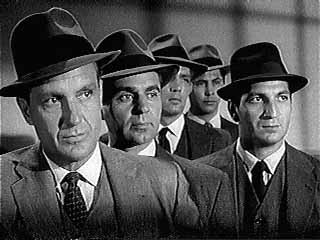
Robert Stack as Eliot Ness with the rest of TV's "The Untouchables." Now THOSE guys were professional. You'd never see THEM text messaging jokes to Al Capone...

The Washington Post ran a story Tuesday describing how the defendants in an elaborate FBI sting operation escaped conviction as a consequence of the revelation of racy text messages between the agents and their undercover informant. Agents and their key informant bantered “about sex, booty calls, prostitutes, cigars, the Village People, the informant’s wives and an agent’s girlfriend.”  When the arrests were first announced by the Justice Department, the operation was regarded as a model law enforcement success. But federal prosecutors failed to win a single conviction,  in large part because defense lawyers used the text messages to raise juror doubts about the credibility and professionalism of FBI agents. Now the Justice Department says that in light of the first two trials, the government is evaluating “whether to continue to go forward” with the remaining prosecutions of 16 defendants, seven of whom had their cases end in hung juries.

During the most recent trial of six men and women on charges of paying bribes to win business with a foreign government, the defense attorney used the FBI’s texts both to attack the character of the informant and to suggest that the lead agent was an untrustworthy, bigoted, anti-gay misogynist. The FBI believes this was unfair, and an example of a lawyer’s trick defeating justice. Informants, almost without exception, are sleazy characters, and managing them takes skill and guile. The agents felt it was essential to build trust, which meant working to develop a collegial  relationship, at least in the informant’s mind. The text banter, they say, was designed to ensure the loyalty of a low-life, which required the agents to sometimes act like low-lifes themselves. Thus they texted messages back and forth that included bawdy jokes, innuendos about sex, anti-gay stereotypes and more, all in a buddy-buddy tone that the jury found troubling. “The texts were one of many things that point to an absolutely amateurish operation,” the jury foreman told the Post. Continue reading →

A “Naked Teacher Principle” Spin-Off: “The Case of the Naked Football Coach”

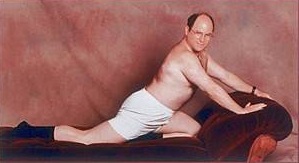
If it's any consolation, Coach Withee, George Costanza sends his sympathies.

With the notable exception of the high school art teacher who moonlighted on the web as an artist that painted pictures using his butt and genitals while wearing a paper bag over his head, most victims of the “Naked Teacher Principle”(TNTP for short) have been females.  [You can read the initial exposition of the principle here. “To put it in the simplest possible terms, a responsible high school teacher has a duty to take reasonable care that her students do not see her in the nude. It’s not too much to ask.”] This time, however, the naked teacher was not only male but the football coach. And, as the merciless Principle demands, he’s out of a job. Continue reading →

Comment of the Day: “‘Who Ya Gonna Call?'” Paranormal Ethics, and the Irony of Same”

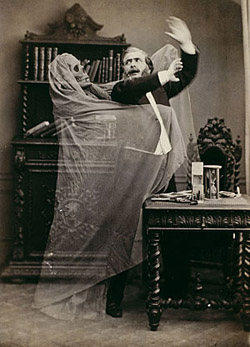
"I'm sure there's a perfectly rational explanation for this. Let's go figure it out in a motel."

The Comment of the Day is an interesting one from Melissa Leath, a psychic who is published on the topic of psychic ethics. She is responding to the recent post here about proposed standards for paranormal investigators.

Her measured response forces me to confront my own ambivalence on this issue. I am, as she says, a skeptic; more than a skeptic, really, as I intellectually am committed to the position that all paranormal, psychic and spiritual phenomenon, including those in the realm of religious believe, are imaginary at best and fraudulent at worst. I would have said “unshakably committed, ” but emotionally, I have to confess am not as sure as I would like to be, or should be. Perhaps I watch too many horror movies. I don’t like Ouija boards, and won’t have the damn things in the house. If my kitchen furniture suddenly rearranged itself like it does in “Poltergeist,” or if my ultra-rational son started telling me that an old man in 1940s clothes kept appearing in his room at night and saying that he was going to hurt him, or if I saw dark, inky shadows crawling up the wall like in “The Grudge,” I can say with conviction that I would not be the one insisting that there must be a rational explanation and hanging around waiting for the bed to start raising off the floor. I would be the one out the door and checking into a motel, and from the safety of which  insisting that there was a rational explanation, but also secretly fearing that my house had been built over a Native American burial ground.

I realize that this is inconsistent and silly.  But I have a good friend who is as normal and sincere as someone can be who is a serious astrologer. And when I see the late Telly Savalas finally tell his personal ghost story in a YouTube clip, after personally watching him refuse to repeat it on TV talk shows for decades because “it was too scary,” I do wonder, even as I rebuke myself for wondering. Knowing that I wonder, however, it is only fair to give Melissa her say.

Here is her “Comment of the Day” on “‘Who Ya Gonna Call?'” Paranormal Ethics, and the Irony of Same.” Continue reading →

“Who Ya Gonna Call?” Paranormal Ethics, and the Irony of Same

Here we see a common ethics violation: the paranormal researcher has allowed himself to become emotionally involved with his subject...

Any profession, no matter how strange, that thinks seriously about ethics is to be encouraged, and thus it is that Ethics Alarms gives a hearty shout-out to paranormal investigator L.S. Watts, 8 years a ghost-hunter and the co-founder of Grigori Research Institute of Paraspsychology. She has published a set of ethical standards for paranormal investigators that appear to be serious, thorough and well-thought out, addressing issues of professionalism, candor, honesty, conflicts of interest and fairness. Since her profession is by definition likely to be involved with a lot of people who are, shall we say, easy to deceive, and that must also attract more than its share of con artists, humbugs and frauds, there is an obvious need for a clear and sensible ethics code, for which her work would be an excellent starting point. Back in May of 2010, I noted that there was a planned “Town Meeting” on ethics in the field of paranormal investigation, and it’s nice to see progress has been made.

Ms. Watts seems sincere, so I can’t fairly apply the principle I am itching to state, which is that there are activities and fields like astrology, paranormal research, psychics, spiritualism, faith healing, creation science, loan-sharking and hacking for which the only truly valid Code of Conduct would be an extremely brief one that says, “Don’t Do This.” As long as these professions are with us, however, they might as well try to be as ethical as possible.

Funeral Ethics: The Embalmer, the Board, and the Bearskin Rug Baby

Troy Schoeller

Should the state board that licenses embalmers have yanked the license of Massachusetts embalmer Troy Schoeller after he described his work in graphic and disgusting terms to a reporter?

Schoeller is suing, claiming that the discipline violates his First Amendment rights, and I would think that he has a strong case. That’s a constitutional law question, however. My question is: did Schoeller do anything so unethical that it would justify taking his profession away…by telling the Boston Phoenix writer how he works to restore traumatized corpses, how the bodies of fat people react to the embalming process , how revolting the fumes emanating from bodies can be, and, most memorable of all, how he reconstructed the smashed body of a baby “that looked like a bearskin rug,” saying…

“I had to rebuild it in nine hours. I used everything: duct tape, masking tape, tissue builder, wound filler. … I put, like, coat hangers and caulk in there and put him into a little baby outfit. … He looked awesome.” Continue reading →