The Saga of Heidi Montag and Spencer Pratt: Life in a Culture That Values Lies

Post-surgery Montag, trying to stay famous

If you have taste, a job, and a brain, or don’t read a lot of “Us” and “People” in doctors’ offices, you may never have heard of Spencer Pratt and Heidi Montag. They were stars of the once popular TV reality show “The Hills,” and despite being two vacuous and shallow individuals of minimal common sense, talent or education, they presumed that they could ride the “famous for being famous” gravy train in celebrity-and-media obsessed America indefinitely. They couldn’t.

The Daily Beast features a horrifying interview with the pair, which is worth reading for its ethics lessons on several levels. For one thing, the degree to which the culture of dishonesty has progressed in America  surprises even me. Allowing yourself to be presented to the public as a completely manufactured personality in exchange for fame and fortune has always been part of the celebrity experience, but the reality show phenomenon has removed it from everything else—now the lie is all there is. And there are thousands upon thousands of attractive, young dimwits who actually aspire to such ersatz enshrinement in the culture as their life’s pursuit. Paris Hilton and the Kardashian sisters are these deluded individuals’ goddesses, despite the fact that 1) there are not 500 IQ points among the four of them and 2) they all have the benefit of rich trust funds to fall back on, so their jaunts as pop culture comets are more like diversions than careers, though profitable ones. Continue reading

Comment of the Day: “The Folly of Sacrificing Integrity to Kindness in Competitions”

Today’s Comment of the Day is on the post about using awards and honors to make the less fortunate and unqualified feel good, as Michael carries the issue into the related matter of grading:

“I run into this every semester. I can’t give anyone a C in a class. I can’t give anyone a B in a class. You have to earn it by demonstrating that you understand and can apply the relevant material. You may be the most attractive, most charitable, most loved person on the planet, but if you can’t do this work, you can’t pass. Usually, they still don’t understand, and I have to give a speech I title “What a C student does.”

“Where do my ‘C’ students go? What do ‘C’ students do after they leave? ‘A’ and ‘B’ students go to graduate school, medical, and dental school. They may hold people’s lives in their hands in their careers. But what about the ‘C’ student? Surely there is no harm in letting someone squeak by with a ‘C’? Well… they test your water to make sure it is safe. They determine what amounts of new pesticides can be used without causing harm. They run the tests that determine if you raped someone or if that really was a bag of cocaine in your car, or just some borrowed powdered sugar (as you insisted). My ‘C’ students work jobs where people die if they mess up. The ‘C’ stands for competence. If you don’t have it, you don’t get a ‘C’. Continue reading

Ethics Dunce: The California State Bar

This question should be easy.

This will be a short post, unless I snap in the middle of writing it and get hysterical.

Why is The California State Bar August’s first Ethics Dunce? This news item says it all:

“A California State Bar panel is considering whether an illegal immigrant who passed the exam to practice law should be admitted despite his status.”

Pardon me, California State Bar, but exactly what is there to “consider?” 

I can see the value of some general consideration of the insanity of California’s laissez faire attitude toward illegal immigrants, and the fact that California residents seem to have no problem with allowing them to use schools, hospitals, public schools, universities and others services that their bankrupt state can barely afford. I can see the need for some reconsideration of the foolishness of creating incentives for illegal immigrants to continue living a lie in America by giving them the benefits of a Dream Act, like the one Governor Brown recently signed into law. Continue reading

Ethics Quiz: Is Bunting to Break Up a No-Hitter Unethical?

I want to get this on the record for all time, because the controversy comes up almost ever baseball season. it came up again yesterday.

In Sunday’s baseball game between the Detroit Tigers and Los Angeles Angels, Tiger pitcher Justin Verlander was six outs from joining Bob Feller, Sandy Koufax, and Nolan Ryan as the only pitchers since 1900 with three or more no-hitters in their careers. But the Angels’ Erick Aybar tried to end the no-hitter with a bunt single leading off the eighth against Verlander. He got it, too, except that the home town scorer attempted to preserve Verlander’s historic bid by charging an error instead. (Unethical. But I digress.) Continue reading

No Winners, Only Losers in the Debt Ceiling Train Wreck

I object to “a pox on all their houses” assessments on principle, because it encourages the lack of accountability. If everyone is at fault, nobody is at fault, or at least nobody will be willing to accept responsibility as long as he or she or they can point fingers at someone else. Reading all of the clichéd “Winners and Losers” columns in the media this morning as the debt ceiling crisis winds down, however, convinces me that there were no winners, only losers, in this sorry spectacle. In the latter group I include the writers of the “Winners and Losers” pieces, which are all just spin, obvious and biased attempts to extract a writer’s favorites from the train wreck using the rhetorical Jaws of Life.

They are all losers, all of them, together with the United States of America. The perfect storm of cowardly, irresponsible, reckless, stupid and arrogant leadership weakened the recovery, weakened the economy, weakened foreign faith in American investments, weakened American prestige, split the Republican Party, revealed the Democratic Party as hell-bent on chasing the European-style nanny state even as their model is crumbling abroad, exposed the Tea Party as a unmannerly mess of deluded doctrinaire ideologues with no grasp of political or economic realities, and most disastrously of all, showed the American President to be hopelessly, pathetically, frighteningly weak, devoid of leadership skills and leaderly instincts. Continue reading

Scent Branding, Mind-Control, and Ethics

Agreed: this is scary. We're not there yet. We don't even know if "there" exists.

A recent article on the web that purported to explore the ethics of “scent branding” was fascinating for two reasons.

First, “scent branding” is a term I had never encountered before, for a practice that I had not focused on. About five seconds of thought, however, made me realize that indeed I was aware of the phenomenon, and had been for quite a while. “Scent branding”—using fragrances in a commercial environment to create a desired atmosphere and to prompt positive feelings, recollections and emotions from patrons—has been around a long, long time, though not under that label. When funeral parlors made sure that their premises smelled of flowers rather than formaldehyde, that was a form of scent branding. Progress in the science of scent allowed other businesses to get into the act: I was first conscious of the intentional use of smell when I spent a vacation at the Walt Disney World Polynesian Villages Resort. The lobby and the rooms had a powerful “tropical paradise” scent, a mixture of beach smells, torches and exotic fauna. It was obviously fake, like much in Disney World; also like much in Disney World, I found it effective, pleasant, and fun. I certainly didn’t think of it as unethical. I was normal in those days, however.

Well, more normal.

The second aspect of the article, entitled “Is it Ethical to Scent Brand Public Places?”, that caught my attention was that it had an obvious agenda. The piece was opposed to scent branding, and set out to find the practice unethical in order to justify condemning it. Continue reading

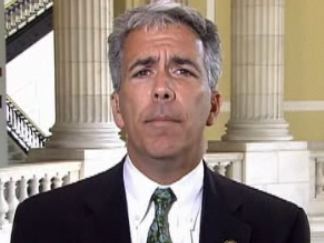
Fick* of the Month: Tea Party Congressman Joe Walsh


Rep. Walsh says that President Obama has no shame. He should know: having no shame is something of a specialty of Walsh's.

Freshman U.S. Rep. Joe Walsh (R-Ill) is a vocal Tea Party champion dedicated to fiscal responsibility, meeting obligations, protecting the future for our children, and living within our means. How does he reconcile these values with the fact that he owes $117,437 in child support to his ex-wife and three children?

He can’t. It’s impossible. Walsh is the epitome of a political hypocrite, and because he is shameless about his despicable failure to meet his family obligations, he is also a fick. In fact, he is the Ethics Alarms Fick of the Month.

To be fair, Walsh disputes the amount that his wife claims he owes her in the suit she recently filed. You know what? It doesn’t matter how much he owes. Ethically, he is just as much of a fraud and a fick whether he owes $100,000, $25,000, or $500. For this is the self-righteous freshman Congressman who says,  in a video speech lecturing President Obama on fiscal responsibility, “I won’t place one more dollar of debt upon the backs of my kids and grandkids unless we structurally reform the way this town spends money!” ”Have you no shame, sir?” he asks. Continue reading

Ethics Quote of the Week: Washigton Post Reader Elizabeth Grover

“Sun wrote: ‘Most doctors will not perform abortions beyond 22 or 24 weeks for various reasons, including legal concerns, social stigma, inadequate training or inexperience.’ She left out perhaps the biggest reason: Most doctors believe that late-term abortions are morally wrong.”

—-Elizabeth Grover of Washington, D.C., in a letter published in the Washington Post “Free for All” section. Reader Grover was commenting on a glowing Post profile of Maryland physician Dr. LeRoy Carhart by feature writer Lena Sun, extolling his willingness, indeed eagerness, to perform late term abortions, which are illegal in several states. Dr. LeRoy dismissed state restrictions on abortions of any kind as “ridiculous.”

Grover was absolutely correct to flag the bias and misrepresentation in Sun’s article. Continue reading

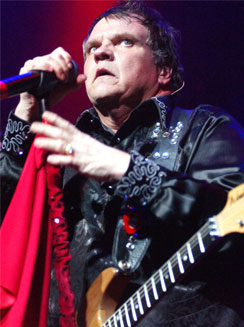
Ethics Hero: Meat Loaf

Bravo.

I’m sure many of you will react to this with a hardy, “What an idiot!” That’s all right. You don’t understand.

In the grandest tradition of “The show must go on!”, 70’s rock legend Meat Loaf, now 63, finished a concert in Pittsburgh after he fainted on stage and lay unconscious for a full ten minutes. He got up, apologized, explained (obscenely) that it was his asthma, and continued to sing his old hits for a cheering crowd. “Kept suckin’ on his inhaler & singing his ass off,” one fan tweeted from the scene.

Grand. I love it.

In these times when rock acts are often hours late or severely shortened by the artist’s physical or pharmaceutical maladies, and when performers in general often consider it too much of a sacrifice to give their best efforts when healthy, not to mention when they have the sniffles, Meat Loaf’s dedication to his craft and particularly his audience is impressive, although not surprising. Continue reading

Casey Anthony’s Lawyer is Pronounced Unethical By an Expert

Jack Thompson knows incivility

Ah, the Casey Anthony trial continues to be the legal equivalent of “Jersey Shore,” or some other annoying TV reality show. In today’s episode: Hypocrisy! Revenge!  Irony! Abuse of process! Incivility!  And a special guest!

Cheney Mason, one of Casey Anthony’s defense attorneys, gave a raised middle finger (the international symbol of “I have nothing but contempt and utter disdain for you and your untoward words and conduct, so please have some form of unpleasant sexual intercourse with yourself!”) to a spectator who was verbally harassing Mason and others celebrating Anthony’s July 5 acquittal at a restaurant immediately after the trial.  Such public conduct by a lawyer is rude, undignified and inappropriate, but it is also rude, undignified and inappropriate for sea captains, puppeteers and plumbers, too. Incivility by a lawyer has to be especially egregious and must in some way threaten to undermine the administration of justice to raise the possibility of bar discipline, and flipping the bird to a jerk in a restaurant just plain doesn’t qualify. Now, a lawyer running all over town giving the finger to everyone for weeks on end, or a lawyer making the gesture to judges, opposing counsel or jury members in court would be very different matters. Such conduct would call into legitimate question a lawyer’s fitness to practice law. One such incident? No. I won’t speculate on what percentage of lawyers have given the upturned finger to someone during their careers, but you can.

Nevertheless, a Florida citizen decided to file an ethics complaint against Mason, which is his right. But this wasn’t just any Florida citizen; the complainant was Jack Thompson, a once nationally prominent attorney who managed the nearly impossible: he got himself disbarred for life in Florida for incivility, along with other ethical misconduct. Continue reading