Ethics Dunce AGAIN By A Man In A Position That Should Never Include An Ethics Dunce: Pope Francis

Let’s see now. You are the titular head of a religious organization that talks a good game about virtue, morality and the dangers of sin, and it has been shaken to its core by an ongoing scandal involving thousands of officials sexually molesting hundreds of thousands of children while your organization not only covered up the crimes, but facilitated them. After the latest outbreak of this decades—centuries?—long scandal, you declared that your organization would regain the trust of its members by reversing its previous corrupt practices, and send clear messages that the conduct that endangered and damaged children would not be tolerated.

Then, when one of the highest officials in your organization offers his resignation after being convicted in a court of law for failing to stop one of the ongoing molesters despite knowledge of his vile  activities, you refuse to accept that resignation.

What sense does this make? This is a fair summary of Pope Francis’s recent decision to reject the resignation of Cardinal Philippe Barbarin despite his conviction this month for covering up decades-old allegations of sexual abuse by a priest in his diocese. The only way it makes sense is if the Pope doesn’t comprehend the seriousness of the sex abuse scandal, and still places loyalty to the church and his colleagues above the welfare of victims past, present and future. Continue reading

Gayle King, R.Kelly, Journalism Competence And The King’s Pass

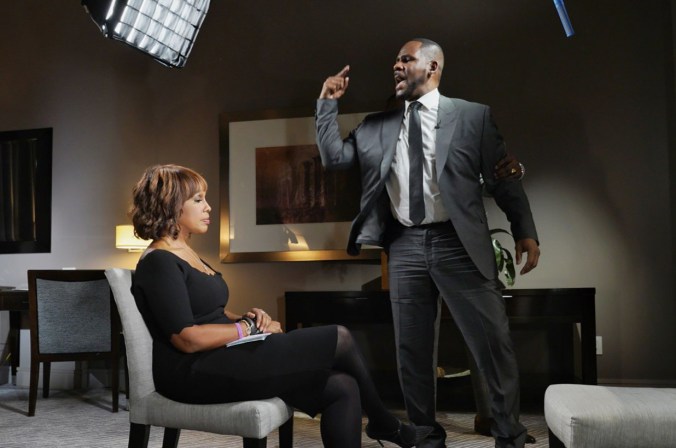
For some reason—OK, I think I know the reasons—CBS morning host Gayle King is getting plaudits for mishandling the insane R.Kelly interview last week. The photo below  says it all: Kelly, his reputation and career falling apart in chunks because the years of rumors and accounts of his alleged sexual misconduct with underage girls finally caught up to the hip-hop superstar (thanks to an explosive documentary—hmmm, where have we heard that before?— is standing, shouting, ranting and generally going bonkers as King sits immobile and silent, with her eyes cast down.

There were two exhibitions of the King’s Pass on display in the interview and its aftermath. Kelly, being allowed to behave outrageously on the air was one, for most guests in any setting would be ordered to sit down, act civilly, or leave the studio after such an infantile and threatening display. King was the other, praised for showing that her frequent feminist rhetoric was convenient claptrap, and that she did not have the guts or principle to assert her power over an abusive male when professional ethics demanded it.

I’m not sure which is more unforgivable. CNN said that King’s passivity was a masterclass in journalism. The Washington Post praised her “composure.” She told the New York Times that she was silently thinking, “Don’t walk off the set. Don’t walk off the set.” A competent journalist should have given him a warning, and then had him thrown off the set. A female professional who had the integrity to demonstrate how women should handle male abuse would have demanded that he sit down, apologize, or leave. They train salespeople and operators to push back against abusive customers, but a national TV host doesn’t have the fortitude to act when a guest behaves like a berserk barbarian? Continue reading

Sunday Ethics Warm-Up, 3/10/2019: Ethics Savings Time Edition!

It’s still morning according to MY watch…

1. When ethics alarms don’t ring...How could Philadelphia’s retailers and stores not have seen this problem? The city of Philadelphia has passed a law that will requiring retailers to accept cash, responding to increasing numbers that have gone “cashless.”The new law was signed by Mayor Jim Kenney last week and takes effect on July 1 . Violations could bring  fines of up to $2,000.

City Councilman Bill Greenlee co-sponsored  the bill. “It just seemed to me unfair that I could walk into a coffee shop right across from City Hall, and I had a credit card and could get a cup of coffee. And the person behind me, who had United States currency, could not,” he explained.

Good. Serving only people with credit cards is obviously discriminatory.

2.  More on the robocalling experiment. I previously noted that MLB is using the independent Atlantic League to try out some new rules, innovations, and suggested “fixes” for baseball. Only one is of obvious ethics interest: the electronic calling of pitches, which is a matter of integrity. Games should not be warped by crucial decisions that are obviously erroneous and that the game now has the technological tools to prevent. The rest of the measures being tested raise issues of their own:

  • The mound will be moved back two feet to 62’6″. Comment: I assume this is an effort to make hitting easier and pitching harder. I find it difficult to believe that anything this radical has a chance of being adopted.
  • Larger bases will be used (18″ instead of 15″). Comment: Okaaaay…
  • Defensive shifts will be banned. Comment: A terrible idea, constraining defensive creativity and the constant back-and forth change-and-response that has kept baseball dynamic. Let batters figure out how to beat shifts. They have the ability to do it.
  • A radar-enabled strike zone will be employed. Comment: It’s about damned time!
  • Time between innings and pitching changes reduced from 2:05 to 1:45. Comment: Good.
  • Three batter minimum for pitchers entering a game. Comment: This is to eliminate the single pitcher-per-batter trend in late innings that slows down the game with minimal benefits. I see no reason not to do it; there are similar rules already, such as requirements that a pitcher must pitch to at least one batter.
  • There will be no mound visits unless a pitcher is removed from the game or for medical issues. Comment: NO visits is draconian. All this will do is speed the intrusion of electronic communications between catcher and pitcher and pitcher and manager. Yechhh!

3. When lawyers should just shut-up. ABA Model Rule Of Professional Conduct 3.6 says in part:

a) A lawyer who is participating or has participated in the investigation or litigation of a matter shall not make an extrajudicial statement that the lawyer knows or reasonably should know will be disseminated by means of public communication and will have a substantial likelihood of materially prejudicing an adjudicative proceeding in the matter.

It also says,

c) Notwithstanding paragraph (a), a lawyer may make a statement that a reasonable lawyer would believe is required to protect a client from the substantial undue prejudicial effect of recent publicity not initiated by the lawyer or the lawyer’s client. A statement made pursuant to this paragraph shall be limited to such information as is necessary to mitigate the recent adverse publicity.

The rule, which has substantially identical versions in all jurisdictions, needs to be enforced more stringently. It isn’t, I assume, because the bar associations are worried about a court striking down the rule as a First Amendment violation.

Here’s Jussie Smollett’s lawyer, media hound Mark Geragos, on the charges against his client.:

“This redundant and vindictive indictment is nothing more than a desperate attempt to make headlines in order to distract from the internal investigation launched to investigate the outrageous leaking of false information by the Chicago Police Department and the shameless and illegal invasion of Jussie’s privacy in tampering with his medical records. Jussie adamantly maintains his innocence even if law enforcement has robbed him of that presumption.”

ALL the publicity was initiated by Gallegos’s client! His crime was designed to get publicity!

Shut up, Mark. This is the kind of statement that does your client no good, and adds to the public’s distrust of lawyers.

I do give him credit for one thing, though: note that he says, “Jussie adamantly maintains his innocence,” and not “Jussie is innocent,” which he knows is a lie.

4. Nah, there’s no mainstream media bias!

  • Headline (NYT):Border at ‘Breaking Point’ as More Than 76,000 Unauthorized Migrants Cross in a Month.” Quote:”More than 76,000 migrants crossed the border without authorization in February, an 11-year high and a strong sign that stepped-up prosecutions, new controls on asylum and harsher detention policies have not reversed what remains a powerful lure for thousands of families fleeing violence and poverty.”

Gee, sounds like a national emergency to me! Nope: it’s Trump’s fault: “the Trump administration’s aggressive policies have not discouraged new migration to the United States.”

  • Because the Democrat’s watered down “anti-hate” resolution did nothing to condemn the anti-Semitic statements by Rep. Omar, some Republicans withheld their votes for it in protest. Here was how Politico spun it: “Republican leadership splits, and party splinters over hate resolution.”

5. I suppose this should be a stand-alone post, but I don’t want to write about Michel Jackson any more than I have to. It is now official [Pointer: JutGory]: “The Simpsons” is airbrushing away the classic 1991 episode “Stark Raving Dad,” because a key character was voiced by Michael Jackson. James L. Brooks, co-creator of the show, says that the 1991 episode guest-starring Michael Jackson will be pulled out of its archives, permanently, and will be removed from all platforms including DVD sets and streaming services. “It feels clearly the only choice to make,” Brooks says. “The guys I work with—where we spend our lives arguing over jokes—were of one mind on this.”  He added, “I’m against book burning of any kind. But this is our book, and we’re allowed to take out a chapter.”

Sure it’s book burning, and  “the guys Brooks works with” are probably all in favor of tearing down the statues of Confederate generals and monuments to slave-holding Founders, too. Brooks’ ideological clones are suddenly fans of censorship and hiding history when it becomes uncomfortable. There is so much wrong with this decision, it boggles the mind, but a few will suffice…

  • Why now? Oh, right: a documentary made a decade after Jackson’s death suddenly proves what couldn’t be proved in court, is that the theory?
  • Is Brooks really asserting that any artist who releases his or her art to the public is justified in unilaterally destroying it because of a personal motive? The artist has the right, yes. It’s also unethical. The work is no longer the artist’s, it belongs to the culture. This is why Stephen Spielberg has regretted and reversed his politically correctness-addled decision to change the guns carried by the federal agents in “E.T.” to walkie-talkies.
  • This is a time for Kant’s Categorical Imperative. If this is the right thing to do because of Jackson’s alleged misconduct,  then it must be absolute, an unconditional requirement to be observed in all circumstances and justified as an end in itself. That means that no work by Woody Allen, Bing Crosby, Bill Cosby, Errol Flynn, Richard Pryor, John Lennon (and by extension, The Beatles), Peter, Paul and Mary, Charlie Chaplin, Jerry Lee Lewis, and too many others to list, should ever again be available for the public to view, hear, or enjoy.
  • Presumably any film that O.J. Simpson appeared in must be vaporized as well, including “The Naked Gun” films and the greatest disaster movie ever made, “The Towering Inferno.”

The main thing is that “Stark Raving Dad” is a terrific episode.

This is flagrant narcissism, virtue-signaling and grandstanding by Brooks and his colleagues.
I Expect Non-Lawyers And Journalists To Misunderstand This Basic Legal Ethics Principle….But HARVARD LAW SCHOOL?

Kaboom.

This is a repeat issue, so I could make this short and link to the previous Ethics Alarms post on this annoying subject, or  here, when I defended Hillary Clinton when she was being called a hypocrite for once defending  a child rapist, or maybe the post titled,  No, There Is Nothing Unethical Or Hypocritical About A Feminist Lawyer Defending Roger Ailes.or this post, when liberal icon and former Harvard Law professor Larry Tribe was representing a coal company. I have vowed, however, that if I accomplish nothing else with this blog, I will do my best to put a stake through the ignorant and destructive idea that lawyers only represent clients they agree with, admire, or personally support. Here its is again, the ABA rule that is quoted somewhere in every jurisdiction’s attorney conduct regulations. Let’s do it really big this time:

ABA Model Rule 1.2(b): “A lawyer’s representation of a client, including representation by appointment, does not constitute an endorsement of the client’s political, economic, social or moral views or activities.”

Got that? Memorize it Print it out and carry it in your wallet, and hand it to your ignorant loud-mouth family member who complains about those scum-bag lawyers who represent bad people. Post it on social media and  in online comment sections where people are bloviating about the same. idiotic misconception.

What we can do about Harvard, however, I just don’t know. You know what they say, “Get woke, lose all respect and credibility as a trustworthy advocate for civil rights and the Rule of Law.” Okay, I’m going to have to work on that… Continue reading

Saturday Ethics Warm-Up, 3/2/2019: Road Trip Epiphanies…And The Washington Post’s “Note” On The Covington Fiasco

Hi, everybody! It’s good to be back home!

I was torn whether to mention in this morning’s post that I would be Northern Virginia-bound from the Pittsburgh, Pennsylvania area (Washington County) for most of the day. Who knows what banned and lurking commenters would seize on that intelligence to raid the forum here while I was unable to moderate, as occurred yesterday?

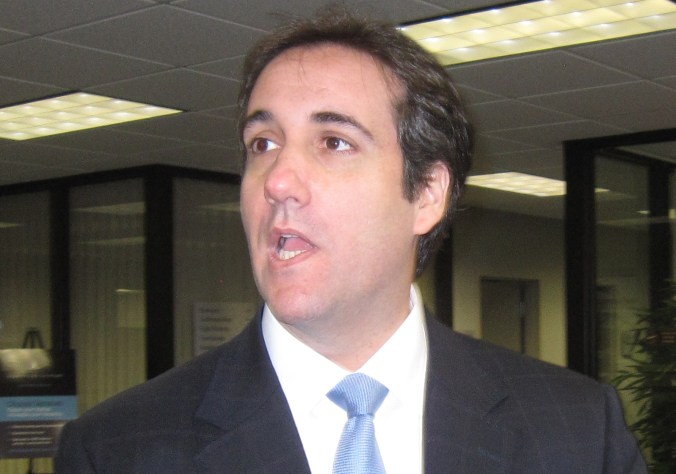
1. I wonder if most lawyers have the same reaction… The Pennsylvania lawyers I spoke to all seemed to share the same impression of the Michael Cohen testimony that I had. Why would anyone believe someone like that? What is the point of Congressional testimony by a convicted liar and disbarred attorney? No one disagreed that Cohen couldn’t be a witness in any proceeding, not would his testimony be admissible. How could anyone see this as anything but a transparent and  base effort by Democrats in Congress to try to smear the President with ad hominem slurs and unprovable allegations by someone obviously trying to somehow improve his own, self-made, miserable position? The lawyers are also concerned Congress is weakening the crucial attorney client privilege by encouraging a witness to breach it.

2. Ethics Corrupter: Nancy Pelosi. How dare the speaker of the House insult the President before the public by saying, “Do the country a favor, don’t run in 2020?” The democratic Congress continues to lead the effort to strip the President and his office of all the respect and basic deference they both must have for the government to function. Her snide condescension is unprofessional and nauseating….as well as bizarre, coming after the Trump-led economy just had its best month of growth in a decades—just as he promised it would. Given the state of her own party right now, a plea of “Do Democrats a favor, don’t run in 2020” would be more logical.

3. Engineering ethics. My GM rental car was keyless. It’s cool and all, but why? Congress is trying to pass new safety regulations because keyless cars are killing people. Drivers leave them running without realizing it, and sometimes poison themselves or other with carbon monoxide. They also may be easier to steal.

What, exactly, is the problem that keyless ignition was needed to solve? The “improvement” adds to the cost of cars, and appears to be a classic example of fixing something that ain’t broke, just Americans like gadgets. I have attacked the “if it saves one life” idiocy of the anti-gun lobby, but that’s because guns have very valid uses. If a completely gratuitous change in engineering and technology kills anyone without conferring some counter-balancing advantage, then that change is irresponsible and reckless.

4. Not good enough—not even close. The Washington Post, which is being sued by lawyers for 16-year-old Nicholas Sandmann for its role in focusing partisan hate on a student who had in fact done nothing wrong, issued an “Editor’s Note” on the episode late yesterday. Here it is in its entirety: Continue reading

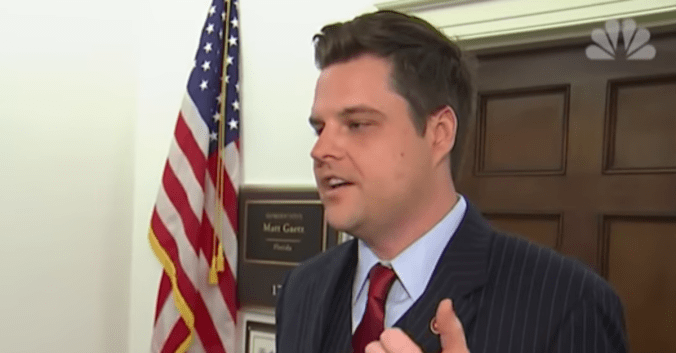
Unethical Tweet Of The Month: Rep. Matt Gaetz (R-Fla)

To be fair, he’s not quite as unethical a lawyer as Michael Cohen, but then Cohen isn’t in Congress…

Hey @MichaelCohen212 – Do your wife & father-in-law know about your girlfriends? Maybe tonight would be a good time for that chat. I wonder if she’ll remain faithful when you’re in prison. She’s about to learn a lot…

Nice.

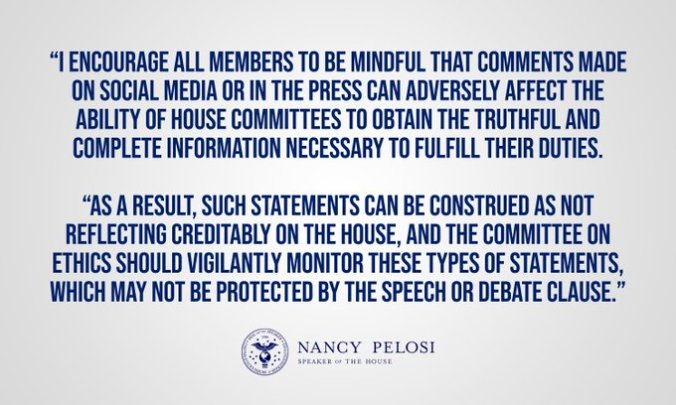
Gaetz sent this tweet before Cohen testified before Congress. It is witness intimidation. It is also stupid witness intimidation. Among other things, it gave Speaker Pelosi an opportunity to appear fair and responsible, by stating,

Goetz doubled down on his ham-handed “nice little family you got there; too bad if something were to happen to it…” threat by denying that he was witness tampering, telling a reporter that he was “witness testing.

This jerk is a Florida lawyer, and his bar is now investigating whether he breached the ethics rules by threatening a witness. Of course he did, and he did it on Twitter, which makes it the dumbest example of witness tampering in history.

Observations On Michael Cohen

Ew.

  • Michael Cohen was officially disbarred from the practice of law this week, though that result was so inevitable that it barely qualifies as news. He pleaded guilty in November to lying to Congress and evasion of income tax liability, and was sentenced in December to three years in prison and to pay $1 million dollars in restitution. Tha alone made disbarment unavoidable, but he would have been disbarred without his crimes because he taped his client without his client’s consent and revealed attorney-client confidences to try to mitigate the consequences of his own conduct.

His disbarment is backdated to November when he pleaded guilty. It should have been backdated to the day he was admitted to the bar.

  • Conservative critics are absolutely correct that for Congressional Democrats hold a hearing designed for no other purpose than to slime the President while he was engaged in crucial negotiations abroad shows where their priorities lie, and they are not with the United States of America. They want the President to fail in all things (which seems unnecessary, since they will represent his successes as failures anyway), and to undermine his ability to do his job.

There was no valid reason why Cohen’s useless testimony could not have been postponed until after the President’s summit with North Korea’s Kim. Continue reading

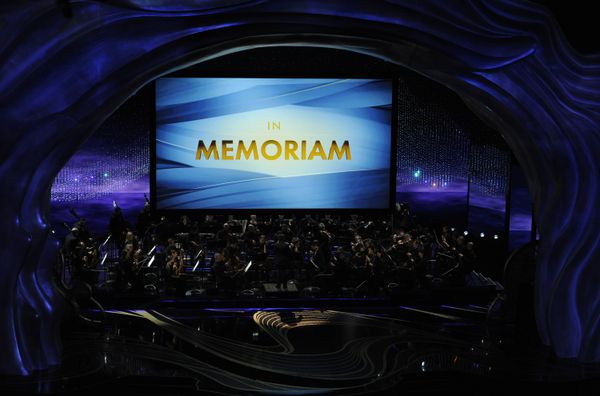
The 2019 Oscar “In Memoriam” Snubs [UPDATED!]

Ethics Alarms has been cataloguing the infuriating omissions from the Oscar “In Memoriam” segment for several years. Why does it matter? Well, curtain calls are important to me, as are the lives of major film artists generally. I believe that the final bows of those screen artists who perished during the year have been earned with blood, sweat, tears, crippling anxieties and addictions, and their families and fans want to see that last acknowledgment from the industry they toiled for. Once the fleeting clip of a dead actress, actor or other movie figure is over, each recedes slowly in the culture’s memory to eventual oblivion, which is the real death for the once-famous.

There is no good reason they shouldn’t get that final moment. The inexplicable omissions, and there are several every year, are not oversights. They are deliberate. The Academy knows who died, and a complete list is on its website. The whole segment takes only a few minutes. Last night’s version, like the rest of the streamlined broadcast, was less leisurely than usual, but adding in the fallen few left out would have made no difference to the whole comparable to the insults and cruelty it would have avoided.

Here were 2019’s most upsetting “In Memoriam” snubs:

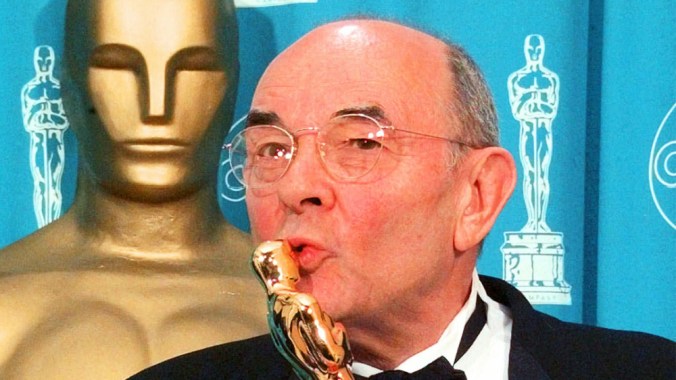
Stanley Donen

How hard would it have been to include a quick clip from “Singin’ in the Rain,” the all-time classic he directed with Gene Kelly, perhaps the most entertaining movie of all? Donen, who received a Lifetime Achievement Oscar, also directed “Charade,” “Damn Yankees,” and many other important films, including “Two For The Road,” a clip of which was shown to mark the passing of Albert Finney, who was, quite properly, accorded the honor of the last bow in this “In Memoriam.”

The excuse given for Donen’s snub was that he died last Tuesday. There was time to add him; of course there was. The producers just didn’t care enough to make the effort.

Sandra Locke

This one was especially cruel. If you know anything about the way Clint Eastwood treated Locke, his long-time live-in girlfriend and his frequent co-star, you are probably not quite as big a fan of Clint as you might be otherwise. Locke was very good when she had decent material to work with. Her film debut in 1968’s The Heart Is a Lonely Hunter  got her nominated for an Academy Award  for Best Supporting Actress, and she starred in many films, the most successful with Eastwood. From October 1975 until April 1989, Locke she lived with actor.   Locke had two abortions in that period, then had a tubal ligation, stating in her autobiography that her decision to have the procedures was due to Eastwood’s insistence that their art and lifestyle wouldn’t allow parenthood. Eastwood, meanwhile, secretly fathered another woman’s two children during the last three years of their relationship.

Nice guy.

Eastwood ended the virtual marriage with Locke when he changed the locks on their Bel-Air home. Locke filed a palimony suit, and after a year-long legal battle, the parties reached a settlement in which Eastwood set up a film development/directing deal for Locke at Warner Bros. in exchange for her dropping the action. (Clint also got married, after refusing to marry Locke during all of those years together.) Locke sued Eastwood for fraud in 1995, alleging that the deal with Warner was a sham. The studio had rejected all of the 30 or more projects she proposed and never used her as a director. She also claimed that Eastwood had, in essence, blacklisted her.  Eastwood settled out of court for an undisclosed amount.  Locke brought a separate action against Warner Bros. for conspiring with Eastwood, and this also was settled.

I got the horrible feeling that Locke’s snub was somehow a continuation of the industry’s mistreatment of Locke, who barely worked again after Clint dumped her. Continue reading

Once Again, Baseball Agent Conflicts Are Hurting Players Who Don’t Understand Why

Baseball writers are the tools of baseball player agents, useful idiots who write on and on about the underpaid millionaire players and the unfair owners, who won’t pay them what they “deserve.” They scrupulously avoid educating readers about the unethical player agents who manipulate the system and the players for their own benefit, not their clients.  I have written about the unregulated and largely ethics-free baseball agents before, but their conduct this off-season is unusually revolting.

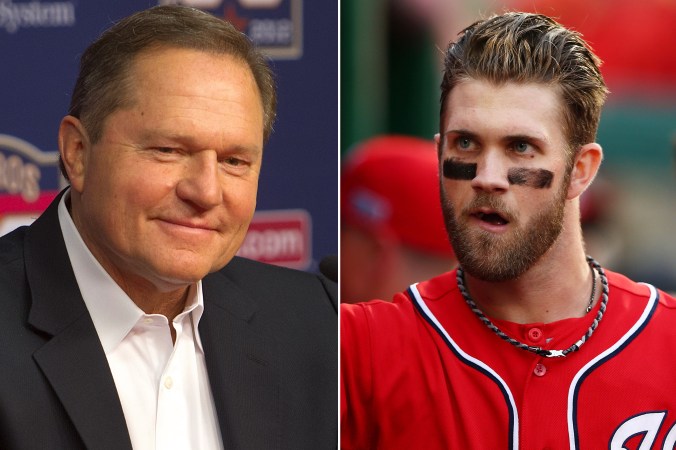
At the top of the list, as usual, is mega-agent Scott Boras, who cleverly treads the line between being an agent and a lawyer—he is both—while having too many stars under his thumb for the sports organizations or bar associations to hold him to account. For example, as a lawyer, Boras would be absolutely bound to tell his clients about a settlement offer, and would be subject to disbarment if he rejected an offer without communicating it to his client (you know, like you regularly see lawyers doing on TV and in the movies). However, there are no player agent rules that require an agent to communicate a team’s salary offer to a player. Agents can, and presumably do, reject offers without their clients ever hearing about them. This, of course, avoids the problem of a baseball star saying, “Oh, hell, that’s more money than I could ever spend anyway. I know it’s less than we talked about, but go ahead and take it.”

Agents have conflicts of interest so grand, and apparently so little understood, that meaningful consent from the client, theoretically the remedy, is virtually impossible. Let’s look at Bryce Harper, Boras’s client who is seeking more than $300 million dollars over a ten year guaranteed contract. Harper is 26 years old and has already made 49 million dollars, not counting endorsements. The functional utility of each dollar he earns is less than the one earned before in his situation. Realistically, there is very little difference between a $250,000,000 contract and a $300,000,000 contract to Harper, except from an ego perspective. The extra 50,000,000 won’t make any difference to him. Boras, however, is a different matter. Let’s say his cut of Harper’s salary is 5%.  He’ll get 15,000,000 if Harper signs for the high figure, but “only” 12,500,000 if Harper agrees to the lower figure. $2.5 million means nothing to Harper: he could throw it down the toilet, and wouldn’t feel a thing. The difference to Boras, however, is much greater in practical, and add to that the marketing advantage of being able to tell potential clients that he set the new all-time record for a free agent contract for his client. Continue reading

Social Media Is Eyeball To Eyeball With Legal Ethics, And Guess Who Blinked First?

Online consumer complaints about lawyers on sites like Avvo and Yelp have been driving lawyers crazy. The ethics rules on client confidentiality prohibit a lawyer from defending him (her) self online, because that requires revealing details of the representation. Two years ago, the Colorado Bar suspended a lawyer’s license d for six months after he responded to a negative online review and revealed that the complaining client had bounced a check and committed unrelated felonies. Lawyers are also generally prohibited from suing their clients for false statements about them in disciplinary complaints, but there have been exceptions. In Blake v. Giustibelli, the Fourth District Court of Appeal upheld a $350,000 libel judgement for a lawyer  against a divorcing couple who posted an online review that falsely accused the attorney of inflating fees and falsifying a contract.

Now Florida, one of the strictest jurisdiction regarding attorney ethics, has allowed a tiny crack in the wall. The Florida Bar Ethics Committee voted 18-0 to approve a Florida Bar Staff Opinion that “permits an inquiring attorney to post a limited response to a negative online review that the attorney says falsely accuses her of theft.” The Florida Bar says that  the increasing frequency of negative online reviews mandate some loosening of the rules. “An attorney is not ethically barred from responding to an online review by a former client where the former client’s matter has concluded,” the opinion states. “However, the duty of confidentiality prevents the attorney from disclosing confidential information about the prior representation absent the client’s informed consent or waiver of confidentiality.”

You can read more about the Bar Committee’s findings on the Florida Bar website here.