Jake Stein’s Tears

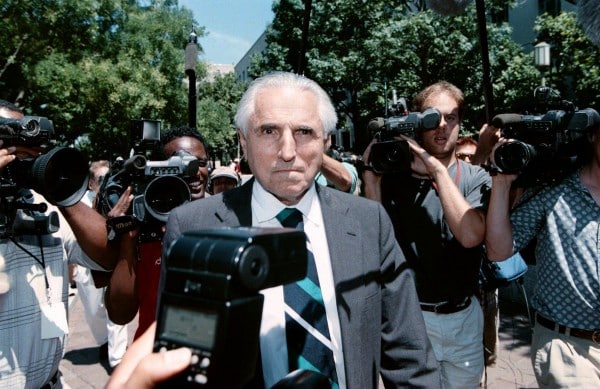
Legendary D.C. lawyer Jake Stein died last week at 94. He was that rarity in Washington and among lawyers, a universally respected attorney who had made few enemies and had few detractors. He was also long regarded as the sage of the profession in D.C., whose thoughtful and erudite essays that closed the bar associations’ monthly magazine, Washington Lawyer, were perhaps the most-read features of the publication.

I was reminded in his New York Times obituary that Stein represented Kenneth W. Parkinson, a former lawyer for President Nixon’s re-election committee, when he was charged with conspiracy and obstruction of justice in the Watergate scandal. Parkinson was the only indicted Watergate figure who was acquitted, and Stein’s skillful defense was considered to be the reason.  His closing argument was made unusually dramatic by Stein weeping as he described Parkinson as a pawn of “confessed perjurers,” and pleaded for the jury to consider his client’s character and the wounds the unjust prosecution had inflicted on it. “Doesn’t a lifetime, where you built it up grain by grain, weigh against that?” Stein asked plaintively.

I wonder: were Stein’s tears real, and does it matter? Continue reading

Naked Teacher Principle, The Selfie Variation

Pure as the driven snow! Especially if her breasts really look that THAT…

The Naked Teacher Principle (NTP) states that a secondary school teacher or administrator (or other role model for children) who allows pictures of himself or herself to be widely publicized, as on the web, showing the teacher naked or engaging in sexually provocative poses, cannot complain when he or she is dismissed by the school as a result.

Ah, would that it were always this simple! In the past, we have had to deal with the “naked teacher who paints with his butt and naughty bits on camera with a bag over his head” principle, for example.  Another teacher got fired when the naked photos of herself she had on her own tablet inadvertently was sent to the students in her class. Continue reading

“Russiagate” Collapse Ethics: Don’t Trust These People Again…Ever.

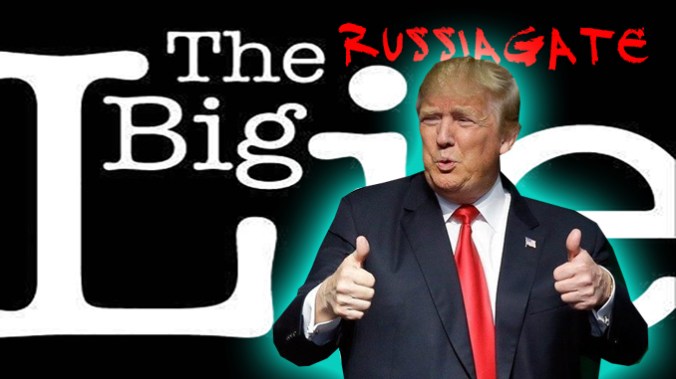
Debra Heine has compiled a useful list of the worst liars, hate-mongers, ethics corruptors,  and civic disrupters in he past three years of framing the President of the United States as a traitorous usurper who conspired with Russia to steal his high office. I was happy to find that I already distrusted all of those on the list that I had heard of, for this was hardly their only example of unethical instincts and corrupt behavior. Heine, a conservative blogger and pundit, used a rather high standard to make her list; I would have added several more. For example, ex- MSNBC star Keith Olberman, now again doing sports punditry on ESPN, has repeatedly tweeted such messages to the President as “Resign, you traitorous fuck!” and “Read up on the ADX Florence Supermax prison in Colorado. You’ll be celebrating your next birthday there. Enjoy!” But maybe nobody pays any attention to Keith any more—I hope not—so Debra was wise leaving him off. I definitely miss seeing Richard Painter on the list. He was President Bush’s ethics counsel, and has abused that credential (unethically exploiting credentials to deceive is a theme) to make one  specious impeachment argument after another, from “emoluments” to obstruction of justice to collusion.

Here is her list, which I will periodically comment on, though she has added extesnive documentation on each. It  is important that there be consequences for what all of these public figures, journalists, politicians and others have done to the nation, its institutions and our culture by pushing the Big Lie that the President made a deal with Russia absent any evidence at all. As I see it now, most of these individuals are refusing to acknowledge what they did or make any effort to undo the damage they have done to all of us. Suggestions that they served Putin’s interests by promoting discord and distrust of our institutions more than anything the President has done are quite correct.

A related list, focused only on the news media’s “fake news” regarding the Russia investigation and other efforts to impugn the President, was released yesterday by rebel reporter Sheryl Attkisson. She also ended up with an incomplete list, but a full list of the news media’s deceptions, incompetent errors, false predictions and wildly biased analysis would require days to scroll through. You can read it here.

Now Heine’s list… Continue reading

Morning Ethics Warm-Up, 3/25/2019: Woke Up Really Sick Of Democratic Party BS This Morning. I’m Sure I’ll Get Over It…

Good Morning!

…as the Mueller report lets the sunshine in…

1. Thank goodness judges don’t bake cakes…the American Bar Association’s Standing Committee on Ethics and Professional Responsibility have issued Formal Opinion 485. It holds that judges who perform marriages, either as an obligation of their office or by choice, may not refuse to do so for same-sex couples. The opinion emphasizes that regardless of their backgrounds, personal views or philosophies, judges must follow the law and act impartially, free from bias or prejudice.

I’d say the opinion is unassailable for a judge who regularly performs marriages  as a mandatory part of his or her job. A judge who is not so required, presumably, can choose not to perform any marriages at all. I bet some judge will challenge the proposition, however, that a  religion-based refusal to perform an optional civil wedding is per se “bias or prejudice.” [Source: Legal Ethics in Motion]

2. Welcome to my world...This week I am doing several ethics programs, one of which (not in legal ethics) I have presented over many years. Last year, I was told that the 2 hour program I had been presenting to the group only needed to be 90 minutes, so the materials I prepared and submitted indeed covered that amount of time, as did my presentation.  This year, I again prepared for 90 minutes. Now, looking at the conference’s two-day program, I see that my seminar is listed in the program as two hours again. That’s a mistake, but it’s too late to correct it: the attendees plan on getting professional credit. So what is my most ethical response? I could…a) stretch the material to two hours, but that’s a 30 minute stretch. b) At my own expense, create an additional 30 minutes of material, copy the materials, distribute them, and never mention that the conference manager, my long-time contact, screwed up. c) Use this crisis as leverage to negotiate a supplement to my fee for the necessary upgrade. d) End after 90 minutes, tell the attendees why, and suggest that they take up the matter of the missing credit with the conference organizers. e) Do the upgrade, present it, and then bill the conference for my time. Continue reading

Comment Of The Day: “Unethical Prosecution, Incompetent Jury: Once Again, ‘Sorry’ Isn’t Enough.”

The recent post about a Louisiana man sent to prison for 36 years when procsecutors and a jury ignored the fact that the evidence didn’t meet the standard for guilt beyond a reasonable doubt  sparked many excellent comments. The tongue-in-cheek suggestion by a commenter that failure to dispense criminal justice competently should earn the same fate as Admiral Ozzel in “Star Wars”—he was strangled to death by an angry Darth Vader’s Dark Force powers—inspired long-time commenter mariedowd to write this Comment of the Day regarding juries, prosecutors and professionalism:

I agree the Ozzel is far too harsh. I think it is hard enough to get reasonably educated and alert jurors. Adding a risk when  they don’t really understand the proceedings and follow along when one set of lawyers plays their sympathies or fears better than the other will not improve the situation at all.

 I think jury pools should not be linked to voting rolls, because it discourages registering and voting. Non-voters fear the loss of income and time that comes with jury service,  AND their vote never accomplishes anything (they think), so why bother? I once got a preliminary  call to jury duty halfway across the state when I had serious mobility problems.  I was looking at hundreds to thousands of dollars in lost income for a long Federal case. The threat of costs and holes in lives pushes away competent, aware citizens, leaving a high percentage of jury membership  to the fringes, and fringes have  axes to grind.

Maybe we should attach jury selection to Social Security, as that is a larger pool Using drivers’ licenses is also a possible improvement, because it ties into citizenship.  Let’s make jury service less of a sacrifice for people who cannot dump their daily duties for unknown periods with the threat of lost income.

Maybe proximity to the courts should factor into selection, so travel isn’t such a problem. For a courtroom 70 minutes, away my elderly mother was supposed to travel to a strange town by  bus for an 8 am call. She simply does not have the energy for all that back and forth, even though she is alert and would make be a competent juror. Jury deliberations should be a juror’s burden, not getting to court: you can’t concentrate on the case if you ache from the journey. I don’t know exactly how to fix this, but the current system sorts out some good potential jurors while attracting less desirable varieties. Continue reading

Unethical Prosecution, Incompetent Jury: Once Again, “Sorry” Isn’t Enough.

After Archie Williams (above) was released from a federal penitentiary  last week after serving 36 years  not only for a crime he didn’t commit, but  after a false conviction that would have been prevented by decisive exculpatory evidence that was available to the prosecution from the beginning. The district attorney for East Baton Rouge Parish, Hillar C. Moore III, said in court, “As a representative of the state, I apologize.”

I’m sure that makes Williams feel all warm inside. As we discussed here just this month in another case of wrongful arrest, trial and imprisonment, the kind of life-destroying mistakes that send citizens to prison for crimes they didn’t commit must involve accountability for those responsible beyond mere financial damages paid by the State.

This case is especially infuriating. It was known at the trial, and admitted by the prosecution, that  fingerprints found at the scene where a woman had been raped and stabbed in in Baton Rouge, La. belonged to someone other than the man standing trial for the crime.  Under basic prosecutorial ethics, Williams shouldn’t have been charged. The prints guaranteed reasonable doubt.  An ethical  prosecutor is not supposed to decide, “Well, maybe we can convince the jury to ignore those prints.” Prosecutors aren’t supposed to fool juries.  Ethical prosecution demanded that the State acknowledge doubt, no matter how much it wanted to clear the case, The victim of the attack was the wife of a wealthy and powerful man.

Instead, the prosecutor at the trial trivialized the significance of the then-unidentified fingerprints found at the scene.  “How many people come through your house?” Jeff Hollingsworth asked the jury, after suggesting that the prints could have belonged to  a plumber or a carpenter, “The air-conditioning man, people who clean your carpets, the little girl home from school.”

Then it was the duty of the police to determine who those people were, match the prints, and determine that they didn’t commit the crime. Without that due diligence, there is doubt as a matter of reason as well as ethics.

Technicians in a crime lab eventually ran the fingerprints  through a national database, and  within hours there was a match with a serial rapist. That happened last week, however, almost four decades after the prints should have been identified. When Williams  requested that the fingerprints be run against the national database in 1999, prosecutors opposed his request and  no statute required them to comply…just fairness and an interest in justice.

The fingerprints weren’t the only reason the jury should have acquitted Williams. Although the victim was certain that he was her attacker, several aspects of her description of the rapist didn’t match  Williams. His lawyer at the trial, Kathleen S. Richey, accurately told the jury that  the victim had described a  taller man with a scar on his shoulder blade.  Williams did not; he had a scar on his upper arm.

The jury found him guilty beyond a reasonable doubt anyway. He was 22 when police arrested him. Archie is Williams is 58 today.

It was dawning on criminologists by 1983 that eye witness testimony was less reliable than previously thought, and that identification could be negligently or intentionally be manipulated by police. Combined with the mysterious fingerprints, the shaky ID should have assured Williams’ acquittal. Juries, however, don’t know the law, don’t have experience evaluating evidence, and sometimes, as Reginald Rose pointed out in “Twelve Angry Men,” just want to get home, are misled by their biases, or just aren’t very bright.

I hesitate to call for some kind of sanctions or penalties when a jury botches its job like this; after all, the police screwed up, the prosecution was unethical, the judge let it all happen, and they were doing jobs that they had been trained to do. Nonetheless, it seems like some consequences of a bad verdict might focus jurors attention a bit more, to the benefit of justice. What those consequences might be, I have no idea.

I would support a law mandating the resignation and permanent bar from further prosecuting duties any prosecutor involved in sending an innocent man to prison, however.

It’s fascinating that such a case should come to public attention at the same time that activists, feminists and progressives are arguing that the presumption of innocence for men accused of sex crimes should be reduced. Archie Williams graphically shows where that position leads.

Ethics Dunce AGAIN By A Man In A Position That Should Never Include An Ethics Dunce: Pope Francis

Let’s see now. You are the titular head of a religious organization that talks a good game about virtue, morality and the dangers of sin, and it has been shaken to its core by an ongoing scandal involving thousands of officials sexually molesting hundreds of thousands of children while your organization not only covered up the crimes, but facilitated them. After the latest outbreak of this decades—centuries?—long scandal, you declared that your organization would regain the trust of its members by reversing its previous corrupt practices, and send clear messages that the conduct that endangered and damaged children would not be tolerated.

Then, when one of the highest officials in your organization offers his resignation after being convicted in a court of law for failing to stop one of the ongoing molesters despite knowledge of his vile  activities, you refuse to accept that resignation.

What sense does this make? This is a fair summary of Pope Francis’s recent decision to reject the resignation of Cardinal Philippe Barbarin despite his conviction this month for covering up decades-old allegations of sexual abuse by a priest in his diocese. The only way it makes sense is if the Pope doesn’t comprehend the seriousness of the sex abuse scandal, and still places loyalty to the church and his colleagues above the welfare of victims past, present and future. Continue reading

Gayle King, R.Kelly, Journalism Competence And The King’s Pass

For some reason—OK, I think I know the reasons—CBS morning host Gayle King is getting plaudits for mishandling the insane R.Kelly interview last week. The photo below  says it all: Kelly, his reputation and career falling apart in chunks because the years of rumors and accounts of his alleged sexual misconduct with underage girls finally caught up to the hip-hop superstar (thanks to an explosive documentary—hmmm, where have we heard that before?— is standing, shouting, ranting and generally going bonkers as King sits immobile and silent, with her eyes cast down.

There were two exhibitions of the King’s Pass on display in the interview and its aftermath. Kelly, being allowed to behave outrageously on the air was one, for most guests in any setting would be ordered to sit down, act civilly, or leave the studio after such an infantile and threatening display. King was the other, praised for showing that her frequent feminist rhetoric was convenient claptrap, and that she did not have the guts or principle to assert her power over an abusive male when professional ethics demanded it.

I’m not sure which is more unforgivable. CNN said that King’s passivity was a masterclass in journalism. The Washington Post praised her “composure.” She told the New York Times that she was silently thinking, “Don’t walk off the set. Don’t walk off the set.” A competent journalist should have given him a warning, and then had him thrown off the set. A female professional who had the integrity to demonstrate how women should handle male abuse would have demanded that he sit down, apologize, or leave. They train salespeople and operators to push back against abusive customers, but a national TV host doesn’t have the fortitude to act when a guest behaves like a berserk barbarian? Continue reading

Sunday Ethics Warm-Up, 3/10/2019: Ethics Savings Time Edition!

It’s still morning according to MY watch…

1. When ethics alarms don’t ring...How could Philadelphia’s retailers and stores not have seen this problem? The city of Philadelphia has passed a law that will requiring retailers to accept cash, responding to increasing numbers that have gone “cashless.”The new law was signed by Mayor Jim Kenney last week and takes effect on July 1 . Violations could bring  fines of up to $2,000.

City Councilman Bill Greenlee co-sponsored  the bill. “It just seemed to me unfair that I could walk into a coffee shop right across from City Hall, and I had a credit card and could get a cup of coffee. And the person behind me, who had United States currency, could not,” he explained.

Good. Serving only people with credit cards is obviously discriminatory.

2.  More on the robocalling experiment. I previously noted that MLB is using the independent Atlantic League to try out some new rules, innovations, and suggested “fixes” for baseball. Only one is of obvious ethics interest: the electronic calling of pitches, which is a matter of integrity. Games should not be warped by crucial decisions that are obviously erroneous and that the game now has the technological tools to prevent. The rest of the measures being tested raise issues of their own:

  • The mound will be moved back two feet to 62’6″. Comment: I assume this is an effort to make hitting easier and pitching harder. I find it difficult to believe that anything this radical has a chance of being adopted.
  • Larger bases will be used (18″ instead of 15″). Comment: Okaaaay…
  • Defensive shifts will be banned. Comment: A terrible idea, constraining defensive creativity and the constant back-and forth change-and-response that has kept baseball dynamic. Let batters figure out how to beat shifts. They have the ability to do it.
  • A radar-enabled strike zone will be employed. Comment: It’s about damned time!
  • Time between innings and pitching changes reduced from 2:05 to 1:45. Comment: Good.
  • Three batter minimum for pitchers entering a game. Comment: This is to eliminate the single pitcher-per-batter trend in late innings that slows down the game with minimal benefits. I see no reason not to do it; there are similar rules already, such as requirements that a pitcher must pitch to at least one batter.
  • There will be no mound visits unless a pitcher is removed from the game or for medical issues. Comment: NO visits is draconian. All this will do is speed the intrusion of electronic communications between catcher and pitcher and pitcher and manager. Yechhh!

3. When lawyers should just shut-up. ABA Model Rule Of Professional Conduct 3.6 says in part:

a) A lawyer who is participating or has participated in the investigation or litigation of a matter shall not make an extrajudicial statement that the lawyer knows or reasonably should know will be disseminated by means of public communication and will have a substantial likelihood of materially prejudicing an adjudicative proceeding in the matter.

It also says,

c) Notwithstanding paragraph (a), a lawyer may make a statement that a reasonable lawyer would believe is required to protect a client from the substantial undue prejudicial effect of recent publicity not initiated by the lawyer or the lawyer’s client. A statement made pursuant to this paragraph shall be limited to such information as is necessary to mitigate the recent adverse publicity.

The rule, which has substantially identical versions in all jurisdictions, needs to be enforced more stringently. It isn’t, I assume, because the bar associations are worried about a court striking down the rule as a First Amendment violation.

Here’s Jussie Smollett’s lawyer, media hound Mark Geragos, on the charges against his client.:

“This redundant and vindictive indictment is nothing more than a desperate attempt to make headlines in order to distract from the internal investigation launched to investigate the outrageous leaking of false information by the Chicago Police Department and the shameless and illegal invasion of Jussie’s privacy in tampering with his medical records. Jussie adamantly maintains his innocence even if law enforcement has robbed him of that presumption.”

ALL the publicity was initiated by Gallegos’s client! His crime was designed to get publicity!

Shut up, Mark. This is the kind of statement that does your client no good, and adds to the public’s distrust of lawyers.

I do give him credit for one thing, though: note that he says, “Jussie adamantly maintains his innocence,” and not “Jussie is innocent,” which he knows is a lie.

4. Nah, there’s no mainstream media bias!

  • Headline (NYT):Border at ‘Breaking Point’ as More Than 76,000 Unauthorized Migrants Cross in a Month.” Quote:”More than 76,000 migrants crossed the border without authorization in February, an 11-year high and a strong sign that stepped-up prosecutions, new controls on asylum and harsher detention policies have not reversed what remains a powerful lure for thousands of families fleeing violence and poverty.”

Gee, sounds like a national emergency to me! Nope: it’s Trump’s fault: “the Trump administration’s aggressive policies have not discouraged new migration to the United States.”

  • Because the Democrat’s watered down “anti-hate” resolution did nothing to condemn the anti-Semitic statements by Rep. Omar, some Republicans withheld their votes for it in protest. Here was how Politico spun it: “Republican leadership splits, and party splinters over hate resolution.”

5. I suppose this should be a stand-alone post, but I don’t want to write about Michel Jackson any more than I have to. It is now official [Pointer: JutGory]: “The Simpsons” is airbrushing away the classic 1991 episode “Stark Raving Dad,” because a key character was voiced by Michael Jackson. James L. Brooks, co-creator of the show, says that the 1991 episode guest-starring Michael Jackson will be pulled out of its archives, permanently, and will be removed from all platforms including DVD sets and streaming services. “It feels clearly the only choice to make,” Brooks says. “The guys I work with—where we spend our lives arguing over jokes—were of one mind on this.”  He added, “I’m against book burning of any kind. But this is our book, and we’re allowed to take out a chapter.”

Sure it’s book burning, and  “the guys Brooks works with” are probably all in favor of tearing down the statues of Confederate generals and monuments to slave-holding Founders, too. Brooks’ ideological clones are suddenly fans of censorship and hiding history when it becomes uncomfortable. There is so much wrong with this decision, it boggles the mind, but a few will suffice…

  • Why now? Oh, right: a documentary made a decade after Jackson’s death suddenly proves what couldn’t be proved in court, is that the theory?
  • Is Brooks really asserting that any artist who releases his or her art to the public is justified in unilaterally destroying it because of a personal motive? The artist has the right, yes. It’s also unethical. The work is no longer the artist’s, it belongs to the culture. This is why Stephen Spielberg has regretted and reversed his politically correctness-addled decision to change the guns carried by the federal agents in “E.T.” to walkie-talkies.
  • This is a time for Kant’s Categorical Imperative. If this is the right thing to do because of Jackson’s alleged misconduct,  then it must be absolute, an unconditional requirement to be observed in all circumstances and justified as an end in itself. That means that no work by Woody Allen, Bing Crosby, Bill Cosby, Errol Flynn, Richard Pryor, John Lennon (and by extension, The Beatles), Peter, Paul and Mary, Charlie Chaplin, Jerry Lee Lewis, and too many others to list, should ever again be available for the public to view, hear, or enjoy.
  • Presumably any film that O.J. Simpson appeared in must be vaporized as well, including “The Naked Gun” films and the greatest disaster movie ever made, “The Towering Inferno.”

The main thing is that “Stark Raving Dad” is a terrific episode.

This is flagrant narcissism, virtue-signaling and grandstanding by Brooks and his colleagues.

I Expect Non-Lawyers And Journalists To Misunderstand This Basic Legal Ethics Principle….But HARVARD LAW SCHOOL?

Kaboom.

This is a repeat issue, so I could make this short and link to the previous Ethics Alarms post on this annoying subject, or  here, when I defended Hillary Clinton when she was being called a hypocrite for once defending  a child rapist, or maybe the post titled,  No, There Is Nothing Unethical Or Hypocritical About A Feminist Lawyer Defending Roger Ailes.or this post, when liberal icon and former Harvard Law professor Larry Tribe was representing a coal company. I have vowed, however, that if I accomplish nothing else with this blog, I will do my best to put a stake through the ignorant and destructive idea that lawyers only represent clients they agree with, admire, or personally support. Here its is again, the ABA rule that is quoted somewhere in every jurisdiction’s attorney conduct regulations. Let’s do it really big this time:

ABA Model Rule 1.2(b): “A lawyer’s representation of a client, including representation by appointment, does not constitute an endorsement of the client’s political, economic, social or moral views or activities.”

Got that? Memorize it Print it out and carry it in your wallet, and hand it to your ignorant loud-mouth family member who complains about those scum-bag lawyers who represent bad people. Post it on social media and  in online comment sections where people are bloviating about the same. idiotic misconception.

What we can do about Harvard, however, I just don’t know. You know what they say, “Get woke, lose all respect and credibility as a trustworthy advocate for civil rights and the Rule of Law.” Okay, I’m going to have to work on that… Continue reading