Morning Ethics Warm-Up, 7/19/2018: The All-Denial Edition

Good Morning!

On this day in ethics, 1918: Washington catcher Eddie Ainsmith claimed that he should be deferred from the draft because he was a major league baseball player. Uh, nice try, Eddie, but no,  Secretary of War Newton D Baker ruled, as he tried to suppress uncontrollable eye-rolling..

1. “California, here I come!…here I come!…here I come!…” Oh. Never mind. The California Supreme Court took a measure off the ballot that would have allowed Californians to vote on whether the state should be divided into three smaller states, like this:

In its opinion, the Court argued that the changes demanded by the ballot measure exceeded California voters’ broad authority to enact laws by initiative, established in 1911. If enacted, the measure would have in effect abolished the state Constitution and all existing laws, which would have to be replaced by lawmakers  in the three new states. The measure would also alter the laws that define California’s boundaries, amending the state Constitution. That cannot be done by initiative, but instead requires approval by two-thirds of both houses of the Legislature to be placed on the ballot.

I know that the splitting up of California was a transparent effort to hijack the Senate by adding four more guaranteed Democrats. It was also doomed, since this plot would need to pass Congress and not be vetoed by the President. Still, wouldn’t something as obvious as violating the state Constitution arise before the wacko measure was placed on the ballot? How incompetent can you get? How much more incompetent can California get?

2. THIS will end well… Facebook claims that it will be removing false information from its pages when it threatens to cause violence, before it will cause violence. Sure, we all trust Facebook as an objective, trustworthy arbiter of speech, don’t we? Don’t we? Especially since they use the ever-reliable Snopes to check. During an interview with ReCode’s Kara Swisher, Mark Zuckerberg cited Holocaust denials as the kind of misinformation Facebook would allow to remain on the platform.  “At the end of the day, I don’t believe that our platform should take that down because I think there are things that different people get wrong,” Zuckerberg told Swisher. “I don’t think that they’re intentionally getting it wrong.”

He doesn’t? I’m not sure Holocaust denial is automatically eligible for Hanlon’s Razor; on the other hand, there are good faith idiots. Speaking of idiots, Zuckerman was surprised when his ignorant shrug sparked angry attacks like that of Jonathan Greenblatt, CEO of the Anti-Defamation League, who said, “Holocaust denial is a willful, deliberate and longstanding deception tactic by anti-Semites that is incontrovertibly hateful, hurtful, and threatening to Jews.Facebook has a moral and ethical obligation not to allow its dissemination.”  Continue reading →
Ethics Analysis: My CVS Confrontation

As with many ethics problems, the most important question to answer  is “What’s going on here?”

This is what happened.

I take quite a few drugs, some of which keep me breathing. My doctor now e-mails the full slate, usually a three-month supply, but with automatic refills, after every check-up. This time, I actually witnessed the prescriptions being sent. From the start, however, there was a screw up. The first three drugs I tried to get refills for turned up expired: there was no record of the directive from my doctor. Each time, the same thing happened: the CVS pharmacy automated line said the order “was being filled;” when I arrived to get it, I was told that the prescription had expired; I explained that they had a glitch in their system; one of the staff agreed (“Ugh! This ticks me off! Someone is automatically cancelling these orders!”); and I eventually got my drug, sometimes after giving me a partial refill and my having the doctor call CVS to confirm. The last time, however, the prescription I sought was ready. (They all had been e-mailed at the same time.) They also offered me another drug, and extremely expensive one, that I didn’t need immediately. I said I didn’t care to spend the money just then, and they told me they would hold it.

Yesterday I needed that drug, the previous supply having run out the day before. I had no opportunity to go to the pharmacy until nearly 9 PM, but it shouldn’t have mattered: the pharmacy during the week is open until the CVS closes at 10 pm, and I knew the prescription was ready, because of my previous visit.

But it wasn’t. The pharmacist, a young woman, told me that I had no valid prescription. “Nope,” I said. “Wrong.” And I explained what had been happening with my drugs, how I was told that the system glitch had been fixed, and also that I actually saw the filled prescription I now needed when I picked up my last prescription. AND, I said, firmly, skipping a day was not an option. This drug was one of the ones I could not skip.

Then the excuses started. Continue reading →

Sunday Morning Ethics Hangover, 7/15/2018: “Animal House” And The Death Of Truth [UPDATED!]

Good Morning!

(WordPress isn’t working properly this morning. Perfect…)

1. Not being biased helps you be non-stupid…Yesterday, chatting with lawyer attendees at my ethics seminar, a former government attorney told me that he had several ex-FBI colleagues who were horrified at many aspects of the Peter Strzok hearings, as was he. Among their concerns:

  • The news media was failing its duty to explain to the public the duties of professionals, and why Strzok’s conduct was unacceptable, unethical, and undermined the credibility of the investigations he was involved in.
  • Democrats were defending the indefensible, and also breaching their duty to the public. They ought to be exactly as outraged as Republicans at a figure as demonstrably biased as Strzok polluting important law enforcement inquiries, and also should have rebuked him for his defiant attitude.
  • The Strzok scandal was immensely damaging to the public image of the FBI, and should be. It demonstrates an agency that has been seriously mismanages, and that has a damaged culture.
  • The simple fact that Strzok would use FBI equipment to send his texts demonstrated outrageous incompetence and lack of judgement. Even setting aside the bias issue, for a key figure in an investigation to behave so recklessly proves that the current FBI is untrustworthy.

Naturally this is gratifying, since the positions are all consistent with those I have expressed here, and also because they are correct.

2.  When miscreants emulate “Animal House” and Democrats applaud...We also discussed Strzok’s ridiculous “Otter defense”in the hearing, as he emulated the cynical (but in that case, funny) argument offered by the “Animal House” character played by Tim Mathieson (“Take it easy! I’m pre-law!” “I thought you were pre-med!” “What’s the difference?”) in a student council hearing over his fraternity members’ outrageous conduct, especially his own:

” Ladies and gentlemen, I’ll be brief. The issue here is not whether we broke a few rules, or took a few liberties with our female party guests – we did. But you can’t hold a whole fraternity responsible for the behavior of a few, sick twisted individuals. For if you do, then shouldn’t we blame the whole fraternity system? And if the whole fraternity system is guilty, then isn’t this an indictment of our educational institutions in general? I put it to you, Greg – isn’t this an indictment of our entire American society? Well, you can do whatever you want to us, but we’re not going to sit here and listen to you badmouth the United States of America!”

This, of course, is exactly the disingenuous tactic employed by Strzok when he pronounced himself grievously offended that his accusers would dare to impugn the integrity of the FBI, knowing well that the harm done to his agency was entirely due to his own actions. Continue reading →

Ick Or Ethics? The Officers’ “Coin Flip”

OK, it wasn’t really a coin flip, as many news sources inaccurately reported. And, true, there is no definitive evidence that the virtual coin flip two police officers allegedly resorted to in order to make the call whether to arrest a reckless driver or not actually was the reason they arrested her. It is even possible that they did the opposite of what the cell phone app told them to do.

Never mind. It’s still an interesting ethics story. I would make it an ethics quiz, except that I am sure of the answer.

Here is the background: In the city of Roswell,  outside of Atlanta on April 7,  Sarah Webb was running late for work. Police saw her go by at what they estimated was over 80 miles an hour, caught up to her, and told her she was diving recklessly, especially since the roads were wet.

She was arrested. Then it came out that this happened, (from the New York Times account):

In the footage of the arrest, the officers can be heard talking about what to do. One said that she had not been able to measure the exact speed of Ms. Webb’s vehicle but had to drive as fast as 90 miles per hour to catch up with her. Then she could be seen pulling out a phone.

“A, head. R, tail,” said one of the officers — A for arrest, or R for release.

“O.K.,” said the other.

Then a sound effect can be heard: a cartoonish chime and click, like a coin flipping and landing.

“This is tail, right?” said one officer.

“Yeah. So, release?” said another.

“23,” came the reply, referring to a police code for an arrest. Ms. Webb was handcuffed moments later.

In the aftermath, the charges were dropped and the officers involved have been suspended, with the police chief saying, “This behavior is not indicative of the hard-working officers of the Roswell Police Department. I have much higher expectations of our police officers and I am appalled that any law enforcement officer would trivialize the decision-making process of something as important as the arrest of a person.” Meanwhile, the reckless driver, in an exhibition that should at least be entered for the 2018 Gall of the Year award, is vocally claiming victimhood, saying, Continue reading →

A Harvey Weinstein Ethics Train Wreck Special: Roman Polanski’s Wife Authors An Unethical Quote For The Ages!

The feminist and her husband

Some background is in order.

The Academy of Motion Pictures Arts And Sciences invited 928 artists  to join the Academy in a rough equivalent of packing the Supreme Court. The idea is to get nominees and winners of Academy Awards that will be sufficiently “diverse”—merit is not the primary concern here—to avoid criticism from minority activist groups of all kinds, colors and agendas, as future Academy Awards honor tribes and agendas, rather than, you know, movies. What fun.

The Academy also kicked director Roman Polanski out, only a few decades after he was convicted of raping a juvenile actress and fled the country, as it installed (in December)  a new code of conduct for its members now that sexual harassment is officially (but not actually) taboo in the film industry, thanks to Harvey. We are told that the Academy consulted experts and ethicists. Really? For this is boilerplate junk:

“The Academy is categorically opposed to any form of abuse, harassment or discrimination on the basis of gender, sexual orientation, race, ethnicity, disability, age, religion, or nationality. If any member is found by the Board of Governors to have violated these standards or to have compromised the integrity of the Academy by their actions, the Board of Governors may take any disciplinary action permitted by the Academy’s bylaws, including suspension or expulsion.”

Academy CEO Dawn Hudson emailed all members last week, reiterating:

“Academy membership is a privilege offered to only a select few within the global community of filmmakers. In addition to achieving excellence in the field of motion picture arts and sciences, members must also behave ethically by upholding the academy’s values of respect for human dignity, inclusion, and a supportive environment that fosters creativity. There is no place in the academy for people who abuse their status, power or influence in a manner that violates recognized standards of decency.”

All 8,427 members will be expected to abide by the new guidelines with “will be” the key phrase. Obviously many, many of the current members have violated—are violating, probably will violate—these ill-defined standards. Why has Polanski been singled out for expulsion, and not, for example, Casey Affleck? Where was due process? Why was Polanski punished for conduct that occurred long, long before the standards were announced? How is that fair?

Forget it, Jake..it’s Hollywood. Still, Polanski is suing the Academy, and he has a good case.

Then, inexplicably, or perhaps too explicably, the Academy invited French actress Emmanuelle Seigner to join its membership. She is Polanski’s wife. Is she a major artist, a significant artist, a worthy member? Hardly. Is there any good reason she should have been invited, other than the fact that she is female, and Men Bad/Women Good is the current motto in Progressive Land, and that she would provide the fugitive director of “Rosemary’s Baby” a way to have influence in the Academy without embarrassing it? Continue reading →

Morning Ethics Warm-Up, 7/3/2018: Remember Pickett’s Charge! Edition [UPDATED]

Good Morning!

1. “General, I have no division!” At about 2:00 pm, , July 3, 1863, by the little Pennsylvania town of Gettysburg, Robert E. Lee launched his last, desperate and audacious stratagem to win the pivotal battle of the American Civil War, a massed Napoleonic assault on the entrenched Union position on Cemetary Ridge, with a “copse of trees” at its center. The doomed march into artillery and rifle fire, across an open field and over fences, lasted less than an hour. The Union forces suffered 1,500 casualties,, while at least 1,123 Confederates were killed on the battlefield, 4,019 were wounded, and nearly 4000 Rebel soldiers were captured. Lee’s bold stroke had failed spectacularly, and would go down in history as one of the worst military blunders of all time.

That verdict is debatable, but this is not: Pickett’s Charge, as the attack came to be called, holds as many fascinating ethics lessons as any event in American history, and this blog has returned to it for enlightenment time and time again.

There is the matter of the duty to prevent a disaster that you know is going to occur, the whistleblower’s duty, and the theme of Barbara Tuchman’s work, “The March of Folly.” There was Robert E. Lee’s noble and unequivocal acceptance of accountability for the disaster, telling the returning and defeated warriors that “It is all my fault.” The defeat also turned on moral luck, with many unpredictable factors, such as the intervention of a brave and intrepid Union cavalry officer named George Armstrong Custer, who also teaches that our greatest strengths and most deadly flaws are often the same thing, and that the Seven Enabling Virtues can be employed for both good and wrongful objectives.  Pickett’s Charge shows how, as Bill James explained, nature conspires to make us unethical.

Pickett’s Charge also teaches that leadership requires pro-active decision-making, and the willingness to fail, to be excoriated, to be blamed, as an essential element of succeeding. Most of all, perhaps, it illustrates the peril’s of hindsight bias, for without a few random turns of fate, Robert E. Lee’s gamble might have worked.

2. Funny how if you continually denigrate someone based on his color and gender, he will eventually stop respecting you. Stanford University has established a Men and Masculinities Project  that aims to help men develop “healthy and inclusive male identities”—because they obviously don’t have those now.  “We acknowledge that male identity is a social privilege, and the aim for this project is to provide the education and support needed to better the actions of the male community rather than marginalize others,” anti-man-splains Stanford’s gurus. Stanford, of course, is not alone in pushing the ubiquitous progressive narrative that men are toxic, along with whites, making white men the worst of all. Perhaps this might explain why support for Democrats among young white men is falling fast.

Nah, it must be because they are sexist and racist…

3. But..but…settled science! The Economist estimates that as many as 400,000 papers published in supposedly peer-reviewed journals were not peer-reviewed at all. Scientists, scholars and academics are no more trustworthy or alien to unethical conduct than anyone else, but because most of the public (and journalists) don’t  understand what they write about and have to accept what they claim on faith, they are presumed to be trustworthy.

Think of them as the equivalent of auto mechanics. Continue reading →

More On “Media Bias Report 3.1”

It is amazing how many desperate liberals  circulate or defend  the absurd, misleading and incompetent chart purporting to measure the bias of various news sources as if the thing had any integrity at all. First of all, they could not (I hope) have read the creator’s nonsensical criteria for her assessments. Second, it should be obvious that no single individual could possibly examine and compare over 40 news sources with anything approaching thoroughness and accuracy. How would this be possible, even as a full-time endeavor, which it most certainly was not in this case? A research group like Pew might be able to pull such a study off with a large budget, lots of time, and a substantial staff, and even then I’m very dubious.

The chart is a classic example of making fake research—garbage in, garbage out— look impressive through packaging. This is, of course, unethical.

For the record, here are some of the factors someone who was seriously interested in measuring bias objectively (and not primarily determined to show that mainstream media bias is a right-wing myth): Continue reading →

The SCOTUS Ruling In Trump v. Hawaii [UPDATED]

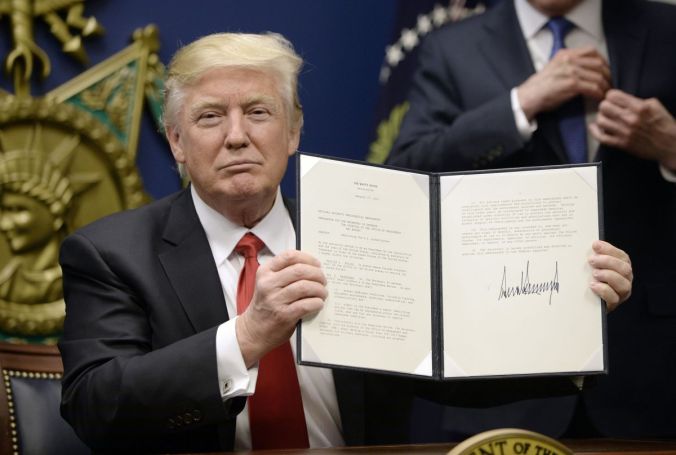
The Supreme Court properly and ethically  killed the burgeoning liberal judicial theory that different Presidents have different restrictions on how they can exercise established Presidential powers. The majority in in the just announced decision in Trump v. Hawaii conclusively struck down a Hawaii judge’s ruling that Trump’s hostile comments about Muslims on the campaign trail rendered his travel restrictions unconstitutional, while a similar measure ordered by a nice President for the right intuited reasons would be presumably acceptable. This seemingly partisan ruling required substituting mind-reading for the President’s stated reasons for the Executive Order, and would have established a terrible precedent in a number of areas.

Sadly, this was another 5-4 ruling where the Court seemed to divide along ideological lines. However, since it seems clear that the five conservatives would have ruled the same way no matter which party’s President had issued the order, while the liberal bloc was indulging “the resistance” with a “Trump is special” approach, only one side of the political divide appears to have left integrity and and objectivity in their spare robes. Many, many commentators around the web have noted that this should have been a 9-0 decision, and that the political bias of the Hawaii decision was flagrant from the start. I agree. The President’s authority in this area is clear and unambiguous.

Writing for the majority, Chief Justice John Roberts wrote that the government “has set forth a sufficient national security justification” for its action. “We express no view on the soundness of the policy,” Roberts added.

More, from the holding: Continue reading →

Morning Ethics Warm-Up, 6/13/2018: Everybody’s A Critic!

Good morning!

(That almost came out “good monging”…not a propitious sign)

1.  Diversity ethics:  The concept that somehow there are sinister motives and undesirable results any time an occupation settles into a demographic mix that isn’t four-square with that of the general population is one more bit of ideological cant. In London, U.K, the mayor has decreed it a crisis that the population using bicycles is disproportionately white, and has  said he is considering setting diversity targets for London’s cycling population to ensure that “progress was achieved.” I liked Amy Alkon’s disgusted reaction to this whole issue, as she asked how  gender equality would be achieved in fields where women show little interest in participating for a variety of reasons, including a greater interest in a work-life balance. How is this artificial PC “diversity goal” going to be achieved, she asks…” Force women at gunpoint to become cardiologists, oil rig workers, and garbagepersons? Force men at gunpoint to become veterinarians and kindergarten teachers?”

Reader (and volunteer Ethics Alarms proof-reading czar) Pennagain just sent me an article about the relative lack of female movie critics (minority movie critics are also under-represented among Hispanics, blacks and Asians. (I would also bet that they are disproportionately gay, but the study discussed didn’t check that, apparently.) Now unlike, say, female  “garbagepersons,” female movie critics predictably have a point of view that would make a substantive difference in film reviews, so I cannot brush aside this particular imbalance with “So what?” Instead I will ask, “What’s stopping them?” Anyone can be a movie critic now: all you need is a website, some dedication, and, one hopes, some understanding of film and culture. Now, being paid as a film critic is a little trickier.

Here is the Wikipedia entry on the New Yorker’s Pauline Kael, still perhaps the most famous U.S. film critic, whose long-lasting prominence, success and influence (I hated her reviews most of the time–overly political and biased, with whole genres she didn’t understand—“guy movies” like Westerns and horror films, that she sniffed at as beneath her) should have inspired more women to enter the field, but didn’t. I presume there is a reason for that, such as that spending your life watching multiple movies a day including many you wouldn’t be caught dead at if it wasn’t mandatory isn’t an attractive career choice, especially if you want a family.

2. From my sexual harassment files...I just rediscovered this, a sexual harassment case I discussed in program for a construction company in the 90’s. An attractive woman who worked in construction (Diversity!) was walking to work with a co-worker when some boor from an apartment window shouted at her, “Hey, show me your tits!” The women misheard the remark, and shouted back, “Sorry, I don’t have any kids!” Her colleague thought th exchange was hilarious, and told her what the guy really said, He also told everyone on the construction site about the incident, and the woman was pestered from then on with men smirking as they made comments like, “Hey, can I see pictures of your kids?” I hear you have two beautiful kids!” “Why don’t you let your kids out more?”  “Boy, I bet you’re proud of those kids of yours.” The women tried to laugh it off, but the joke never died, even though she started telling everyone to knock it off. Finally, she complained to management, and was told that she was being silly and hyper-sensitive. She sued.

Was using the word “kids”  in a coded joke creating a hostile work environment, or did the court find that since the language itself was inoffensive and not sex-related, it couldn’t be sexual harassment? Continue reading →

Afternoon Ethics Warm-up, 6/6/18: Special “Don’t Sue Me, These Are Just Opinions” Edition

Good afternoon.

1. For the record...Ethics Alarms passed 9 million views this week. That’s not a lot in a bit less than 9 years by the mega-blog standards, but their aren’t many ethics blogs that do better, and maybe none. Admittedly, this is a little like being the most popular fan site for Clint Howard…

2. Now this IS a frivolous lawsuit...tomorrow I finally go to Boston to argue my motion to dismiss the vexatious defamation lawsuit against me by an Ethics Alarms commenter whose feelings I hurt in the process of throwing him off the site. If a lawyer brought this suit, I would have a rare claim against him for breaching Rule 3.1, prohibiting frivolous suits. No lawyer, however, would bring such a suit. There has to be a good faith belief that you can prevail, or change the law, but there is literally no support in the law of defamation for calling insults (yup, I insulted him), opinions, and conclusions based on fully-revealed information and data libel. Non-lawyers, however, don’t have to obey legal ethics rules, and, as in this case, don’t know what they are anywhere. Maybe after I’m through with all of this, I’ll post the whole complaint. Among its claims is that I graduated from Hampshire College, and that the Massachusetts court has jurisdiction because I’m a fan of the Boston Red Sox. I also, it claims, defamed the plaintiff by erroneously referring to him as an academic. To deal with this spiteful action, I have already expended several thousand dollars. Yes, it goes with the territory. I know.

3. Imagine, impugning the professionalism and impunity of the FBI! A drunk and irresponsible FBI agent  shot a man at a Denver bar over the weekend when his gun flew out of his pocket, hit the floor and discharged as he was executing an acrobatic maneuver on the dance floor. This, you will not be surprised to learn, is not compliant with FBI policy. Agents are considered on duty at all times. They can carry their weapon at all times too, but cannot endanger the public while doing so. They are also not permitted to act like clowns in public, or be drunk as proverbial skunks. The agent is Chase Bishop, 29, who works out of Washington D.C. No word yet if he is part of the Mueller investigation.

Conservative wag Glenn Reynold would headline this story, “Top. Men.” Maybe he already has. And if you don’t get the reference, your cultural literacy needs a tune-up. Continue reading →