Double Standard Chronicles: Why Is Mocking The Rolling Stones For Their Appearance More Ethical Than Fat-Shaming Kelly Clarkson?

Rolling Stones

It isn’t. It is just as wrong.

Fox’s Chris Wallace has apologized for making a gratuitous and unkind crack about pop singer Kelly Clarkson’s weight on a conservative talk radio show (he was suckered into it by the host, Mike Gallagher, who has also apologized to Clarkson.)

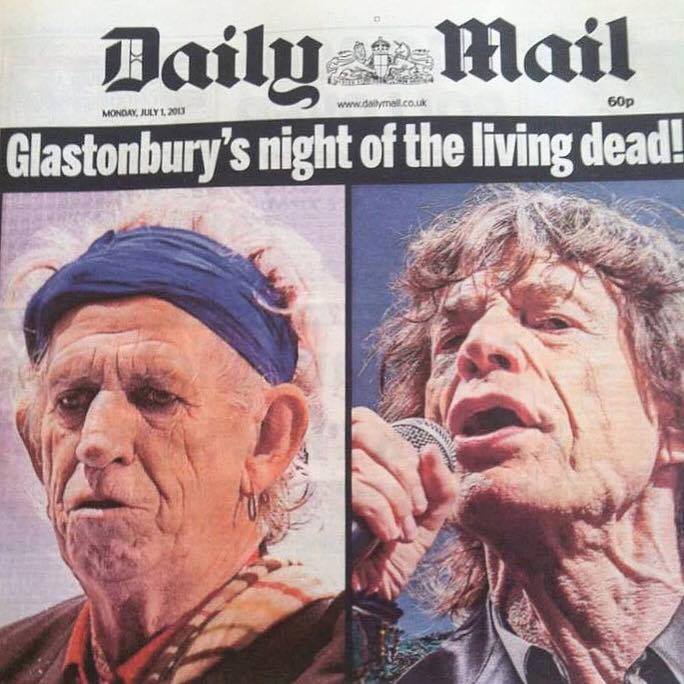
Today I have seen the above graphic circulating on Facebook with many “likes” and snarky comments about Mick and Keith’s faces.

My restrained reply is “Shut up, jerks, and show some respect.

Original members Mick Jagger, Keith Richards and Charlie Watts are over 70 now. Nevertheless, they are embarking on another North America tour. They can still play, in some ways better than ever; Mick can still sing, and can still dance like a chicken. The Stones show passion and professionalism in every performance; those who have seen their concerts leave amazed. The Stones are not like the Beach Boys or the Turtles, croaking out 50-year-old hits to grandparents at county fairs. The Stones can still rock, still have musical integrity, still give their audiences their money’s worth and then some.

I wonder how many of the Facebook trolls writing about how the Stones, who are going to be 73 this year, look old—they are old, and so what? What exactly are they supposed to do about that?—know how hard performing at a professional level is, how exhausting it is, how it impossible to get to sleep for hours after a show because you are soaked with adrenaline, and how much wear and tear it places on the body, emotions and mind.

My guess? Very few. And very few of these obnoxious critics will be able to walk upstairs quickly at the age that the Stones are still rocking arenas. I give three hour, interactive ethics seminars, and I’m a lively speaker. After about two seminars in a week with the related travel, I am fried—and the Stones are expending more energy, more often, then I am. They are also a decade older than I am. I can’t be certain I’ll be able to do my Ethics Chicken Dance when I’m 73. They are an inspiration. Continue reading

Tales of the Indiana State Legislature: “Your Baby Is A Racist!”

Indiana State Rep. Vanessa Summers. (All right, not really, but I couldn't resist. Read the story and you'll get it.)

Indiana State Rep. Vanessa Summers. (All right, not really, but I couldn’t resist. Read the story and you’ll get it.)

Can it get worse than this? During the debate  in the Indiana House  over the Religious Freedom and Restoration Act,  state Rep. Vanessa Summers, (D-Indianapolis) rose to set a new record in outrageous race-baiting.

“I told [Republican colleague] Jud McMillin I love his son, but he’s scared of me because of my color.”

Responding to a rumble of protest from her assembled colleagues, Summers insisted, “It’s true.” When challenged on the assertion later. she defended her accusation, saying:

“He (the eighteen-month-old child) looked at me like I was a monster and turned around and cried. And I told him (McMillin) you need to introduce your child to some people that are dark-skinned so he will not be scared.”

There are so many take-aways from this episode that it’s difficult to know where to begin, or where to stop.

Continue reading

Ethics Over Compliance: The Dutch Banker’s Oath

bankers oath

“Professional ethics” is a never-ending battle between compliance and ethics, between rules and penalties on one side, and principles and values on the other. Compliance is easier: all you do is tell people with rules and regulations what they must or can’t do, and promise that there will be consequences if those rules are violated. For ethics to work, people actually have to understand ethical values and be committed to living by them in a professional context.

Compliance has little to do with ethics. Jack the Ripper will follow rules if they are clear, if he knows he’ll get caught if he violates them, and if the punishment when he does will be  harsh enough. That won’t make him ethical. In fact, compliance–rules-based professional conduct control—is often antithetical to ethics. Rules and laws are merely a challenge to the type that Oliver Wendell Holmes called “The Bad Man”-–which includes bad women—to find ways to do things that are wrong but that avoid violating rules sufficiently to justify punishment.  This is why most compliance codes have language in their introductions noting that it’s impossible to make a code that will cover every wrong someone can think of, so ethics are important too.

Pure compliance-based systems don’t improve ethical conduct. The financial collapse in 2008 was largely caused by financial manipulators operating in the grey areas of the rules and laws—that’s why so few of them could be prosecuted. In politics, The compliance mindset is extremely convenient for clever liars and cheats like the Clintons, which is why Hillary could try to explain her e-mail shenanigans by saying that “I fully complied with every rule I was governed by (heh-heh-heh!).” Unethical people will always find ways to get around rules. Ethical people, in contrast, barely need rules at all.

Another benefit of ethics over compliance is that ethics rules–compliance codes—have to be long and detailed, otherwise it’s too easy for Clinton-types to find loopholes, though they usually will find some anyway. Ethical values, on the other hand, can be stated very simply. An ethical employer thinks, “Hmm, that intern is cute, but I am married and have duties of loyalty and honesty to my wife and family, and it would be an abuse of power and influence as well as irresponsible for me as a leader to have an affair with someone under my supervision in the organization.” The Bad Man thinks, “Wow, she’s hot; my wife won’t care as long as I’m not caught; getting a hummer isn’t considered sex where I come from, and there’s nothing that says a President can’t fool around!” For the former, “A leader should not have sex with subordinates” is clear as a bell; his values tell him why. The latter, though, is thinking, “Hmmm. How can I get around this? That rule says “should” but not “shall”— that’s good. No punishment is specified. Sounds like more of a guideline than a rule. “Sex”—that must mean sexual intercourse: great! Lots of wiggle room there. And “subordinate”—is an intern really a subordinate? And I bet I could argue that this is personal, not official conduct. All good…now where’s that cigar?

Invoking ethics rather than compliance is a new oath required by the Dutch Bankers Association. It could be printed on a postcard, and if a banker is ethical, it is all he or she needs:

I swear within the boundaries of the position that I hold in the banking sector…

…that I will perform my duties with integrity and care;

…that I will carefully balance all the interests involved in the enterprise, namely those of customers, shareholders, employees and the society in which the bank operates;

…that in this balancing, I will put the interests of the customer first;

…that I will behave in accordance with the laws, regulations and codes of conduct that apply to me;

…that I will keep the secrets entrusted to me;

…that I will make no misuse of my banking knowledge;

…that I will be open and transparent, and am aware of my responsibility to society;

…that I will endeavor to maintain and promote confidence in the banking system.

So truly help me God.

And if a banker isn’t ethical,

it won’t matter anyway.

__________________________

Pointer: Legal Ethics Forum

Sources: Bloomberg, The Conglomerate

Graphic: Bloomberg

Ethics Dunce: Tucker Carlson (No, I Mean Seriously, This Guy Is Really, REALLY An Ethics Dunce!!!)

Oh NO!!! Tucker Carlson is trapped by a conflict of interest! I'm coming, Tucker...just hold on! I'M COMING!!!!

Oh NO!!! Tucker Carlson is trapped by a conflict of interest! I’m coming, Tucker…just hold on! I’M COMING!!!!

Tucker Carlson is the founder and publisher of the conservative commentary and news site, The Daily Caller. In this post, I recently discussed Carlson’s ethical obtuseness in pulling a column by a Daily Caller contributor because it criticized Fox News, where Carlson has a gig as a weekend host of the network’s embarrassing happy conservative talk morning news show. I wrote,

The conflicts of interest on display here, the insensitivity to them, and the lack of any pretense of journalistic fairness or integrity is staggering. Carlson has placed The Daily Caller in the same, discredited ethics no-man’s land of Media Matters, Move-on.org, the Daily Kos and other sites that blatantly distort the news and their commentary on it for specific, ideological and personal agendas, and a personal agenda is the most unethical and cynical conflict of all. Carlson likes his Fox paycheck, apparently. Well, then, his ethical obligation is to have an independent journalist edit his website. In the alternative, he needs to refuse to work for Fox unless the network agrees to allow him full reign to say and write what he believes on his website, and to allow others to do so as well.

Apparently Carlson doesn’t read Ethics Alarms—I am shocked and disappointed—and moreover, has the imagination and ethics problem-solving skills of a banana slug.  Mediaite reports that he was discussing his ethics problem with RealClearPolitics, and admitted that he was totally flummoxed about what to do, poor dear:

“I have two rules,” Carlson said, “One is you can’t criticize the families of the people who work here, and the other is you can’t go after Fox” because he works there. Sigh. “Yes, it’s a conflict, for sure…but I don’t know what to do about it.” Continue reading

A Remorseful Prosecutor Apologizes

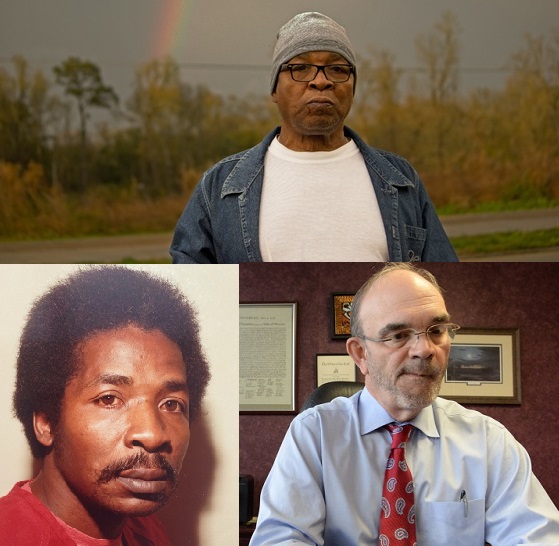
Above: Glenn Ford Today. L-Ford in 1983 R-The apologetic prosecutor

Above: Glenn Ford Today. L-Ford in 1983 R-The apologetic prosecutor

Now THIS is a #1 Level apology on the Ethics Alarms Apology Scale.

It’s more than an apology, really: it approaches self-flagellation. The tragic aspect of the confession and apology of former prosecutor  A.M. “Marty” Stroud III,  is that no one can really apologize for what he did, not after 30 years. For Stroud was the lead prosecutor in the December 1984 first-degree murder trial of Glenn Ford, who was convicted and sentenced to death for murdering Isadore Rozeman. Ford was innocent, and was finally released a year ago. His is a classic, horror story of justice derailed. Continue reading

Ethical! Funny! But Stupid: Kentucky’s Risible Same-Sex Marriage Ban Defense.

laughing Scotus

Supreme Court justices deserve to have a good laugh now and then.

Michigan, Ohio, Kentucky, and Tennessee are all defending their legislative bans on gay marriage in briefs before the U. S. Supreme Court. Only one of their legal teams came up with—-or had the guts to include—the novel argument contained in the Bluegrass State’s brief, which explains why a ban on gay marriage does not “discriminate on the basis of sexual orientation”:

Kentucky’s marriage laws treat homosexuals and heterosexuals the same and are facially neutral. Men and women, whether heterosexual or homosexual, are free to marry persons of the opposite sex under Kentucky law, and men and women, whether heterosexual or homosexual, cannot marry persons of the same sex under Kentucky law.

This is in the amusing category of arguments that make technical sense in legal terms—well yes, come to think of it, if you look at it that way, you’ve defined discrimination right out of the case!— but no sense whatever in the real world. Gays can’t marry their intended life partner but heterosexuals can; that’s obviously unequal treatment and constitutes discrimination. The defense deceitfully pretends that the whole reason for the emotional controversy doesn’t exist: “Love? What’s that? We know nothing of this thing you call love!”

These come up all the time when legal teams are brainstorming which theories to pursue in an appellate brief, and are virtually always discarded after some general amusement and admiration for the Clintonian who devised it. There is nothing unethical about including a dubious argument along with better ones in a brief, even a Supreme Court brief: consider the position that carried the day in the Obamacare case, when Chief Justice Roberts adopted a rationale for the individual mandate that the Obama Administration had repeatedly rejected and denied. The problem is that such an off-the-wall argument is risky:

1. It pulls time, attention and consideration from more promising arguments.

2. It makes the client look foolish or unserious to the public.

3.  Worse, it might make the client look foolish to the justices.

4. Some justice might react to it as an insult to his or her intelligence.

More than all of that, however,the argument is not going to work. Can you imagine what the reaction would be if the Supreme Court endorsed gay marriage bans relying on that logic? The argument is a non-starter, so including it in the brief sends a loud and clear message that no appellate lawyer ever wants a judge to hear:

“We got nothin’.”


Advocacy Ethics And Larry Tribe’s “Betrayal”

Bought, believed, or both?

Bought, believed, or both?

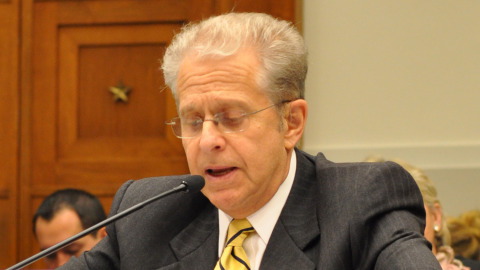
One of my favorite topics here, the public’s (and news media’s) misunderstanding of legal ethics and the function of lawyers, recently broke into the news with a crash as progressives saw Barack Obama’s constitutional law professor at Harvard and liberal icon Lawrence Tribe go before Congress and testified against the President’s climate change initiative, the Clean Power Plan, saying that it was the equivalent of “burning the Constitution.” This has been called every name in the book by progressives, from betrayal to greed to dishonesty.

“Laurence Tribe must not have been sworn in over a Bible today before testifying before Congress, because if he had been, that Bible would have burst into flames after his phony testimony about EPA’s legal authority to set standards for unlimited carbon pollution from power plants,” said David DiMartino, adviser to the Climate Action Campaign.“But I guess we shouldn’t be surprised— a wad of coal industry money burning a hole in your pocket can make you do strange things,” he added.

Indeed, Tribe was hired to represent its interests by Peabody Energy, the world’s largest private-sector coal company, and is the company’s counsel in a lawsuit that seeks to invalidate the EPA plan. That is what lawyers do, and what they exist to do: represent citizens and companies as they seek to avail themselves of their guaranteed right to use the law to protect their interests. Continue reading

Tales of “The King’s Pass”: Pete Rose and Jeremy Clarkson

King

The King’s Pass has been much in the ethics news of late—Brian Williams, Bill O’Reilly, David Petraeus, Hillary. Let’s review, shall we?

11. The King’s Pass, The Star Syndrome, or “What Will We Do Without Him?”

One will often hear unethical behavior excused because the person involved is so important, so accomplished, and has done such great things for so many people that we should look the other way, just this once. This is a terribly dangerous mindset, because celebrities and powerful public figures come to depend on it. Their achievements, in their own minds and those of their supporters and fans, have earned them a more lenient ethical standard. This pass for bad behavior is as insidious as it is pervasive, and should be recognized and rejected whenever it raises its slimy head.  In fact, the more respectable and accomplished an individual is, the more damage he or she can do through unethical conduct, because such individuals engender great trust. Thus the corrupting influence on the individual of The King’s Pass leads to the corruption of others…

1. The BBC just demonstrated how the King’s Pass should be rejected—with courage and gusto.

Jeremy Clarkson, the main host of the popular BBC auto show “Top Gear,” spent March misbehaving. He got in a shoving match with a producer, verbally abused staff and was recorded trashing the network. When Clarkson topped it off with a physical altercation with a show staffer, the BBC decided not to renew his contract. BBC head Tony Hall said in a statement:

It is with great regret that I have told Jeremy Clarkson today that the BBC will not be renewing his contract. It is not a decision I have taken lightly. I have done so only after a very careful consideration of the facts…I take no pleasure in doing so. I am only making [the facts] public so people can better understand the background. I know how popular the programme is and I know that this decision will divide opinion. The main facts are not disputed by those involved.

The BBC is a broad church…We need distinctive and different voices but they cannot come at any price. Common to all at the BBC have to be standards of decency and respect. I cannot condone what has happened on this occasion. A member of staff – who is a completely innocent party – took himself to Accident and Emergency after a physical altercation accompanied by sustained and prolonged verbal abuse of an extreme nature. For me a line has been crossed. There cannot be one rule for one and one rule for another dictated by either rank, or public relations and commercial considerations… Obviously none of us wanted to find ourselves in this position. This decision should in no way detract from the extraordinary contribution that Jeremy Clarkson has made to the BBC. I have always personally been a great fan of his work and “Top Gear”…The BBC must now look to renew Top Gear for 2016. This will be a big challenge and there is no point in pretending otherwise. I have asked Kim Shillinglaw [Controller of BBC Two] to look at how best we might take this forward over the coming months. I have also asked her to look at how we put out the last programmes in the current series.

The show, without Clarkson, is toast, and Hall knows it. Nonetheless, he had the guts to do the necessary and ethical act: not allowing its indispensable star to abuse his power and popularity . Once Clarkson did that, “Top Gear” was doomed anyway; firing him now just minimizes the carnage. Although Hall has no responsibility to other networks and organizations, his decisive handling of the episode has saved other programs even as it destroys his own. It is a precedent and a role model for employers refusing to allow themselves to be turned into enablers  by stars assuming the King’s Pass works. When they say, “You can’t fire me, I’m irreplaceable! There’s no show without me!”, the response now can be, per the BBC: “If there’s no show without a jerk like you, then there’s no show. Bye!”

2. Once again, Pete Rose is sucking the ethics right out of people’s brains.

Ah, Pete Rose. He was the topic of the first ethics post I ever wrote, way back in 2004. Then, in 2007, he became my first and only Ethics Dunce Emeritus.

The Pete Rose case is simple. Baseball has an absolute, no exceptions rule that demands a lifetime ban of any player, coach or manager who gambles on major league baseball games. Such banned players can’t be hired by major league teams for any purpose, and cannot be considered for Hall of Fame membership., ever, even after they are dead. Everyone in baseball knows why this rule exists—baseball was nearly destroyed in 1919 when gamblers bribed the Chicago White Sox to throw the World Series—and the rule is posted in every clubhouse. Rose bet on baseball while a major league manager, and also bet on his own team. Thus he is banned.

The significance of the fact that he is, as a player, the all-time hits leader and was the face of the game is that it led Rose to believe that the game would never ban him, and that if caught, he would be treated with special leniency. His excellence on the playing field doesn’t mitigate his conduct, or justify minimizing the ban it earned, at all.

The New York Times published a story about Rose’s efforts to get baseball to lift the ban, now that a new Commissioner, Rob Manfred, is in office. You can read the article here, which is remarkable for the many jaw-droppingly unethical arguments put forth by the baseball people the article quotes, contrasted with the occasional quote that shows that a speaker comprehends the concepts of consequences, accountability, and why letting stars break the rules is suicidal to any culture. It would be an excellent ethics exam.

Here are the quotes; my comments follow in bold. Continue reading

Fire NYT “Public Editor” Margaret Sullivan

new_york_times_logo

In some professions, an apology isn’t enough.

One such profession is accounting. Arthur Andersen couldn’t fix its reputation by apologizing. Its knee-deep involvement and likely complicity in the Enron debacle rendered its claim to trustworthiness permanently and irredeemable damaged. Its conduct made the company useless as a certifier of transparency and truth. For an accountant or auditor, if there is any doubt that he or she might not be telling the truth, the jig is up. One cannot trust a truth-teller who only is accurate and reliable most of the time.

I think the same applies to newspaper ombudspersons, if that’s the proper term now, and this is what Margaret Sullivan’s job as New York Times “public editor is,” euphemisms aside. She is supposed to bolster public trust by serving as an objective critic of Times reporters, columnists and editors, and ensuring that they hew to the high standards of professionalism and journalism ethics readers should be able to expect from the nation’s most respected newspaper.

Like the Washington Post’s Jonathan Capehart, Sullivan has published a mea culpa for her joining on the “Darren Lewis is a white cop and Mike Brown was an unarmed black kid, so obviously the white cop gunned down the black kid in cold blood because that’s what white cops do and whites want to do” lynch mob last summer as it was being led by Eric Holder, the media, Al Sharpton and others.  But unlike Capehart, who is an opinion columnist and can be forgiven a bit for being led by his biases, Sullivan job is to protect her colleagues from their biases and ensure that the Times at least tries to be objective and fair. Continue reading

Ethical Quote Of The Month: Jonathan Capehart…Big Whoop.

Hands up 3

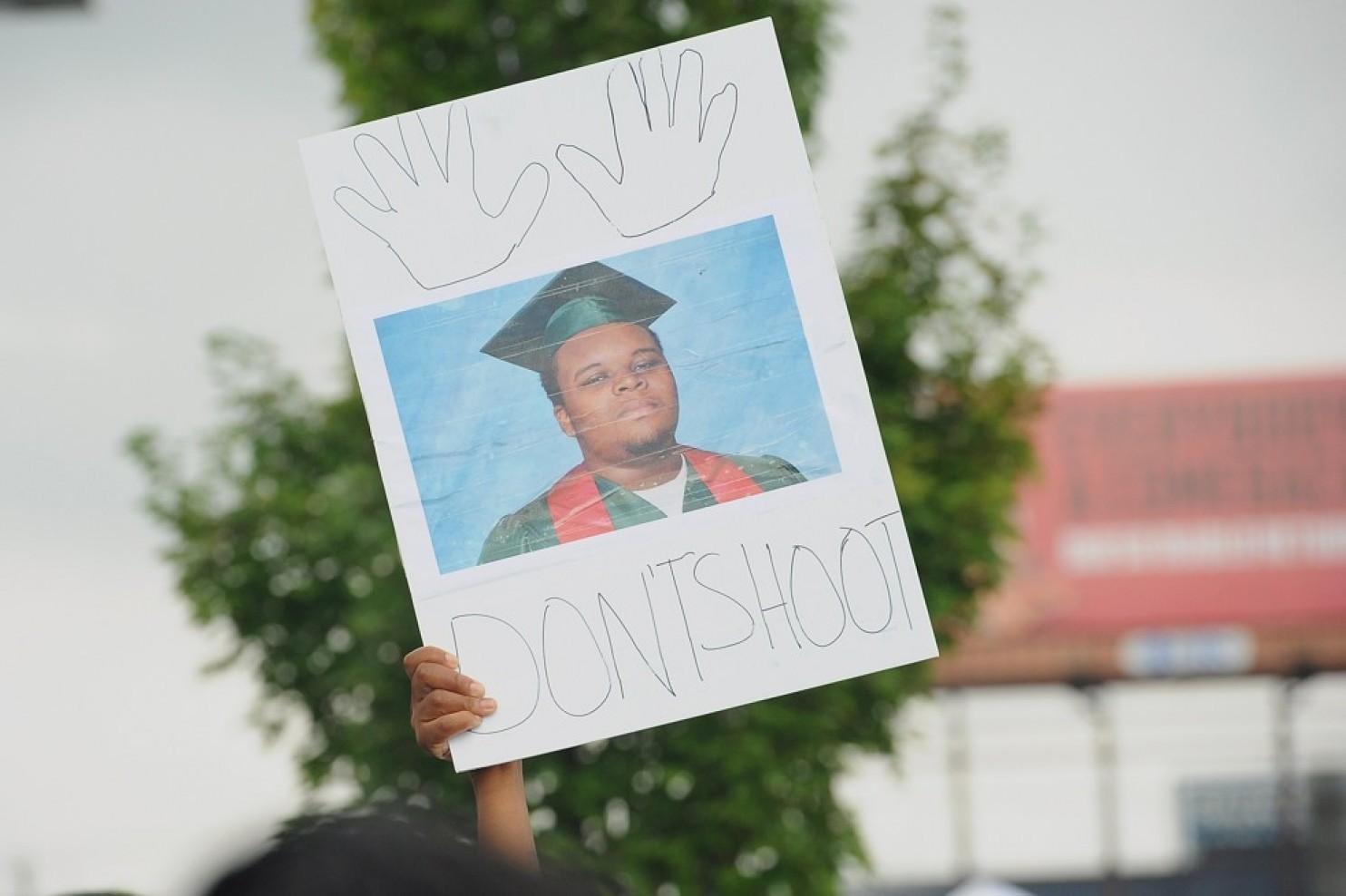
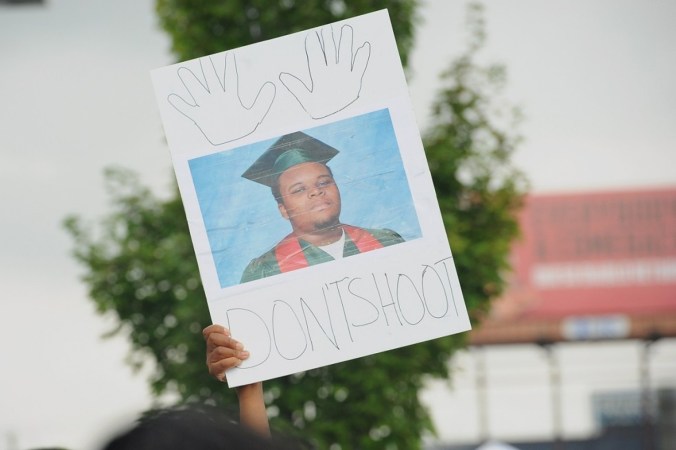
“Now that black lives matter to everyone, it is imperative that we continue marching for and giving voice to those killed in racially charged incidents at the hands of police and others. But we must never allow ourselves to march under the banner of a false narrative on behalf of someone who would otherwise offend our sense of right and wrong. And when we discover that we have, we must acknowledge it, admit our error and keep on marching. That’s what I’ve done here.”

—— African-American Washington Post blogger and MSNBC contributor Jonathan Capehart in a Post column acknowledging that the “Hands up! Don’t shoot!” chant, hashtag, protest motto and refrain was based on the lies of Dorian Johnson.

This is unusual: a statement embodying ethical principles that arises entirely out of an unethical, unprofessional and untrustworthy world view.

It is a credit to Capehart that he has the integrity to openly admit he was wrong when the facts finally penetrated his biased, bigoted, unethically-motivated brain. He is certainly more admirable than the politicians and journalists of the left and the civil rights movement who still refuse to admit it, like Capehart’s MSNBC colleague and perpetually Angry Progressive Lawrence O’Donnell. It’s good that he apologized, in the sense that it’s better than if he didn’t, but if he were aligned with ethical advocates and advocates, his apology would be unnoticed among thousands of others. Capehart’s ability to process and admit what was, or should have been obvious months ago is not rescued from disgrace because others are even worse.

For the record, Ethics Alarms concluded that “Hands Up! Don’t Shoot!” was probably false on November 27, 2014. I don’t usually quote myself at length, but after I read Capehart’s much praised, “Well, gol-ly! Knock me over with a feather! Dorian Johnson was lying, and I used what he said to help the media, Al Sharpton and Eric Holder convince African-Americans that whites are out to kill unarmed black men! Ooopsie! My bad!” column, I gagged, and went back and read this:

How does the culture, the news media, the civil rights  industry, and politicians determined to benefit by making African-Americans suspicious, paranoid, racist and, of course, lifetime Democrats, make amends for this? How do they undo the damage to mutual trust and American society?

Obviously they don’t. They don’t even try. In fact, all indications are that they will refuse to acknowledge that the entire, national effort to portray the tragic confrontation between Michael Brown and Officer Wilson as a race-triggered execution was based on a lie that was presumed to be accurate despite much reason to doubt it.

The original claim that Brown was shot and killed after putting his hands in the air came from his friend and partner in crime, Dorian Johnson. Johnson, who already had a record of lying to police, was with Brown prior to the August 9 confrontation, and had joined him in the petty robbery that occurred just before Brown’s arrest. In his TV interviews  after the shooting, Johnson said that Wilson shot Brown in the back, causing him to turn around with his hands up, pleading, ‘I don’t have a gun, stop shooting!’ Before the grand jury, Johnson, who admitted that he hid during the incident and later ran home to change clothes so he wouldn’t be identified, even elaborated and provided minute details to his fabrication, stating under oath that the shot in his back caused Brown’s body to “do like a jerking movement, not to where it looked like he got hit in his back, but I knew, it maybe could have grazed him, but he definitely made a jerking movement.” The forensic evidence showed that Brown was not shot in the back.

Other witnesses concocted similar testimony demonizing Wilson after hearing the media’s credulous accounts based on Brown’ friend’s claims. One told the FBI that he saw Wilson shoot Brown in the back and then stand over his prone body to “finish him off.” In front of the grand jury, however, this witness acknowledged that he had not seen that part of the shooting. He explained that the false story he told the FBI was “based on me being where I’m from, and that can be the only assumption that I have.”

Sort of like Democrats have to believe such false narratives because the presence of deadly, virulent racism is core to the party’s appeal to African American voters…

Then, he admitted,  he changed his story to fit details of the autopsy once it was reported on TV.  “So it was after you learned that the things you said you saw couldn’t have happened that way, then you changed your story about what you seen?’ a prosecutor asked. “Yeah, to coincide with what really happened,” the witness replied.

Members of the community, activists, anti-police zealots and those who had observed how effective the Trayvon Martin hoodie symbolism had been in casting George Zimmerman as a racist killer (rather than as he was subsequently shown to be, an irresponsible, unbiased jerk) immediately seized on the gesture as a powerful protest symbol. Every time it was repeated in a protest or demonstration, it was Johnson’s lie multiplied, until the narrative that Officer Wilson shot an unarmed, unresisting teenaged black male who was pleading to live was imbedded in the American mind. Of course it was murder! Of course any system that does not immediately charge the rogue police officer with murder is corrupt and flawed.

I have had conversations with well-intentioned liberals in denial,who are obviously unable to think of what occurred in Ferguson any other way. Such frustrating conversations. As in the Martin case, they want the white shooter to be guilty of racism and brutality. The fact that no clear evidence will show that, as the grand jury found out, doesn’t dissuade them, even though they would nod vigorously if activists argued that prosecutors displayed racism by indicting any black suspect when eye-witness testimony was unreliable.

Oh, it is true that their confusion is compounded by not understanding what a grand jury does, or hearing references to the quote that a prosecutor can make a grand jury “indict a ham sandwich” (not recognizing that this was a criticism, or perhaps having no more regard for a young policeman’s life than they do a ham sandwich, because, you know, white cop), and that they have been conditioned to believe from their SDS veteran professors from the Sixties that police officers are not public servants but really diabolical agents of an overbearing state—not that they don’t want an overbearing state in most matters, just not where public safety…okay, it’s complicated!). Still, what most nourishes their fervor now—how I love being told that I am taking my cues from Fox News!—is the indelible image of young, frightened, unarmed Mike Brown, with his hands in the air.

How does Darren Wilson get his career, reputation and life back after a lie is promoted as fact by the media, and ruthlessly used by race-hucksters to destroy him while escalating racial distrust? How does the culture recover from this deep, self-inflicted wound?

It is not the criminal justice system that is so in need of repair, but our system of communicating important events to the public, so that bias doesn’t overwhelm truth, and we will be able to forge the right lessons from tragedies like Michael Browns death, not false lessons that leave us more ignorant, hateful, and afraid.

How was I able to write that four months ago, and Capehart is only capable of comprehending it now? It’s simple, really: I’m not an anti-white bigot, and he is.  I had no horse in this race: I was just trying to weigh the facts. I don’t have a stake, politically, racially or socially, in proving that Mike Brown was just an innocent kid hunted down and shot in the street like a dog, or proving that Office Wilson was a model police officer. Capehart didn’t pay attention to the evidence because it was a white Prosecuting Attorney who produced it, and a black—sorry, thug—who contradicted it, as a black Attorney General behaved and spoke as if he believed the thug.

Now Capehart is a believer, and why? He is a believer because the Justice Department run by that black Attorney General had to grudgingly admit that there were zero facts to support the lie that it desperately, urgently wanted to be true, so Darren Wilson could be crucified to expiate white America’s sins against the black man….and, not so incidentally, gin up black votes for the Democratic base.  Now Capehart trusts the facts, because a black AG, not a white one, endorses them.

Well, to hell with him, frankly. Why are anti-white racists with Capehart’s biases writing for the Washington Post? Must there be a black racist slot on the op-ed page now? I didn’t notice: did Obama’s EEOC pass that regulation? The New York Times has Charles Blow, and so the Post must have at least one too? Is there a black racist pundit arms race?

Who is going to apologize to Darren Wilson? Capehart didn’t do that; after all, Wilson is white. Capehart doesn’t care about whites, but wants to clear the record so future protests against police, Ferguson and white America aren’t weakened by reliance on a lie. Where are the apologies to Robert McCulloch, that presumptively racist Prosecuting Attorney who was able to avoid the lynch mob’s demands that Wilson be tried for murder by running a grand jury that got to see all the evidence for once, the scum. How dare he? Van Jones, who is treated as a respectable, rational pundit on CNN and ABC, told the latter that “If there had been a special prosecutor in Ferguson, we would have had a different result.” And we all know that a different result would be the right thing, meaneth Van. To my knowledge, Van hasn’t apologized either. I’ll lay odds that he won’t. Neither has the former governor of Massachusetts, prominently mentioned as a possible presidential candidate once Democrats finally admit that Hillary is hopeless: Deval Patrick told Meet the Press that he wanted to see Wilson indicted regardless of the facts. Nor Kasim Reed, Mayor of Atlanta, who told Meet the Press that justice meant trying Wilson for murder, based on seeing the case through the eyes of Brown’s parents, the individuals whose confirmation bias most powerfully compelled them to believe the self-serving lies of their baby boy’s pal.

Two police officers are dead, two more have been shot, uncounted whites have been targeted and beaten by angry blacks (the Justice Department hasn’t been interested in the racial implications of those attacks), Ferguson is in ruins, innocent businesses are destroyed, Darren Wilson is in hiding, and racial distrust across the U.S. is worse than it has been in decades, not entirely but substantially because people like Jonathan Capehart wanted to believe Dorian Johnson’s lie, because it fits their ideological, political, social and racial agenda. So they did.

Admitting a wrongdoing—not a mistake, but wrongdoing— is always commendable, but when it comes after such carnage, and so inexcusably late, my applause is going to not only be faint, but suffused with disgust.

______________________
Graphic: Washington Post