Making Mitt Seem Stupid: A Confirmation Bias Case Study

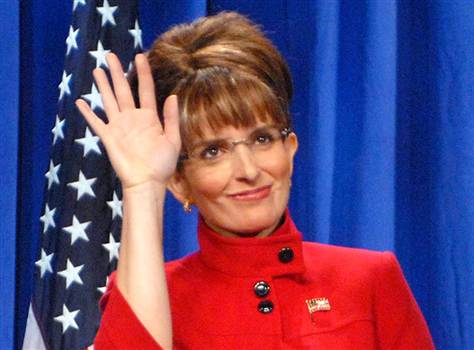
“Tina Fey, Sarah Palin…who cares who said what? Palin’s stupid, right?

Many progressives and liberals (this therefore includes the majority of journalists)  are so sure that conservatives are stupid that they allow confirmation bias to make them act stupidly and unethically. Either that, or some of them just choose to lie their heads off and pretend people don’t notice.

I first realized this a while back when the ABC website posted a feature called  “I Can’t Believe He Said That!” or something in that vein, featuring verbal gaffes by politicians. Well, actually it featured verbal gaffes by 19 Republicans and one Democrat (Joe Biden, of course.) Oddly, President Obama’s goof about the “57 states” wasn’t there, because, as we all know, he’s brilliant and his gaffes don’t count. Well, actually, the list was 18 Republicans, one Democrat, and Tina Fey. Yes, the celebrated Saturday Night Live Sarah Palin impressionist was represented with her “I can see Russia from my house!” line…except that it was attributed to Sarah Palin. Similarly, I have quizzed people about who first used the non-word “strategery.” Sure enough, about half in my unscientific poll, almost exclusively Democrats, thought it was President Bush, and not the real quote-master, SNL Bush satirist and comedian Will Farrell when he was playing Bush.

This was brought back to mind recently when “Doonesbury’s” Gary Trudeau  mocked Mitt Romney for making this spectacularly fatuous, Dan Quayle-like declaration in a stump speech,

“I believe in an America where millions of Americans believe in an America that’s the America millions of Americans believe in.”  Continue reading
Yet Soon We Will Be Missing Ann Curry On The Today Show

Pretty, perky, biased and incompetent—yup, perfect for NBC.

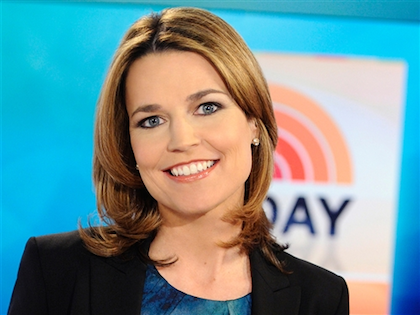
Fresh from highlighting the lack of professionalism exhibited by Ann Curry as she was booted off the Today Show, I was jostled by another blog’s link to this one reminding me that I already had an ethics run-in with her replacement, the fresh-faced, cute as a button, proudly biased and ignorant Savannah Guthrie, who continues the devolution of the female liberal mouthpiece co-anchor position on the show that began with Barbara Walters.

The hard conservative site Freedom Report alerted me that I had blown the whistle on Guthrie’s incompetence in an April, 2011 post, after she tried to “gotcha!” Donald Trump and exposed her own Constitutional illiteracy instead. I had forgotten the episode, perhaps because it forced me to defend The Donald, which was and is about as appealing to me as snorting skunks. You can read the post here. A quick summary: Guthrie attempted to argue against Trump’s pro-life views by asking the Constitutional equivalent of the automobile-tuning query asked of expert witness/hairdresser Marisa Tomei in the climax of  the classic,”My Cousin Vinnie,” to which she replies, “It’s a bullshit question!”: Continue reading

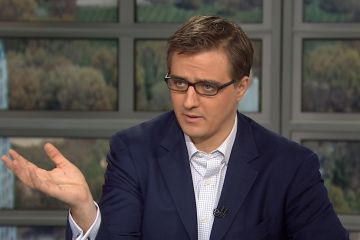
The Ethics Verdict on the Chris Hayes Apology

To be fair, while Chris Hayes is ill-informed, ungrateful and arrogant, at least he’s incoherent.

As anyone could have predicted, MSNBC host Chris Hayes had to issue an apology after his fatuous and inarticulate comments about Memorial Day. If you were lucky enough to miss them, here they are:

“I think it’s interesting because I think it is very difficult to talk about the war dead and the fallen without invoking valor, without invoking the words “heroes.” Why do I feel so [uncomfortable] about the word “hero”? I feel comfortable — uncomfortable — about the word because it seems to me that it is so rhetorically proximate to justifications for more war. Um, and, I don’t want to obviously desecrate or disrespect memory of anyone that’s fallen, and obviously there are individual circumstances in which there is genuine, tremendous heroism: hail of gunfire, rescuing fellow soldiers and things like that. But it seems to me that we marshal this word in a way that is problematic. But maybe I’m wrong about that.’

With so many interesting, thoughtful, perceptive and provocative statements being written and uttered every day that vanish forever, never to be repeated or published, it is cruel irony to confer immortality on cretinism like that, but I digress. My commentary on Hayes’ statement is here. His apology was pre-ordained, because he insulted so many, so deeply, so pointlessly and so arrogantly, at the worst possible time, that a national outcry was guaranteed, and the eventual directive, “Apologize or pack!” from his MSNBC overlords was a forgone conclusion.

As forced apologies go, how did Hayes’ rank? Continue reading

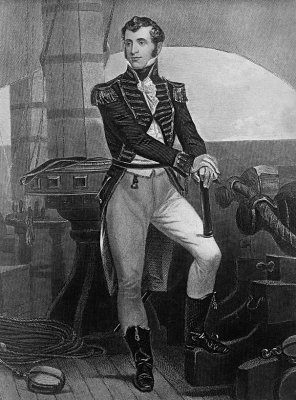
Stephen Decatur, Eduardo Saverin, and the Unpatriotic Hypocrisy of the Right

Stephen Decatur

I admit that I am often ambushed by the hypocrisy of both political parties and their followers. The ability of both conservatives and progressives to completely reverse positions and advocate exactly what they had passionately opposed mere months, weeks, or even minutes before is breathtaking, and I never seem ready for it. For example, after the Democrats had tried to pin the shooting of Rep. Giffords on the harsh rhetoric of  Sarah Palin, Rush Limbaugh and others in the conservative camp, I really wasn’t ready for them to ratchet up the metaphorically violent metaphors themselves within a few weeks, but they did. Similarly, after conservatives had mocked and condemned the discouraged liberals who had fled the U.S. in dismay after George W. Bush was re-elected, I was unprepared for the unseemly applause emanating from the Right when Facebook co-founder Eduardo Saverin decided to become an ex-American to save mega-millions on his tax bill.

Lock-step ideology is damaging enough, but lock-step ideology without consistent values, principles and priorities is dangerous, and that, I fear, is what we have on both ends of the political spectrum in America today.

Stephen Decatur (1779-1820) was a genuine American hero, once featured in grade school history lessons but now, like so many others, the victim of cultural oblivion. One of the greatest naval commanders in U.S. history, Decatur had his meteoric career was cut short by a duel, and as his exploits on the waves have faded from memory, the one feature of his remarkable life that is best remembered is his legendary  toast, made in April 1816,  that became an iconic, if often misunderstood, expression of American patriotism:

“Our Country! In her intercourse with foreign nations may she always be in the right; but our country, right or wrong.” Continue reading

Ethics Alarms Recap: A Long Weekend of Ethics

If the long Presidents Day weekend took you hither and yon and away from ethical dilemmas and controversies, welcome back! Here is what went on here in a lively three days:

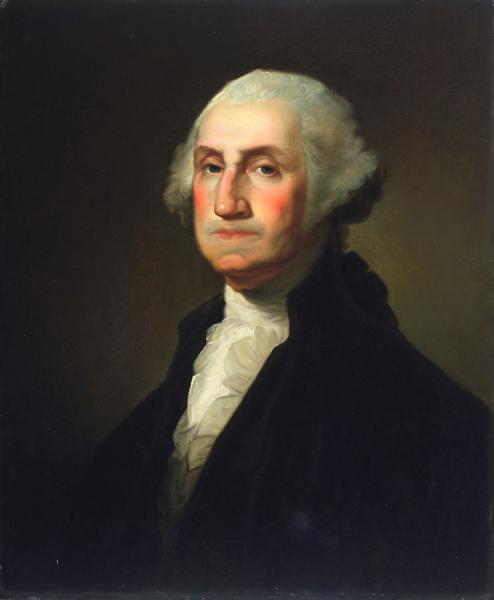
The Most Ethical President

When I am asked who I think was the most ethical President of the United States, my answer is the man whose birthday President’s Day preempts: George Washington. He was not our most brilliant or eloquent President, and it often took him a while to find his way to the right thing to do, slavery being the most important example. Still, the United States was extraordinarily fortunate to have such a principled and instinctively wise leader as its first. He created the template that, though weakened by time and inferior successors, continues to exert a powerful influence over our choice of Presidents. He was honest. He was civil. He was dignified and insisted on respect, but never worship: his simple decision that America’s Chief Executive be called, humbly, “Mr. President” had immense consequences for the nation’s attitudes toward executive leadership. Perhaps most important of all, Washington was a gifted leader but a reluctant one. He believed that a citizen should heed the nation’s call when needed, but he was a reluctant public servant, and condemned those who sought power for its own sake.

I am always amazed, when I return to Washington’s writings and speeches, how sure, persuasive and perceptive his statements remain, so long after they were made.

Here are some of my favorite quotes from our most ethical President.

Happy Birthday, approximately, General Washington. Continue reading

Reflections On President’s Day, 2012: A United States Diminished in Power, Influence and Ideals

Rep. Ron Paul is fond of saying that the United States shouldn’t be the world’s policeman, and thanks to irresponsible stewardship of America’s resources and horrific maintenance of its ideals, his wish has already come true. One result is a world that has no functioning opposition to evil, a world at the mercy of chaos with no champion or guiding inspiration in sight. The other result is a United States that no longer stands for its own founding principles.

For proof, we have only to look as far as Syria, where a brutal dictator is killing his own people at an accelerating rate. Although his people have tired of his tyranny, Hafez al-Assad, like Gaddafi before him, seems determined to kill as many of his own countrymen as he has to in order to stay in power. Our President, Barack Obama, has delivered stern admonitions and disapprovals, which is this President’s style and approximately as effective as tossing water balloons. The Secretary of State, Mrs. Clinton, expresses frustration, for all the good that does. The killing, of course, goes on.

If you think I’m going to advocate U.S. action in Syria, you are wrong. Quite simply, we can’t afford it—not with a Congress and an Administration that appear unwilling and unable to confront rising budget deficits and crushing debt with sensible tax reform and unavoidable entitlement reductions. Yesterday Congress and the President passed yet another government hand-out of money it doesn’t have and refuses to raise elsewhere, among other things continuing to turn unemployment insurance, once a short-term cushion for job-seekers, into long-term government compensation for the unemployed. Part of the reckless debt escalation was caused by the last President unconscionably engaging in overseas combat in multiple theaters without having the courage or sense  to insist that the public pay for it, and the current administration is incapable of grasping that real money, not just borrowed funds, needs to pay for anything. The needle is well into the red zone on debt; we don’t have the resources for any discretionary military action.

Ron Paul thinks that’s a good thing, as do his libertarian supporters. President Obama, it seems, thinks similarly. They are tragically wrong. Though it is a popular position likely to be supported by the fantasists who think war can just be wished away, the narrowly selfish who think the U.S. should be an island fortress, and those to whom any expenditure that isn’t used to expand  cradle-to-grave government care is a betrayal of human rights, the abandonment of America’s long-standing world leadership in fighting totalitarianism, oppression, murder and genocide is a catastrophe for both the world and us. Continue reading

Update: The King Memorial Quote Mess Is Officially A Fiasco

The Martin Luther King Memorial Commission meets to address the quote controversy

When we last left the star-crossed Martin Luther King Memorial on the National Mall, Secretary of the Interior Ken Salazar had boldly declared that the Interior Department was ordering the embarrassing misquotation of the martyred civil rights leader changed, so he would not sound to future generations like “an arrogant twit,” in poet Maya Angelou’s neat phrasing. Now a war of words and intentions has broken out, with Salazar declaring that the entire made-up quotation (“I was a drum major for justice, peace and righteousness.”—something King never said, and probably never thought, either) had to be removed, and the correct quote (“…if you want to say that I was a drum major, say that I was a drum major for justice. Say that I was a drum major for peace. I was a drum major for righteousness. And all of the other shallow things will not matter.”) added, and Ed Jackson, the architect who oversaw the memorial’s development for years, saying that Salazar’s plan would wreck the structure. Asked if there was any way to remove the inscription from the memorial without destroying it, Jackson answered, “No.Continue reading

Ethics Hero Emeritus: Christopher Hitchens (1949-2011)

Too many excellent writers are writing about Christopher Hitchens in the wake of his premature death from cancer for me to add much of value. I disagreed with Hitchens frequently, but then, so did everyone. What I appreciated was his integrity, which was unshakable. What I admired, and will always try to emulate, was his refusal to be seduced by convention, ideology, political agendas and partisan bias. Hitchens looked at the world with clear and piercing eyes, and dissected what he observed with a mind that was curious, rigorous, and forever open. Thus he was never a comfortable ally for liberal or conservative, Republican or Democrat, because he would never hesitate to arrive at conclusions that shocked his friends and cheered his friend’s enemies. He was fearless and principled.

Most of all, however, Christopher Hitchens wrote like an angel, a simile the committed atheist would have hated. It is a measure of the depths to which popular taste and intellect have fallen that the Mark Train Prize was awarded in recent years to the pedestrian likes of Will Farrell and Tina Fey when Hitchens routinely churned out prose wittier than their best efforts on the most inspired days of their creative lives. He was truly the spiritual and literary descendant of Mark Twain, as well as Swift, Ambrose Bierce, H.L. Mencken, George Bernard Shaw, W.S. Gilbert, Dorothy Parker, Gore Vidal and the rest of the select crew of social critics blessed with the ability to infuriate, illuminate and amuse simultaneously. When he focused all of his passion, intellect and rhetorical skills on a topic he cared about, Hitchens was as close to an irresistible force as a writer can be. Yet his mission was always noble. His constant goals were truth, justice, fairness, and wisdom. Of him it could be fairly stated, as of few others, that while Christopher Hitchens was around, bullshit was never safe.

I’ll close with four links about Hitchens: the New York Times obituary, the Washington Post obituary, a collection of comments and other links about Hitchens, a collection of his essays, an appreciation from a friend, and a collection of some of his best quotes.

If you can only read one, choose the last. The list is heavily tilted toward Hitchens’ attacks on religion, and he wrote about so many other things, but it is representative of his skill and style. One quote on the list  in particular I remember well, and it makes me laugh every time I read it:

“If you gave [Jerry] Falwell an enema he could be buried in a matchbox.

Ah, we’ll miss you, Hitch!

Unethical Quote of the Week: Herman Cain

Stick to pizza, Herman.

“Here’s what I would have – I would have done a better job of determining who the opposition is and I’m sure that our intelligence people have some of that information. Based upon who made up that opposition, OK, based upon who made up that opposition, might have caused me to make some different decisions about how we participated. Secondly, no, I did not agree with Qadhafi killing his citizens. Absolutely not. So something would have had to been – I would have supported many of the things they did in order to help stop that. It’s not a simple yes-no, because there are different pieces and I would have gone about assessing the situation differently, which might have caused us to end up in the same place. But where I think more could have been done was, what’s the nature of the opposition?”

—–Republican Presidential hopeful Herman Cain, responding to a reporter’s question asking for his opinion of President Obama’s handling of Libya. The comment followed an eleven second pause and one false start, as Cain appeared confused and unprepared for the question.

The ethical problem with Cain’s answer was not that he fumbled it, but that like his stated position on abortion, it is unethical and intellectually lazy. Continue reading