Unethical Quote Of The Week: Nautika Harris

miami-teen-home-intruder

“You have to look at it from every child’s point of view that was raised in the hood. You have to understand … how he gonna get his money to have clothes to go to school? You have to look at it from his point of view.”

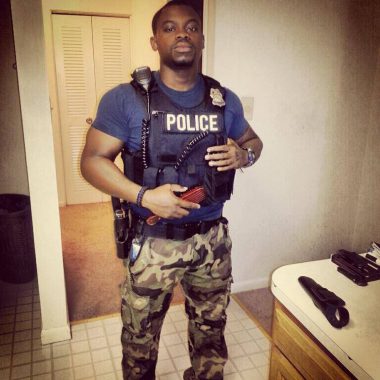
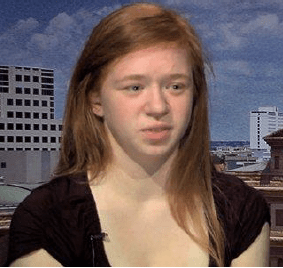
Nautika Harris (above, right), the cousin of a 17-year-old teen shot dead by a 54-year-old Miami woman as he tried to exit her home, which he had entered to burglarize.

Miami-Dade police say that Trevon Johnson, 17, burglarized the home of a 54-year-old old woman last week.

She was not in the house when the break-in occurred, but after being alerted by her surveillance system, she rushed home and found Johnson climbing out of a window. She shot him dead, and his relatives are outraged.

“I don’t care if she have her gun license or any of that. That is way beyond the law … way beyond,” Johnson’s cousin Nautika Harris told local radio station WFOR. “He was not supposed to die like this. He had a future ahead of him. Trevon had goals … he was a funny guy, very big on education, loved learning.”

And loved burglary, apparently. Continue reading

Unethical Restaurant of The Month, Busted Ethics Alarms Division: Joe’s Crab Shack

Joes Crab Shack

“Wait, someone took offense at the photo of a lynching that we had as a placemat? Who could have predicted that?”

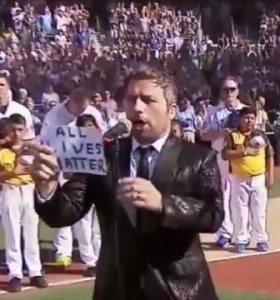
Yes, in a case of a staff-wide ethics alarms breakdown that defies the laws of probability, Joe’s Crab Shack in Roseville, Minnesota thought it would be cute and entertaining to its diners to place on a table a large photo depicting the hanging of a black man before white onlookers. Labeled “Hanging at Groesbeck, Texas on April 12th 1895,” the placemat included a speech bubble coming from the doomed black man that  says, “All I said was that I didn’t like the gumbo.”

I don’t understand this at all. I know that Minnesota has as many African Americans as Washington, D.C. has albinos, but still: who would think this was appropriate decor anywhere in the U.S.?  And if there was one employee who did, due to a lesion or something, how did no other employee or no one in management intercept this atrocity, saying, “Whoops! Gotta watch Cletus the Closed Head Injury Busboy more closely, everyone. Look what he put on this table!” 

Surely most people in 2016 have better racism detectors than this. Please. Tell me this was a social science experiment or something. Please.

The evidence, though, suggests that the entire establishment is run by Cletuses…or maybe crabs! That would explain it—the Joe’s Crab Shack chain is operated by crabs! Crabs are notoriously insensitive. That would explain the restaurant’s apology: Continue reading

The Zoe Saldana-Nina Simone Controversy

I have been following this story for some time with a mixture of amusement and horror; satisfaction too, I suppose, as it is nice to see that black grievance-mongers are equally irrational when the imagined offender is black rather than white. There is integrity in this, after the irrationality of it all.

Nina Simone’s tribute website calls her a “classically trained pianist who evolved into a chart-topping chanteuse and committed civil rights activist.” As a white kid growing up in the Sixties, I missed Simone almost entirely: she wasn’t a regular guest on TV variety shows.  In college, I encountered aficionados who referred to her as brilliant, and I tried to appreciate her song stylings. She was one of those singers that  I could understand why she was famous and exceptional without wanting to listen to her for pleasure. At the time I regarded Simone as a cult singer, but that was unfair; she was obviously more important than that. I was also unaware of her considerable significance in the civil rights

Three years ago, Zoe Saldana was cast as Nina Simone in “Nina”, a major Hollywood film about the singer’s life, replacing singer Mary J. Blige, who was originally cast but dropped out. Immediately, the choice of Saldana, a rising black actress of Dominican and Puerto Rican parents best known for her work as Uhura on the “Star Trek” reboots, “Avatar,” and “Guardians of the Galaxy”, was attacked. She wasn’t a singer, isn’t a “true” African-American and doesn’t resemble Simone sufficiently, the critics said.

All of these accusations are ridiculous on their face. Most biopics about famous singers, though not all, star actors rather than vocalists: all singing is dubbed in after the film anyway. When, in the history of drama, has there been a rule that the performer’s ethnicity had to match the role he or she was playing? I wrote about the foolishness of this issue most recently here. What matters isn’t that Yul Brenner wasn’t really a Thai, what matters is that he was fantastic at playing the King of Siam. Continue reading

Cutting The Racial Gordian Knot: What Are The Ethical Implications Of The Terrible Economic Disparity Between Black And White In America?

Gordian Knot

The question raises the ethical implications to all American citizens and our shared obligation to our nation and its society of a disastrous, crippling problem that poisons our culture. and society: the persistent plight of Black America.

Back when I was a senior in college majoring in American Government and the U.S. Presidency, I took a course  from Professor Thomas Pettigrew, then as now one of the foremost scholars on race, prejudice and public policy. It was about the challenges facing blacks as they tried then to benefit from new legislation and opportunities created by the Civil Rights Act and other policies, such as school busing. I was very impressed by Pettigrew’s even-handed, objective and non-political approach, even though, at my college, political teaching was the rule, not the exception.

I have never left a course so discouraged. Pettigrew, himself a pretty optimistic man, led us into one dead-end after another: black families, education, neighborhoods, political behavior, crime and more, all dysfunctional or suffering. All areas of black society interfered with or blocked improvements, progress, remedies and policy initiatives that showed promise to address racial inequality in other areas.

Late in the course I asked him if he saw any hope that in 50 years, black America would be approaching parity with white America. “I have hope,” he said. “But I honestly don’t see how we get there from here. There is a path, but we haven’t found it.”

It appears that my discouragement then was an accurate reading of the problems ahead.

Last week, these charts from the Brookings Institution’s Social Mobility Memos blog were posted to the web by other sources. They show how deeply the problems I was warned about have failed to improve in 50 years. Here is what they show:

1. Upward mobility is much more unlikely  for black than white Americans. 51% of the black Americans born into the lowest fifth of the earnings distribution remain there at age 40:

Oscar Ethics Post Mortem: The Academy Just Guaranteed That Whatever Artists Win Oscars Next Year, They Will Have No Credibility Whatsoever

Good job, everybody!

Good news, Sipke! The fix is in: if you make a movie this year, no matter how crappy it is, you'll get a nomination. Happy now?

Good news, Sipke! The fix is in: if you make a movie this year, no matter how crappy it is, you’ll get a nomination. Happy now?

Thanks to an extended public self-flagellation by the Academy of Motion Picture Arts And Scientists last night, any future Oscar nominations or awards to black performers, designers, writers and directors will be regarded by the public and the Hollywood community itself with justifiable suspicion, doubts and cynicism. Last night’s ceremony, from Chris Rock’s all-race monologue to the choice of the music over the credits, was a tacit commitment by the Academy to henceforth and forever name sufficient minority nominees and winners regardless of the merits of their work or the comparative merits of their work to any white artists. Diversity is officially more important than merit. By hook or by crook, there will now be prominent honors to Hollywood blacks….even if some of the honored work is crap.

Not surprisingly, given its traditional and intellectually wan reflex liberalism, Hollywood painted itself into an affirmative action and quotas mandate. After last night, the voters won’t dare fail to nominate a whole bunch of blacks, so Spike Lee will come to the ceremony.  This does put pressure on black artists to actually turn in some outstanding, or at least plausibly decent, work to avoid making all those guaranteed nominations and awards look as phony and rigged as they will be. If the 2017 Oscars include nominations for Samuel L. Jackson playing Samuel L. Jackson, a lifetime achievement award for Sydney Poitier and a gift nod to James Earl Jones for a charming cameo as a crusty old hermit in “The Sandlot, Part 3,” it’s going to be even more obvious what’s going on. Continue reading

Anti-Trump Sunday Concludes With An Ethics Quote Of The Day: President Ronald Reagan

Portrait Of Ronald Reagan

“Those of us in public life can only resent the use of our names by those who seek political recognition for the repugnant doctrines of hate they espouse. The politics of racial hatred and religious bigotry practiced by the Klan and others have no place in this country, and are destructive of the values for which America has always stood.”

—President Ronald Reagan in 1984, after learning that the KKK had endorsed him.

The contrast between this and the disgraceful, dishonest, weak and waffling response by Donald Trump Sunday when asked about his endorsements from the KKK and David Dukes is stark and illuminating.

__________________

Pointer: Instapundit (Ed Driscoll)

More “Anti-Trump Sunday”… A New Ethics Alarms Feature: “Unethical Donald Trump Quote Of The Day”

Trump can't say if anything's "wrong" with these people because he's never met them....

Trump can’t say if anything’s “wrong” with these people because he’s never met them….

Trump is averaging at least one outrageous, unethical statement a day. Either they show incompetence, or they are irresponsible, or they are uncivil, or they are lies, or they show disrespect for the office he is seeking, U.S. citizens and the nation, or all of these.

It’s rather hard to quote The Donald, since he rambles, free associates, and generally talks like someone who is tripping. In this case, one must look at the entire exchange holistically.

CNN’s Jake Tapper asked Trump this morning if he would disavow the endorsement of white supremacist and former KKK leader David Duke,or that of “other white supremacists.”

Trump claimed that he has been living in a cave (Everyone has heard of Duke): “I don’t know anything about David Duke. I don’t know anything about what you are even talking about with white supremacy or white supremacists. So, I don’t know. I mean, did he endorse me or what’s going on? Because I know nothing about David Duke, I know nothing about white supremacists. And so, you are asking me a question that I’m supposed to be talking about people that I know nothing about.”

Tapper obviously didn’t believe that Trump knows nothing about white supremacists, nor do I.  He asked again: “Would you just say, unequivocally, you condemn them and you don’t want their support?” Continue reading

Five Reasons Why Melissa Harris Perry’s Email Is Even Worse Than Talia Jane’s Open Letter To Yelp

Melissa-Harris-Perry-Tampon-Earrings

Last week, Talia Jane, a low-level Yelp worker, wrote a whining online “open letter” to Yelp’s CEO that became an instant classic in the category of “How not to treat one’s employer.” Yesterday, MSNBC host Melissa Harris-Perry sent an e-mail to her colleagues at MSNBC announcing that she was refusing to appear on her show this weekend because her show had been virtually taken away from her and that she felt “worthless” in the eyes of NBC News executives. You can read the whole thing here, but here are the juicy parts:

” [A] s of this morning, I do not have any intention of hosting this weekend. Because this is a decision that affects all of you, I wanted to take a moment to explain my reasoning…

Here is the reality: our show was taken — without comment or discussion or notice — in the midst of an election season. After four years of building an audience, developing a brand, and developing trust with our viewers, we were effectively and utterly silenced. Now, MSNBC would like me to appear for four inconsequential hours to read news that they deem relevant without returning to our team any of the editorial control and authority that makes MHP Show distinctive.

The purpose of this decision seems to be to provide cover for MSNBC, not to provide voice for MHP Show. I will not be used as a tool for their purposes. I am not a token, mammy, or little brown bobble head. I am not owned by Lack, Griffin, or MSNBC. I love our show. I want it back. I have wept more tears than I can count and I find this deeply painful, but I don’t want back on air at any cost. I am only willing to return when that return happens under certain terms.

…I have a PhD in political science and have taught American voting and elections at some of the nation’s top universities for nearly two decades, yet I have been deemed less worthy to weigh in than relative novices and certified liars. I have hosted a weekly program on this network for four years and contributed to election coverage on this network for nearly eight years, but no one on the third floor has even returned an email, called me, or initiated or responded to any communication of any kind from me for nearly a month. It is profoundly hurtful to realize that I work for people who find my considerable expertise and editorial judgment valueless to the coverage they are creating.

While MSNBC may believe that I am worthless, I know better. I know who I am. I know why MHP Show is unique and valuable. I will not sell short myself or this show. I am not hungry for empty airtime. I care only about substantive, meaningful, and autonomous work. When we can do that, I will return — not a moment earlier…”

As with Talia, this screed has apparently cost Harris-Perry her job. Good. Continue reading

Fairness To Clinton: #WhichHillary Is Fair, Black Lives Matter Isn’t

Racial Justice Sign

Protesters who interrupt speeches are not engaging in free speech, they are defiling it. We can expect protesters of all sizes, shapes and colors to be interfering with campaign appearances this year, forcing candidates into a lose-lose-lose proposition of either giving the activists a platform they don’t deserve, rewarding rude and disrespectful behavior and looking weak (as Bernie Sanders did last year, allowing a Black Lives Matter group to hijack a campaign appearance), trying to ignore the disruption and thus being unfair to those who came to hear a speech without static, or being  confrontational with the protesters and alienating voters who may sympathize with their cause.

This is one area in which Donald Trump has a clear advantage: since neither he nor his addled supporters care about ethical values, he can safely be abusive to protesters, and he is. At the rate his abuse is escalating, I expect him to egg on one of his mobs to burning or eating one by the spring.

Thus I must sympathize with Hillary Clinton, who just had an ironic ethics encounter. Continue reading

Ethics Observations On Georgetown Law Center’s Scalia Foofarah

Scalia-Georgetown

I am a Georgetown University Law Center grad, as well as a former administrator there. I also know and have personal relationships with several members of the faculty. None of this especially informs my ethical analysis of the community argument there that arose from a rather innocuous official expression of respect and mourning in the wake of Justice Scalia’s death, but if anyone wonders why I’m posting about this rather than many other ethics issues nipping at my heels, that’s part of the reason. The other reason is that this academic dust-up raises interesting ethics issues, and has received national publicity.

Observations on the tale as it has unfolded:

1.  Georgetown Law Center issued a press release mourning the death of Antonin Scalia, including a statement from Dean William M. Treanor that read:

Scalia was a giant in the history of the law, a brilliant jurist whose opinions and scholarship profoundly transformed the law. Like countless academics, I learned a great deal from his opinions and his scholarship. In the history of the Court, few Justices have had such influence on the way in which the law is understood. On a personal level, I am deeply grateful for his remarkably generous involvement with our community, including his frequent appearances in classes and his memorable lecture to our first year students this past November. The justice offered first-year students his insights and guidance, and he stayed with the students long after the lecture was over. He cared passionately about the profession, about the law and about the future, and the students who were fortunate enough to hear him will never forget the experience. We will all miss him.”

[Note: In the original post, I missed the first line, and kept missing it. Don’t ask me why. The text has been finally, after a couple botched attempts, been revised to include it.]

Is there anything inappropriate about the dean’s statement? Not in my view. This is nothing but a traditional expression of professional respect on behalf a prominent institutional member of the legal community. There is nothing in the statement, save for the last sentence, that anyone could argue is untrue. Countless academics, as well as Scalia’s more liberal colleagues, did learn “a great deal from his opinions and his scholarship.” He was an influential and significant figure on the Court. Scalia was generous with his time and passion as a teacher, and by all accounts he was a good one.

The opening statement,  “Scalia was a giant in the history of the law, a brilliant jurist whose opinions and scholarship profoundly transformed the law,”  seems to be what rankled Scalia critics. It shouldn’t have. At worst it is standard memorial puffery. But calling Scalia a giant “ in the history of the law” seems fair whether you agree with his jurisprudence or not: he is certainly among the 20 or so most quoted, most debated, and most provocative justices. The rest shouldn’t be troubling to anyone who isn’t suffering from Scalia-phobia. A Justice can be brilliant and transformational while being wrong.

None of the reports of the controversy ignited by this standard issue sentiment mention it, but Georgetown Law Center isn’t on the Georgetown campus. It has its own campus that is a 15 minute walk from the Supreme Court. Law students regularly attend oral arguments; I did: it was one of the great advantages of studying law there. More than any law school, the Law Center has good reason to feel a special affinity to the Court and all its justices.

2.  What about the last sentence? Is it appropriate for Treaner to speak for the law school community and say that “We will all miss him”? He was reasonable and fair to assume that.  Unfortunately, in today’s vicious partisan divide where opinions and sincere positions reached after thought and research are too often treated as proof of consort with Satan, and ion which even lawyers, who are trained not to take legal arguments personally, are frequently unable to respect a colleague for a well-reasoned argument that they may still think is completely wrong, it was not a safe assumption. Pillory the dean, then, for giving all members of his community the benefit of the doubt, and assuming they are capable of grace, compassion, fairness, professional respect and civility.

It’s still not unethical to assume one’s colleagues have some class.

3. They all don’t, unfortunately. Law Center professors Gary Peller and Mike Seidman (I know Mike, never met Gary) then used the Campus Broadcast system, usually used for event announcements, invitations and policy changes, to send a message  to all members of the student body titled, “Responses to Dean Treanor’s Press Release Regarding Justice Scalia.”  Peller’s statement reads,

Like Mike Seidman, I also was put-off by the invocation of the “Georgetown Community” in the press release that Dean Treanor issued Saturday. I imagine many other faculty, students and staff, particularly people of color, women and sexual minorities, cringed at headline and at the unmitigated praise with which the press release described a jurist that many of us believe was a defender of privilege, oppression and bigotry, one whose intellectual positions were not brilliant but simplistic and formalistic….That ‘community’ would never have claimed that our entire community mourns the loss of J. Scalia, nor contributed to his mystification without regard for the harm and hurt he inflicted.”

This was partisan grandstanding of the worst kind. The professors, of course, have a right to proclaim their opinions to the student body any time they want to, but their complaint here was petty and mean-spirited. It also models behavior that is poisonous both to the legal profession and the culture as a whole. The are saying, in essence,We don’t mourn him, we won’t miss him, and we’re glad to be rid of him, because his legal theories aren’t our legal theories, and we are on the side of the angels while he was an uncaring villain.” Such a message accomplishes nothing positive, and much that is destructive. The professors engaged in demonizing, when their profession and their duty is not to denigrate but reason. If they really think they can prove that Scalia was a defender of privilege, oppression and bigotry, they can make that case in a scholarly paper: I doubt that they can. Scalia often defended the rights to engage in conduct that he did not personally support, as well as some he did: the sloppy rhetoric of Seidman and Peller echoes the legally ignorant who accuse criminal defense attorneys of defending robbery and murder. Continue reading