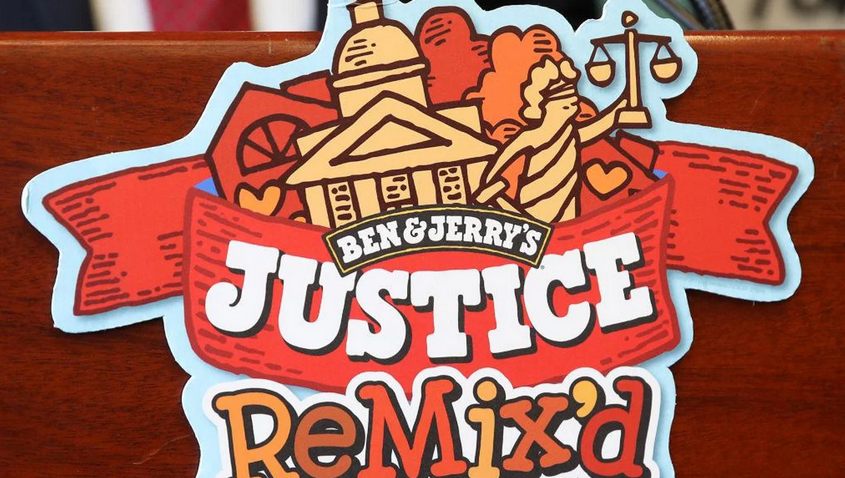
That flyer above may tip-toe through the legal tulips adequately (though I would love to see it challenged), but it stomps its way through the garden of ethics.
The University of Wisconsin-Madison will host a “Welcome BBQ” on September 12, four days after the start of the academic year “intended” only for students of color. White, like everyone else, are “welcome,” of course, but they have been warned that the event isn’t “intended” for them. “We don’t want you white devils to come, but you’re ‘welcome’ if you do.” Boy, I bet the legal staff worked long and hard on that wording. They should have worked harder. If a “welcome barbecue” is only intended for one type of student, how are other students still “welcome”?
American University in Washington, D.C. has a course called AUx2 which freshmen must take. Students will learn about “race, social identity, and structures of power.” In the course, students “evaluate how racism intersects with other systems of oppression.”
The campus paper, “The Eagle” reports that the university has all-Black sections in the course, and has since last year. “We’ve definitely heard from Black students and other students of color that the material can be a lot for them because it is part of their lived experiences,” Izzi Stern, the AUx program manager told the student newspaper. “And we wanted to create a space where they could be together in community and have an overall positive experience with the course.”
On the university’s webpage, a former AUx2 student says, “The AUx Program is fundamentally shifting the culture, and students, of American University, while simultaneously fulfilling the institutions’ commitment to social justice and equity. I could not be more enthusiastic about my support for the transformative impact of the AUx2 course.” A sophomore at American University told the paper that “having an all-Black space truly changes the way you interact in that space and the level of comfort you feel.”
“I wish Maria Taylor all the success in the world — she covers football, she covers basketball. If you need to give her more things to do because you are feeling pressure about your crappy longtime record on diversity — which, by the way, I know personally from the female side of it — like, go for it. Just find it somewhere else. You are not going to find it from me or taking my thing away.”
—-ESPN sideline reporter Rachel Nichols in a phone conversation nearly a year ago after learning that she would not host coverage during the 2020 N.B.A. finals, as she had been expecting.
The phone call, unbeknownst to her, was being recorded, and someone leaked it to the ESPN brass and the public. The ethical issues raised by that conduct are clear and have been discussed here often: it is a dastardly thing to do, a breach of basic Golden Rule ethics, and indefensible because it creates harm to all involved. But that’s not the issue at hand.
After the video was leaked, many black ESPN employees told one another that it confirmed their suspicions that outwardly supportive white people talk differently behind closed doors. Nichols, seeing the ominous handwriting on the wall, tried to apologize to Taylor with texts and phone calls. Taylor did not respond. Meanwhile, ESPN employees turned against Nichols, whom they perceived as indulging in a “common criticism used by white workers in many workplaces to disparage nonwhite colleagues” when she suggested that “Taylor was offered the hosting job only because of her race, not because she was the best person for the job.”
1. Good Harry, bad Harry. I recently watched the 1961 interviews David Susskind did with Harry Truman in 1961. You can see them on Amazon Prime streaming. I was very impressed; I could not remember any President in my lifetime who appeared so candid, open, and sincere about his principles, certainly none of our recent POTUSes. Truman is not one of favorite Presidents; I regard him as a mediocre man thrust into a job far above his abilities who managed to do better than anyone could have predicted. He rose to the occasion as best he could, and that is deserving of respect. The interviews elevated Harry in my estimation.
Then, yesterday, I read a scholarly paper by Prof. Paul Campos of the University of Colorado Law School that shattered my newly grown regard for Harry. The Former Presidents Act (FPA), a 1958 statute provides ex-Presidents with millions of dollars in future taxpayer-funded benefits. One of the motives behind the House’s “snap impeachment” of Donald Trump was to ensure that he not be a beneficiary of the Act. (They failed. As Nelson Muntz would say, “HAHA!”) Campos’s research shows that while the FPA has always been explained as a response to former President Truman’s financial struggles in part because he refused to exploit his status as a former President cash in (like some Presidents of recent vintage), this was not just a false narrative, but a spectacularly false narrative. Campos writes,
“Using recently released and until now unexamined archival evidence… in a complete contravention of the existing standard historical record, [it appears that] Harry Truman was, as a direct result of being president, a very wealthy man on the day he left the White House, with an estimated net worth, in relative economic terms, of approximately $58 million in 2021 dollars. …[T]his wealth was a result of both Truman’s enormous presidential salary — several times larger, in real terms, than the current salary for the office — and, more problematically, of the evident fact that Truman misappropriated essentially all of the multi-million dollar — in 2021 terms — presidential expense account that was set up for him by Congress at the beginning of his second term….[A]gain contrary to the current historical understanding, Truman made another fortune after he left the Presidency, by doing precisely what he claimed he was not doing, that is, exploiting his status as a former President to maximum economic advantage. Indeed, by the time Congress passed the FPA in response to Truman’s various claims that he was at least teetering on the brink of potential financial distress, Truman’s net worth was, in relative economic terms, approximately $72 million in 2021 dollars.”
Well, there goes that newfound respect! Truman was a member of the corrupt Prendergast political machine in Kansas City before entering national politics, so this isn’t as much of a surprise as it would be for some other icons.
“[N]ever assemble an all-white creative team on a production again, regardless of the subject matter of the show…”
——A provision in the “New Deal for Broadway,” an agreement signed by Broadway “power-brokers” pledging to strengthen the industry’s diversity practices as theaters reopen following the nearly 18-month pandemic shutdown.
“A New Deal for Broadway,” was developed by Black Theater United, one of several organizations established last year, the Times story tells us, “as an outgrowth of the anger Black theater artists felt over the police killings” of George Floyd in Minnesota and Breonna Taylor in Kentucky. “Black Theater United’s founding members include some of the most celebrated performers working in the American theater, including Audra McDonald, Brian Stokes Mitchell, Billy Porter, Wendell Pierce, Norm Lewis and LaChanze.”
The pledge was signed by the owners and operators of all 41 Broadway theaters as well as the Broadway League, the trade organization representing producers, and Actors’ Equity Association, which represents actors and stage managers.
Harry Truman liked to say “If you can’t stand the heat, stay out of the kitchen.” That applies in a lot of fields, but perhaps nowhere more than in the field of humor and satire in these days where would-be censors and race-baiters slither across the landscape. If you are going to venture into these dangerous environs (what they endanger is free speech, expression, and freedom itself), you better have the courage of conviction and willingness to fight the adventure requires. If not, you will make things worse. You will become part of the problem, and it is a big problem.
Gene Weingarten is a longtime columnist for the Washington Post, I’ve written about one of his serious pieces here (also here) and had debates with him via email on occasion. He often writes humorous columns, and it was one of those that unjustly made him the target of the social media mobs.
I assume Gene was a little stuck for a topic, because his theme, foods he won’t eat, is a pretty hoary one. I have read very similar joke essays by other writers, going back to Robert Benchley. Clarence Darrow used to riff on foods he didn’t like: he once said, “I don’t like spinach, and I’m glad I don’t, because if I liked it I’d eat it, and I’d just hate it.“ Another of Darrow’s was “I don’t like turnips, and I don’t like anyone who does.”
So Weingarten whipped off a lazy column joking about all the foods he says he hates; remember, actually hating them isn’t an ethical requirement. The idea is just a platform to justify snarkiness and to make silly comments like ” Balsamic vinegar likely broke up the Beatles.” Among his targets: Old Bay seasoning (hate it), hazelnut (I agree), anchovies (it depends), blue cheese (yecchh), pizza with more than two toppings (I think that’s about right), “garbage sushi,” meaning junk like California rolls (not worth hating) and sweet pickles (absolutely). It should be obvious to a spaniel that all of his laments are tongue in cheek, but that spaniel might object to “Drowning good food in wildly disparate other tastes is — I do not mean to exaggerate — like drowning puppies in a toilet.”
Someone please explain how the closing of the investigation of the shooting of Ashli Babbitt can be reconciled with the sentence just handed down in the case of the Alabama officer who shot an allegedly suicidal man who would not drop his gun.
The US Capitol Police officer who shot and killed pro-Trump rioter Ashli Babbitt on January 6, 2020 will not face any disciplinary action. “USCP’s Office of Professional Responsibility (OPR) determined the officer’s conduct was lawful and within Department policy, which says an officer may use deadly force only when the officer reasonably believes that action is in the defense of human life, including the officer’s own life, or in the defense of any person in immediate danger of serious physical injury,” the department said in a statement. The department will not name the officer out of consideration for the officer’s safety, although his name has been unofficially on the web for quite a while. If this is not a USCP double standard, it is certainly a journalism and political double standard. A black officer who shot an unarmed white women is protected with official anonymity while one white officer after another in police-involved shootings of black men have had their names not only released, but published and made the targets of attacks by elected officials.
Baseball had a rare PR triumph earlier this month when it held a regular season game between the New York Yankees and the Chicago White Sox in the Iowa cornfield diamond that was the setting for the cult movie favorite “Field of Dreams.” The TV ratings were the best for any regular season broadcast in 16 years. That’s amazing, but maybe it shouldn’t be. Despite rumors of its demise, baseball still has a cultural bedrock of tradition, nostalgia and history unmatched by any other sport, professional or amateur. So many Americans would not tune in to a baseball game if they didn’t still have a flicker of affection for the sport, and if your argument is, “Yeah, but that’s just because of the movie,” the movie wouldn’t have become iconic if a lot of people didn’t care about baseball. As Terrence Mann said,
Now my confession: I’m not a wild fan of the film, nor that scene. The scene in particular is unforgivably stagey and artificial: it’s right out of the (much better) book, “Shoeless Joe,” and not even the great James Earl Jones could make it sound like anything but a recitation. I got annoyed, during the hype for the game broadcast, with “Field of Dreams” being repeatedly called “The greatest baseball movie.” I don’t regard it as that; I think it just barely makes the top five, and I could be talked out of ranking it that high.
For good reasons, many baseball writers, fans and bloggers have criticized the film over the years, and not just because it is shamelessly manipulative. But it is that. Baseball writer Craig Calcaterra, a vocal debunker of the film, writes,
“I will fully admit that a story about a father and son repairing a longstanding rift over a game of catch — with or without the magical realism elements — could form the basis of a MAJOR chills moment in an absolutely fantastic movie. The problem, as I’ve said in the past, is that “Field of Dreams” does not earn its chills moment. It is lazy in that it does not sketch out the dispute between Ray and his dad in anything approaching realistic terms — it’s dashed off in the rushed intro with almost no details — and it does nothing to explain why Ray’s moving the Earth and the Heavens to bring his dad back to that ball field is so important or why it serves as the “penance” Ray must pay for whatever reason. With no buildup or backstory, there’s no payoff.”
But worse, for me and others, is the slipshod handling of baseball history. “Shoeless Joe” Jackson was not innocent of taking a bribe to throw the 1919 World Series, he was guilty. He was not a thoughtful, wise-cracking Ray Liotta, he was just north of being a moron. He batted left-handed, and famously so, not right-handed like Liotta. When Frank Walley’s character, a magically reincarnated and youthened old ballplayer named Archie “Moonlight” Graham, whose single appearance in the major leagues was in 1905, is nearly beaned by a close pitch, he says “Hey ump, how about a warning?” Umpires didn’t warn pitchers for throwing at batters in 1905, and not for more than a half-century after that. Sloppy.
Ah, those heady days when the U.S. felt ethically justified in toppling governments it didn’t approve of, and “nation building” was still considered practical and virtuous. Today marks the anniversary of the U.S. overthrowing the government of Premier Mohammad Mosaddeq and reinstalling the Shah of Iran in 1953, The Shah was a torturing, oppressive autocrat, but he was our torturing, oppressive autocrat for 26 years, a dependable anti-Communist ally of the United States until a revolution ended his rule in 1979. You should know the rest. Wonder why Iranians aren’t crazy about the U.S.? Today is one big reason. Also on the ethics regrets list is the release of the West Memphis Three on this date in 2011. I wrote about that one here. An excerpt:
“In an ethical system, prosecutors would have made certain the wrongfully convicted men were freed, without any further adversary action. But this was not an ethical system. Instead, prosecutors insisted on a bizarre plea deal in which the Memphis Three agreed to take an Alford plea, a strange, dishonest and much criticized guilty plea in which a defendant essentially lies to avoid an otherwise unavoidable unjust punishment. With an Alford plea, the prisoner or defendant asserts he or she is innocent, but acknowledges that the prosecution has sufficient evidence to prove guilt beyond a reasonable doubt, and thus acknowledges legal, though not actual, guilt. Prosecutors insisted that all three men plead “guilty” in this fashion in order to agree to release them with time served. The judge accepted the deal. Now Echols, Baldwin and Misskelley are free, their lives all but ruined by 18 lost years, thanks to a rotten system. The news media for the most part didn’t bother to explain why the terms of their release was just one more gratuitous assault on their existence by Arkansas legal hacks.”
I’m sorry today reminded me of this case. It still upsets me to think about it.
1. Here’s evidence that the current complaints of antiracism propagandists is a crock: Denzel Washington. I’ve been watching a lot of his movies lately, and a comparison with Sidney Poitier is unavoidable. Poitier was the ground-breaker, the black man who became a genuine movie star in a majority white market, and more than that, did it by holding up the racism and discrimination in American culture for all to see. Nonetheless, he was limited by his race. Poitier always played character’s whose race was central to their roles in the plot. He never played a villain: like many stars, like John Wayne, Cary Grant and Clark Gable, he regarded his career as a continuous work exploring a particular archetype in all of its facets. For Poitier, it was that of the outstanding black man as an outsider in American society. In Poitier’s amazing year of 1967, he was in three hit movies: “In the Heat of the Night,” “Guess Who’s Coming to Dinner?,” and “To Sir, With Love.” All three featured Poitier as a black man thrust into a biased white environment, and gradually earning respect and some measure of equality. Today the #1 black star is Denzel, and he doesn’t have to play such sanctimonious roles. Race plays a part in many of his movies; he has even played black civil rights activists, like Malcolm X and Hurricane Carter. Washington, however, in part because of Poitier’s work, often plays parts that were written for white actors, and nobody cares. He isn’t afraid to play flawed characters and even brutal ones, like in “The Equalizer.” Washington’s success, and the versatility and range he is allowed to explore in his movies, would have been impossible in Poitier’s prime years. His body of work is proof of how far American attitudes toward race have advances and how unfair and dishonest the Black Lives Matter/ Critical Race Theory narrative is holding that the Jim Crow culture still rules America.
Denzel is also better than Poitier, although it is fair to say that Poitier never had the option of being as versatile as Washington. If Sidney Poitier is cinema’s Jackie Robinson, Denzel Washington is its Willie Mays.
I owe Ann Althouse for finding this; I never would have, especially since I’m disgusted with YouTube.
Above is a montage of all of the TV series offered to the public by ABC in the Fall of 1961. It’s worth noting that in 1961 the Fifties culture was still going strong, though JFK had replaced Ike as President. What we think of as the cultural Sixties didn’t really start until after Kennedy’s assassination in November of 1963. Also worth noting: ABC was the perennial least watched network on 1961. That meant they took the most risks, but ’61 was not a good year for ABC.
What can we learn from the montage? Culture is ethics and ethics is culture; this is a snapshot that shows what a large percentage of Americans watched at night, and what contributed to their worldview. It is fair to say, I think, that nothing in popular culture today influences an many people as even ABC’s prime time schedule did. The snap shot reveals where the nation has progressed, and what it has lost. In 60 years, there is a lot to consider.