Comment Of The Day: “Casting Ethics: ‘Anne Boleyn’ And Discriminatory Double Standards”

Oh, I just love this Comment of the Day by Curmie, who was AWOL from the ethics comment wars for far too long, and whose return recently has made my heart soar like a hawk. I love it for many reasons, including, of course, the fact that it is well written and enlightening, far more so than my post that prompted it, which focused narrowly on the double standard of applauding the having a performer of one race portray another, but only when it’s the “right” races involved.

As with my posts about ethics issues in another lifetime passion, baseball, I know that many readers nod off when the framework is theater. But the conceit of Ethics Alarms is that the ethics issues and process of analysis are often universal regardless of where the dilemmas and conflicts pop up. As it happens, baseball and theater happen to be two realms that I know a lot about.

But not as much as Curmie, at least as far as theater is concerned. I had hoped that he would weigh in on the casting of a black actress as Anne Boleyn, and he did.

Here is Curmie’s Comment of the Day on the post, Casting Ethics: “Anne Boleyn” And Discriminatory Double Standards.

***

Literally two minutes after reading this post, I saw that Katori Hall had been awarded the Pulitzer Prize for Drama for her play The Hot Wing King. I don’t know the play—its Off-Broadway run was cut short by COVID, and as far as I can tell it hasn’t been published.

I do, however, recognize her name as the playwright of The Mountaintop, in which the two characters are Martin Luther King, Jr. and an employee of the Memphis hotel in which he is spending what he doesn’t know is his last night on earth. (Spoiler alert: she’s really an angel preparing him for what is to come.) It is a good, borderline great, play: by turns moving, humorous, and incisive. But what comes immediately to mind is the production by a student group at Kent State University, in which a white actor was cast as King. The director, of course, claimed the casting decision wasn’t a gimmick. (Newsflash: it was a gimmick.)

The original idea was to alternate the role between a white and a black actor to be, in the director’s words, “a true exploration of King’s wish that we all be judged by the content of our character and not the color of our skin.” The black actor had to drop out of the production, and the white one played the role throughout the run.

Continue reading

Ethics Dunce: Yahoo! Sportswriter Shalise Manza Young

Naomi-Osaka interview

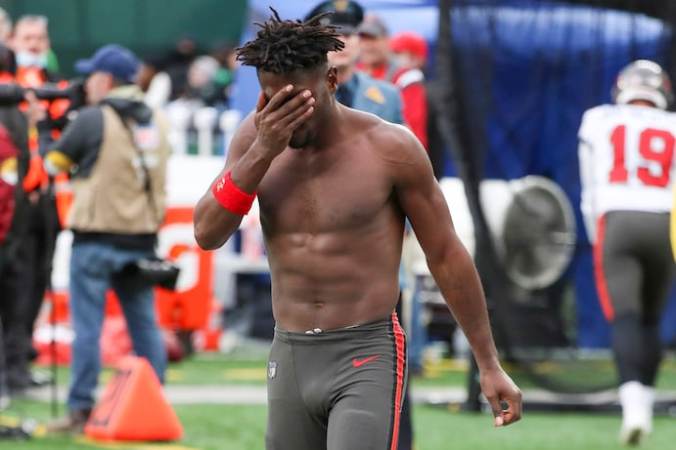
The withdrawal of female tennis star Naomi Osaka from the French Open because she wasn’t allowed to ignore rules all the other players were forced to play by has inspired a revealing amount of criticism…of the concept that stars should have to abide by the same rules and laws as everybody else. Since this is a massive ethics blind spot that defies persuasive advocacy, I’ve been somewhat surprised that so many commentators and athletes have been willing to put such an unethical position in print.

I shouldn’t have been, I guess. Osaka (predictably) played the victim, suddenly revealed that she suffered from depression (the old reliable “I’m not bad, I’m sick!” ploy satirized in “Officer Krupke”), and she had the triple benefit of being Asian, Black and female, the “Get Out Of Accountability Free” hat trick (that’s hockey, but you get the point) in the Age of The Great Stupid.

I was originally going to dedicate this post to the fatuous commentary of New York Times columnist Kurt Streeter, to whom all sports is about race, on l’affaire Osaka. “Using social media posts, first last Wednesday then on Monday, Osaka called out one of the most traditional practices in major sports: the obligatory news conference, vital to reporters seeking insight for their stories, but long regarded by many elite athletes as a plank walk. After monumental wins and difficult losses, Osaka has giggled and reflected through news conferences and also dissolved into tears. In Paris, she said she wanted nothing to do with the gatherings because they had exacted a steep emotional toll,” he wrote. “She sent a message with significant weight: The days of the Grand Slam tournaments and the huge media machine behind them holding all of the clout are done. In a predominantly white, ritual-bound sport, a smoothstroking young woman of Black and Asian descent, her confidence still evolving on and off the court, holds the power. Get used to it.”

Get used to what? Star athletes (and politicians, and other celebrities) thinking that if they are successful enough and popular enough, they get to break rules and get away with it? We’re used to that. But the point is that she doesn’t have the power. Tennis authorities fining her and threatening to kick her out of upcoming tournaments proved it. So she threw a tantrum, quit, took her ball and went home, and that’s admirable to Streeter, or anyone else? Well, but, you see, “it is impossible to know the depth of Osaka’s internal anguish” as “the rare champion of color in a tennis world dominated by fans, officials and a press corps that is overwhelmingly white.” Oh, gag me with a spoon. I’d be willing to suffer a lot of internal anguish in an enterprise I could make over 50 million dollars in a year, as Osaka has. Who wouldn’t?

Continue reading

Ethics Observations On The Naomi Osaka Affair [Corrected]

Osaka2

On Ethics Alarms yesterday, the controversy involving the current top female pro tennis star, Japan’s Naomi Osaka, was relegated to the morning warm-up rather than a stand-alone post. If you were not following EA yesterday, here’s a quick summary:

Citing her annoyance with repetitious questions from the news media that undermined her confidence, the 23-year old announced that she would violate the 2021 official Grand Slam rulebook, which requires players to participate in post-match news conferences. Violations result in fines of up to $20,000, but since Osaka made over 55 million dollars last year alone, more than all but the most elite U.S. professional athletes, this fine would be like a late fee at the library to normal people. I wrote in part,

This is literally an example of a star announcing that rules are for lesser mortals. Verdict: Ethics Dunce. The reason Osaka makes so much money is that athletes are paid heroes and entertainers, and submitting to the idiocy of reporters is part of their job. Fines obviously aren’t enough: a tennis player who refuses to fulfill her obligations to the sport should be banned from competing until she does.

Yesterday, after winning her first round match at the French Open, Osaka was fined (but only $15,000), and tennis officials proved that they read Ethics Alarms (I jest) and told Osaka that continuing her boycott of the media would result in her being suspended from the current tournament and others. Good. The organization had no other choice, unless it wanted to directly endorse the King’s Pass (Rationalization #11). If Osaka was allowed to snub the media with minimal consequences (for her), then no other player would feel obligated to cooperate either. Rennae Stubbs, a former player who is now a coach and ESPN analyst, stated the obvious while most of the players and former players were expressing sympathy for Osaka: “You cannot allow a player to have an unfair advantage by not doing post-match press. It’s time consuming, so if one player is not doing that and others are, that is not equal.”

Continue reading

The Scott Rudin Reckoning

Rudin

If you are not a active follower of show business, you may not recognize the name Scott Rudin. Heck, I am an active follower of show business, and I only began actively registering his name in my RNA lately because of the sudden shift in his fortunes. Rudin, in case you’re normal and barely noticed, has long been one of the most celebrated and powerful producers in Hollywood and Broadway. His productions have made billions; he has created too many stars to list, and his work has earned an Emmy, a Grammy, an Oscar and 17 Tony Awards. The problem, except that it wasn’t a problem until recently, is that Rudin is a toxic, bullying, abusive jerk who makes working with or for him a living hell. He’s not a sexual predator, like Harvey Weinstein, so his misconduct has not been strictly illegal. Moreover, while he is an extreme case, his obnoxious type has hardly been rare in show business. One could say it is closer to the norm.

Yet suddenly, Hollywood, Broadway and the entertainment business have begun a cultural shift. It was undoubtedly spurred by #MeToo, but in the end it may be more significant that #MeToo. This highly influential industry is beginning to reject the King’s Pass. As much as I hate to say anything good about show business culture, this is an unquestionably ethical development that could have wide reaching effect far beyond movies, plays, TV shows and music.

The King’s Pass is described in the Ethics Alarms Rationalizations List thusly:

11. The King’s Pass, The Star Syndrome, or “What Will We Do Without Him?” One will often hear unethical behavior excused because the person involved is so important, so accomplished, and has done such great things for so many people that we should look the other way, just this once. This is a dangerous mindset, because celebrities and powerful public figures come to depend on it. Their achievements, in their own minds and those of their supporters and fans, have earned them a more lenient ethical standard. This pass for bad behavior is as insidious as it is pervasive, and should be recognized and rejected whenever it raises its slimy head.  In fact, the more respectable and accomplished an individual is, the more damage he or she can do through unethical conduct, because such individuals engender great trust.

It is one of the most pervasive of all ethical perversions, and throughout human history, as reliable as an aspect of human nature. If you are successful and valuable to organizations and people, you can get away with bad, even terrible conduct that ruins lesser mortals. The rule reigns in business, academia, politics, government, sports and, of course, entertainment. One can speculate on why Scott Rudin’s unexpected fall has become a possible catalyst for weakening the iron grip of The King’s Pass, but for the moment, let’s focus on the fact that he has.

Continue reading

Ethics Quiz: The Football Coach’s Tweet

Malone

Once again, I am 90% certain, maybe more, what the right answer should be, but also again, I’m close enough to the cusp to have “reasonable doubt,” or as they would say in the Chauvin trial, “Never mind!”

Chris Malone, an offensive line coach at the University of Tennessee-Chattanooga (UTC), , was fired two days after he tweeted,

“Congratulations to the state GA and Fat Albert @staceyabrams because you have truly shown America the true works of cheating in an election, again!!! Enjoy the buffet Big Girl!! You earned it!!! Hope the money is good, still not governor!”

The school responded, through its athletic director,

“Last night, a totally inappropriate social media post by a member of our football staff was brought to my attention. The entire post was appalling. The sentiments in that post do not represent the values of our football program, our Athletics department or our University. With that said, effective immediately, that individual is no longer a part of the program.”

Your Ethics Alarms Ethics Quiz for today (as I head to my oral surgeon for the latest emergency…):

Was it ethical to fire him?

Continue reading

Undercovers Ethics, 4/27/21

Well, here I am trying to write a post in bed. This never works our well, but it’s this or nothing. I have clients waiting, my dog is mad at me for not walking him on a gorgeous day, and I wish I could just soldier through it all. I can’t, though, and feel like an utter failure. I’ve in pain in more than one location, a lower back strain being the latest addition, I’m in the midst of an allergy attack, and all the drugs have made me nauseous and dizzy. But ethics waits for no one, and it certainly isn’t going to wait for the likes of me.

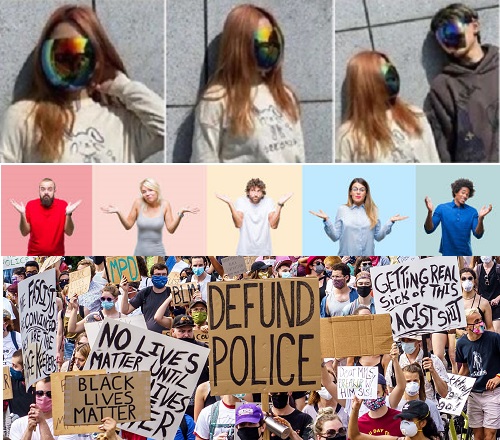
1. This is what “systemic racism” propaganda produces…an op-ed by a civil engineering student from the University of California, Los Angeles, written for the the College Fix documents some of his discussion with the woke-infected on campus. He says he recently took part in an online debate about “systemic racism” during which some UCLA students complained that automatic soap dispensers are racist. One student said the dispensers “don’t see her hands” because of her dark skin. Another student claimed that the dispensers force “black and brown” people to show their palms, “the only light areas of the skin,” before the liquid soap comes out.

Both students are delusional, but this is how the current “racist America all the time everywhere” makes gullible and insecure blacks paranoid and miserable.

2. Blame Mitch McConnell for the “court packing” rationalizations. Last week, a Georgetown law student—poor bastard— confronted Senator Ted Cruz (R-Texas) when he accused Democrats of making a “power grab.””You didn’t see Republicans, when we had control of the Senate, try to rig the game. You didn’t see us try to pack the court,” he said. The law student protested, “How is court packing any different than what the Republicans did in 2016 and 2020?”

“We filled vacancies, that’s not packing the court,” Cruz insisted, as the law student insisted there was no difference between what Republicans refusing to consider President Obama’s nomination of Merrick Garland to replace Justice Scalia, did and what Democrats are now trying to do by expanding the court. “They’re doing something that’s allowed under the Constitution,” the student countered. “It’s not an obstruction to the rule of law if it’s in the law.”

Ugh. Mitch McConnell’s unethical—not illegal—gambit to bury the Garland nomination under a contrived election year rule may have worked, but Republicans will be suffering for it for generations—and they deserve to. No, what the GOP did wasn’t “court packing,” which has had a specific, well-understood meaning since FDR tried it. But the laws student is already adept at the progressive craft of redefining words and concepts to meet whatever goal they are seeking to justify at the moment.

Continue reading

The Trevor Bauer Affair: “What’s Going On Here?” Unclear So Far, But It’s About Ethics

This developing ethics story comes out of baseball, and if you skip the baseball ethics stories, this one shows why that is a mistake. The erstwhile National Pastime is certainly off to a flying start this season in ethics controversies, what with the game’s bone-headed decision to get involved in race-baiting politics seeded by Joe Biden and Stacey Abrams. This new controversy has the advantage of actually being about the game on the field. It also has a marvelous jumble of factors , real and hinted: history, tradition, real rules, unwritten ruled, rationalizations, hypocrisy, persecution, tarnished heroes, and maybe revenge.

Here we go…

Trevor Bauer is a pitcher for the Los Angeles Dodgers whose fame, reputation and salary ($34 million a year for three years) are out of proportion to his record, which stood at 75-64 as this season dawns. At 30, this is roughly the equivalent of the success achieved by such immortals as Chris Young, Ben McDonald, and Chuck Dobson, mediocrities all. But Bauer is 1) unusually articulate 2) a social media master, and 3) had his best two seasons, including winning a Cy Young Award in last year’s shortened, pseudo-season, just as he was nearing free agency. Many players and his primary team in his career, the Cleveland Indians, don’t like Bauer, and not just because opinionated players are never popular with management. He once knocked himself out a crucial post-season start by cutting a pitching hand finger playing with a drone (he loves drones). In 2019, after allowing seven runs, Bauer threw a baseball over the centerfield wall, after seeing his manager Terry Francona come out of the dugout to remove him from the game. Bauer apologized profusely, but it was the final straw, and the Indians traded him.

Bauer, among other opinions, has been among the most vocal critics (and one of the few player critics) of the Houston Astros in particular (see here), and cheating in baseball generally.

After the 1919 Black Sox Scandal, baseball cracked down on pitchers doctoring the ball with foreign substances or by marring the surface to make it do tricks. Nonetheless, that many pitchers continued to try to slip spit, or Vaseline, or slippery elm, or pine tar onto the ball has been assumed, indeed known, ever since. This year, as part of the game trying to cut down on strike-outs which have reached boring levels (baseball is more entertaining the more the ball is put in play), MLB announced that umpires would be checking the balls more carefully and regularly to ensure that the rule against doctoring the ball wasn’t being violated. Lo and Behold, the first pitcher to have his thrown baseballs collected for inspection based on suspicion of doctoring was…Trevor Bauer!

How ironic!

Part of the game’s new policy is examining Statcast spin-rate data to determine unusual upticks for individual pitchers. What does that mean? “Spin-rate,” which now van be measured via computer technology, determines how much a thrown ball moves in curves, sliders and other breaking balls, as well as fastballs. The quicker the spin-rate, the harder the ball is to hit. Bauer has tweeted and spoken about spin-rate, and how using stuff on the ball speeds it up. Coincidentally, while Bauer’s normal spin rate on his fastball was about 2,250 r.p.m. in 2018, which is the league average, his spin rate began rising by 300 r.p.m. is 2019, and rose still more last season. So did his effectiveness.

Funny.

Continue reading

End Of Day Ethics, 4/7/2021: “Ick,” Ethics, And Law

And as we bid farewell to April 7 and good morning to April 8, I want to wish my wonderful, kind, talented and tolerant wife of 40 years a happy birthday. I owe everything to her.

1. Well, you can’t accuse satellite radio of being politically correct…the Comedy Legend Sirius channel is a welcome oasis in the woke era humor desert, with routines old enough to remind one what it was like when comedians only had to worry about being funny to the audience at hand—and yet there are limits. At least, there should be. Today I heard an old Louis C.K. routine about his childhood. You recall how C.K. became a #MeToo arch-villain, costing him his show, bookings, and essentially his career, don’t you? He set a new low for celebrity sexual harassment by masturbating in front of non-consenting female visitors to his hotel room, and on more than one occasion. Ick. Also sick. In the routine featured on Sirius-XM, the comedian was reminiscing, to audience hilarity, how he showed his penis to a girl with Down Syndrome when he was nine. I don’t know that I would have ever found that story funny, but hearing C.K. tell it in light of his later revealed proclivities was an experience I could have lived my whole life without having. Since it is now clear to me that whoever programs that channel can’t be trusted to apply any discretion or common sense at all, I’m not sure it is safe for me to drive with it playing…

Continue reading

Ethics Observations About “How Trump Steered Supporters Into Unwitting Donations”

To imply that I am not exactly shocked is not to suggest that what the story—that headline is from the New York Times—described isn’t just as wrong as it would be if the news sent me to a cardiac ward.

But read on…

What the story describes is this…

….Facing a cash crunch and getting badly outspent by the Democrats, the [Trump] campaign had begun last September to set up recurring donations by default for online donors, for every week until the election.

Contributors had to wade through a fine-print disclaimer and manually uncheck a box to opt out.

As the election neared, the Trump team made that disclaimer increasingly opaque, an investigation by The New York Times showed. It introduced a second prechecked box, known internally as a “money bomb,” that doubled a person’s contribution. Eventually its solicitations featured lines of text in bold and capital letters that overwhelmed the opt-out language.

The tactic ensnared scores of unsuspecting Trump loyalists — retirees, military veterans, nurses and even experienced political operatives. Soon, banks and credit card companies were inundated with fraud complaints from the president’s own supporters about donations they had not intended to make, sometimes for thousands of dollars.

….In the final two and a half months of 2020, the Trump campaign, the Republican National Committee and their shared accounts issued more than 530,000 refunds worth $64.3 million to online donors. 

Observations :

Continue reading

Unethical Quote Of The Month: CNN

“We generally do not get involved in the medical decisions of our employees. However, it is not surprising that in the earliest days of a once-in-a-century global pandemic, when Chris was showing symptoms and was concerned about possible spread, he turned to anyone he could for advice and assistance, as any human being would.”

—-CNN spokesman Matt Dornic, in a jaw-dropping defense of anchor Chris Cuomo after it was revealed that he used  his brother’s influence to “cut in line” to get Wuhan virus testing when it was unavailable to the general public.

Earlier this week, the The Albany-Times Union and The Washington Post reported yet another scandal involving New York’s Francis Ford Coppola-redolant governor, Andrew Cuomo. As if the deadly NY nursing home cover-up and the expanding sexual harassment allegations were not more than enough, we learned that…

“High-level members of the state Department of Health were directed last year by Gov. Andrew M. Cuomo and Health Commissioner Dr. Howard Zucker to conduct prioritized coronavirus testing on the governor’s relatives as well as influential people with ties to the administration. Members of Cuomo’s family including his brother, his mother and at least one of his sisters were also tested by top health department officials — some several times.”

The governor, in short, manipulated state resources to ensure that his brother, CNN’s Chris Cuomo, received Wuhan virus testing when tests were scarce and generally unavailable. “The CNN anchor was swabbed by a top New York Department of Health doctor, who visited his Hamptons home to collect samples from him and his family,” WaPo reported. The test specimens from Andrew and other Cuomo family members were then rushed, in some cases driven by state police troopers to a state public health lab in Albany, where they were processed immediately. Some employees in the state health laboratory worked overtime late into the night to process the results for Cuomo family members whose roles in society, while hardly essential to New York or the public, were favored by the Governor of New York.

In particular, the CNN anchor got specialized medical attention while “media reports were full of accounts from New Yorkers desperate to get tested — including some with symptoms and recent travel history who were turned away because of scarcity.”

Glenn Greenwald neatly sums up the import of this beyond the obvious fact that this is another example of elected officials using their power and influence for personal gain:

For more than a year now, CNN’s promotion of “interviews” conducted by Chris Cuomo of his own brother — in which the CNN host repeatedly heaped lavish praise on Gov. Cuomo and even hyped him as a presidential contender while the Governor was corruptly and possibly criminally covering up COVID deaths — was one of the most glaring breaches of journalistic ethics imaginable…it aggressively deceived CNN’s audience. That they knew it was corrupt was evidenced by the CNN host’s recent announcement that he would not cover his brother’s recent scandals: what conceivable framework makes it journalistically permissible for a news host to shower his own brother with praise, but then not cover his scandals?

But now Chris Cuomo is directly involved in a serious abuse of power scandal by his brother: in fact, he’s the prime beneficiary of that scandal. He sought special medical favors from his brother, depriving other sick people more in need of it than he, by exploiting the fact that his brother is Governor and thus rules the state. That’s a scandal by any measure — one involving not only the Governor but also the CNN host.

What’s even more remarkable is that on May 6 — just weeks after Gov. Cuomo provided special COVID testing and treatment for him — Chris Cuomo “interviewed” his brother and began the interviewing by noting that New York State lacks the resources to provide COVID testing to the public at large. So not only did they conceal that they had both just used state resources to get Chris that scarce testing, but they both acknowledged that there was a resource shortage to serve the general public, even as Gov. Cuomo was lavishing those resources on his own family.

Now read CNN’s response again. Continue reading