Integrity Check For “The Resistance” And The News Media (But I Repeat Myself)

“The U.S. economy had a blockbuster second quarter, with growth surging to a 4.1 percent pace the Commerce Department said Friday. That was nearly double the first quarter rate of 2.2 percent and the strongest pace in nearly four years. President Trump has been steadfastly claiming that his policies will catapult the U.S. economy into a much higher rate of growth — 4 percent over the next few years. That would be about double the growth rate in recent years. And it would almost certainly mean a big boost in the standard of living for many Americans, with higher wages and better public services as the government raked in more tax dollars from a booming economy.”

This isn’t from Fox News or Breitbart. It’s from NPR. (Sometimes even biased new sources have no choice but to just report the news.)

Stipulated: The anti-Trump deranged are now fully incapable of admitting that this President has done something right or that he is capable of doing something, anything, right.  The New York Times already started pooh-poohing the positive report before it was released, with this story, Why Friday’s G.D.P. Number May Be a Size Too Big. (Hard copy headline: Get Ready For Sizzling Growth Data. Then Take a Deep Breath.)

Now I’m obligated to note that if President Obama’s stumbling, growth-restricting policies had produced a leap like this, no mainstream media news source would have offered anything but unrestrained praise, though Fox News might well have said, “Well it’s about damn time!”

OK, that’s out of the way.

How long does “the resistance” think it can get away with the intellectually dishonest, obviously unfair, self-indicting strategy of insisting on a parallel reality where double standards reign and no good news or welcome developments will ever, ever, prompt it to concede that the President was right, succeeded or improved the nation’s status? Indeed, why does it think it is getting away with that destructive, divisive and dishonest strategy now? Half the nation doesn’t trust the news media, meaning it cannot change anyone’s mind even when changing the minds is crucial. Democratic opposition to Trump appears to be personal rather than substantive, and it appears that way because it is.

The Ethics Alarms position, since it is an ethics blog (and yes, “The Ethics Alarms position” means MY position, Tim…) is that every single one of the reasons I wrote so many posts explicating them that led me to believe that Donald Trump should never be President stands. Every one. Nothing that he has done, and especially the manner in which he has done what he has done, alters my analysis in any way. However, he is President, so analyzing whether he should be is moot. Now the questions are…

  • How well are his policies and initiatives working?
  • What good are they doing for the country?
  • What harm are they doing, or might they do, and how do we mitigate that?
  • If there are long term benefits of his Presidency, what are they?
  • If there are long term deficits, what are they, and and how do we mitigate them?
  • How does the nation, the public and its institutions best ensure that the results of the President’s tenure on the nation and the culture are as beneficial as possible?
  • What have I and other analysts been proven wrong about, and what does this mean for future analysis going forward?

None of these tasks can be done competently by anyone who is so soaked in hatred, partisan agendas and bias that they are determined to deny the President his wins and “I told you sos,” and there have been a surprising amount both. Nor is it helpful to be willfully blind to the President’s strengths when they become apparent, and some have become apparent.

For example, he cannot possibly be as stupid as I assumed in 2016, and had concluded many years before. President Trump is something else, and I’m not sure what the word for that something else is, or, I suppose, he’s the luckiest bastard who ever lived. I am relatively certain that in the grand cosmic scheme Donald Trump is what philosopher Isaiah Berlin, in his famous essay “The Hedgehog and the Fox” called a hedgehog, someone who, in words of the Greek poet Archilochus, “knows one big thing” as opposed to a fox, which knows many things. The thrust of the essay (and a later book) is that a lesson of history is that the hedgehogs tend to win out over the foxes.

Now I just have to figure out what the one big thing Donald Trump knows is. Based on the evidence so far, it is worth knowing.

_______________________

Pointer: Ann Althouse
 

Morning Ethics Warm-Up, 7/23/2018: Look! A Trump And Biased News Media-Free Warm-Up!

Good morning.

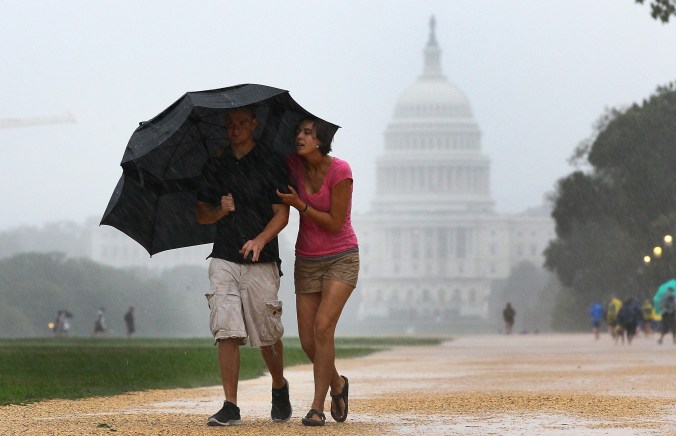
The three days of heavy rain wouldn’t bother me so much if it didn’t make Rugby so miserable. You do NOT want to be cooped up with an unhappy Jack Russell Terrier. Trust me on this.

1. Baseball Ethics, Jerk Division. Watch this:

Yes, that guy deliberately took a baseball away from a kid who lost hold of it after it had been tossed to him by Cubs first base coach Will Venable during yesterday’s Cubs-Cardinals game. Apparently the child was given a replacement ball by the Cubs, and this one was autographed. The gesture also took some the inevitable heat off the jerk who snatched the ball. with the Cubs telling reporters that he had helped the same boy get a ball earlier in the game and wasn’t really a monster.

A few points:

  • That the kid ended up, as some commentators put it, “better off” because the jerk stole his ball is pure moral luck, and doesn’t make what the guy did any less wrong, cruel or despicable.
  • Neither is it mitigation that the same man—claims the Cubs—helped the kid get another ball earlier. What kind of ethical principle is that? “I helped you before, so this entitles me to steal from you now: all even, right?”
  • Please save some contempt for the woman the jerk gave the purloined ball to. She should have handed the ball right back to the child, She’s as big a jerk as her friend is.

2. Now consider this: what if the jerk was a federal judge nominated to fill a Supreme Court seat? Would that video be fair game to consider in evaluating his qualifications to be a SCOTUS justice? Let’s have a poll:

Continue reading

The Ethics Conundrum Of The Undisciplined Mind: What Does The President Mean When He Says He Mispoke?

Today President Trump said he had “realized that there is a need for some clarification” regarding his remarks yesterday.

“In a key sentence in my remarks I said the word ‘would’ instead of ‘wouldn’t” The sentence should have been, ‘I don’t see any reason why it wouldn’t be Russia.’ Sort of a double negative.”

Contradicting what most critics took to be his message yesterday,  the President proclaimed his “full faith and support for America’s great intelligence agencies,” adding,

“I have felt very strongly that while Russia’s actions had no impact at all on the outcome of the election, let me be totally clear in saying that — and I’ve said this many times — I accept our intelligence community’s conclusion that Russia’s meddling in the 2016 election took place.”

Knowing what we know about Donald Trump—I’m not speaking here to the anti-Trump unhinged, who “know” that he is a fascist, colluding, cheating autocratic moron menace who stole the election and who is only President to con the nation and raid its coffers—what does all that mean? What does it mean when someone who thinks and speaks—and acts— like Trump does says, ‘I didn’t mean what I said’?

Not only don’t I have any idea, I don’t think it is possible to know. I see the following possibilities: Continue reading

Monday Morning Ethics Wake-Up, 7/16/2018: Punking, Molesting, Grandstanding And Obsessing

My state of mind this morning…

It’s Monday again.

1. Ethics Neurosis. I failed to get an Ethics Warm-Up or an equivalent posted this past Saturday, and still feel guilty about it after feeling guilty all weekend. This is not healthy. I had an early morning seminar to teach as well as some urgent family business to tend to afterwards, and then found myself thoroughly exhausted. I just couldn’t rouse myself to the task, then felt like I was failing my duties of diligence and responsibility.

This is especially weird, because I’m kind of frustrated over the blog these days. Traffic continues to lag, having dropped about 10% since the overheated days of 2016, and 2018 is a little behind last year, meaning that there is a goodly chance that Ethics Alarms will have negative growth two years in a row after trending up for its first seven years. I attribute the slump to Mr. Trump, as the New York Times calls him, the “resistance,” as the large bloc of progressives, including those in the news media, who have refused to do the ethical thing and let Mr. Trump be the President he was elected to be without unprecedented disrespect, sabotage  and interference from them, and the rigid polarization, social and political, the two have created among members of the public who are now crippled by hate, anger and bias.

One of my Facebook friends, in this case a real friend who has occasionally commented here, recently noted innocently that one of Melania Trump’s dresses was gorgeous, and even though he had led with a disclaimer that he did not want his observation to prompt political invective, several of his own FBF’s reacted by attacking the First Lady. One called her a “ho;” another opined that she had no soul, which is the only way she could be married to this President of the United States. I told the latter commenter to “Get help,” and he responded by declaring me a racist. This is the kind of deranged logic that has caused committed leftists from visiting here, being rational, and discussing ethics. One of our prominent and most noisy excommunicants recently wrote me  to say that since I apparently approved of “putting children in cages,” he was glad to be gone.

Maybe such individuals will be able to reason objectively again some day. I’ve got to learn to stop beating myself up if they can’t. Writing an ethics blog is too much work and responsibility to do every day when it makes me unhappy.

2. Why I don’t give a damn what the Pope thinks. I watched “Spotlight” again yesterday, the Academy Award-winning film about how the Boston Globe broke the Catholic Church child molestation scandal 18 years ago. It ends with a disturbing four screens of small type listing all of the cities in the U.S. and the world where major child molesting scandals and cover-ups had been exposed. (There have been more since.) Come to think of it, I also lost some readers here over the Ethics Alarms (correct) position that a religious organization that could allow this catastrophe to happen had forfeited its moral authority and was untrustworthy.

Then I read a prominent story above the fold in today’s Times that begins, Continue reading

Where Have You Gone, Ernest Hemingway? Of Baseball, Tanking, Winning, Trying, And Life…

This essay is only incidentally about baseball, but like so many things that sieve through my brain, it was sparked by a conversation about baseball. On the satellite radio MLB channel, one of the interchangeable hosts—I really have trouble telling them apart: some are ex-general managers who nobody will hire, some are ex-players, and a few are sportswriters, but they all seem to say the same things, though one says them with a bilateral lisp—was interviewing a New York sportswriter. That alone would normally prompt me to switch to the Beatles Channel (or the weather), but as I reached for the dial I caught one of the writer’s comments. He was talking about the fact that the New York Yankees’ opponent at the time, the Tampa Bay Rays, were almost a .500 team, and were competing despite a tiny payroll, unlike many other teams this year, which have adopted the controversial strategy of fielding cheap and crummy teams (called “tanking’) in the hopes of getting high draft choices as a reward for  miserable won-lost records.

“I guess you have to admire the Rays,” he said, “though in this day and age, it makes no sense to try to be a .500 team.”

What a nauseating, unethical position, and how characteristic of the downward trend in American values and spirituality!  It makes no sense to try be a .500 team? This sentiment warps so much in American life today. It translates into the envy, resentment and anger that typical, normal, healthy Americans lug around on their souls all day because they aren’t rich like the people they see on TV, or the neighbor down the street who had wealthy parents and left him a bundle.

It makes sense for the Rays to try to be a .500 team because it means the team is doing the best it can, despite limitations beyond its control, to give its fans something to cheer and care about. It makes sense to try to be a .500 team for the same reason it makes sense to aspire to be the kind of steady, honest, hard-working middle class American who raises happy and well-adjusted children in a stable home but will never win any major awards or be the subject of features in their local newspapers. It makes sense to try to be a .500 team for the same reason it is right to work hard and well no matter what your salary, or whether you are being paid at all.

Ambition is a great motivator, as long as one understands that achieving one’s goals is often as dependent on chance and chaos as it is on industry and talent, and if you prepare yourself to be bitter about that, bitter is how you are likely to wind up.

I learned to love baseball passionately following a .500 baseball team–indeed a sub-.500 baseball team— that seemed like it would never be anything but. This was in an era where the New York Yankees literally won the pennant every year, with a rare exception now and then. The system was rigged to favor them, and had been for decades. The Boston Red Sox began every season knowing that getting to the World Series was a pipe dream, and their fans knew it too. Nevertheless, they tried. As an almost good team, they had a chance to win every game—not a great chance, when they were playing the Yankees, but a chance. Often the Sox made a good fight of it while going down: our hopes were raised, and there was that wonderful-horrible moment that is the beating heart of baseball where anything can happen from a miracle to a tragedy as the ball is hurtling toward the plate and fate’s resolution. Life is like that, and the sooner you realize and accept it, the better off you are.

The best hitters make outs 60% of the time, and the best teams still lose at least 35% of their games. The typical players and teams do worse than that, just like the typical American, indeed human being, loses a lot more often than he or she wins. The important thing, the thing that undergirds ethics, and integrity, and responsibility, and honor, is that you do the best you can, and pick yourself up when you fail, and try again. It’s not a bromide. It’s the only way to live without going crazy, becoming a serial killer, or surrendering to despair. Continue reading

The SCOTUS Ruling In Trump v. Hawaii [UPDATED]

The Supreme Court properly and ethically  killed the burgeoning liberal judicial theory that different Presidents have different restrictions on how they can exercise established Presidential powers. The majority in in the just announced decision in Trump v. Hawaii conclusively struck down a Hawaii judge’s ruling that Trump’s hostile comments about Muslims on the campaign trail rendered his travel restrictions unconstitutional, while a similar measure ordered by a nice President for the right intuited reasons would be presumably acceptable. This seemingly partisan ruling required substituting mind-reading for the President’s stated reasons for the Executive Order, and would have established a terrible precedent in a number of areas.

Sadly, this was another 5-4 ruling where the Court seemed to divide along ideological lines. However, since it seems clear that the five conservatives would have ruled the same way no matter which party’s President had issued the order, while the liberal bloc was indulging “the resistance” with a “Trump is special” approach, only one side of the political divide appears to have left integrity and and objectivity in their spare robes. Many, many commentators around the web have noted that this should have been a 9-0 decision, and that the political bias of the Hawaii decision was flagrant from the start. I agree. The President’s authority in this area is clear and unambiguous.

Writing for the majority, Chief Justice John Roberts wrote that the government “has set forth a sufficient national security justification” for its action. “We express no view on the soundness of the policy,” Roberts added.

More, from the holding: Continue reading

Morning Ethics Warm-Up, 6/26/2018: Our Amazing, Evolving, Contentious Culture

Good Morning!

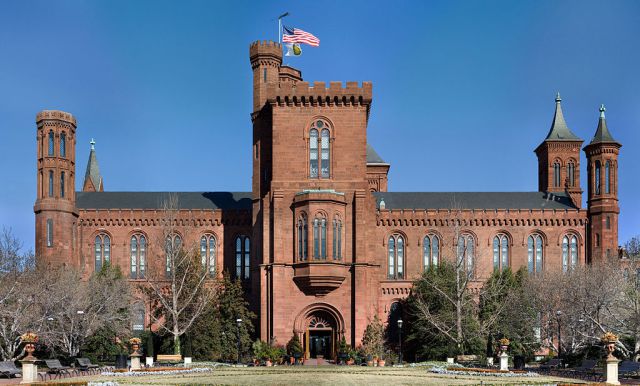
1. Outrageous Self-Promotion Dept.: Just in case you live in the vicinity of Washington, D.C., AND are interested in the cultural impact of the works of Gilbert and Sullivan in the U.S., AND would like to see me (and three long-time friends and colleagues who will periodically join me in performing some selections from the brilliant satirical operettas) discuss this rich and wide-ranging topic (Politics! Satire! Movie scores! Broadway musicals!) over a three-hour session that will fly like the wind, all it will take is a mere 50 dollars (just 35, if you are a Smithsonian Associates member) and your attendance. I’d love to see you. The program is Gilbert and Sullivan in the 21st Century, this Saturday, June 30, at 9:30 a.m. Here are the details.

2. Speaking of culture…If you want to feel better about the state of U.S. culture, I recommend watch a Beach Party movie. I just saw the first one all the way to the end for the first time—to realize that it was easily the best of its line (there were six—SIX!!!—more) is mind-boggling all by itself—and found it immediately uplifting. The 1963 William Asher-directed relic looks like it’s from some particularly demented parallel universe, depicting a weird place where 30-year-olds pretend to be  loitering teenagers who do nothing all day but gyrate to frenetic versions of the Twist, listen to awful surf music that makes the Jan and Dean sound like Brahms in comparison, do some surfing themselves (but just the males), and interact with B-list comics like Morey Amsterdam and Harvey Lembeck. The songs and their hackneyed lyrics make you yearn for the nuanced hip-hop musings of Kanye West; the comedy makes “Big Bang Theory” seem like Oscar Wilde, and to speculate on what kind of populace would actually enjoy such badly-conceived and sloppily-executed crap is to risk madness. If this was America in 1963, a) Good riddance, b) How did we survive? and c) No wonder the Soviet Union thought they were going to win!

No blacks are to be seen; indeed no skin color of any shade but glistening white is visible anywhere—didn’t these people even tan? Here’s a typically clueless exchange to ponder:  Annette Funicello: “The professor got his robe from the chief of the Tokyo Fire Department!” Random 30-year-old teenage beach bum: “Great! I’ll call him if my rickshaw catches fire!”  [laughter]. In the hilarious motorcycle gang, where all of the actors appear to be at least 45, the male members’ leather jackets say “Rats” on the back, and their female cohorts’ jackets say “Mice.” None of the”girls” have any function in the film, and no higher purpose, than to moon after the guys and gyrate in their faces.  Accepted conduct is for every male youth to gawk, pant, and emit some sound the equivalent of a wolf whistle every time a shapely female passes. The romantic lead (of sorts), teen idol Frankie Avalon, trying to make virginal, had-to-get Annette jealous, grabs a generic Scandinavian waitress and just starts kissing her. It’s like a magnet. Just kisses her He doesn’t  even wait. When you’re a star, they let you do it. You can do anything. Then he tells her he loves her so she’ll make out with him until Annette loosens up. This is the hero, remember.

They should show this film in every junior high school American History class. I’m very serious about this.

3. An abject lesson in how the news media uses language to manipulate public perception: Virtually every news report about the Trump administration’s actions at the Mexican border described them, and are still describing them, in headlines as “family separation.” The cumulative effect of this is to make casual, not fully-engaged readers and listeners think that family separation is the objective of the policy. The objective of the policy is to enforce current immigration laws while obeying other legal requirements, such as the one that forbids children from remaining with federally  detained parents.  This is, under the Ethics Alarms definition, fake news: deliberately deceitful reporting that conveys a false impression. The equivalent would be characterizing the imprisonment of African American men convicted of felonies as “the Trump policy of making black families into single-parent households.” Continue reading

“Jurassic World” Ethics: Why Movie Reviewers Are Useless

I’m going to see “Jurassic World: Fallen Kingdom” just as soon as I can, as I have seen all of the other “Jurassic Park” films since Spielberg’s first. Of course I am: I love dinosaurs.

I have loved dinosaurs since I was about 4, and my dad brought me a bronze model of  a T-Rex when he returned from a business trip to Chicago. That five-inch model was the first entry into a collection that eventually reached over thirty dinosaurs, greatly abetted by my mom, who was a ceramicist. She would peruse the dinosaur books I borrowed from the library and pick out artwork that she liked. Thus I became the only kid in Arlington, Mass. with ceramic models of a gorgosaurus and a styracosaurus.When I was in the first grade, I gave a talk about my collection and the species they represented—in those days they hadn’t even discovered velocirapters yet, thought dinosaurs dragged their tails, and assumed they were cold-blooded, like reptiles—at theParmenter School sixth grade hobby show.

The more I learned about dinosaurs the more  I loved them. I still can’t get over the fact that these amazing creatures existed, when they look like the results of a fantasy artist’s bad drug trip. I must confess, I also love the fact that dinosaurs drive evolution deniers and Fundamentalists crazy. If the Earth is the only planet with life, doesn’t the fact that God filled it with dinosaurs suggest that they were his favorites too? Might it even suggest that God looks like a T-Rex? My first face to face experience with an intelligent person who simply denied facts that didn’t fit in with her ideology was a U.S. Chamber of Commerce colleague who noted the large, leather pteranodon hanging in my office and said, which a superior smirk, “You don’t really believe those things existed, do you?”

Mostly, however, dinosaurs fill me with wonder, exactly as they did when I was 4.

This was the aspect of the first film that Spielberg captured so well: It’s not a monster movie, but a pro-dinosaur movie. People forget now, but many critics dismissed “Jurassic Park” as junk: they were  enthralled with Spielberg’s other movie that year, “Schindler’s List,” an important movie. The critics didn’t get “Jurassic Park,” and still don’t.

Now they are slamming the fifth in the series, the sequel to “Jurassic World,” which they also didn’t get, because most critics equate dinosaurs with Godzilla. I thought “Jurassic World” was easily the best of the sequels. I loved the attack of the pterosaurs (accompanied by air raid sirens!)—I had models of all of them! I loved the mossasaur—Mom made me a couple of different species—and its surprise role in the film’s climax. I loved how the T-Rex, just like in the first film, became an unlikely rescuer of the human stars. And look! There’s an ankylosaurus! Mom made me one of those! Continue reading

Now That The ACLU No Longer Wants To Be The ACLU, The United States Needs An ACLU

In a confidential memo obtained by former board member Wendy Kaminer, the American Civil Liberties Union has defined a policy that retreats from and undermines—perhaps the best word is betrays— its traditional mission of protecting the Bill of Rights, and especially the First Amendment rights of all Americans.  The memo says in part,

Work to protect speech rights may raise tensions with racial justice, reproductive freedom, or a myriad of other rights, where the content of the speech we seek to protect conflicts with our policies on those matters, and/or otherwise is directed at menacing vulnerable groups or individuals….We are also firmly committed to fighting bigotry and oppression against other marginalized groups, including women, immigrants, religious groups, LGBT individuals, Native Americans, and people with disabilities. Accordingly, we work to extend the protections embodied in the Bill of Rights to people who have traditionally been denied those rights. And the ACLU understands that speech that denigrates such groups can inflict serious harms and is intended to and often will impede progress toward equality.

…There is no presumption that the First Amendment trumps all other amendments, or vice versa. We recognize that taking a position on one issue can affect our advocacy in other areas and create particular challenges for staff members engaged in that advocacy. For example, a decision by the ACLU to represent a white supremacist group may well undermine relationships with allies or coalition partners, create distrust with particular communities, necessitate the expenditure of resources to mitigate the impact of those harms, make it more difficult to recruit and retain a diverse staff and board across multiple dimensions, and in some circumstances, directly further an agenda that is antithetical to our mission and values and that may inflict harm on listeners…Our defense of speech may have a greater or lesser harmful impact on the equality and justice work to which we are also committed, depending on factors such as the (present and historical) context of the proposed speech; the potential effect on marginalized communities; the extent to which the speech may assist in advancing the goals of white supremacists or others whose views are contrary to our values; and the structural and power inequalities in the community in which the speech will occur….

Where the ACLU defends the right to speak of those with whom it disagrees, it should generally engage in counter-measures both to reinforce the
values the speaker attacks and to make clear that we do not endorse the substance of the views. Some options might include:

1. Denouncing the views in press statements, op-eds, social media, and other available fora.

2. Participating in counter-protests. When we assist people in securing the right to march or demonstrate for views we condemn, we can and generally should support and participate in counter-protests, with consideration given to participation by senior staff or board members to highlight the ACLU’s commitment and ensure that such participation does not disproportionately burden other staff.

3. Supporting other counter-speech by supporting, organizing or helping to organize events, facilitating access to media, or taking other actions that will amplify and
strengthen the voices of those espousing our values.

4. Expanding our work on behalf of the values the speaker attacks.

5. Earmarking any fees recovered from the case to projects within the ACLU that further the values that we support and the speaker attacked, or donating them to another organization that works to advance those values, preferably in the geographical area where the speech occurred….

Continue reading

Suicide And Ethics

Just as we learned about the suicides of two niche celebrities, Celebrity chef Anthony Bourdain and designer Kate Spade, the news media is reporting a massive increase is self-homicide since 1999, over 25%. “Social isolation, lack of mental health treatment, drug and alcohol abuse and gun ownership are among the factors that contribute to suicide,” says the Times. All of that hasn’t increased 25% in less than two decades, however. What has changed?

This:

1. The decline of religion. In Christianity, for example, suicide is a sin, and if you believe in an after-life, a terribly short term solution. People don’t believe in eternal punishment for suicide any more.

2. The end of shame. Suicide was once considered shameful in this culture. For decades, however, suicide advocates have been promoting it not only as a right, but a reasonable option under certain circumstances. Never mind sin: the culture currently teaches that suicide isn’t even wrong.

3. Reinforced narcissism, selfishness, and cowardice. Suicide is a terrible act of aggression against loved ones and associates.  As a member of a family that has suffered through three suicides, I have seen this up close. Suicides leave horrible emotional carnage in their wake. The essence of ethics, which is thinking about the impact of one’s conduct on others, has been gradually eroded in the culture through the dominance and influence of ethics corrupters.

4. Confused and contradictory cultural signals regarding death. Beginning with abortion, through assisted suicide laws in Oregon, our culture is sending strong messages that some people are better off dead. For the unsophisticated, the young and the gullible especially, this new cultural eddy makes suicide far more attractive than it used to be.

5. Celebrity suicides. In a culture that uses performing celebrities as role models, suicide becomes model conduct. Politicians rarely kill themselves, much as we might wish they would.

I don’t see any mystery at all. Suicide rates are increasing because our culture no longer sends the message that suicide is wrong.