Worst Apology of the Month: First Baptist Church of Crystal Springs, Mississippi

A prominent member of the First Baptist Church of Crystal Springs, Miss.

It’s time to add a new Ethics Alarms category— the Worst Apology. Apologies seem to be flying around faster than usual as campaign season intensifies, though some individuals who desperately need to apologize—like, say, Harry Reid, are not.

I’ll be using the Ethics Alarms Apology Scale to rank the rotten apologies in our future. Ironically, the first winner in the category is a rare form of putrid apology that doesn’t even appear on the scale. The lowest ranking on the scale is a 10 ( “An insincere and dishonest apology designed to allow the wrongdoer to escape accountability cheaply, and to deceive his or her victims into forgiveness and trust, so they are vulnerable to future wrongdoing”), but the recent apology by the First Baptist Church of Crystal Springs, Miss. pulls an 11. Continue reading

Randy Cohen’s Scofflaw Cycling: How Did THIS Guy Ever Get To Be Called “The Ethicist”?

Stop means “stop,’ unless Randy decides it means “yield”—after all, he knows best.

Randy Cohen was the original author of the New York Times Magazine’s column “The Ethicist.” During his tenure he made a name for himself with lively and sometimes witty prose, and on Ethics Alarms, at least, a disturbing tendency to rationalize clearly unethical conduct when it suited his political agenda, which was unapologetically left of center. In one notorious example, he told a student whose wealthy and famous father was paying her college tuition that it would be ethical for her to cash a partial tuition refund check she received from the university to her mother and stepfather, who believed that the father had not paid his fair share of child support. Cash that check, advised Cohen….“You are entitled to this money not because he is successful while you struggle. Such rough justice would also encourage you to sneak into his house, swipe his sofa and sell it on some kind of furniture black market. That would be stealing; this is merely claiming what he owes you.”  Of course, this is also stealing: cashing a check not intended for you because you believe it should be used to settle a disputed debt between the owner and someone else is not honest or fair, regardless of the merits of that belief. But Randy is a class warrior: as “The Ethicist,” he routinely took the position that it was “ethical” for people to use dubious means to get an edge on the evil rich, which in his world apparently means anyone richer than him.

I don’t know what Cohen has been doing since the Times sacked him; it isn’t practicing ethics, as he didn’t do this before his tenure, and confessed when he left the job that writing about ethics didn’t make him practice ethics while he was “The Ethicist” either, something I found and still find incomprehensible. Now, he tells us in a recent Times piece, the Ex-Ethicist is riding around New York City on his bicycle, running stop signs and red lights.

He tells us, moreover, that this is ethical, though it is certainly illegal. “I roll through a red light if and only if no pedestrian is in the crosswalk and no car is in the intersection — that is, if it will not endanger myself or anybody else, ” Cohen says. “To put it another way, I treat red lights and stop signs as if they were yield signs. A fundamental concern of ethics is the effect of our actions on others. My actions harm no one. This moral reasoning may not sway the police officer writing me a ticket, but it would pass the test of Kant’s categorical imperative: I think all cyclists could — and should — ride like me.”

This is arrogant, fatuous, reckless and wrong. But that’s Randy.

Even Coehn’s reading of Kant is wrong. The categorical imperative says that an action is ethical only if it could be the universal rule without harm, and this, despite Cohen’s rationalizations, could not. Who says the cyclist’s judgment of when it is safe to run a red light or stop sign is correct or reasonable in every instance? Why couldn’t motorists also use this same justification for running red lights at will? Continue reading

Ethics Dunce: Rev. Stan Weatherford

Rev. Weatherford with a parishioner

The First Baptist Church of Crystal Springs, Mississippi has never hosted the wedding of a black couple in its 150 year history, so you can imagine how important it was to the congregation not to break a perfect record. All right, that’s unfair: only a handful of white church members protested to Rev. Stan Weatherford when they learned that he was preparing to wed Charles and Te’Andrea Wilson at First Baptist, but their threat that they would have him voted out of his job if he did was sufficient to cause him to tell Charles and Te’Andrea, just two days before the scheduled ceremony, that they would have to move the event to another church.

“I didn’t want to have a controversy within the church, and I didn’t want a controversy to affect the wedding of Charles and Te’Andrea. I wanted to make sure their wedding day was a special day,” Weatherford told local reporters. Continue reading

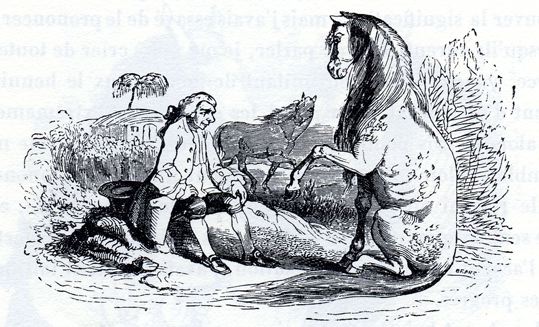
“The Truth About Human Nature”: Gulliver, Horse People, Absolutism and Lies

Gulliver among the Houyhnhnms

As I recuperate from air travel hell and try to gather my wits, here is a provocative essay examining how Jonathan Swift explored the complex function of lying in human nature. The essay is by Prof. Lee Perlman, in the New Atlantis, and you can read it here.

___________________________________

Source: The New Atlantis

Graphic

Ethics Dunces: Half of the U.S.A.

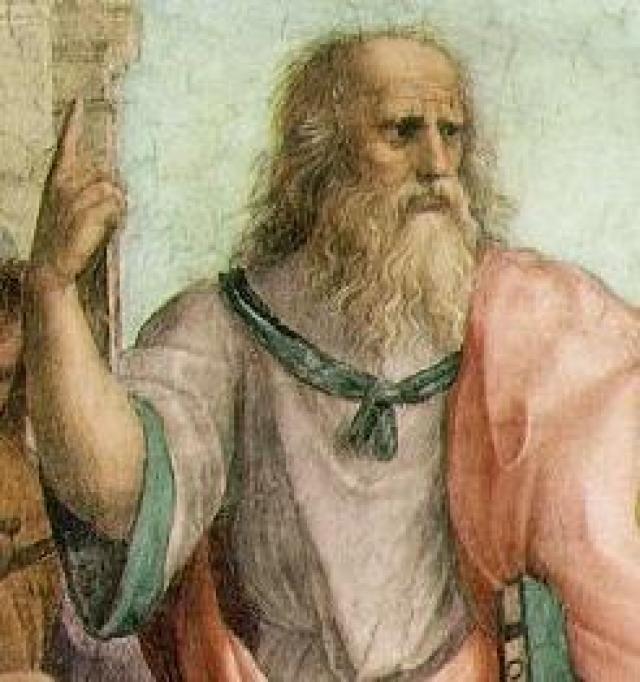
“Who’s Plato?”

According to a recent  Pew poll, almost half of the U.S. is still unaware of last week’s landmark Supreme Court decision upholding the Affordable Care Act, limiting Congress’s power to control private choices through reliance on the Commerce Clause of the Constitution, and flagging the Democrat deceit in passing a substantial tax on the middle class while hiding the fact in public and political discourse. 15% of the public must have been watching Fox and CNN the way listeners of Orson Welles “The War of the Worlds” listened to the 1938 radio broadcast, turning the dial before misinformation was clarified. These trusting or lazy souls still think the ACA was over-turned. This is, admittedly, better than thinking the world has been conquered by Martians.

The poll means that as we head into a watershed election that challenges the nation to make hard choices about its future course in tax policy, addressing the debt and deficit, foreign policy, commitment to national defense, entitlement reform, immigration, education, infrastructure renewal, employment, financial regulation, and equally vital matters that could have a decisive impact on America’s success, stability and even survival, one half of the public lack the interest and initiative to  stay current with crucial national developments. Continue reading

Comment of the Day: “Nomination For Enshrinement in the Hall Of Bad Ethics Ideas: A Hippocratic Oath For Scientists”

Zoebrain, the Aussie researcher who has enlightened many Ethics Alarms debates, provides delicious perspective to the post regarding scientific ethics, specifically regarding the question of whether scientists can or should pledge, like doctors, to “do no harm.”

Here is her Comment of the Day to Nomination For Enshrinement in the Hall Of Bad Ethics Ideas: A Hippocratic Oath For Scientists:

“Tell the truth, the whole truth – but possibly not nothing but the truth, as long as any opinion is unmistakably marked as such. Correct your past mistakes as you find them. Also be prepared to accept responsibility for the moral consequences of the power you provide to others being misused. Unless you feel it right to give them the power, you must accept personal responsibility and so withhold it. That’s not a Scientific sin, it’s a personal one.

“Providing the sharpest possible scalpel to a surgeon is one thing. Providing it to a vivisectionist of “untermenschen” another. Providing it as a toy for a 6-month-old baby yet another.

“The only scientific sins are knowing falsification of results, and omitting contradictory evidence. But scientists have responsibilities as humans too.

“Please have a listen to this song [ by musical satirist/scholar Tom Lehrer’s “Werner Von Braun,” about the amoral Nazi-turned-U.S. rocket-scientist.]:

Continue reading

The Homophobic Counselor, the Ethical Bigot, and the One-Legged Tarzan

Jennifer Keeton was expelled from the graduate program at Georgia’s Augusta State University in 2010 because her Christian religious convictions dictate that homosexuality is sinful and voluntary conduct, rather than an innate sexual orientation. A court upheld the school’s right to expel her on the basis that her beliefs made it impossible for her to meet their counseling standards, which the court ruled were neutral, and did not discriminate against her speech or religion.

The case may raise legitimate constitutional issues. The Alliance Defense Fund (ADF), a conservative legal group, and Constitutional Law professor Eugene Volokh (of Volokh Conspiracy fame) are assisting Keaton as she attempts to get reinstated. Ethically, however, I don’t think she has a leg to stand on.
In fact, I think her position resembles the old Dudley Moore-Peter Cook comedy routine where Moore is one-legged amputee who cries foul at being “discriminated against” by a film director who refuses to consider him for the role of Tarzan:

Similarly, how can a counselor claim to be able to provide full and competent services when her attitude toward gays dictates an unsympathetic, hostile and scientifically discredited point of view? Continue reading

The Ethics of Bloomberg’s Soft Drink Ban

It’s a serious problem.”

“Something needs to be done.”

“This is a public health issue.”

The media defenses of New York Mayor Bloomberg’s controversial decision to ban the sale of large soft drink servings in New York City, and Bloomberg’s defense as well, set up a classic utilitarian argument for a government intrusion into personal choice and lifestyle. It is, simply, that the ends justify the means, and as we all know, sometimes they do.

Sometimes, however, those means sacrifice too much: lives, dignity, fairness, liberty, fun. Sometimes employing those means require crossing lines that have not been crossed before, opening the door to more and greater sacrifices that even advocates of the particular measure would find objectionable and wrong. This leads to the slippery slope dilemma, and invokes absolutism. Some things must never be considered as just means, no matter what the ends being sought may be. Immanuel Kant’s philosophy of absolutism declared that it was always wrong to use human beings against their wills to solve problems, no matter how great the problems are. The Declaration of Independence holds that a human being’s rights to life, liberty and the pursuit of happiness must never be breached by government. Continue reading

Executing an Insane Killer: a Cynical Ethics Controversy

Let’s me get this straight: this is only a “macabre spectacle” if the guy strapped down to be poisoned isn’t crazy. Right?

In the case of Steven Staley, Texas has itself one of those periodic ethical/legal conundrums surrounding capital punishment that leave me feeling  cynical, puzzled, and worried that I am missing an important part of my compassion apparatus.

Staley’s problem, or his perhaps stroke of luck, is that he is a little more crazy now than he was when he committed the crimes that placed him on death row. In September 1989, Staley escaped from a Denver prison  and started robbing everything he encountered, looting nine businesses across four states. Finally he hit the Steak and Ale Restaurant in Tarrant County, Texas. Staley and his accomplices gathered the employees at gunpoint and forced the manager to hand over the contents of all the registers and the store safe. He then took the manager into the getaway car as a hostage, and executed him as Staley tried to elude the police. Continue reading

Ethics Hero Emeritus: Harry Philo (1925-2012)

Harry Philo: Champion, Lawyer, Inspiration

A great man died last week, and yet unless you are member of his family or law firm, a trial lawyer, or one of the many people he helped over his long career, you probably never heard of him. There is barely a trace of Harry Philo on the Internet; Wikipedia has no page devoted to him, and a Google search turns up next to nothing. (It shows over 22 million links for a search on Kendall Jenner, who is Kim Kardashian’s little sister). Yet Harry Philo was a great man, and one of the things that was great about him was that he didn’t waste a lot of time seeking glory for himself. Continue reading