Coercive Indoctrination in the Schools: Unethical, Regardless of the Content

A German language teacher at Western Hills High School in Fort Worth, Texas sent 14-year-old honors student Dakota Ary to the principal’s office for telling a classmate that he believes “homosexuality is wrong.”

Ary was then suspended as punishment. Homosexuality isn’t wrong,, but the school was.

Ary, who was raised in a church that believes homosexuality violates God’s laws, has a right to believe whatever he chooses to, and also has a right to express those beliefs as long as he doesn’t denigrate fellow students or incite violence or a disruption. There are words for schools punishing students for their beliefs, and among those words are “indoctrination,” “coercion,” brain-washing,” and “unethical.” Continue reading

Ethics Quiz: Which Musical Comedy Censor is More Unethical?

How could anyone predict that this show would be risque?

Rick Jones brought these sorry tales to my attention, and they are perfectly suited to an Ethics Quiz.

Your challenge: Explain which of the censors in these two incidents was more unethical.

Censor A: The mayor of Carrollton, Georgia, Wayne Garner, who ruled last week that a city-funded professional production of The Rocky Horror Picture Show was not suited for a community production. The city council had contracted with a theater group of actors, singers, dancers, musicians and crew, and had committed $2,500 of taxpayer funds in up-front production costs to prepare for four performances in October. The mayor’s spokesperson said that the production was going to contain racy choreography,despite the fact that it was supposed to be a “PG show.”

How a counter-culture musical specifically about gender bending, kinky sex and transvestites was supposed to be “PG” is anybody’s guess.

Censor B: Thomas Fleming, Superintendent of Schools in the Richland School District in western Pennsylvania.   He prompted District officials to veto the high school’s choice of the classic 1950s Broadway musical Kismet as a 2012 production, because it suddenly occurred to him that the characters in the play, which takes place in old Baghdad, are Muslims. Continue reading

The History Channel’s Unethical Science Fiction

Apparently cable TV needs some basic ethics rules, particularly focusing on integrity. SyFy, the science fiction channel, includes professional wrestling prominently in its programming, as well as movies that qualify as horror or fantasy but have no science, fictional or otherwise, in evidence. Chiller, the horror channel, includes movies that are pure suspense or science fiction, as well as re-runs of the reality show “Fear Factor,” which would belong on the Stupid Channel if there was one (other than E!, of course.) This week, a religious program was on Chiller; I have no idea what that was about. Meanwhile, The Learning Channel has become the Child Exploitation Channel, led by the “Jon  & Kate plus 8” franchise, spin-offs and imitators. What are we learning? Not much, except that the names of cable channels mean little or nothing.

Nevertheless, while it is sloppy and false branding to show “Apollo 13” on the SyFy channel, it is considerably worse to show fiction and fantasy on The History Channel, which is what The History Channel has been featuring recently with “Ancient Aliens,” a series that presents the wacko theory that aliens visited Earth centuries ago as fact. Continue reading

Unethical Quote of the Month: Canadian Judge Joanne Veit

“…While many Canadians undoubtedly view abortion as a less than ideal solution to unprotected sex and unwanted pregnancy, they generally understand, accept and sympathize with the onerous demands pregnancy and childbirth exact from mothers, especially mothers without support…Naturally, Canadians are grieved by an infant’s death, especially at the hands of the infant’s mother, but Canadians also grieve for the mother.”

—- Canadian Judge Joanne Viet, announcing that Katrina Effert, who strangled her newborn child and threw the body over a fence into the neighbor’s yard when she was 19, will serve a three-year suspended sentence with no jail time for the murder, reflecting a “fair compromise of all the interests involved.”

This is a cautionary ethics tale indeed for those who deny that a callous attitude toward human lives in the womb, giving them no standing against a mother’s desires and convenience, will gradually, inevitably, coarsen and warp a culture’s respect for life and its comprehension of wrong. [Addition: Many commenters have pointed out that Canada had designated infanticide as a relatively minor crime before fully legalizing abortion. That is a strange progression, though once infanticide had been declared “understandable,” abortions days were numbered. In the US, the gradual de-valuing of young life is moving in the more obvious way, from younger to older. The process, however, is the same.] Continue reading

“The Star Thrower” and Ethics

My response to the Ethics Alarms reader who pronounced my efforts here pointless and futile received many kind responses from commenters, several of who have pointed me to the story of the man who threw starfish into the sea. I had never read it or encountered it is any way. The fable is often simplified to represent the lesson that just because one person cannot “save all the starfish dying on all the beaches,” saving one by throwing it back into to the sea is still worth the effort, if only to the starfish that is saved. I am grateful for that analogy to what I do, but even more grateful for being alerted to the original  “The Star Thrower,” by anthropologist/philosopher/ writer Lauren Eiseley (1907-2007)

He had a lot more wisdom to convey  to us. You can read “The Star Thrower ” here.

How Can Anyone Justify Attacking Chaz Bono on “Dancing With the Stars”?

Apparently ABC’s message boards, e-mail inbox and phone messages have been over-flowing with “Dancing With the Stars” fans and others protesting the addition of Cher’s transgendered son to the slate of competitors. Why are they so upset, you ask?

That’s what I’d like to know. I have watched Chaz Bono in several interviews, and he impressed me as a smart, down-to-earth, articulate and thoroughly likable young man in every way. He is straightforward in answering the most delicate questions, and appears to have no other objective than to be happy and, if possible, to provide comfort, inspiration and hope for others who have gender confusion issues.

Now Chaz has been added to the cast of the upcoming installment of America’s favorite competition/reality show, which has always included an odd stew of American cultural figures, from tabloid targets to star athletes to nostalgia cases to reality show comets to novelty choices from the worlds of politics and media. He fits right in (tabloid target/nostalgia division) , and in many ways is an upgrade from the usual B and C-List denizens who usually do the dancing. What in the world is so objectionable about Chaz Bono? Continue reading

Comment of the Day on “The Twins and the Amazing Hockey Shot: the Public Flunks Its Ethics Test…Badly”

Reader Jim Weaver came up with an especially deflating and insulting Comment of the Day by taking literally my lament, in the post about the twin winning, then being denied, a cash prize while masquerading as his brother, that I was disappointed that after almost a decade of my ethics commentary that the public was still ethically out to lunch.

His comment:

“Did you really think that this blog would make a difference in America’s ethics? Is that really why you write this thing? If so, then you should be depressed because you are sadly deluded. 99.99% of the country has never heard of you or read your blog.

“I thought you wrote it to get attention and to try to drum up business for your training company. Just exactly how many readers do you have anyway?” Continue reading

The Twins and the Amazing Hockey Shot: the Public Flunks Its Ethics Test…Badly

Lets's face it: twins are trouble.

I am depressed today, for it is increasingly likely that I am wasting my life.

I began writing about ethics on-line after being stunned by the letters to the editor and calls to C-Span, not to mention the articles in the press, regarding President Clinton’s conduct in the Monica Lewinsky affair. The commentary was virtually ethics-free, and I realized that the vast majority of the American public had no idea how to apply ethical analysis to an event or problem. Their judgment regarding who was right and who was wrong appeared to be based entirely on rationalizations, biases, and non-ethical considerations.If they liked Clinton, he did nothing wrong. If they opposed his policies, he was scum. Objectivity and fair analysis only occasionally surfaced in the discussion at all, and the media coverage, if anything, was worse.

Now I’ve been doing this for almost a decade, and the verdict is clear: nothing has changed. In fact, the situation may have worsened. The sad proof at hand is the public’s reaction to The Tale of the One-in-a –Million-Hockey-Shot Scam, a feel-good story from last month that just turned sour. Continue reading

Richard Cohen, National Interests, and the Ethical Duties of the US to the World

There used to be no columnist who infuriated me more consistently than Richard Cohen. Those were the hazy, golden days before I discovered E.J. Dionne, Paul Krugman and Harold Mayerson, however, whose rigid ideology virtually precludes objective analysis. Cohen isn’t biased, he’s just wrong more often than not. But he is also capable of bursts of moral and ethical clarity. Today was an example, as he took on the isolationist voices on the left and the right that make up a large component, if not the majority, of our elected leadership today.

Cohen begins by recounting a section from  Erik Larson ‘s book,“In the Garden of the Beasts,” about how the American foreign policy establishment in the Thirties resisted efforts by William Dodd, then ambassador to Germany, to protest the Hitler government’s increasing persecution of Jews. Humanity, and the U.S., paid a steep price for its inward-turning perspective after World War I, as we abdicated our traditional role as defender of liberty, freedom, democracy and human rights on the world stage. Continue reading

Historical Theft at the King Memorial

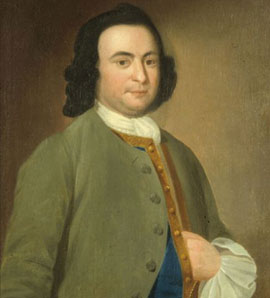
Rev. Theodore Parker

The new Martin Luther King Jr. Memorial is not just the King-in-Carbonite monolith that has caused so much controversy. There is much more to the National Mall’s latest addition, including inscriptions in marble of quotes from the martyred civil rights leader’s writings and speeches. There are more than a dozen examples of his oratory, a quotation from King’s 1963 “Letter From a Birmingham Jail,” and an excerpt from King’s Nobel Peace Prize acceptance speech in 1964.

Among them, this:

“The arc of the moral universe is long, but it bends toward justice.”

But Rev. King didn’t say it. Theodore Parker, an influential and eloquent Boston minister and abolitionist, did. King never pretended otherwise; it was one of his favorite quotes, and he used it often, but he usually credited its originator. Continue reading