The Judgement Day Leader’s Cowardly Ethics Failure

"It is all my fault."

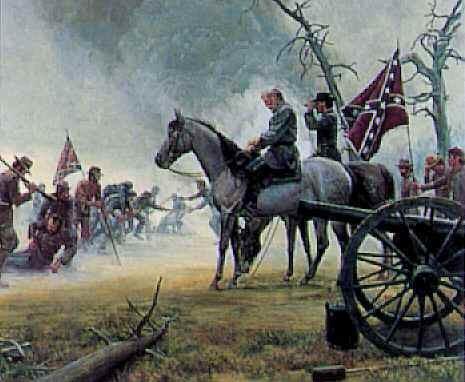
After the catastrophic miscalculation of Pickett’s Charge led to the slaughter of his soldiers and the loss of the pivotal Battle of Gettysburg, Confederate General Robert E. Lee   met the bloody survivors returning from the field of fire, telling them, one by one, “It is all my fault!” To Pickett, whose division was all but wiped out, he said, “Upon my shoulders rests the blame.”

I am no admirer of Robert E. Lee, but this was his finest moment as a leader, and an example for all leaders who are followed in faith and meet disappointment or worse.  I wrote two days ago that Harold Camping, the evangelical broadcaster who proclaimed with absolute, 100%  certainty that his calculations foretelling the end of the world on May 21 were correct, had better be prepared to be held accountable when we were all still here on May 22. He wasn’t. From Reuters:

” With no sign of Judgment Day arriving as he had forecast, the 89-year-old California evangelical broadcaster and former civil engineer behind the pronouncement seemed to have gone silent on Saturday. Family Radio, the Christian stations network headed by Harold Camping which had spread his message of an approaching doomsday, was playing recorded church music, devotionals and life advice unrelated to the apocalypse.” Continue reading →

The Atheist, the Graduation, and the Prayer

Is an atheist high school student who single-handedly blocks his school from having a prayer at graduation a hero or a jerk?

Well, neither. He’s a high school student. But he’s growing up to be a jerk. Perhaps even… a fick!

Pray for him….no, wait. Scratch that.

Here’s the story in Damon Fowler’s own words:

 “My graduation from high school is this Friday. I live in the Bible Belt of the United States. The school was going to perform a prayer at graduation, but due to me sending the superintendent an email stating it was against Louisiana state law and that I would be forced to contact the ACLU if they ignored me, they ceased it. The school backed down, but that’s when the shitstorm rolled in. Everyone is trying to get it back in the ceremony now. I’m not worried about it, but everyone hates me… kind of worried about attending graduation now. It’s attracted more hostility than I thought.

  “My reasoning behind it is that it’s emotionally stressing on anyone who isn’t Christian. No one else wanted to stand up for their constitutional right of having freedom of and FROM religion. I was also hoping to encourage other atheists to come out and be heard. I’m one of maybe three atheists in this town that I currently know of. One of the others is afraid to come out of the (atheist) closet. Continue reading →

“Everybody Beat A Dead Horse Day” Ethics

Cartoonist Jeff Hibbert's conception of Muhammad

I was stunned to discover that “Everybody Draw Muhammad Day,” last year’s mass warped exercise in going out of the way to insult the religious beliefs of fine, upstanding, moral Muslims world-wide,  is supposed to be an annual event. I would have thought that the justifiable abuse heaped on serial Islam-provoker Rev. Terry Jones would have shown the organizers of EDMD the error of their ways (which I correctly pointed out to them here, and here). But no. The self-styled defenders of the undoubted right to use freedom of expression recklessly and badly still claimed to be standing up for the sullied rights of  the “South Park” creators, who last year had their show censored by cowardly and hypocritical “Comedy Central” suits after a threat by some Muslim nut-jobs. For their part, Trey Parker and Matt Stone have happily moved on to the more profitable work of making fun of Mormons on Broadway, because they won’t kill you. Continue reading →

Is Harold Camping Ready For His May 22 Integrity Test?

"Never mind!" will not do it, Harold.

In response to a New York Magazine interviewer’s question about how he could be so sure the world was going to end on May21 (that’s tomorrow, folks!), Harold Camping, the leader of the imminent rapture movement,  said this:

“God has given sooo much information in the Bible about this, and so many proofs, and so many signs, that we know it is absolutely going to happen without any question at all. There’s nothing in the Bible that God has ever prophesied–there’s many things that he prophesied would happen and they always have happened–but there’s nothing in the Bible that holds a candle to the amount of information to this tremendous truth of the end of the world. I would be absolutely in rebellion against God if I thought anything other than it is absolutely going to happen without any question.”

The Rapture’s not happening on May 21st, but on May 22nd this good and pious man will have a big ethical decision to make. Continue reading →

“The Mentalist” Ethics: Patrick Jane Osamas “Red John”

Red John's bloody calling-card will be found at serial killing scenes no more.

Tonight marked the season finale of “The Mentalist” on CBS, and by happy coincidence, Bruno Heller’s odd-ball murder mystery drama ended with its hero, Patrick Jane (played with brio by the excellent Simon Baker) executing his nemesis, the serial killer “Red John,” in a crowded food court…a Osama bin Laden style killing that, like the death of the Al Qaida mastermind, was both technically illegal and completely ethical.

Bravo.

Red John, for those of you who do not follow “The Mentalist,” is the self-chosen monicker of a brilliant maniac with financial resources, who slaughtered California Bureau of Investigation consultant Jane’s family as well as untold others. Jane has spent the three years of the series in an Ahab-like quest for revenge, wittily solving other murders along the way. In the final episode, Red John plotted the death of Jane’s boss and maybe love interest, Theresa Lisbon, played by Robin Tunney. Red John’s henchman managed to kill two officers and wound Lisbon before he was foiled, leading to a dramatic confrontation between the serial killer himself and the hero. Continue reading →

Ethics Quiz: What Is Wrong With This Statement?

Wait...is there some problem with making Hitler jokes in France?

“The Festival de Cannes provides artists from around the world with an exceptional forum to present their works and defend freedom of expression and creation. The Festival’s Board of Directors, which held an extraordinary meeting this Thursday 19 May 2011, profoundly regrets that this forum has been used by Lars Von Trier to express comments that are unacceptable, intolerable, and contrary to the ideals of humanity and generosity that preside over the very existence of the Festival. The Board of Directors firmly condemns these comments and declares Lars Von Trier a persona non grata at the Festival de Cannes, with effect immediately.”

—- The Cannes Film Festival organizers, kicking Danish director Lars Von Trier out of the event (though his film remains in the competition for a prize) for some rambling, clearly (if ineptly) facetious comments he made to reporters in response to a question, referring to himself as a Nazi and saying that Israel was “a pain in the ass.”

This should be an easy one.


The Unethical Consequences of Ethical Coffee

"Mmmmmmm! Smells ethical!"

When ethical conduct becomes too complicated, confusing, or controversial, the vast majority of people will shrug and give up, leaving the conduct to be embraced by fanatics who can be relied upon to argue among themselves about who is really being ethical.   Welcome to the world of so-called ethical coffee, where adherents must choose between a dizzying number of certifications and categories to ensure that their coffee purchases support ethical practices and objectives.

“Shouldn’t the dollars you spend support the values you believe in?,” chirps the home page of EthicalCoffee.com. “Fortunately, when it comes to the morning cup of coffee so many of us love, it’s easier to put your money where your conscience is than with any other commodity. (Just try to find a gas station that can certify that the gasoline you’re putting in your tank isn’t linked to environmental disasters or labor abuses halfway around the world.) With coffee, you can pay a little more and know the grower is getting a minimum price or be sure you’re helping preserve winter habitat for some of the same songbirds that will show up next summer in your back yard.”

Hey, sounds great! Love those song birds! Then comes the “but’… Continue reading →

Ethics Hero: Sen. John McCain

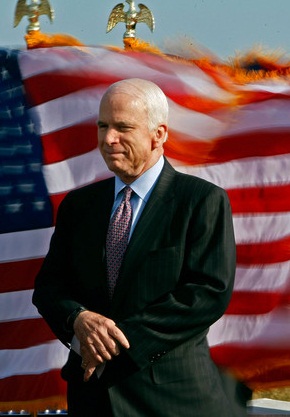
Arizona Senator John McCain has seriously tarnished his reputation for integrity  since losing the Presidential election in 2008, particularly during his last campaign for re-election to the Senate. The best of McCain was on display this week, however, as he delivered a strong and eloquent denouncement of torture (a.k.a “enhanced interrogation techniques”) on the Senate floor, in response to the ethically offensive arguments being put forth by many conservatives that the successful elimination of Osama bin Laden somehow magically transformed the evil practice of torture into a respectable tactic of national security. It is an important, courageous and persuasive statement from a U.S. Senator with special qualifications to make it, as one who had been tortured himself, and as fine a legacy as McCain, or any Senator, could aspire to.

Sen. McCain said, in part (you can read the entire text of his speech here)…

“Mr. President, the successful end of the ten-year manhunt to bring Osama bin Laden to justice has appropriately heightened the nation’s appreciation for the diligence, patriotism and courage of our armed forces and our intelligence community.  They are a great credit and inspiration to the country that has asked so much of them, and like all Americans, I am in their debt.

“But their success has also reignited debate over whether the so-called, ‘enhanced interrogation techniques’ of enemy prisoners, including waterboarding, were instrumental in locating bin Laden, and whether they are necessary and justifiable means for securing valuable information that might help prevent future terrorist attacks against us and our allies and lead to the capture or killing of those who would perpetrate them.  Or are they, and should they be, prohibited by our conscience and laws as torture or cruel, inhuman and degrading treatment. Continue reading →

Me, Wrestling With Bias, And Losing

A large part of being ethical involves being aware of your biases and minimizing their impact on your conduct. As I recently was reminded, this sounds easier than it is in practice.

Searching yesterday for an Ethics Alarms topic, I came across an interesting, if not earth-shaking, issue of legal ethics that had obvious applications to other professions. Tracking down the source of the story, I discovered that the original idea was posted by a lawyer-blogger who in the past has gone out of his way to denigrate me professionally and personally on the web. He has also insulted me directly. Outside of that, though, he is by all accounts a terrific lawyer, an astute commentator on the legal profession, and, I’m sure, the salt of the earth.

Still, I don’t feel like sending readers to his site. Not only did the guy, unfairly, set out to harm me professionally, but he probably would do so again. I have no reason to do something that benefits him, nor is there any reason for me to try to curry favor with him: he owes me an apology, and I know I am never getting it.

I could link to one of the blogs and websites that picked up and elaborated on his post, but that would be unfair: I try to link to the originator of a useful ethical discussion as a matter of fairness and recognition. Continue reading →

Ethics Quote of the Week: Washington Post Columnist Michael Gerson

“In determining who is a “major” candidate for president, let’s begin here. Those who support the legalization of heroin while mocking addicts are marginal. It is difficult to be a first-tier candidate while holding second-rate values.”

—-Washington Post columnist and former Bush advisor Michael Gerson, pronouncing presidential candidate Rep. Ron Paul’s Libertarian endorsement of drug legalization ethically unacceptable.

Gerson’s deconstruction of the all-too-common and increasingly ominous calls for legalizing addictive drugs nicely captures the trio of ethical flaws of the advocacy: it denies the crucial and legitimate government role defining responsible conduct for society, it embraces the myth that recreational drug use “does no harm,” and it is arrogant and selfish, condemning the poor and reckless to problems that their fragile resources cope with, in order to bestow a dubious “freedom” that the drug advocates do not need. Continue reading →