The War On Dollar Stores

The problem–well, one of them—with trying to control how other people choose to live their lives is that nobody’s smart enough to do it without making things worse. Still,a lot of sociologists and politicians think they are smart enough.

Oklahoma City, Tulsa, Fort Worth, Birmingham, and Georgia’s DeKalb County have passed restrictions on dollar stores, and other communities are debating whether to follow their example, where laws and zoning regulations limit how many of these small stores can open within a particular area. Other laws dictate what they can and can’t sell, most notably fresh food. You see, the antipathy to dollar stores is based on the narrative pushed by activists that they saturate poor neighborhoods with cheap, over-processed food, squeezing out other retailers and lowering the quality of nutrition in poor communities. An analyst for the Center for Science in the Public Interest makes the argument, “When you have so many dollar stores in one neighborhood, there’s no incentive for a full-service grocery store to come in.” Dollar stores, like Dollar Tree and Dollar General, the researchers say, make neighborhoods seem poor, and scare away better stores,  “locking in poverty rather than reducing it,” as one told the Washington Post.

Ah! Poor nutrition  is the fault of dollar stores!

Oops! Continue reading

Ethics Warm-Up, 1/6/2020: On The Eve Of Destruction Edition!

ARRGH! WE’RE DOOMED! DOOMED!

Just kidding.  I’m sure I’ve mentioned Barry McGwire’s hilariously overwrought rendition of P.F. Sloan’s silly lyrics before. Everyone should listen to this song every few months or so to remind them that we were pronounced doomed 55 years ago, yet here we are. The lack of historical perspective and general knowledge about the real world of geopolitics is driving so much of the over-heated laments we are hearing and reading—I think laughing is a better response that rolling one’s eyes, but I’m open to being convinced otherwise. Yes, sometimes leaders and countries have to draw red lines, and it is always best if the world believes them when they do. It never believed Barack Obama.

1. Fake news, headline-style...Yesterday, the New York Times headline, in bold,  “this is really important!!!” point type, told us that Trump’s military advisers were “stunned” at his decision to kill Iran’s head terrorist. Oh, no! His decision was surprise? Tt came out of the blue? They had recommended against it? Well, no. The story under that intentionally misleading headline says that the President was presented with several options, and the pros and cons of all were discussed. They expected him to choose one of the other options, that’s all. “Stunned” carried negative implications that the facts didn’t warrant, so naturally that’s what the Times editors chose. All the better to undermine trust in the President.

2. Not all celebrities are America-hating dolts:

Continue reading

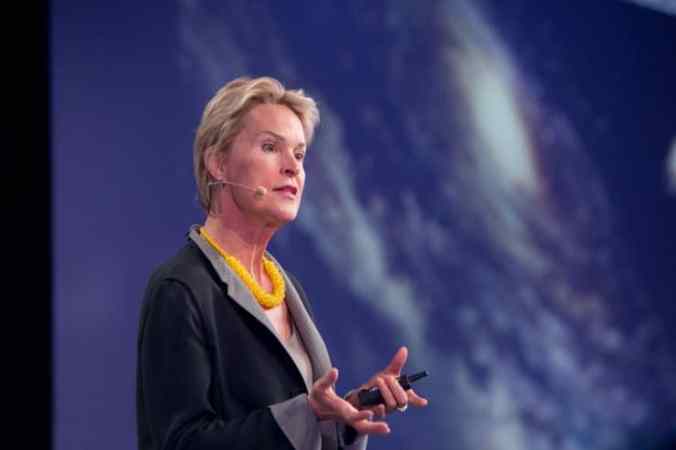
Ethics Hero: Frances Arnold

I’m sure there are a lot of people doing ethical things and not  trying to deliberately make me embarrassed to be a member of the human race—just not on social media, and not in the news. And there is Frances Arnold.

She is an American chemical engineer and the Linus Pauling Professor of Chemical Engineering, Bioengineering and Biochemistry at  Caltech. Professor Arnold was awarded the Nobel Prize in Chemistry in 2018 for pioneering the use of directed evolution to engineer enzymes. “Directed evolution” is a method used in protein engineering that mimics the process of natural selection to steer proteins or nucleic acids toward a user-defined goal. You know..this:

She had published a  paper on enzymatic synthesis of beta-lactams in May 2019 in the Science journal. When she discovered recently that her research could not be replicated, however, Arnold repudiated her own paper, and pronounced it the product of shoddy research.

“For my first work-related tweet of 2020, I am totally bummed to announce that we have retracted last year’s paper on enzymatic synthesis of beta-lactams. The work has not been reproducible,” she posted on Twitter. “It is painful to admit, but important to do so. I apologize to all. I was a bit busy when this was submitted, and did not do my job well.”

A short, clear, Level I apology, and it is refreshing to know that there are scientific geniuses who use the word “bummed,” and who do not write like Timnit Gebru.

On one hand, I wonder if it is easier for a Nobel winner to admit something like this. On the other, I am certain that the more eminent a scientist is, the harder it is to reveal a serious error. No matter how one looks at it, Professor Arnold exhibited integrity, honesty, humility and courage, may have done as much for science by showing how an ethical scientist handles an error as she did with her work on directed evolution.

I would be more certain about that if I understood what the hell directed evolution was.

_________________________________________

Use this link if you are sharing on Facebook: https://twitter.com/CaptCompliance/status/1213583009942622208

“Authentic Frontier Gibberish” Ethics

On Ethics Alarms, the term “Authentic Frontier Gibberish” is used to describe “intentionally (or sometimes just incompetently) incoherent double-talk used by politicians, advocates, lawyers, doctors, celebrities, scientists, academics ,con artists and wrong-doers to deceive, obfuscate, confuse, bore, or otherwise avoid transparency, admitting fault, accepting accountability or admitting uncomfortable truths. The term comes from “Blazing Saddles,” in this memorable scene.

It sometimes arises from incompetent communication skills, which are unethical for anyone in the public eye to employ. Sometimes it is more sinister than that, and occurs when someone chooses to create a vague word cloud that obscures the speaker’s or writer’s real purpose…and sometimes the fact that they are frauds. Sometimes AFG is designed to convey a feeling while avoiding sufficient substance to really explain what he or she means.

Sometimes, it feels like gaslighting.

A New York Times article was ostensibly about “Dealing with Bias in Artificial Intelligence.” This was, obviously, click-bait for me, as the topic is a developing field of ethics. The introduction stated in part, “[S]ocial bias can be reflected and amplified by artificial intelligence in dangerous ways, whether it be in deciding who gets a bank loan or who gets surveilled. The New York Times spoke with three prominent women in A.I. to hear how they approach bias in this powerful technology.” The statements of the first two women—I see no reason why only female experts on the topic were deemed qualified to comment—were useful and provocative.

Last, however, was Timnit Gebru “a research scientist at Google on the ethical A.I. team and a co-founder of Black in AI, which promotes people of color in the field, [who] talked about the foundational origins of bias and the larger challenge of changing the scientific culture.”

Here’s what she said (Imagine, the Times said this was “edited and condensed”! ). The bolding is mine.. Continue reading

Morning Ethics Warm-Up, 1/2/2020: A Rich Assortment Of Jerks And Assholes To Begin The Year.

 It’s finally Getting Back To Normal Day!

I don’t know about you, but I feel like everything’s been one big, holiday/stress/disruption blur since I enlivened Thanksgiving dinner by keeling over. There should be  law preventing Christmas and New Years from falling on Wednesdays, which effectively kills two full weeks. I’m behind on everything, and I don’t know what I could have done to avoid it…

1. Sigh. This is what we have to look forward to in 2020…Ezra Klein, the Left-biased Washington Post journalist who founded Vox, which he then staffed with all Left-biased journalists, tweeted out the link a nine-month-old Post article stating as fact that counties hosting Trump rallies saw massive spikes in hate crimes compared to counties that didn’t host Trump rallies. By Wednesday afternoon, Klein’s tweet had been re-tweeted  more than 7,000 times and had more than 14,000 likes. It also polluted many Facebook feeds.

Klein didn’t tell his 2.5 million followers  that the article relied on a study that had been debunked months ago by  Harvard University researchers Matthew Lilley and Brian Wheaton.  “The study is wrong, and yet journalists ran with it anyway,” they revealed in in Reason magazine four months ago. That’s four. 4. IV. F-O-U-R.

Lilley and Wheaton tried to replicate the original study—if a study is valid, you can do that.  They discovered that “adding a simple statistical control for county population to the original analysis causes the estimated effect of Trump rallies on reported hate crimes to vanish. “Given how little scrutiny was required to reveal the flaws in the thesis that Trump rallies cause hate incidents, one cannot help but wonder whether its viral status was aided by journalists predisposed to believe its message,” the researchers noted.

Ya think?

Klein’s tweet is still up. It’s false and inflammatory, but it advances one of the key Big Lies (that would be #4), so he is running with it anyway. Do you wonder why those on opposite sides of the partisan divide have different views of reality? This kind of thing is a primary reason.

Enemy of the people.

2. The first “I don’t understand this story at ALL” of 2020:

 In July 2018, Michael J. Reynolds. a New York City police officer, was in Nashville for a three-night bachelor-party trip with six other officers. At one point in the festivities,  Reynolds, who is white, kicked in a black woman’s door in a drunken rage, threatening her (“I’ll break every bone in your neck…”) and her sons while calling them “niggers” and showering them with obscenities. He was arrested, tried, and sentenced to 15 days in jail with three years’ probation after pleading no contest to four misdemeanors, court records show. Nevertheless, he remains an employee of the N.Y.P.D. More than 10,000 people signed an online petition demanding his dismissal and supporting the woman whose home he invaded.

Theories? Never mind unions, due process and mandatory investigations: the incident took place a full year and a half ago. There is no excuse for this. Reynolds apologized and said that he was so drunk he doesn’t remember the episode. Oh! Then that’s OK, Officer! Let’s all forget the whole thing!

As it habitually does, the New York Times reached a false analogy, writing,

The case of Officer Reynolds is again focusing scrutiny on the pace of the Police Department’s disciplinary process. In a prominent example of how it can drag on, five years passed before Officer Daniel Pantaleo, whose use of a prohibited chokehold contributed to the 2014 death in police custody of Eric Garner, was fired and stripped of his pension benefits in August.

Ridiculous. There were legitimate issues involved in Pantaleo’s case that made the proper discipline in his case complicated and controversial. There are no reasons for controversy here. Continue reading

Last Sunday Of The Decade Ethics Alarms, 12/29/2019: Herman Kahn Rolling Over In His Grave Edition

Good morning!

In my one, fortuitous one-on-one conversation with futurist Herman Kahn, then regarded as the most brilliant man in America, he observed that society periodically for forgets everything it has learned over the years, and then chaos reigns temporarily until bad ideas and horrific mistakes re-teach the lessons that once were accepted as obvious. He was talking about the Sixties, but it is clear that this is another one of those periods. Kahn also noted that some of the forgotten lessons are re-learned too late to save society from permanent harm. The Sixties gave us socially acceptable promiscuous sex and the resulting normalization of children born out of wedlock, the re-assignment of of abortion as ethical (somehow) rather than criminal, and societal sanctions of recreational drug use.

Nice work, Boomers…

1. Speaking of abortion...can there be a more empty, fatuous justification of it than what Senator Cory Booker tried last week? ”Abortion rights shouldn’t matter to men because women are our mothers, sisters, daughters, friends,” Booker tweeted. “They should matter to men — to everyone — because women are people.”

How profound. Nobody has ever disputed that women are people, and Booker’s non-logic—the statement compels the response, “And SO…????”—is an appeal to emotion without substance. It also makes its own rebuttal screamingly obvious to anyone but a pro-abortion zealot: “Abortion should be repugnant to men and women…and Presidential candidates…because unborn babies are living human beings.” Continue reading

Shrugging Off Cheating: It Is As I Feared…[Corrected]

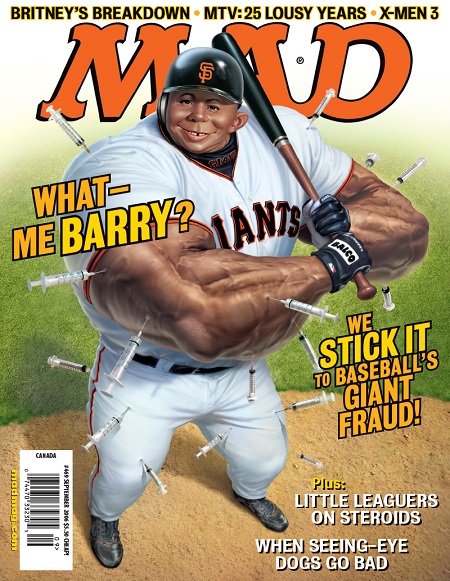
Unfortunately, MAD is no longer around to protect our values…

My favorite Christmas gift this year, as it has been in recent years, is the new Bill James Baseball Handbook, which will be my primary bathroom reading for the next ten months. Oh, it’s not as much fun as the old Bill James Abstracts, but in those days, three decades ago, Bill was revealing then-unknown nuances of the game that spawned  the elaborate (and still developing) analytical tools that have changed how baseball is played, watched, and understood.

James typically writes a few long, Abstract-like articles for the Handbook, which has many contributors, and he is, as always, fascinated by the selection criteria for the Major League Baseball Hall of Fame in Cooperstown. My gift is especially timely, because his observations in the Handbook dovetail nicely with the recent voting by sportswriters on the latest entering class, including Derk Jeter, naturally, and perhaps others. The results won’t be announced for a while.

Bill did research this past year to determine who the public wanted to see elected to the Hall among players who had not yet been deemed worthy ( meaning that they hadn’t been listed on at least 75% of the ballots cast, or are not yet eligible for various reasons, including players who are still active. The results, as he explored the gap between public opinion and past voting, were disturbing, if not exactly shocking. Continue reading

Your Ethics Reading Assignment: “The Cost Of America’s Cultural Revolution”

I swear, when I wrote the recent post about the lawsuit against the use of the standard college admissions tests, I had not read nor was even aware of Heather MacDonald’s superb essay on the topic of the manipulation of higher education in pursuit of ideological domination. (Thanks and gratitude to Instapundit for the timely link.)

Here is a taste:

The social-justice diversity bureaucracy has constructed a perpetual-motion machine that guarantees it eternal life. Minority students who have been catapulted by racial preferences into schools for which they are not academically prepared frequently struggle in their classes. The cause of those struggles, according to the social-justice diversity bureaucracy, is not academic mismatch; it is the lack of a critical mass of other minority students and faculty to provide refuge from the school’s overwhelming bigotry. And so, the school admits more minority students to create such a critical mass. Rather than raising minority performance, however, this new influx of diverse students lowers it, since the school has had to dig deeper into the applicant pool. The academic struggles and alienation of minority students will increase, along with the demand for more diversity bureaucrats, more segregated safe spaces, more victimology courses, more mental health workers, more diverse faculty, more lowered standards, and of course, more diversity student admits. And the cycle will start all over again.

And another…

The ultimate social-justice solution to the skills and behavior gap is to remove the competition entirely. From the moment children enter school, they are berated for their white heteronormative patriarchal privilege if they fall outside a favored victim group. Any success that they enjoy is not due to their own efforts, they are told; it is due, rather, to the unfair advantages of a system deliberately designed to handicap minorities. Teachers are now advised to ignore white male students, since asking or answering questions in class is another mark of male supremacy.

Please read it all, here.

There will be a quiz.

Written Statement of Prof. Jonathan Turley: “The Impeachment Inquiry Into President Donald J. Trump: The Constitutional Basis For Presidential Impeachment” [PART V]

Note the date…

In his final section before concluding, Professor Turley covers other theories being floated as justification for impeachment, and finds them startlingly weak and contrived.

The Hill has Turley’s lament regarding the  the Alliance of Unethical Conduct’s attacks on his thorough and objective dismantling of their coup efforts. (The AUC—that’s the Ethics Alarm shorthand for the Democratic Party-“resistance”-mainstream media alliance to remove Trump from office by any means possible, not Turley’s.)  He writes,

Despite 52 pages of my detailed testimony, more than twice the length of all the other witnesses combined, on the cases and history of impeachment, [Washington Post columnist Dana Milbank] described it as being “primarily emotional and political.” Milbank claimed that I contradicted my testimony in a 2013 hearing when I presented “exactly the opposite case against President Obama” by saying “it would be ‘very dangerous’ to the balance of powers not to hold Obama accountable for assuming powers ‘very similar’ to the ‘right of the king’ to essentially stand above the law.”

But I was not speaking of an impeachment then. It was a discussion of the separation of powers and the need for Congress to fight against unilateral executive actions, the very issue that Democrats raise against Trump. I did not call for Obama to be impeached….

In my testimony Wednesday, I stated repeatedly [as I stated in my testimony during the Clinton impeachment] that a president can be impeached for noncriminal acts…. My objection is not that you cannot impeach Trump for abuse of power but that this record is comparably thin compared to past impeachments…. … Democrats have argued that they do not actually have to prove the elements of crimes…. In the Clinton impeachment, the crime was clearly established and widely recognized…. [W]e are lowering impeachment standards to fit a paucity of evidence and an abundance of anger…. 

Writes Ann Althouse in a post yesterday, “it seems to me that the real impeachable offense has always been that Donald Trump got himself elected.”

I wish Prof. Turley had dealt with that, the real justification, in their minds, for the House’s impeachment push.

Back to the professor:

C.  Extortion.

 As noted earlier, extortion and bribery cases share a common law lineage. Under laws like the Hobbs Act, prosecutors can allege different forms of extortion. The classic form of extortion is coercive extortion to secure property “by violence, force, or fear.”85 Even if one were to claim the loss of military aid could instill fear in a country, that is obviously not a case of coercive extortion as that crime has previously been defined.

Instead, it would presumably be alleged as extortion “under color of official right.” Clearly, both forms of extortion have a coercive element, but the suggestion is that Trump was “trying to extort” the Ukrainians by withholding aid until they agreed to open investigations. The problem is that this allegation is no closer to the actual crime of extortion than it is to its close cousin bribery. The Hobbs Act defines extortion as “the obtaining of property from another, with his consent, induced by wrongful use of actual or threatened force, violence, or fear or under color of official right.”87

As shown in cases like United States v. Silver, extortion is subject to the same limiting definition as bribery and resulted in a similar overturning of convictions. Another obvious threshold problem is defining an investigation into alleged corruption as “property.” Blackstone described a broad definition of extortion in early English law as “an abuse of public, justice which consists in an officer’s unlawfully taking, by colour of his office, from any man, any money or thing of value, that is not due him, or more than is due, or before it is due.”89 The use of anything “of value” today would be instantly rejected. Extortion cases involve tangible property, not possible political advantage.90 In this case, Trump asked for cooperation with the Justice Department in its investigation into the origins of the FBI investigation on the 2016 election. As noted before, that would make a poor basis for any criminal or impeachment theory. The Biden investigation may have tangible political benefits, but it is not a form of property. Indeed, Trump did not know when such an investigation would be completed or what it might find. Thus, the request was for an investigation that might not even benefit Trump.

The theory advanced for impeachment bears a close similarity to one of the extortion theories in United States v. Blagojevich where the Seventh Circuit overturned an extortion conviction based on the Governor of Illinois, Rod Blagojevich, pressuring then Sen. Barack Obama to make him a cabinet member or help arrange for a high- paying job in exchange for Blagojevich appointing a friend of Obama’s to a vacant Senate seat. The prosecutors argued such a favor was property for the purposes of extortion. The court dismissed the notion, stating “The President-elect did not have aproperty interest in any Cabinet job, so an attempt to get him to appoint a particular person to the Cabinet is not an attempt to secure ‘property’ from the President (or the citizenry at large).” In the recent hearings, witnesses spoke of the desire for “deliverables” sought with the aid. Whatever those “deliverables” may have been, they were not property as defined for the purposes of extortion any more than the “logrolling” rejected in Blagojevich.

There is one other aspect of the Blagojevich opinion worth noting. As I discussed earlier, the fact that the military aid was required to be obligated by the end of September weakens the allegation of bribery. Witnesses called before the House Intelligence Committee testified that delays were common, but that aid had to be released by September 30th. It was released on September 11th. The ability to deny the aid, or to even withhold it past September 30th is questionable and could have been challenged in court. The status of the funds also undermines the expansive claims on what constitutes an “official right” or “property”:

“The indictment charged Blagojevich with the ‘color of official right’ version of extortion, but none of the evidence suggests that Blagojevich claimed to have an ‘official right’ to a job in the Cabinet. He did have an ‘official right’ to appoint a new Senator, but unless a position in the Cabinet is ‘property’ from the President’s perspective, then seeking it does not amount to extortion. Yet a political office belongs to the people, not to the incumbent (or to someone hankering after the position). Cleveland v. United States, 531 U.S. 12 (2000), holds that state and municipal licenses, and similar documents, are not ‘property’ in the hands of a  public  agency. That’s equally true of public positions. The President-elect did not have a property interest in any Cabinet job, so an attempt to get him to appoint a particular person to the Cabinet is not an attempt to secure ‘property’ from the President (or the citizenry at large).”

A request for an investigation in another country or the release of money already authorized for Ukraine are even more far afield from the property concepts addressed by the Seventh Circuit.

The obvious flaws in the extortion theory were also made plain by the Supreme Court in Sekhar v. United States, where the defendant sent emails threatening to reveal embarrassing personal information to the New York State Comptroller’s general counsel in order to secure the investment of pension funds with the defendant. In an argument analogous to the current claims, the prosecutors suggested political or administrative support was a form of intangible property. As in McDonnell, the Court was unanimous in rejecting the “absurd” definition of property. The Court was highly dismissive of such convenient linguistic arguments and noted that “shifting and imprecise characterization of

the alleged property at issue betrays the weakness of its case.”94 It concluded that “[a]dopting the Government’s theory here would not only make nonsense of words; it would collapse the longstanding distinction between extortion and coercion and ignore Congress’s choice to penalize one but not the other. That we cannot do.”95 Nor should Congress. Much like such expansive interpretations would be “absurd” for citizens in criminal cases, it would be equally absurd in impeachment cases.

To define a request of this kind as extortion would again convert much of politics into a criminal enterprise. Indeed, much of politics is the leveraging of aid or subsidies or grants for votes and support. In Blagojevich, the court dismissed such “logrolling” as the basis for extortion since it is “a common exercise.” If anything of political value is now the subject of the Hobbs Act, the challenge in Washington would not be defining what extortion is, but what it is not.

D.  Campaign Finance Violation

Some individuals have claimed that the request for investigations also constitutes a felony violation of the election finance laws. Given the clear language of that law and the controlling case law, there are no good-faith grounds for such an argument. To put it simply, this dog won’t hunt as either a criminal or impeachment matter. U.S.C. section 30121 of Title 52 states: “It shall be unlawful for a foreign national, directly or indirectly, to make a contribution or donation of money or other thing of value, or to make an express or implied promise to make a contribution or donation, in connection with a federal, state, or local election.”

On first blush, federal election laws would seem to offer more flexibility to the House since the Federal Election Commission has adopted a broad interpretation of what can constitute a “thing of value” as a contribution. The Commission states “’Anything of value’ includes all ‘in-kind contributions,’ defined as ‘the provision of any goods or services without charge or at a charge that is less than the usual and normal charge for such goods or services.’” However, the Justice Department already reviewed the call and correctly concluded it was not a federal election violation. This determination was made by the prosecutors who make the decisions on whether to bring such cases. The Justice Department concluded that the call did not involve a request for a “thing of value” under the federal law. Congress would be alleging a crime that has been declared not to be a crime by career prosecutors. Such a decision would highlight the danger of claiming criminal acts, while insisting that impeachment does not require actual crimes. The “close enough for impeachment” argument will only undermine the legitimacy of the impeachment process, particularly if dependent on an election fraud allegation that itself is based on a demonstrably slipshod theory. Continue reading

Morning Ethics Warm-Up, 12/5/2019: Post Impeachment Hearing Meltdown Edition

Good Morning!

Somehow a picture of the so-called “unicorn puppy,” appropriately named “Narwhal,” seems appropriate today. The Democratic Party/”resistance”/mainstream media has been pushing its corrupt impeachment plot on the assumption that sufficient Trump-haters would find it cute, but as of yesterday the undemocratic motives and ugliness of the effort stood out like a tail on a puppy’s face. You can’t hide it, and lots of people will convince themselves that it’s attractive. But rationally, the damn thing has to come off.

1. On the Stanford law professor’s joke about Barron Trump’s name. Oddly, perhaps the most harmless part of the otherwise embarrassing testimony of Stanford constitutional law professor Pamela S. Karlan yesterday became the most controversial. “While the president can name his son Barron, he can’t make him a baron,” she said.

HAHAHAHAHA! Good one, professor! Gratuitous and completely irrelevant to the issues at hand,  but hey, anything to throw fish to the seals! Based on the outrage around the conservative media, most of which only referenced this knee-slapper without quoting it, I assumed that she had actually insulted the teenager.  I kept reading about how this was one more example of the double standard: using Obama’s daughters for political warfare was off limits, but now this mean professor was getting laughs from Democrats by making fun of Barron Trump. Laura Ingraham tweeted that this joke was guaranteed to turn the public against the impeachment farce for good. (I don’t think so, Laura. You should get out more.) Naturally the First Lady piled on, tweeting at the professor, “A minor child deserves privacy and should be kept out of politics. Pamela Karlan, you should be ashamed of your very angry and obviously biased public pandering, and using a child to do it.” Trump 2020 national press secretary Kayleigh McEnany went even more overboard:

“Only in the minds of crazed liberals is it funny to drag a 13-year-old child into the impeachment nonsense,” she wrote. “Pamela Karlan thought she was being clever and going for laughs, but she instead reinforced for all Americans that Democrats have no boundaries when it comes to their hatred of everything related to President Trump. Hunter Biden is supposedly off-limits according to liberals, but a 13-year-old boy is fair game. Disgusting. Every Democrat in Congress should immediately repudiate Pamela Karlan and call on her to personally apologize to the president and the first lady for mocking their son on national TV.”

Oh come ON. Continue reading