Your Ethics Alarms Super Bowl Guilt Trip

You know that by watching the Super Bowl, you’re helping to kill and cripple young men, right?

Sure you do.

You and people like you watch the Super Bowl, maybe hold parties around it, allowing the NFL to make millions of dollars selling ads and merchandise off of the most watched sporting event of the year. And, of course, the popularity of the Super Bowl makes it the year’s #1 promotion for the billion dollar mega-industry that is the National Football League, and down the line, for billion dollar corrupt big time college football, and in places like Texas and other regions warped by the “Friday Night Lights” mentality, high school football, and further down the line, youth football, where kids a young as 8 begin getting the blows to the head that will help make them confused and dysfunctional in their fifties or earlier if they play long enough…and maybe even if the don’t.

Hey, these are great nachos! Is this a microbrew? Look at that funny ad!

The film above, “Concussion Protocol,” was released this month, and shows a compilation of every reported concussion this season. Directed by Josh Begley and produced by Laura Poitras,  it is believed to be a nearly complete compilation of the NFL’s reported 281 concussions this season, the most since 2012. The NFL, which is affirmatively evil, is spinning this as a good thing, pointing out that it means that players are self-reporting their head injuries more often.

Sure. That must be it. Bravo! Problem solved. DE-Fence!
Continue reading

Pssst! Climate Change Activists? This Is Why Nobody Trusts You…

Here is Houdini showing the Scientific American panel how spiritualists and mediums made bells ring. See his foot?

I once subscribed to Scientific American. We had to read it in high school, and I often used articles from the magazine in research projects. I also was a fan of its history, which intersected with my long-time love of magic and magic history. It was Scientific American, back in the 1920s, that created the special cash prize for anyone who could prove they had supernatural powers, or that paranormal phenomena was real. After a while psychics and other miracle workers stopped applying for the prize, because SA’s panel of experts always exposed them as frauds. The star member of that panel was Harry Houdini, in his post-performing second career as the enemy of charlatans and frauds

Thus it pains me to see the once great, dumbed-down vestige of Scientific American publish an article with this unforgivable headline, in front of content that is little better:

Climate Change May Have Helped Spark Iran’s Protests

And space aliens may have built the pyramids.

Actually, the article still has educational value, though no teacher is likely to use it properly. It is a wonderful example of poor critical thinking, bad science, the result of mixing science with politics, and how bias makes you stupid.  The author, Scott Waldman, doesn’t even try to hide the article’s weak logic and lame premise, beginning it with this:

The impacts of climate change are among the environmental challenges facing Iran that helped spark protests in dozens of cities across the Islamic republic.At least 20 people have died in the uprising, driven by the sudden collapse of financial institutions, low wages and mistrust of national leaders. Rising temperatures are seen by some experts as an underlying condition for the economic hardships that led to the unrest. A severe drought, mismanaged water resources and dust storms diminished Iran’s economy in recent years, according to experts who study the region. While the protests are largely driven by resistance to the country’s hardline conservative government, such environmental factors might have contributed to the largest protests inside Iran in years.

That tells any objective reader all he needs to know: junk ahead.  The old “some experts” ploy, eh? You can find “some experts” who will say anything, especially on TV. We just went through weeks of unethical speculation on whether the President was suffering from dementia based on “some expert,” a Yale professor of psychiatry who breached the American Psychiatric Association (APA) ethics protocols and was revealed as not to be licensed to practice anymore.You know. An expert.

Waldman himself isn’t an expert on climatology or even science: he’s a reporter, and his degree was in journalism. Funny, I’m so old, I remember when the articles in Scientific American were written by scientists. How quaint. Continue reading

Comment Of The Day: Public Confidence And Trust (2): Observations On Gallup’s Confidence In Institutions Poll

After Charles Green‘s recent  Comment of the Day on the post, Public Confidence And Trust (1): Observations On Gallup’s Trust In Occupations Poll, I was pretty sure that there would be an encore when I posted Part 2, an overview of the Gallup poll on public trust and confidence in American institutions. Charlie didn’t disappoint, so here is his Comment of the Day on the post, Public Confidence And Trust (2): Observations On Gallup’s Confidence In Institutions Poll:

…I agree with you that this stuff is as mission-critical as anything.

As you know, my life’s work is studying trust, and while I focus on interpersonal trust, you can’t ignore the systemic institutional issues either. In fact, they are connected.

In fact, I agree with your fundamental point that the cure for what ails our institutions must lie in personal behaviors, personal relationships, personal ethics.

Without taking anything away from that fundamental and massive agreement, let me suggest two tweaks to the issue as you have presented it.

The first is that this is NOT simply a US phenomenon. I recommend even more sobering reading from the Edelman Trust Barometer, a study that has been ongoing for over a decade. See the 2017 version here: https://www.edelman.com/global-results/

That survey covers about 18 western countries: fully half of them report the level of distrust in institutions – business, communications, NGOs, CEOs, etc. – not materially different from what we see in the US. Continue reading

Public Confidence And Trust (2): Observations On Gallup’s Confidence In Institutions Poll

In Part 1, we looked at the implications of Gallup’s 2017 polling on Americans’ beliefs in the trustworthiness and honesty of various occupations.  This post looks at institutions, and what Gallup’s research shows us when those polled answer the question, “Now I am going to read you a list of institutions in American society. Please tell me how much confidence you, yourself, have in each one — a great deal, quite a lot, some or very little?”

As with the occupations poll results, what is most interesting—or depressing— is how the public’s attitude has changed over time. Gallup has been taking this poll at the end of every year since 1993, and in some years, for some institutions, before that.

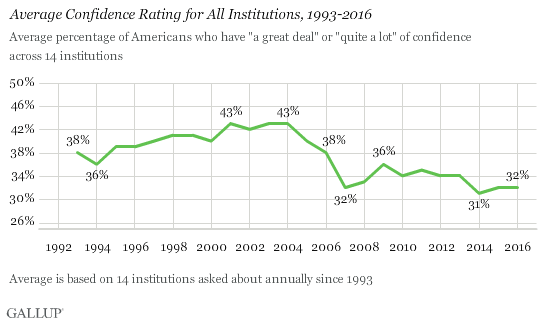
The most important finding is that Americans have less trust and confidence in our institutions than ever before, and have been in this state for three straight years. (See chart above.) The 32% average confidence level in all institutions measured was one point above 2016, which came in at a record low 31%, but that difference is not statistically significant. This is the third straight year that the number has been under 33%. That has never happened before.

I have written about this issue in the past (and discussed it with professional groups, like newly elected state legislators, in ethics seminars), with the same alarm. For a democracy to lack confidence and trust in its institutions portends disaster, and the danger cannot be understated. Of all forms of government, it is democracy that is most built on a foundation of public trust. This erosion in public trust—the average level of trust has fallen about 26% in just ten years—is collectively frightening. Look at the first line and the last in many of these charts: Continue reading

Lies, Dunces, Fools, Villains, Hypocrites And Big Liars In The Resistance’s Plan E, “The President Is Disabled!” [Part 2]

As their purely, non-partisan, unbiased,professional opinion. of course–just like Prof. Lee today.

[Part I was the Morning Warm-up for 1/7/18, which can be found here.]

4. The Big Lie’s smoking gun. CNN, Politico, MSNBC, Newsweek, The Hill, and many other news sources had headlines this week that were some variation of this one, from CNN:

“Lawmakers consulted psychiatrist about Trump”

The obvious message being conveyed: lawmakers—not just Democrats, but Republicans too!—are worried enough about the President’s mental health that they called in an expert to “brief” them. (“Lawmakers briefed by Yale psychiatrist on Trump’s mental health: report”—The Hill.) This is misleading, dishonest, and factually false—truly fake news. The Weekly Standard, hardly a reflex pro-Trump publication, revealed how false it all was. The story began…

On Wednesday night, before Washington was completely consumed by Michael Wolff’s West Wing tell-all, Politico published a piece feeding into a different frenzy: the notion that Congress was concerned President Trump might be mentally unfit for office. The article, titled “Washington’s growing obsession: The 25th amendment,” claims that more than a dozen lawmakers—all Democrats, with the exception of one nameless Republican senator—attended private briefings in early December with a Yale psychiatry professor to discuss Trump’s mental health. The most interesting detail of the story, of course, was that one rebellious Republican senator had met with Dr. Bandy Lee to discuss her belief that Trump is unfit to serve as commander-in-chief. Politico reported that Lee refused to name the GOP lawmaker she claimed to have had a meeting with.

The reporter, Haley Bird, investigated and…

  • …”was unable to confirm that any Republican Senator actually met with the Yale professor.”
  •  “In an on-the-record phone call with TWS Saturday afternoon, Lee admitted her “meeting” with a Republican senator was not actually scheduled and that it was, in her own words, “accidental.” “The meeting happened—it wasn’t arranged in advance,” she said. “It was accidental. It was incidental, I will say. It was incidental.”

That means that she was not summoned  to “brief” worried Republican lawmakers. It was not a “meeting” is the way the word is routinely used by the news media in political matters. The word is not generally construed to mean “the bumped into each other and had a chat.” Nor is “consulted”  used to describe spontaneous questions in a chance encounter.

The media reporting here was pure hype, blowing an informal. chance meeting—in the hall?–with the unethical psychiatrist who has been unethically diagnosing Trump from afar all year long–into news. That’s propaganda in service of the Big Lie. This was not a bipartisan inquiry into a matter of state. Lee was invited to a partisan meeting of Democrats to determine if she could assist with Plan E, removing the President because of an inability to perform his duties.

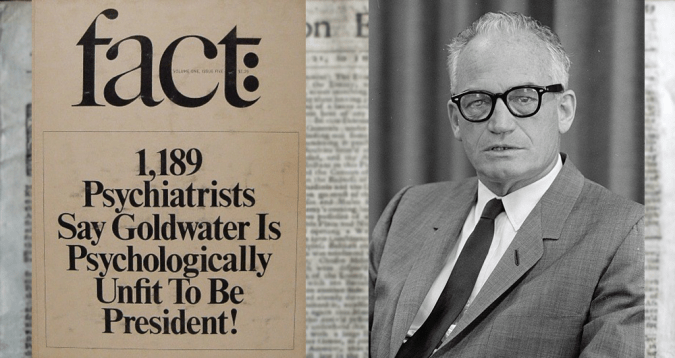
5. Let’s meet the primary Ethics Dunce in the Big Lie plot,Yale psychiatry professor Bandy Lee.  She has been claiming for over a year  that Trump is mentally impaired and unfit to serve. Her primary evidence are his tweets. This is because she has never examined him, met him, or had first hand knowledge about any aspect of his conduct or behavior. Because so many Democratic and progressive professionals were moved to violate their ethics codes out of animus to Trump and fealty to the Democratic Party, the head of the American Psychiatric Association handed down this edict in August of 2016:

“Since 1973, the American Psychiatric Association and its members have abided by a principle commonly known as “the Goldwater Rule,” which prohibits psychiatrists from offering opinions on someone they have not personally evaluated. The rule is so named because of its association with an incident that took place during the 1964 presidential election. During that election, Fact magazine published a survey in which they queried some 12,356 psychiatrists on whether candidate Sen. Barry Goldwater, the GOP nominee, was psychologically fit to be president. A total of 2,417 of those queried responded, with 1,189 saying that Goldwater was unfit to assume the presidency.

While there was no formal policy in place at the time that survey was published, the ethical implications of the Goldwater survey, in which some responding doctors even issued specific diagnoses without ever having examined him personally, became immediately clear. This large, very public ethical misstep by a significant number of psychiatrists violated the spirit of the ethical code that we live by as physicians, and could very well have eroded public confidence in psychiatry… I can understand the desire to get inside the mind of a Presidential candidate. I can also understand how a patient might feel if they saw their doctor offering an uninformed medical opinion on someone they have never examined. A patient who sees that might lose confidence in their doctor, and would likely feel stigmatized by language painting a candidate with a mental disorder (real or perceived) as “unfit” or “unworthy” to assume the Presidency.

Simply put, breaking the Goldwater Rule is irresponsible, potentially stigmatizing, and definitely unethical.”

Got that? Lee just defied her profession’s standards. During the campaign, she continued to diagnose Trump without his consent or an in-person examination. She justified doing so on the grounds that she is “obligated to break them in times of emergency.” Do I really have to recite all of the rationalizations this transparently disingenuous  excuse employs? Oh, all right…

8A. The Dead Horse-Beater’s Dodge, or “This can’t make things any worse”
13. The Saint’s Excuse: “It’s for a good cause”
24. Juror 3’s Stand (“It’s My Right!”)
25. The Coercion Myth: “I have no choice!”
28. The Revolutionary’s Excuse: “These are not ordinary times.”
30. The Prospective Repeal: “It’s a bad law/stupid rule”
31. The Troublesome Luxury: “Ethics is a luxury we can’t afford right now”
40. The Desperation Dodge or “I’ll do anything!”
45. The Abuser’s License: “It’s Complicated”
58. The Golden Rule Mutation, or “I’m all right with it!”
59. The Ironic Rationalization, or “It’s The Right Thing To Do”

She continued to breach professional ethics standards after the election,  earning a book deal that spawned  “The Dangerous Case of Donald Trump: 27 Psychiatrists and Mental Health Experts Assess a President.” So much for objective, unconflicted, professional analysis. She saw a niche and an audience, and grabbed it.

Lee herself said in an interview that she was a “pariah” at her department  Lee’s book, which came out October 3, expanded on her rationalizations by arguing that psychiatrists have a “duty to warn” the country about President Trump. In response to the book, the APA issued another statement reaffirming the importance of the Goldwater Rule standard “not to provide professional opinions in the media about the mental health of someone they have not personally examined and without patient consent or other legal authority.” It also debunked Lee’s “duty to warn” argument, saying,

 “The APA would also like to dispel a common misconception about the so-called ‘Duty to Warn.’ The duty to warn is a legal concept which varies from state to state, but which generally requires psychiatrists to breach the confidentiality of the therapeutic session when a risk of danger to others becomes known during treatment of the patient. It does not apply if there is no physician-patient relationship.”

She is an unethical professional by her own profession’s standards.

6. The Ethics Dunce’s Unethical Quotes Of The Month. In a jaw-dropping interview with Vox that is  signature significance for Anti-Trump Derangement, Lee says, among other things:

“It would be hard to find a single psychiatrist, no matter of what political affiliation, who could confidently say Trump is not dangerous.”

Yes, and that would be because they couldn’t confidently or ethically make any assertions without actually examining him. Moreover, “dangerous” is not a term of art, and in a political context, which is how Lee is speaking, it is subjective and ambiguous. The Left thinks Trump is dangerous because he chooses to be tough with North Korea.

“On the other hand, in the book we have as authors Phil Zimbardo, Judith Herman, and Robert Jay Lifton, who are notable not only for their contributions to mental health but for their amazing ethical record. These are living legends who have also stood on the right side of history, even when it was difficult, and they stand as beacons for me. No one matches their moral and professional authority, in my mind.”

She defends her unethical conduct because others have breached the same standards. (#1 Everybody Does it, #32. The Unethical Role Model)!

I’m a fan of Philip Zimbardo’s writings, but to say that the man who engineered the infamous Stanford Prison Experiment has an “amazing ethical record” shows selective attention. Zimbardo himself declared that his experiment was unethical! Then, as a blatant tell,  Lee uses “the right side of history,”  Rationalization 1B:

1B. The Psychic Historian, or “I’m On The Right Side Of History”

This especially arrogant and annoying rationalization is essentially “Everybody’s going to do it.”  It is an intellectually dishonest argument, indeed no argument at all. Every movement, every dictator, Nazis, Communists, ISIS, the Klan, activists for every conceivable policy across the ideological spectrum, think their position will be vindicated eventually. In truth, they have no idea whether it will or not, or if it is, for how long. If history teaches anything, it is that we have no idea what will happen and what ideas and movements will prevail. “I’m on the right side of history is nothing but the secular version of “God is on our side,” and exactly as unprovable.

We have heard this rationalization a lot during the escalating culture wars. It is a device to sanctify one’s own beliefs while mocking opposing views, evoking an imaginary future that can neither be proven or relied upon. Nor is there any support for the assertion that where history goes is intrinsically and unequivocally good or desirable. Are millions of aborted babies a year “right”? Is the constantly increasing percentage of children born to unmarried couples “right”?

Those who resort to “I’m on the right side of history” (or “You’re on the wrong side”) are telling us that they have run out of honest arguments.

With this she he also proves that hers is a political position, not an honest, objective professional one.

Those who most require an evaluation are the least likely to submit to one. That is the reason why in all 50 states we have not only the legal authority, but often the legal obligation, to contain someone even against their will when it’s an emergency. So in an emergency, neither consent nor confidentiality requirements hold. Safety comes first. What we do in the case of danger is we contain the person, we remove them from access to weapons, and we do an urgent evaluation. This is what we have been calling for with the president based on basic medical standards of care.

Surprisingly, many lawyer groups have actually volunteered, on their own, to file for a court paper to ensure that the security staff will cooperate with us. But we have declined, since this will really look like a coup, and while we are trying to prevent violence, we don’t wish to incite it through, say, an insurrection.

Gee, you certainly wouldn’t want it to LOOK like a coup….

KABOOM!

That this astoundingly unethical and unprofessional, hyper-partisan academic radical can be the cornerstone of an effort by Democrats and the news media to overthrow a President just exploded my head, and my office looks like an abattoir. I have to take a break. Look for Part 3.

__________________________

Sources: Daily Caller, Vox

Comment Of The Day (1): “Public Confidence And Trust (1): Observations On Gallup’s Trust In Occupations Poll”

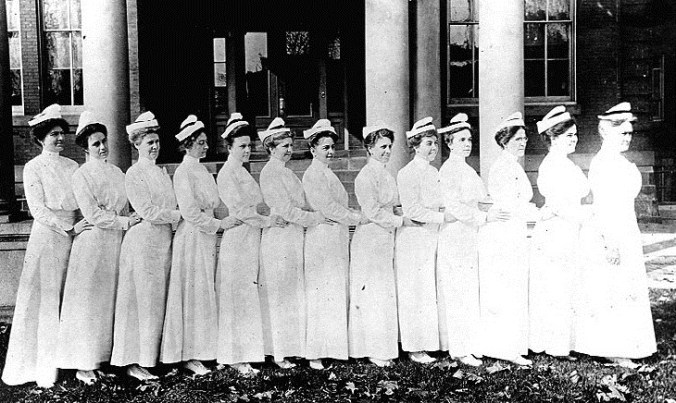
My post on the Gallup poll on public trust in various occupations and professions strayed into Charles Green’s wheelhouse, and the resulting home run comment enlightened us regarding why nurses keep “winning” the poll as the most trusted year after year after year.

Here is Charlie’s Comment of the Day on the post, Public Confidence And Trust (1): Observations On Gallup’s Trust In Occupations Poll:

Speaking just to the nursing angle: my work on trust has involved a diagnostic tool, the TQ (Trust Quotient), a self-assessment of the four components of trustworthiness in the Trust Equation:
(Credibilty + Reliability + Intimacy) / Self-Orientation.

70,000 people have taken it, and three results stand out above all others.

First, women are more trustworthy than men – a finding confirmed by informal polls in 397 out of 400 groups I’ve presented in front of.

Second, the most powerful factor of the four (defined as the highest coefficient in a regression equation) is Intimacy.

Third, the bulk of women’s outscoring men is their higher score on the Intimacy factor (again, intuitively true to the vast majority of groups I ask).

It’s in this context that I note the Gallup work (and other pollsters) finding of nursing at the top of the heap every year but 2002 (which was, not coincidentally, the year after 9/11 – and a year in which firemen, if only for that one year, took over the top spot.

Nursing is an 89% female profession. I ask my audiences, “Which of the four trustworthiness factors do you think nurses most embody: credibility, reliability, intimacy, or low self-orientation?” Most pick intimacy (with low self-orientation a frequent second).

Add ’em up: female, Intimacy, nursing – it’s a trifecta. Continue reading

Public Confidence And Trust (1): Observations On Gallup’s Trust In Occupations Poll

I’ve been following the Gallup organization’s yearly polls on public attitudes toward institutions and occupations for a long time. The results are in for 2017. I’ll discuss the ethics implication of the Gallup occupations poll first; Part 2 will cover the institutions.

The occupations poll tends to fluctuate more year to year, and is most interesting as viewed a competition. Who are most trusted and regarded as most honest? Who are least trusted? Nurses have been ranked #1 in public trust for 16 straight years. I guess this means not too many people watch “Nurse Jackie.” I assume the consistently high rating is because we tend to trust people we have to trust, thus confirmation bias, and because there haven’t been any major nursing scandals or “Angels of Death” in the news. As you will see from the chart, medical doctors are trusted much less. I think that’s the result of an illusion.

Only six professions rate as more than 50% “high” or “very high” for honesty and ethical standards: nurses, military officers, grade school teachers, medical doctors, police officers and pharmacists. The honesty rating of pharmacists dropped five points since 2016, however, and it an occupation that has sometimes finished right behind the nurses. Gallup guesses that the opioid crisis is to blame, and maybe that’s right, though I would think the doctors who prescribe the drugs are more to blame then the druggists who sell them.

Public views of the clergy have fallen like a Chinese space station. Before the Catholic Church child molesting scandal in 2001, the clergy was very trusted at the high 60% level. Now it is all the way down to 42%, though the total of high trust and average trust is still 85%. I think the film “Spotlight” hurt, as it should have.

Occupations that I would regard as having positive public trust include those whose high trust+average scores are higher than their low trust+average scores. That group, in addition to the occupations already named above, includes day care providers, judges, auto mechanics, nursing home operators and bankers. I think in all of these cases, the public has no real idea about how trustworthy these occupations really are. We just hope they are trustworthy, so again, we have a result that is polluted by wishful thinking. These people are entrusted with the welfare of our children, our cars, our parents and our money, plus the justice system. They better be trustworthy. Ignorance is bliss.

I confess amazement that Wells Fargo scandal didn’t result in lowered trust for bankers. Continue reading

Morning Ethics Warm-Up, New Years Day, 2018: The Year On Ethics Alarms, The College Sports Scam, And A Poll That Is Less Than Meets The Eye

1 Stats and things. For the first time, Ethics Alarms had less traffic than the year before, down almost 10%. I was expecting at least a 10% jump, so this is disappointing, though I probably should have seen it coming. The 2016 campaign drew a lot of interest to the site, and that year was a major jump from the previous one. The blog ends the year with more followers than it had at the beginning, and the number of comments were up over 2016. I would also say that the quality of comments was dramatically better, with the most Comments of the Day ever.

The post that had the most comments in 2017 was a COTD, in fact: Comment of the Day: “Morning Ethics Warm-Up, 11/13/17: Rushing In Panic Around My Boston Hotel Room Because I Didn’t Get My Wake-Up Call Edition” with 324, among the most ever.

The author? Zoltar Speaks!

It’s just vanity and ego to worry about traffic fluctuations. I’m competitive by nature; it’s a flaw. I’d love Ethics Alarms to have sufficient name recognition and exposure to have a measurable influence in public discourse, but that’s always been unlikely, given the subject matter. What I should care most about, and do, when I’m being rational, is that the discussions here are uniformly of high quality, avoid the idiotic “Yeah, well what about Bush, you repug?” back and forth threads of most websites, and that there is a daily colloquy here that I can be proud to host. Besides, if Ethics Alarms were widely quoted, I’d have to put up with being called a “self-proclaimed ethicist” more often.

I also banned far fewer commenters this year than last year. That’s a good thing.

Next to the search engines and WordPress, the most referrals came through the Washington Post and the New York Times. The Althouse blog sent more readers here than any other blog, which is nice, especially since Ann still doesn’t bother to include me in her blogroll.

Not counting stand alone pages, like the About page and the Rationalizations List, the top viewed posts in 2017 were 1) the 2016 anti Snopes post; 2) the 2013 workplace ethics post, 3) “Wanetta Gibson is Worse Than I Thought” (2014); 4) the initial VW scandal post from 2015;  5) the 2015 post about ventriloquist Jeff Duham’s marital problems (Don’t ask me why; it’s a mystery); 6) the Listerine and alcoholics post from way back in 2010; 7) the Foundation for a Better Life post (2011); 8) The anti-“What Would You Do?” post, also from 2011, and it is depressing that the thing is still being broadcast; 9) finally a 2017 post, The Naked Teacher Principle, Ex-Porn Star Variation, and 10) also from last year, my take-down of Sally Yates.

That last was also the first politics-related post to turn-up on the list, which tells you something, though I’m not sure what. The Ethics Alarms post that I have most linked to in 2017 was buried deep on the list at 136: 2015’s, A Nation Of Assholes: The Ultimate, Undeniable And Crucial Reason Donald Trump Must Never Be President.

As in every year, I think, none of the posts that I thought were the most important or my best work were among the most read.

Thanks to all the readers and commenters who have made this past year a rewarding and challenging one.

Next year will be even better.

2. While you watch those Bowl games, think about this...College sports critic Mike McIntire explains the absurd status of big money in college sports in his article, “The College Sports Tax Dodge.” An excerpt: Continue reading

Ethics Observations On Pew’s “17 Striking Findings From 2017”

#1Partisan divides dwarf demographic differences on key political values. The average gap between the views of Republicans and Republican-leaning independents and Democrats and Democratic-leaning independents across 10 political values has increased from 15 percentage points in 1994 to 36 points today. Two decades ago, the average partisan differences on these items were only slightly wider than differences by religious attendance or educational attainment, and about as wide as differences across racial lines. Today, the partisan gaps far exceed differences across other key demographics.

I attribute this ominous development to both parties crossing previously observed lines of appropriate political tactics and rhetoric, picking at the seams that hold our society and democracy together. The GOP-advanced Whitewater investigation of the Clintons’ financial shenanigans began the criminalization of politics. President Clinton’s arrogance and recklessness as a sexual predator placed Democrats in the position of defending unethical conduct especially repugnant to conservatives, and the furious (and dishonest) efforts of both Clinton and Democrats to deny the legitimacy of his impeachment drove the parties further apart.

The essentially tied election of 2000 came at the worst possible time, but Democrats made its wounds to public comity worse that they had to be by using the false claim that the election was “stolen” to energize its base for years. The rise of hyper-partisan leaders in the House and Senate—Gingrich, Pelosi, McConnell, and worst of all, Harry Reid—continued to poison discourse.  The Iraq War fiasco, a Republican mistake, and the false Democratic mantra “Bush lied…” in response to it exacerbated the divide. Then the bi-partisan botches that led to the 2008 crash were widely attributed only to Republicans. Spurred by the prospect of a black President, the news media, always heavily tilted leftward, abandoned large portions of its ethical values to be an unapologetic cheerleader for the Democratic candidate, because having a black President elected would be so darn wonderful for everybody. Thus did the media fully embrace “the ends justifies the means” as an operating principle/

The inevitable racist response of a minority—but a vocal one—in conservative and Republican circles to the prospect of a black President caused further division, and Obama’s alliance with an openly racist Reverend Wright caused more racial polarization. Once elected, President Obama could have healed much of the damage since 1994 (as he promised to do) , but instead he chose to leverage divisions among races, genders, ages, classes, gays and straights, and legal and illegal immigrants for political advantage. His supporters, meanwhile, including those in the news media, began using accusations of racism to smother and inhibit legitimate criticism. Obama broke with Presidential tradition by repeatedly blaming his predecessor for problems he proved unable to solve, keeping partisan resentment hot.

Even with all of this, Obama could have healed much of the accumulated partisan antipathy if he had been an effective leader. He wasn’t. In contrast to his predecessor he was an effective (though over-praised) communicator,and in marked contrast to the current POTUS, he played the part beautifully, and that’s not inconsequential. The rest, however, was an ugly combination of misplaced priorities, incompetence, laziness, racial bias and posturing, with awful results. This hastened the divide, because Obama’s core base, the African American community, was inclined to view him uncritically no matter what he did. As other groups called out the President on his failings, that group’s loyalty and bias drove it, and allied groups, into defensive, knee-jerk ideological opposition, as the growing power of social media exacerbated hostility between the ideological polls.

Obama’s divisive administration, rhetoric and poor governing habits begat Donald Trump.

And here we are. Continue reading

5 Signs That Your Organization Has An Unethical Culture Brewing…

The Harvard Business Review has published an article describing what it learned from a survey of experts asked to describe the conditions they have observed in organizations later revealed to have serious ethics problems—the symptoms of an unethical organization ethics culture. Here are the five top signs, with the corresponding rationalizations from the Ethics Alarms list where appropriate, as well as related unethical patterns of thinking and relevant organizational ethics principles that are repeated constantly in training sessions by people like me, yet routinely ignored. The news media, meanwhile, often covers the incidents as if journalist have never heard of those principles.

I. Urgency and fear: Following corruption scandals, leaders tend to describe events in terms of pressure, necessity, and what the company needed to do to ”survive.” This perception of existential competitive threats can be used to justify the creation and maintenance of toxic incentives, and it will undermine any efforts to raise concerns.

Rationalization 28. The Revolutionary’s Excuse: “These are not ordinary times.”

An argument for those who embrace “the ends justify the means”—but only temporarily, mind you!—the Revolutionary’s excuse has as long and frightening a pedigree as any of the rationalizations here. Of course, there is no such thing as “ordinary times.” This rationalization suggests that standards of right and wrong can and should be suspended under “special” circumstances, always defined, naturally, by those who defy laws, rules, and societal values. Their circular logic results in their adversaries feeling justified in being equally unethical, since times in which the other side engages in dishonesty, cheating, cruelty, and more is, by definition, extraordinary.

The inevitable result is a downward spiral of conduct, until unethical behavior is the norm. Ironically, the rationalization that “these are not ordinary times” no longer is necessary at that point. Unethical conduct has become ordinary, the new normal. This is, it is fair to say, the current state of American politics.

and…

Rationalization 31. The Troublesome Luxury: “Ethics is a luxury we can’t afford right now”

Ethics is never “a luxury.” It is slyly effective to describe it as such, however, and those who do so usually believe it—which means you should sleep with one eye open when they are around, watch your wallet, and never turn your back. Saying ethics is a luxury simply means that the speaker believes that one should be good and fair when it is easy and benefits him or her, but when problems loom and crises have to be faced, ethics are optional. This attitude is another calling card of Oliver Wendell Holmes’ “Bad Man,” the law abiding citizen who will cut your throat for his own benefit if he finds a legal loophole. In a true crisis, ethical values are often the only thing standing between us and catastrophic misconduct in the throes of desperation and panic; they aren’t luxuries, they are life-lines. When you hear yourself saying, “I’ll do anything to fix this! Anything!” it is a warning, and the ethics alarm needs to start ringing hard. Grab those ethical values, and hold on to them. They are the last thing you can afford to be without at such times.

***

II. Isolation: Groups and teams that are far from headquarters—either in geography, access to information, or both—are vulnerable. When a team that is isolated (by accident or design) comes under the direction of an authoritarian, competitive leader, an enterprise has created the baseline conditions for corruption. People are far more influenced by their immediate surroundings than by a code of conduct set at the top.

This is group-think, ignoring the tenets of Professor Zimbardo’s rules that he recommends to avoid the phenomenon:

“Avoid situations where you lose contact with your social support and informational networks, for the most powerful forces of social influence thrive then. You do not want all your reinforces to come from these new sources….Never allow yourself to be cut off emotionally from your familiar and trusted reference groups of family, friends, neighbors, co-workers…

***

Continue reading