The Ethics Of Responding To Inconvenient Truths: Colleges Aren’t Working…Now What?

From the Wall Street Journal:

Freshmen and seniors at about 200 colleges across the U.S. take a little-known test every year to measure how much better they get at learning to think. The results are discouraging.

At more than half of schools, at least a third of seniors were unable to make a cohesive argument, assess the quality of evidence in a document or interpret data in a table, The Wall Street Journal found after reviewing the latest results from dozens of public colleges and universities that gave the exam between 2013 and 2016. …At some of the most prestigious flagship universities, test results indicate the average graduate shows little or no improvement in critical thinking over four years. . . .

Some academic experts, education researchers and employers say the Journal’s findings are a sign of the failure of America’s higher-education system to arm graduates with analytical reasoning and problem-solving skills needed to thrive in a fast-changing, increasingly global job market. In addition, rising tuition, student debt and loan defaults are putting colleges and universities under pressure to prove their value.

Some?

What’s the other side saying, that the results are cooked? That critical thinking is over-rated or a sexist, racist, xenophobic construct? How can any objective individual who has followed the news, listened to activists babble incoherently on  campuses like Dartmouth, Yale, Columbia, University of Missouri and hundreds of others, been aware of higher ed apocalypse stories like this one , or notice that the overwhelming majority of college students enthusiastically supported the fact-, math-, economics-, foreign policy-, history-and Constitution- challenged candidacy of Bernie Sanders  be surprised at these findings? They aren’t even new.

The scam that is U.S. higher education poisons the American dream in too many ways to count.  50% of employers say that college graduates they hire aren’t ready for the workplace because of inadequate critical-reasoning skills.  Yet virtually every institution cites this as the prime benefit of paying it a king’s ransom for four years, with brochure proclamations like…

“The university seeks to foster in all its students lifelong habits of careful observation, critical thinking, creativity, moral reflection and articulate expression.”

and

“… University fosters intellectual inquiry and critical thinking, preparing graduates who will serve as effective, ethical leaders and engaged citizens.”

and

“The college provides students with the knowledge, critical-thinking skills and creative experience they need to navigate in a complex global environment.”

“At most schools in this country, students basically spend four years in college, and they don’t necessarily become better thinkers and problem solvers,” said Josipa Roksa, a University of Virginia sociology professor who co-wrote a book in 2011 about the CLA+ test, that littel-known test the Wall street Journal referred to. . “Employers are going to hire the best they can get, and if we don’t have that, then what is at stake in the long run is our ability to compete.”

Even the arguments used to defend college lack evidence of critical thinking. Today’s New York Times special Higher Ed section highlights this quote: Continue reading

Facebook User Ethics : Don’t Spread Panic, And Don’t Make Your Friends As Ignorant As You Are

The eruptions of frantic doomsaying and apocalyptic fantasies on Facebook following President Trump’s announcement that the U.S. would no longer consider itself a party to the Paris accord on climate change. Seldom have I been more tempted to write, “Have you taken leave of your senses?” on so many of my friends’ walls. The statements are hyperbolic in the extreme. “I am glad that I won’t be alive, but fear for my children and grandchildren, when the effects of this catastrophic decision arrive!” wrote one hysteric. “What can we do to save the earth?” wrote another, in all caps. Naturally there were links to similarly over-heated blog posts and op-eds, and the routine amount of Trump vilification and hate. “Is he trying to destroy us all?” wrote one usually rational acquaintance who appears to be headed for a padded room and a guardian ad litem. 

These people are all circulating among similarly oriented citizens increasingly emotional outcries unhinged to facts or reality, and making each other stressed, anxious and miserable. This is the cyber-equivalent of running around in a crowd screaming that something horrible is about to happen. What happens when you do that? Reason vanishes, fight or flight instincts take over, and people get hurt. These Facebook posts, and similar messages on other social media platforms, are at best shameless virtue-signalling–-I care about the environment! I’m a believer in everything I’m told that scientists are saying even though I really don’t understand anything about it! I hate Donald Trump like every other decent human being! Love me!-–and at worst, they are societal napalm.

Both President Obama’s 2016 signing of the Paris Agreement on climate change and President Trump’s withdrawal from that agreement had minimal policy impact, if any.  The  advocates are arguing about symbolism as if it were substance.  Is it possible that the people writing that Trump has destroyed the future while cackling maniacally in his White House lair know how non-substantive, unspecific, self-defining, voluntary and unenforceable the thing is?  I have to assume they have not, in which case  everyone is reading climate change doomsday predictions from friends who they trust and assume they know what they are talking about, when, in fact, they don’t. Continue reading

Anti-Trump Brain Virus Case Study: The Washington Post’s Jennifer Rubin

Not all of the unrestrained anti-Trump zealots are progressives and Democrats. There are a lot of conservatives who detest him sufficiently to surrender their integrity, fairness and common sense as well. The Federalist’s Sean Davis has chronicled a revealing example: Washington Post pundit Jennifer Rubin.

Blogger Rubin is one of the rare in-House Post conservatives. Her 2016 columns regarding Trump were only slightly less vehement than mine, and once he was elected, she threw restraint to the wind. Before that, however, Rubin was one of the few reliably critical voices regarding President Obama and his feckless and bumbling Presidency.

One of the more frequent targets of her acid pen was the Paris climate deal. In a column mocking Obama’s “phony accomplishments,” Rubin wrote  that a Supreme Court decision on environmental regulations proved “how ephemeral Obama’s Paris climate change deal is.” Before that, Rubin  suggested  the accord was a cynical and transparent effort to take attention away Obama’s failure to deal effectively with radical Islamist terrorism, writing, “The president has no answer, so he goes to Paris to talk about climate change.”  Then she cited  the climate change pact as evidence that Obama and former Secretary of State John Kerry lived in a “fantasy world” where “a piece of paper”was a signature accomplishment “even if it achieves nothing.” Rubin accused them of selling the progressive base a “bill of goods” on the Paris deal, while Rubin called it “footprints in the sand.” Still later, Rubin cited approvingly Oklahoma’s Senator Jim Inhofe , the most infamous climate change skeptic in the the U.S. Senate, when he said that the Paris climate change deal was “devoid of substance.”

But Rubin really detests President Trump. For a man she hates to embrace her opinion is so unbearable that her only way out is to reverse the opinion. Before Trump announced that he was quitting the 2015 deal but had hinted that he would, Rubin transformed into a Paris accord booster, and declared that such a move would be a disaster. She wrote:

No, Trump’s pullout from the international accord would be a political act — one that signals solidarity with his climate-change denial, right-wing base that revels in scientific illiteracy. Being a climate-change denier — which entails dogmatic opposition to the Paris agreement — is a dog whistle to the far right, a snub to “elites,” who in this case include academics, government and private scientists, technology chief executives and others whose livelihood depends on accurate data. (Between “2013 and 2014, only 4 of 69,406 authors of peer-reviewed articles on global warming, 0.0058% or 1 in 17,352, rejected AGW [anthropogenic, or man-made, global warming]. Thus, the consensus on AGW among publishing scientists is above 99.99%, verging on unanimity.”)

This would also be an international dog whistle, reflective of Trump’s rejection of the Atlantic Alliance and the bonds of cooperation that tie Western democracies together. R. Nicholas Burns, a career diplomat, is quoted as saying, “From a foreign policy perspective, it’s a colossal mistake — an abdication of American leadership. The success of our foreign policy — in trade, military, any other kind of negotiation — depends on our credibility. I can’t think of anything more destructive to our credibility than this.”

How could President Obama be so wrong to sign what Rubin termed a phony pact, yet President Trump such a villain and a fool to repudiate it?

Simple: if Donald Trump does it or says it, it’s horrible by definition, and previous conclusions and analysis is inoperable.

Writes Davis,

What changed that could possibly explain Rubin’s complete reversal on the necessity of a deal she once said was “ephemeral,” “phony,” “fantasy,” and “devoid of substance?” Nothing. It’s the same deal today as it was when it was agreed to in 2015. The only difference between then and now is that Trump eventually endorsed Rubin’s take in its entirety. And because Rubin now calibrates her political compass to the opposite of whatever Trump is doing, she feels compelled to vociferously support a vapid agreement she at one time opposed on the merits.

Bias makes you stupid. It also makes pundits untrustworthy, and it’s stunning that neither Rubin nor her editors noticed her sudden reversal sufficiently to recognize that some explanation was mandatory. Maybe they think “Trump” is explanation enough.

They probably do.

Ethics Verdict: Hillary Clinton Is The Worst Loser In US Presidential History (PART I)

Yes, having to write this post makes me feel like Michael Corleone in “Godfather III.”

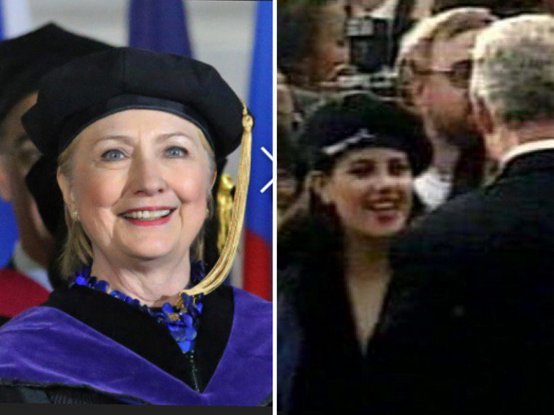
I considered giving Hillary her well-earned Worst Presidential Election Loser award after her embarrassing Commencement speech at Wellesley, but the wag who wrote “Why did Hillary dress up like Monica Lewinsky at Wellesley? to accompany this photo…

…made me laugh, and in my lightened state decided, “Nah! Why bother? Leave the poor woman alone.”

For I do feel sorry for Hillary Clinton. I feel sorry for anyone who loses the Presidency despite winning the popular vote. I would think it could drive someone crazy. In the play “Inherit the Wind,” there is a scene in which the wife of Matthew Harrison Brady (a thinly-disguised fictional avatar for three time Presidential loser William Jennings Bryan) begs for sympathy for her blow-hard husband, asking a critic to imagine what it must be like to have a Presidential election victory speech written and in his pocket three separate times and to never get to deliver it. Well, knowing you received the most votes and still can’t give the speech has to be much, much worse.

Then came yesterday’s orgy of excuses and recriminations as Clinton, looking and sounding angry and bitter, was interviewed at a tech conference hosted by Recode’s Kara Swisher and Walt Mossberg. And she puuuulled me back!

So now I have to review Hillary’s revolting and self-indicting Blame Everyone tour. Let’s begin by stating that no defeated Presidential candidate has ever done anything like this before, not even Richard Nixon. Nixon’s poor loser meltdown was after he lost the California Governor’s race in 1962. When he lost to Kennedy in 1960, his conduct was exemplary, refusing to demand a recount even when there was evidence, as there frequently was with the Kennedys, of shady operations. For a loser to engage in repeated recriminations and bitter pronouncements less than a year after losing is unprecedented. It is also —and forgive me for repeating myself from prior posts–disgusting, despicable and shameful for a defeated candidate to join a “resistance” against the lawfully elected winner. This is especially true in Clinton’s case, when she furiously condemned candidate Trump for suggesting that he might not accept his defeat. Continue reading

Comment Of The Day: “The Good Hoax”

Becoming the first Ethics Alarms comment to achieve a Comment Of The Day on consecutive days is Ryan Harkins. Ethics Alarms has a fair number of lawyers contributing regularly, as well as teachers, doctors, a theologian, business owners, managers, ex-military, scholars, and other professionals, plus practitioners of various trades and the arts. I have been hoping for more engineers to join the discussion, and Ryan brings that perspective along with his communications skills.

Here is Ryan Harkins’ Comment of the Day on the post, The Good Hoax:

While I was a graduate student at the University of Wyoming, one of my office mates was approached by a group who offered, for a couple of thousand dollars, to do all the research for his Master’s Degree and write up the results in a guaranteed-to-pass thesis. Supposedly my office mate tracked down some of the reviews of this group and found that some had indeed managed to attain a Master’s using services like this. As a disclaimer, I didn’t personally follow up on it, or investigate to see if people were later identified for their fraudulent activity.

A year or two later, my advisor was showing me a website that generated very scientific-sounding, but utterly meaningless journals, complete with references. The abstracts this random generator produced weren’t too far off from some of the jargon-laden examples quoted above. One of the claims to fame of this website was that it had actually managed to get a couple of these randomly-generated papers approved at conferences. I think this link to SciGen will take you to the site my advisor found.

My time in academia impressed on me that journal papers are far from the infallible entity we would like them to be. There were people in my field (theoretical computer science) that had a reputation of getting three papers out of each finding they’d made: the initial paper, the correction of the initial paper, and the correction of the correction. I was always worried that, if I ever actually made any findings worth publication, I would have missed some error in my logic that would render my results invalid, and yet people for decades hence would utilize my results in their research, leading to error cascading down for generations. Continue reading

The Good Hoax

Frequent readers here know how much I detest hoaxes, even ones just designed to be funny. News hoaxes are especially vile, as they are often designed to fool people and news outlets. These cause false rumors to spread, and send disinformation through the web and into brains, especially mushy brains. Hoaxes that consist of sufficiently ridiculous components that anyone should know they are not to be believed aren’t really hoaxes at all; they are more akin to satire. They are benign and often illuminating.

What does one make of a hoax that is simultaneously ridiculous and designed to fool people who need to be fooled in the public’s interest? I regard that as an ethical hoax. NYU physicist Alan Sokal designed and pulled off  just such two decades ago, as he described here:

For some years I’ve been troubled by an apparent decline in the standards of intellectual rigor in certain precincts of the American academic humanities. But I’m a mere physicist: if I find myself unable to make head or tail of jouissance and différance, perhaps that just reflects my own inadequacy.

So, to test the prevailing intellectual standards, I decided to try a modest (though admittedly uncontrolled) experiment: Would a leading North American journal of cultural studies… publish an article liberally salted with nonsense if (a) it sounded good and (b) it flattered the editors’ ideological preconceptions?

The answer, sadly, was yes. Despite being salted with copious Authentic Frontier Gibberish like “catastrophe theory, with its dialectical emphases on smoothness/discontinuity and metamorphosis/unfolding, will indubitably play a major role in the future mathematics; but much theoretical work remains to be done before this approach can become a concrete tool of progressive political praxis,”  his article, “Transgressing the Boundaries: Toward a Transformative Hermeneutics of Quantum Gravity,” was peer reviewed and published in the Spring/Summer 1996 issue of Social Text.

Later, Sokal explained his motives:

“While my method was satirical, my motivation is utterly serious. What concerns me is the proliferation, not just of nonsense and sloppy thinking per se, but of a particular kind of nonsense and sloppy thinking: one that denies the existence of objective realities, or (when challenged) admits their existence but downplays their practical relevance….In short, my concern over the spread of subjectivist thinking is both intellectual and political. Intellectually, the problem with such doctrines is that they are false (when not simply meaningless). There is a real world; its properties are not merely social constructions; facts and evidence do matter. What sane person would contend otherwise? And yet, much contemporary academic theorizing consists precisely of attempts to blur these obvious truths — the utter absurdity of it all being concealed through obscure and pretentious language.”

Sokal’s exposé of the sloppiness and lack of rigor in scholarship has spawned followers, as well it should. Using academic studies and papers is the ultimate appeal to authority in social and scientific policy disputes. If the journals that publish them are lazy and biased gate-keepers, they are untrustworthy authorities, which means that they aren’t authorities at all. That makes a Sokal-style hoax, properly and fairly executed, that rarity of rarities, The Good Hoax.

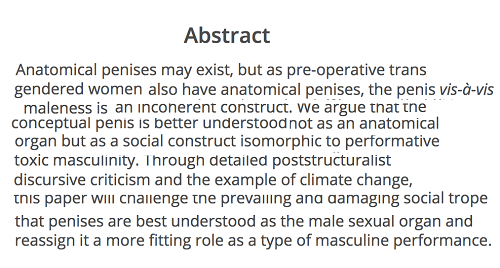
As they explained in the magazine Skeptic, Dr. Peter Bogghosian, a full time faculty member in the Department of Philosophy at Portland State University,  and James Lindsay,  a Phd in mathematics and the author of four books, wrote and submitted the most ridiculous paper they could think of. The title: “The Conceptual Penis as a Social Construct.” Here’s the abstract:

You read that right: the paper argues that penises affect climate change. Behold: Continue reading

Comment Of The Day: “The Most Unethical Sentencing Fallacy Of All: Lavinia Woodward Gets “The King’s Pass”

I am almost caught up on my backlog of Comments of the Day!

This one, by multiple COTDs author Humble Talent, is really two; I’m taking the liberty of combining his later explication with the original comment, as they follow as the night follows day. The topic is bias and double standards in the criminal justice system, and hold on to your hat.

Here is Humble Talent’s 2-for 1 Comment of the Day on the post, “The Most Unethical Sentencing Fallacy Of All: Lavinia Woodward Gets “The King’s Pass”:

You know, every now and again when I’m feeling adventurous, I go to a place I think will have a whole lot of people that don’t think like me and poke at their sacred cows. You meet all kinds of people, and recently, I was given probably one of the better answers to a gender/race issue from the other side yet.

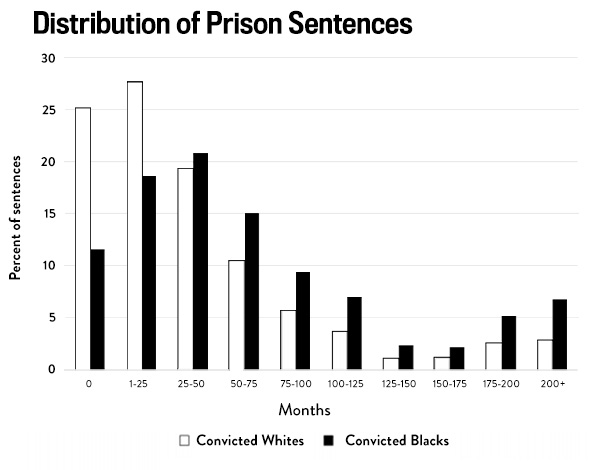
The original fact pattern is that racial activists will cite disparate impact as a problem at every stage of an interaction with the legal system. Black people are more likely to be pulled over, more likely to be arrested, more likely to be charged, more likely to be convicted, and more likely to receive harsher sentences… All for the same stimulus. All of this, by the way, is true. It doesn’t account for the five-fold disparity between the black and white prison population on a per capita basis, but it is a thumb on the scale.

The juxtaposition is that the disparity between men and women in the justice system is about six times that of the racial disparity I just described. Men are more likely to be pulled over, more likely to be arrested, more likely to be charged, more likely to be convicted, and more likely to receive harsher sentences… All for the same stimulus. Sonja Starr wrote extensively on this, and despite some of her methodology being questioned, there’s general consensus that she was on to something.

So the question is that if someone is deeply concerned about inequality, that they are genuinely interested in justice for everyone, why wouldn’t you be just as, if not more concerned with the gender disparity, than the racial one? Continue reading

Comment Of The Day: “Reluctant Additional Ethics Notes On A Manufactured Crisis: The Comey Firing Freakout”

With so much loose talk about impeachment going around (and by “loose” I mean “inexcusably ignorant”), texagg04’s review of the Constitutional standard for the removal of a President is a gift to readers of Ethics Alarms, and one of the most interesting and informative comments ever to appear here.

He was reacting to a New York Times op-ed, cited by another commenter,  by political scientist Greg Weiner (no relation) titled, “Impeachment’s Political Heart,” in which the author concluded,

“The question is by what standards they should conduct this work, and that question provides an opportunity to correct the mistaken assumption according to which presidents can forfeit the public trust only by committing what the law recognizes as a crime. That is a poor bar for a mature republic to set. It is not the one a newborn republic established. And that is why the idea that the conversation about impeachment is simply a political persecution of a man who is technically innocent of a literal crime not only jumps the investigatory gun. It misses the constitutional point.”

Having studied the issue myself, I immediately rejected Weiner’s analysis (which still is worth reading in its entirety) on the ground that a constantly evolving standard of what is a “high crime and misdemeanor” simply means that Presidents can be impeached for behaving, or governing, in ways that enough members of Congress, the news media and the public don’t like. That is what is being advocated now, and that approach would undermine our democracy, the power of elections, and the office of the President.

My gut response, however, is wan and insubstantial compared to tex’s masterful historical review and astute analysis, which (whew!) reaches a similar conclusion.

Here is texagg04’s fascinating Comment of the Day on the post, “Reluctant Additional Ethics Notes On A Manufactured “Crisis”: The Comey Firing Freakout”…I’ll have one brief comment afterwards:

[Weiner] is making an argument from the same source material I mentioned, chiefly the Federalist papers. I still haven’t found Madison’s own specific arguments regarding it, but I think the source is irrelevant as the body of work published by the Founders (“Federalist” and “Antifederalist” alike) should be read as a single work documenting an internal dialogue, to be used as clarification when and where the final adopted documents possibly contain ambiguity. This could very well be one of those cases. That being said, the body of work by the Founders which may aid in revealing their intent or at least how they believed their philosophy of our political system out to be enshrined in the constitution, isn’t the only body of work used to interpret their intent. There is precedence and tradition, which the author of this article disregards when he says “Our tendency to read the impeachment power in an overly legalistic way, which is ratified by 230 years of excessive timidity about its use, obscures the political rather than juridical nature of the device.”

He’s right in nothing but that many of the earliest drafts and proposed language of the impeachment standards were very vague, such as (not an exhaustive list):

Continue reading

Comment Of The Day: “Comment Of The Day: ‘No, Insurance Companies Treating People With Pre-Existing Conditions Differently From Other Customers Is Not Discrimination.’”

The health care/ACA/AHCA commentary from readers continues to be uniformly excellent. (It was originally spurred by the post, No, Insurance Companies Treating People With Pre-Existing Conditions Differently From Other Customers Is Not “Discrimination.”Spartan’s Comment of the Day on the topic has itself sparked its own Comment Of The Day, this one authored by Charles Green.

By fortune’s smiles, I was able to finally meet Charlie last week face to face, as he kindly alerted me that he would be passing through my neighborhood. Finally having personal contact with an Ethics Alarms reader is always a revealing and enjoyable experience, and this time especially so. I think you would all enjoy Charlie; I certainly did. Maybe I need to hold an Ethics Alarms convention.

Here is his Comment of the Day on the post, Comment Of The Day: “No, Insurance Companies Treating People With Pre-Existing Conditions Differently From Other Customers Is Not ‘Discrimination’.”

…The claim that “a free market system” and “freedom of choice” is the solution to all that ails us is a mindless mantra that is only occasionally true, but not always.

It’s important to be clear about when free market solutions are good, and when they are not. It’s not all that hard to sort out. Basically:

Free market solutions ought to be the presumptive default. Unless there is good reason to the contrary, they ought to be the rule.

1. Exception Number 1: Natural monopolies. It makes no sense to have competition for municipal water supplies; airports; multiple-gauge railroads; fishing grounds; groundwater; or police departments. The basic reason is the putative economic benefit is either simply not there, or is absurdly overwhelmed by the social confusion engendered by multiple suppliers.
In these cases, a form of regulated monopoly is desirable. (By the way, the airline industry at a national level is precisely this kind of market; we do not have too little competition there, but too little regulation).

2. Exception Number 2a: Wallet-driven market power monopolies. It’s strategy 101 in business schools that the way to be successful is to be #1 or #2, and the best way to do that is to get more market share than your competition, so you can drive them out of business. The one guaranteed way to do that is to cut prices so low that no one else can compete. Think Walmart. Think Amazon. Think Japanese in the 60s and 70s in any industry.
The reason we have anti-monopoly laws is to reset the playing field when a competitor dominates the market too strongly.

3. Exception Number 2b: Product-driven market power monopolies. Where the product is so obscure, expensive, infinitely variable, and difficult to understand that the producers are de facto in control, because it is too confusing and too dangerous to challenge them.
Drug prescriptions are an interesting example. The ‘free market solution’ to high drug prices was (partly) to let drug companies advertise, and to loosen up the definition of what constituted a ‘new’ drug. What did we get? New diseases like RLS, new definitions of ‘new’ (moving ‘off label’ to ‘on label’) and even higher drug company profits. Because who’s still going to argue with your doc? Especially when he or she gets side benefits from giving in to the latest DTC ads on network news programs?

Continue reading

France And Ireland Remind Us Of Two More Reasons To Be Proud And Grateful To Be An American…

News Item:

France sought to keep a computer hack of frontrunner Emmanuel Macron’s campaign emails from influencing the outcome of the presidential election, with the electoral commission warning on Saturday that it may be a criminal offence to republish the data. Macron’s team said a “massive” hack had dumped emails, documents and campaign financing information online just before campaigning ended on Friday and France entered a quiet period, effectively forbidding politicians from commenting on the leak.

Polls have been predicting that Macron, a former investment banker and economy minister, is on course for a comfortable win over far-right leader Marine Le Pen in Sunday’s election, with the last surveys showing his lead widening to around 62 percent to 38.

…The election commission, which supervises the electoral process, warned social and traditional media not to publish the hacked emails lest they influence the vote outcome…

“On the eve of the most important election for our institutions, the commission calls on everyone present on internet sites and social networks, primarily the media, but also all citizens, to show responsibility and not to pass on this content, so as not to distort the sincerity of the ballot,” the commission said in a statement on Saturday.

“The commission stresses that publication or republication of these data…could be a criminal offence,” it said.

That’s right: withholding information from the voters because they can’t be trusted to be fair and discerning about what is relevant to their vote and what isn’t is to preserve “the sincerity of the ballot.” This is how they reason in countries without guaranteed freedom of speech, and freedom of the press. Florian Philippot, deputy leader of Le Pen’s National Front party, tweeted “Will Macronleaks teach us something that investigative journalism has deliberately kept silent?” Good question. Continue reading