“Who Are You Calling A Nut?” And Other Ethics Issues In The Community College Shooting Aftermath (Parts I-VI)

mr__peanut_s_cane_gun_I. A good friend, who is a nice man so I chose not to upset him by explaining why he sounds like an idiot, announced on Facebook that he wasn’t reading any more “gun nut” posts. Hmmmm. I wonder what he thinks a “gun nut” is? Is a gun nut a teacher who punishes a student for pointing his finger like a gun, or who prevents a deaf child from signing his name, Gunner? Or is it someone who believes that the Second Amendment, which wasn’t second by accident, should be followed? Is it someone who keeps saying that laws need to be passed that will stop shootings like the one in Oregon, but who either has no realistic proposals to suggest or who suggest measures that wouldn’t have affected that shooting at all? Isn’t it nutty to engage in magical thinking? I think so.

II. I also think it’s nutty, not to mention hypocritical, to decry the lack of “civil debate” regarding gun policy and then call anyone who doesn’t want guns melted down by government order “nuts.”  Actually it’s worse than that: pundits, politicians and anti-gun advocates are increasingly equating  opposition to gun regulations advanced using false arguments, dubious logic, ad hominem attacks and deceitful statistics with insanity and intractable evil. Frankly, I resent it. I’m not opposed to sensible gun regulations, but my job is to oppose false arguments, dubious logic, ad hominem attacks and deceitful statistics, as well as to make sure that they don’t succeed lest “the ends justify the means” become a social norm.

III. Speaking of hypocritical, Mike Huckabee and others have been quite properly criticized (by me, for example) by claiming that since the Supreme Court ruling on gay marriage is “wrong,” it shouldn’t be followed. Yet the most vociferous defenders of that SCOTUS decision simultaneously advocate anti-gun measures that are forbidden by the Court’s decisions interpreting the Second Amendment….because, you see, “it’s wrong.” Continue reading


Ethics Heroes: Five Democratic Economists

Senator Warren, who is always right.

Senator Warren, who is always right.

Senator Elizabeth Warren (D-Mass)  was annoyed that Robert Litan, a nonresident and unpaid economics fellow at the reliably liberal Washington think tank, the Brookings Institute, dared to author a study critical of financial advisor regulations being pushed by Warren and the White House. Thus she sent a letter to Brookings last week, challenging the independence of the study and the integrity of Litan, since the study was, as Litan states up front, “supported by the Capital Group, one of the largest mutual fund asset managers in the United States.”

Warren called the report “highly compensated and editorially compromised work on behalf of an industry player seeking a specific conclusion.”

You know, unlike the various donors to Warren’s political war chest, who are not trying to buy specific policies and votes from her.

Literally hours after receiving the letter, Brookings, knowing which side of the bread its butter was on, dutifully forced Litan to resign.

The issue isn’t whether the policy Warren wants is a good one or not; personally, I tend to agree with Warren on the need for the regulation, which would make 401(k) and 403(b) advisors as well as other compensation-related retirement plan advisors be subject to fiduciary duties. the issue is Warren’s embrace of the increasingly popular tactic from the Left of dealing with adversaries by silencing them. Continue reading

Let Us All Bow In Gratitude To Colorado For Generously Sacrificing Its Children And The Safety And Welfare of Its Citizens To Prove What Responsible People Knew Already: Pot Should Stay Illegal

Hey, Que pasa! You idiot...

Hey, Que pasa! You idiot…

I’m probably going to stray a bit from strictly professional rhetoric here, but this really makes me angry.

According to a report released this month by the Rocky Mountain High Intensity Drug Trafficking Area, there has been a 29% increase in marijuana-related emergency room visits and a 38 % increase in pot-related hospitalizations during retail marijuana’s first year in Colorado.

[ NOTE: This is a correction. The original version of the post gave the wrong impression that hospitalizations were up: this was not my intent. Thanks to Humble Talent for being persistent. Ethics Alarms apologizes for the error. We’ll try to do better.]

Now 11% of Colorado’s 12 to 17 year-olds use pot,  56% higher than the national average.There has also been a 40% increase in drug-related suspensions and expulsions in school, primarily from marijuana.

Mercy, what a surprise! Who could have predicted that? Well me, for one, as well as others neither dedicated to getting their periodic recreational buzz nor addled by moldy Sixties cant.

Of course making pot legal and widely available for adults would cause an epidemic of use by kids, who, the evidence increasingly shows, may suffer long term adverse effectsOf course it is causing accidents. Of course adding a third harmful legal drug to the devastating and deadly duo of alcohol and tobacco is going to make society dumber, less safe and less productive. Continue reading

A Final Post Debate Observation: Cognitive Dissonance And The Welch Effect

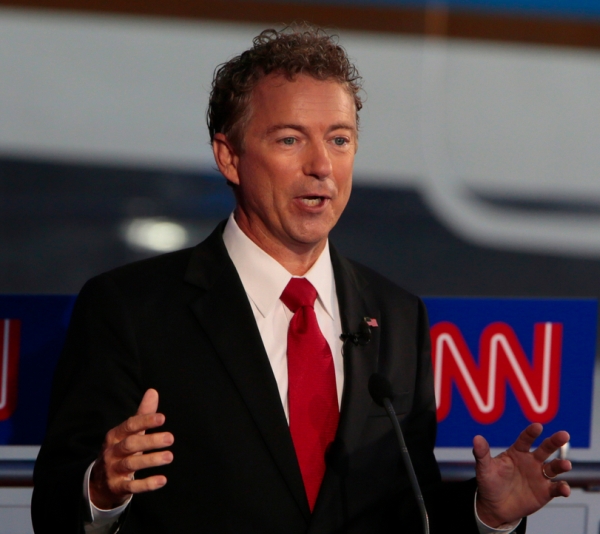
Rand Paul23I’m literally the only one writing about this—which is to say that everyone else is wrong— so I might as well wrap it up.

You will recall that I predicted (and hoped) that one of the candidates in the CNN debate on Wednesday would have the wit, historical perspective and guts to prepare a Joseph Welch take-down of Donald Trump, as it is an excellent way of shining harsh light on a bully and ethics miscreant. This is how lawyer Joseph Welch ended the reign of terror of Sen. Joe McCarthy on live TV in the medium’s “Golden Age,” and McCarthy was bigger and more deadly game than The Donald.

I wrote:

Will the same tactic work on Trump? It should: it would have worked in the first debate. Now, it may not, because many Welches will not be as effective as a single one, and I would not be surprised if several of Trump’s competitors will have a Welchism rehearsed. It also won’t work if the wrong Welch jumps in first, or if he blows his delivery. (Welch was quite an actor.) We shall see. If someone doesn’t at least try it, none of these 15 non-Trumps are  smart enough to be President.

Well, the Welch moment came almost immediately, as the first candidate with an opening to deliver it took his shot: Sen. Rand Paul. As I wrote in my follow-up piece yesterday, it wasn’t completely Welch-worthy, but it stung:

The Joseph Welch moment that I predicted occurred, though it was a wan and, as I feared, an incompetent version.  The Welch-wannabe was Rand Paul, and he directly referenced Trump’s “sophomoric” personal attacks, saying…

“Do we want someone with that kind of character, that kind of careless language to be negotiating with Putin? Do we want someone like that to be negotiating with Iran? I think really there is sophomoric a quality that is entertaining about Mr. Trump, but I am worried. I’m very concerned about having him in charge of the nuclear weapons because I think his response, his real response to attack people on their appearance, short, tall, fat, ugly. My goodness, that happened in junior high. Are we not way above that? Would we not all be worried to have someone like that in charge of the nuclear arsenal?”

…First, a Welch retort has to be delivered with withering contempt, not snotty combativeness. Second, the deliverer has to talk directly to the target; this is key. Not “he,” Senator. “YOU.” Third, whether or not the question was about the temperament of the man with his finger on the button, the danger of having a leader who behaves like Trump goes far beyond that….Still, Welch’s tactic worked a bit. Trump’s rejoinder, essentially “You’re ugly, too!”, got what sounded like awkward laughter, and Donald Trump, who is an entertainer, and who, like most experienced performers, can sense what an audience is feeling, was very subdued the rest of the debate.

What happened is that while the whole bucket of water didn’t land on the Wicked Trump, enough splashed on him to slow him down. When Fiorina delivered a mini-Welch later and Trump simpered his submissive “she’s got a beautiful face, and she’s a beautiful woman” line, he was still melting. She, more than anyone else, jumped in the vacuum left by Trump’s “shrinkage.” Continue reading

Trying To Find A Good Analogy For The Horrific Failure Of America’s Colleges Being Accompanied By The Myth That A College Degree Is Essential

Great. What is it you think you did???

Great. What is it you think you did???

This latest example of a “Look! College grads are too ignorant to come in out of the rain!” survey” isn’t entirely surprising to me, but it is infuriating in a new way. Usually I react to such things with intensified contempt for the grads themselves, their lack of intellectual curiosity, their failure to meet the barest of requirements for competent citizenship. I still feel that way, but my disgust has refocused on other miscreants: the schools themselves, but most of all, the shills for continuing the myth that a college education is not only indispensable for personal and professional success, but worth beggaring the nation to ensure that everyone obtains one.

From a press release of the American Council of Trustees and Alumni (and one which was ignored by the news media so they could spend all their time giving Donald Trump free publicity. That’s incredibly incompetent, but hey, the news media is run by college grads, so what do you expect?):

College Graduates Don’t Know Basic Facts About the Constitution

WASHINGTON, D.C., September 8, 2015 — The American Council of Trustees and Alumni (ACTA) today released a survey that shows how little college graduates and the general public know about the Constitution.

According to the study, nearly 10% of college graduates think Judith Sheindlin — commonly known as Judge Judy — is on the Supreme Court; one-third of college graduates can’t identify the Bill of Rights as a name given to a group of Constitutional amendments; and 32% believe that Representative John Boehner is the current president of the U.S. Senate. Shockingly, 46% of college grads don’t know the election cycle — six years for senators, two years for representatives. Turning to the general population, the report finds that over half (54%) of those surveyed cannot identify the Bill of Rights accurately, and over 1 in 10 (11%) of those ages 25–34 believe that the Constitution must be reauthorized every four years….

Continue reading

The Ridiculous, Sad, But Somehow Not Very Surprising Tale Of The Plagiarizing College Vice-President In Charge Of Plagiarism

WheelockThis may be why cheating among  high school and college students is out of control.

Shirley Malone-Fenner, Wheelock College’s vice-president in charge of academic affairs for the Boston based college, resigned today.  The reason: though her responsibilities included oversight of the investigation and discipline of students accused of  academic plagiarism, Malone-Fenner’s welcome-back letter to the faculty last month…was plagiarized.

The inspiring four-page letter from Malone-Fenner contained at least six passages from the letter Harvard’s president Drew Faust wrote to her returning faculty in 2007. Experienced plagiarists, however—and who has more experience with plagiarism than a college’s academic affairs authority?— knows that it is better to mix sources, so the  letter also contained verbatim and barely altered phrases, sentences, and passages from  a 2004 welcome letter from the president of Rutgers University, as well as sections of  a 2010 letter from the president of the University of the Pacific in California.

A suspicious Wheelock professor ran Malone-Fenner’s letter through software the school uses to detect student plagiarism, discovering the damning parallels. The faculty subsequently called for her metaphorical head.

That head didn’t help matters by dreaming up pathetic explanations like this one, which she gave to the Boston Globe:

“In preparing my message, I reviewed many letters from other institutions and used words from others’ welcoming messages without attribution. What I intended to share is quite simple — I am excited about working with each member of the faculty to make this a most successful year.”

Translation: “Crap, you got me.”

What does what she was “trying to do” and how “excited” she was about it have to do with the fact that she obviously and unethically tried to pass off the words of others as her own? I bet many of the students she has nailed for plagiarism have come up with better excuses than that. Continue reading

For Your Labor Day Ethics Edification: “The Science of Persuasion”

The-Six-Universal-Truth-of-Influence-Robert-B-Cialdini

Making better decisions is essential to making ethical decisions, and a lot of what we discuss here relates to overcoming impediments to unethical thinking and decision-making. This 2012 video is germane to Ethics Alarms; it also includes some of the ideas in Dr. Z’s Rules, which I presented here.

This animated video describes Dr. Robert Cialdini ‘s “six universal principles of persuasion” that people and organizations tend to use to influence the thinking, values and opinions of those of us who are not willing or able to reason in an orderly and unbiased fashion. (Dr. Zimbardo las a somewhat different six). It reflects the research in Dr. Cialdini’s book, “Influence” The Science of Persuasion.”

As those who come here often know, I like to use a variety of approaches and tools. Cialdini’s framework is just one of them, but one worth understanding.

The video is a bit over 11 minutes.


JFK’s Death, Hanlon’s Razor, And How Truth Gets Buried Forever

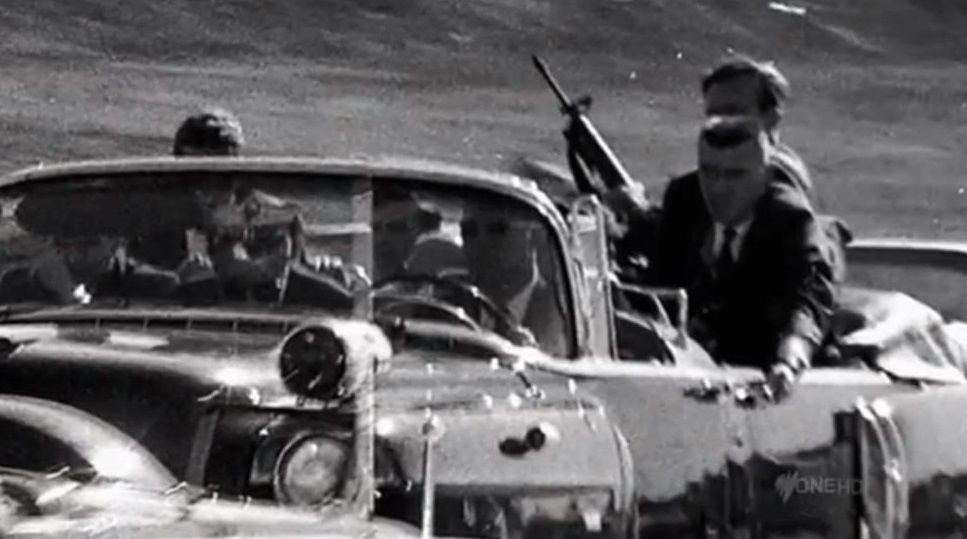
JFK Hickey

I am a student of Presidential assassinations (as you might guess by the posts on McKinley and Garfield), and have been most of my life, ever since I saw a TV special called “Web of Conspiracy” when I was 10, about the Lincoln murder. That led me to read the  best-selling book the special was based on, an 800 page, sensational analysis of the mysteries behind Lincoln’s death, by mystery writer Theodore Roscoe, who dabbled in history. The book’s theories and insinuating style are more convincing to a ten-year-old than an adult (I read the book many years later, and it drove me crazy), but the book still has a lot of fascinating tales and theories in it. I was hooked.

Oddly, the one Presidential assassination that has interested me least in recent years is the one I lived through, the assassination of President Kennedy. Blame Oliver Stone, Kevin Costner and Jim Garrison: “JFK” was the most dishonest movie I had ever watched (still is) and I walked out of it when its lies and distortions got too much for me about a third of the way through. Even before Stone’s brilliantly directed piece of crap. I was sick of the conspiracy theories, though Stone manufacturing a link to Lyndon Johnson was the final straw. Yes, the bitter Vietnam veteran really got back at LBJ; I hope it made him feel better. I, however, was soured on the whole topic.

I should have been paying more attention. Netflix is showing a documentary with the generic conspiracy theory title of “JFK: The Smoking Gun,” which was shown on cable two years ago. I missed it; if I had been aware of the film, the title and the subject matter—Oh, who’s behind it now? The Mafia? Nixon? Woody Harrelson’s father?—would have kept me away. But while I was on the road for a couple days doing ethics seminars for VACLE, my wife watched the documentary, and when I returned, sleep deprived, weak and submissive, she made me watch it.

Fascinating. And troubling. Continue reading

Look! “An Illustrated Book of Bad Arguments”!

bad arguments

As various thought fallacies and flawed arguments are constantly being exposed, used, debunked or otherwise referenced during our ethics discussions and debates—the Ethics Alarms compendium is here–this looked like something readers would enjoy. I probably should dedicate this post to former blog Commenter of the Year tgt, in appreciation for his ending—maybe just briefly, we shall see—his latest sabbatical with a flurry of 70 comments while I was lecturing in Newport last week. I didn’t have time to properly engage him or even read all the comments, but he seemed in characteristic form.

Tgt loves the fallacies and delights in slapping them down whenever they occur. His favorite is “No True Scotsman.” I immediately thought of him when I  stumbled upon “An Illustrated Book of Bad Arguments” by the multi-talented Ali Almossawi. Tgt’s  pet fallacy is here, as well as ad hominem, appeals to authority, the straw man, equivocation and others, some under different names than those I am used to. I haven’t read it carefully: there may be one or two that needs to be added to the Ethics Alarms list.

This is a well-researched and written exposition of some major fallacies with lovely illustrations, presented like a vintage children’s book. Someone should actually publish a children’s book like this: I would have been grateful for one when my son was a boy, or when I was a boy.  I’m grateful for this now.

You can find this amazing work of art, ethics, rhetoric and logic here. I’ve already sent the link around to many friends, young and old, and you may want to do the same.


Hiroshima Ethics And The Washington Post’s Misleading “Five Myths” Feature

Atom bomb cloud

The Washington Post’s Sunday “Five Myths About…” feature is a weekly irritation, as it begins with a misleading definition, and proceeds to a series of dubious and sometimes dishonest conclusions. In spirit it is like the fact-checking columns,  (though, ironically, the Post’s less than most) in that it claims to “disprove” opinions. This week’s installment, however, was too much.

Gregg Herken was this week’s guest bloviator, and the Post gave the emeritus professor of U.S. diplomatic history at the University of California a chance to plug his books on the atomic bomb, so I don’t blame him for taking it. I do blame him for allowing the column’s format and the editors to turn what could have been informative and edifying into lazy scholarship, sophistry, and nit-picking. Now I don’t want to read his books.

His entry was called “Five myths about the atomic bomb.” As is typically the case, no myths were debunked. Myths, in the parlance the Post is evoking, are a “traditional stories of ostensibly historical events that serve to unfold part of the world view of a people or explain a practice, belief, or natural phenomenon.” They are, by definition, false. Herken, however, neither identifies nor disproves any true myths. What he does is offer contrary opinions to those of others that are as provable as true as the opinions he claims to be debunking, which is to say, not provable at all. That means that the headline/title states an unprovable assertion as fact: “These statements are untrue.” Herken cannot ethically say that, but he does anyway.

Bad historian. Bad.

Herken starts off well:

“On Aug. 6, 1945, the United States dropped an atomic bomb on the Japanese city of Hiroshima. Another bomb fell Aug. 9 on Nagasaki. Decades later, controversy and misinformation still surround the decision to use nuclear weapons during World War II. The 70th anniversary of the event presents an opportunity to set the record straight on five widely held myths about the bomb.”

His first myth is that “The (Hiroshima) bomb ended the war.” Continue reading