Comment of the Day: “Scent Branding, Mind-Control, and Ethics”

Elizabeth was the first one to dive into this murky, interesting, science fiction/ “Brave New World” issue that I examined in  “Scent Branding, Mind-Control, and Ethics,” on a topic that confused me more the longer I considered it. What resulted was unusually long, perhaps accounting for the lack of comments, and Elizabeth’s reaction is long as well, but worth reading. There is something potentially sinister here, or perhaps around the corner—or just in our imagination and fears. Scent manipulation, and all it implies, is in the wilderness of ethics, where human nature, science and commerce meet.

Here is the “Comment of the Day”:

“I agree this is a complicated issue.  As you said, restaurant smells (natural, I assume) tend to make people hungry (or more hungry than they really are), as do waiters with large platters of beautiful food which often encourage patrons order more, different, and perhaps more expensive food than what they may have had in mind.  The goal of the restaurant is to sell food:  if memory serves, it’s only been in the last 20 years or so that restaurants had at least parts of their kitchens open to the dining area so “good smells” could waft out from them.  My memory from childhood of elegant restaurants were the multiple green baize doors that completely closed the kitchen off from the dining room.  So was this change intentional or simply simpler and cheaper as restaurant designs?  I don’t know, but it’s different. Continue reading →
Scent Branding, Mind-Control, and Ethics

Agreed: this is scary. We're not there yet. We don't even know if "there" exists.

A recent article on the web that purported to explore the ethics of “scent branding” was fascinating for two reasons.

First, “scent branding” is a term I had never encountered before, for a practice that I had not focused on. About five seconds of thought, however, made me realize that indeed I was aware of the phenomenon, and had been for quite a while. “Scent branding”—using fragrances in a commercial environment to create a desired atmosphere and to prompt positive feelings, recollections and emotions from patrons—has been around a long, long time, though not under that label. When funeral parlors made sure that their premises smelled of flowers rather than formaldehyde, that was a form of scent branding. Progress in the science of scent allowed other businesses to get into the act: I was first conscious of the intentional use of smell when I spent a vacation at the Walt Disney World Polynesian Villages Resort. The lobby and the rooms had a powerful “tropical paradise” scent, a mixture of beach smells, torches and exotic fauna. It was obviously fake, like much in Disney World; also like much in Disney World, I found it effective, pleasant, and fun. I certainly didn’t think of it as unethical. I was normal in those days, however.

Well, more normal.

The second aspect of the article, entitled “Is it Ethical to Scent Brand Public Places?”, that caught my attention was that it had an obvious agenda. The piece was opposed to scent branding, and set out to find the practice unethical in order to justify condemning it. Continue reading →

Ethics Quote of the Week: Washigton Post Reader Elizabeth Grover

“Sun wrote: ‘Most doctors will not perform abortions beyond 22 or 24 weeks for various reasons, including legal concerns, social stigma, inadequate training or inexperience.’ She left out perhaps the biggest reason: Most doctors believe that late-term abortions are morally wrong.”

—-Elizabeth Grover of Washington, D.C., in a letter published in the Washington Post “Free for All” section. Reader Grover was commenting on a glowing Post profile of Maryland physician Dr. LeRoy Carhart by feature writer Lena Sun, extolling his willingness, indeed eagerness, to perform late term abortions, which are illegal in several states. Dr. LeRoy dismissed state restrictions on abortions of any kind as “ridiculous.”

Grover was absolutely correct to flag the bias and misrepresentation in Sun’s article. Continue reading →

Robert E. Lee and the Abuse of Principle

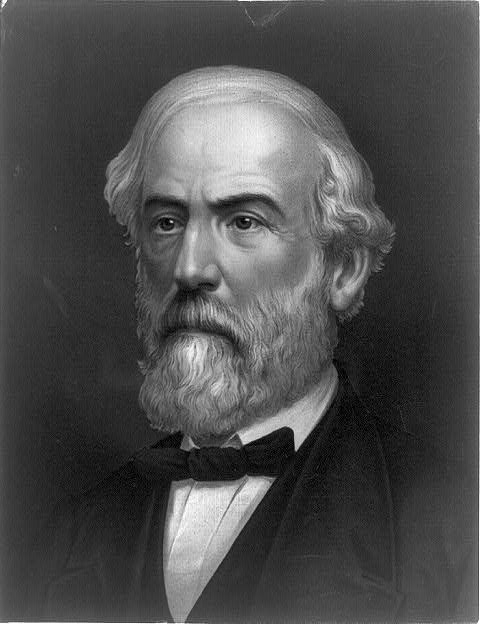
Lee: Use his life as a warning, not an inspiration.

As both political parties and the President of the United States seem to be determined to subject the American people, economy and standing in the world to disaster in the defense of principles, it might be a good time to reflect on the fact that principles detached from reality have little value, and that rigidly adhering to principles to the detriment of the community and civilization is not a virtue.

In the current issue of Humanities, historian James Cobb makes these points vividly, if tangentially, while reflecting on the odd reverence with which Americans, and not just Southerners, regard Robert E. Lee. I am proud to say that the lionization of Lee never made sense to me, not even when I was a small boy. But he is the epitome of someone who is revered as a role model and hero for his supposed character and values rather than what he actually did with them.*

Cobb begins his essay with this anecdote:  Continue reading →

Texas: Resisting Creationism, Embracing Enlightenment

Uh...NO.

Lost in the hysteria over the U.S. government’s self-created default crisis was some good news for integrity, education, and the advance of human knowledge.The Texas Board of Education unanimously (8-0) approved scientifically accurate high school biology textbook supplements from established mainstream publishers that cover the origins and implications of evolution theory and findings, rejecting the creationist-backed supplements from International Databases, LLC. (The creationist-crafted materials submitted by that group was not only “laced with creationist arguments,” said one reviewer, but was also “shoddy”, “teeming with misspellings [and] typographical errors,”and “mistaken claims of fact.”)

The efforts of creationists and Christian fundamentalist forces to ignore and discredit overwhelming scientific evidence of evolution on earth, along with the many biological, anthropological, geological and historical conclusions that spring from the body of research in the field, have created hurdles for educators, impediments to students, and embarrassment to organized religion for more than a century. Continue reading →

Shocking Report: “Zero Tolerance” Policies Are Stupid and Destructive. Who Knew?

If you wanted proof of the utter stupidity and recklessness of no-tolerance policies in the schools, your search is over.

A study of the effects of  ‘Zero Tolerance’ programs in Texas public schools by the Council of State Government’s Justice Center reveals that:

  • Six out of ten Texas high school students have been suspended for expelled or suspended from class at least once over the past six years.
  •  15 % of students were removed from the classroom eleven or more times for disciplinary reasons.
  •  83% of African-American students in Texas have been expelled at least once by the time they graduate
  •  African American students and those with educational disabilities experience a disproportionately higher rate of removal from the classroom for disciplinary reasons. Continue reading →

We Know Enough about Ethics Already

If Shakespeare understood ethics so well, why are we still pretending to be ignorant about it?

I awoke to read about a breathlessly announced new work on ethics, a book called “Blind Spots: Why We Fail to do What’s Right and What to do About it.” Business Professor  Ann Tenbrunsel and co-author Max Bazerman write that we are unaware of the “ethical blind spots” that keep us from recognizing how we engage in unethical actions. The book cites tests and new research showing behavior that the authors call “ethical fading” and “motivated blindness.” They examine such case studies as Enron and the Madoff scam to show how people “believe they will behave ethically in a given situation, but they don’t. Then they believe they behaved ethically when they didn’t. It’s no surprise, then, that most individuals erroneously believe they are more ethical than the majority of their peers.”

Stop the presses! Conflicts of interest make us ignore core values and act in our own best interests, and we rationalize our actions to avoid confronting the true nature of our conduct!

Oops! I just stated the entire thesis of the book. I’m sorry, Ann! Apologies, Max! Continue reading →

Eight Glasses of Water and the Climate Change Bullies

Never mind.

A surprising new report announces that the well-established health standard that we should all drink at least eight glasses a day is a myth, with no data to support it.  Moreover, the report says, drinking so much water may actually be harmful.  Meanwhile, widespread acceptance of water and hydration as a health benefit has led directly to the explosion in the use of bottled water, wasting money and creating an environmental crisis with so many discarded plastic containers.

I would hope that such news, and we get these kind of sudden “never mind!” stories with fair regularity, might convince some of the more insulting critics of global warming skeptics to temper their contempt.
The ideologues and conspiracy theorists who refuse to accept that the world is warming—though nobody really knows how much or how long—and that the effect is likely caused by mankind—though nobody can say with certainty that mankind can reverse or stop it—are rightly derided, up to a point. But those who question the astonishing certainty with which some climate change scientists, Al Gore, and a passel of pundits, columnists and bloggers who barely passed high school chemistry claim to know what the effects of global warming will be, even though doing so requires extensive estimates, extrapolations and assumptions, are being no more than prudent, considering how frequently far simpler scientific conclusions have proven to be flawed, exaggerated, or as may be in the case of  the eight glasses of water, just plain wrong. Prudence is especially appropriate when speculative science transmuted into doctrine calls for huge expenditures of scarce resources and the re-ordering of national priorities, effecting nations, commerce, businesses and lives. Continue reading →

Explain to Me Why We Tolerate Illegal Immigration, Again?

Yes, I'm in a rotten mood today! Wanna make something out of it??

My cranky Saturday continues with an issue that I increasingly find bewildering: the tolerance, denial, and enabling by so many Americans of illegal immigration, although its unethical character cannot be denied or argued away. I know why Democrats support it—pure electoral cynicism—and I know why the business community encourages it—greed. What I don’t comprehend is why anyone else with a modicum of logic, fairness, and common sense isn’t confronting both of these self-serving institutions and demanding real enforcement of anti-illegal immigration measures. Instead, we get outrageous legislation like the Maryland Dream Act, which institutionalizes incentives for aliens to defy our laws. Continue reading →

Comment of the Day: “New Jersey Lottery Ethics…”

Tom Fuller, who can be perceptive when he isn’t peppering us with the quotations of others (all right, even sometimes when he is) makes a useful distinction in the Comment of the Day, on today’s post about the New Jersey Lottery:

“Don’t get me wrong. I’m no fan of government-sponsored lotteries, and I share all of the concerns about them mentioned above. But a facile slogan like “lotteries are a tax on people who don’t understand math” is, like most facile slogans, too simplistic a way of making the arguments. There are plenty of psychological and economic reasons why even people who understand the math buy lottery tickets that are, quite literally, bad bets. There is lots of research on this; one of the better articles is now 21 years old, but is still cited as a good, brief, and comprehensible overview.”  [You can read it here.]

“Every gamble is a losing bet in the long run; otherwise it wouldn’t be a gamble. The trouble with state-run lotteries is not so much that they exploit those who “don’t get it”; they exploit anyone, even a mathematical genius, who is drawn towards what society generally regards as undesirable actities, thereby sending the same mixed messages as taxes on tobacco and alcohol.”