AGAIN: Irresponsible Gun Owners Must Be Charged

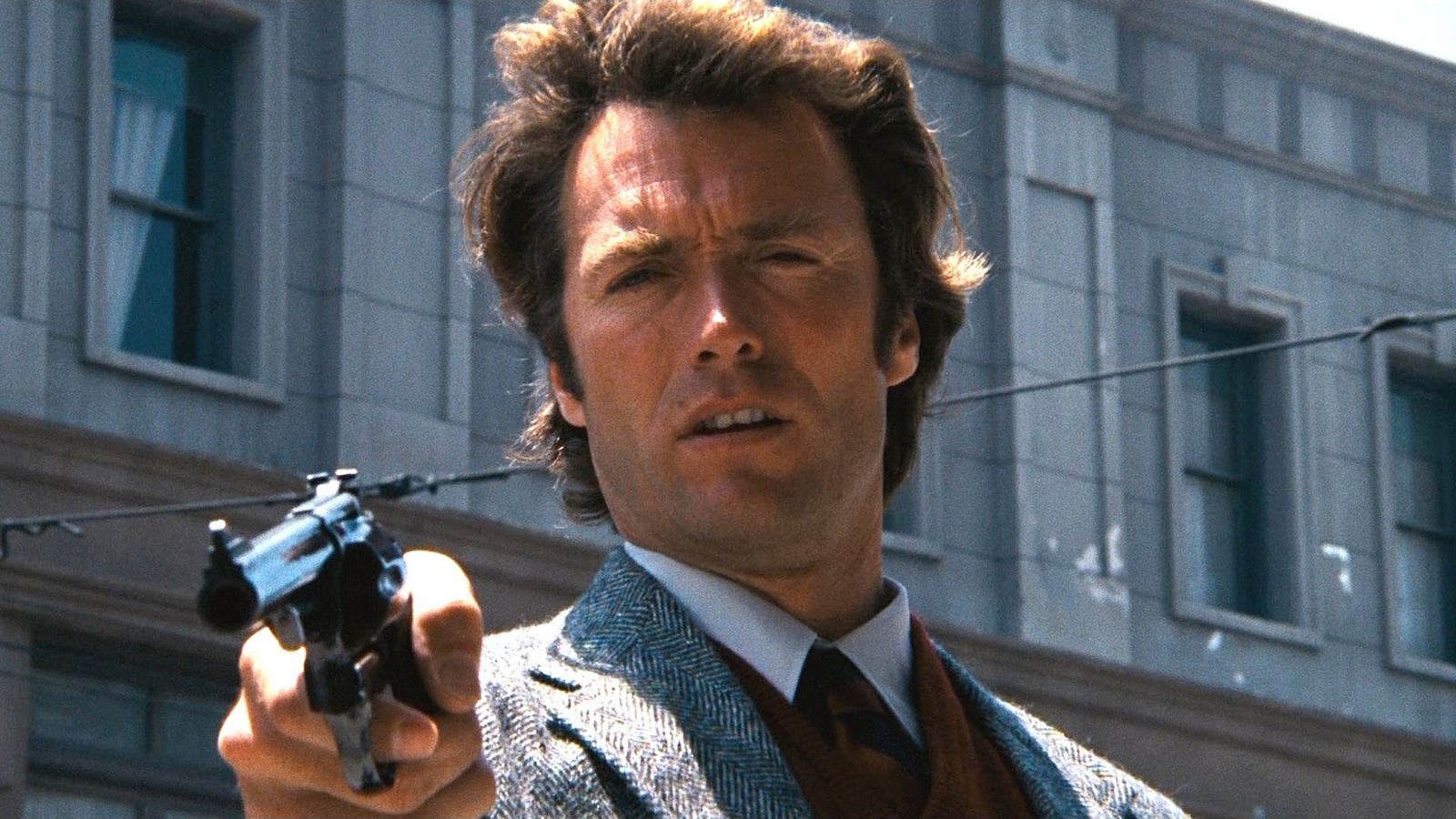
"...but since this is a .357 magnum, the most powerful handgun on Earth, and will blow your head clean OFF.... I think I'll go shopping with my little boy with this in the holster, unfastened, and bullet in the chamber!"

“…but since this is a .357 magnum, the most powerful handgun on Earth, and will blow your head clean OFF…. I think I’ll go shopping with my little boy with this in the holster, unfastened, and bullet in the chamber!”

CBS informs us that in Wassila, Alaska, where you know who dwells, a 4-year-old boy was shot in the leg Saturday on a public sidewalkwhen his mother’s .357-caliber handgun fell out of its holster, struck the pavement on its hammer and fired.

No one has been charged, we are told.

Well, that’s cretinous, and as a society, our law enforcement has to send more responsible messages than that.

Again, as I noted here and here and here, all since the dawn of 2015, the fact that the child or an innocent bystander wasn’t killed by this reckless and stupid gunowner was pure chance, moral luck. As far as her conduct goes, there is no difference. She is the equivalent of a drunk and speeding driver. This isn’t an accident that “can happen to anyone.” This can happen to idiotic gun owners who don’t know basic gun safety and allow guns to be in the close vicinity of children. Why was her holster unfastened? Why did the gun have a bullet in the chamber? Why wasn’t she aware that what she was doing might make the gun fall? Why did she feel she had to carry a cannon of a hand-gun with her on a weekend outing to beautiful downtown Wasilla?

Charge her, prosecute her, throw her in jail, take away her gun privileges, and have child protection services investigate the home.

This has got to stop.

[But don’t call her a gun owner. She isn’t a real gun owner. Real gun owners don’t act like this. To call her a gun owner gives her dignity that she doesn’t deserve, and promotes bigotry against true gun owners, who by definition are responsible, peaceful, and observe gun safety principles at all times. If you don’t believe me, just ask the President. He understands. This is how he thinks, after all.]
KABOOM! ARGHHH! How Can This Happen In The United States? How Can Any University Think This Is Legal, Fair, Ethical Or Rational? How Can A UNiversity That Acts This Way Be Trusted To Teach Anyone Anything, Other Than How To Be A Fascist?

Thank-you, University of Tulsa...

Thank-you, University of Tulsa…

I really didn’t need another KABOOM! so soon after the last one.

From The Foundation For Individual Rights in Education, with my brainless reactions in bold and brackets:

TU suspended student George “Trey” Barnett last October for three Facebook posts [ It’s unethical and probably illegal to punish Barnett for his own Facebook posts…] published by his husband that criticized another student and two TU faculty members. […but it is beyond belief for the school to punish him for what someone else, regardless of who, posts to his page.] None of the Facebook posts came from Barnett’s account; the statements were posted by his husband, who either tagged Barnett or posted them directly to Barnett’s Facebook page. Barnett’s husband later submitted a sworn affidavit attesting to his sole authorship of the posts. Nevertheless, shortly after TU professor Susan Barrett filed a complaint against Barnett arguing that Barnett could not “avoid responsibility” because someone else was responsible for the posts. [This is Kafaesque. Do these even people know how Facebook works? ] TU Senior Vice Provost Winona Tanaka imposed eight restrictive interim measures against Barnett. The sanctions included suspending his participation in certain courses and activities and even barring him from speaking about certain individuals. [University administrators can not bar whom a citizen may speak to; only judges can do things like that, and only rarely.]

Without affording him the hearing he was entitled to under TU’s University Student Conduct Policies & Procedures, and despite his husband’s affidavit, Tanaka found Barnett responsible for “harassment.” Tanaka also found Barnett guilty of retaliation and violating confidentiality requirements for speaking about the disciplinary charges with his husband—who was also his exculpatory witness. [ What??? WHAT??? Due Process? Rights of the accused? Procedures? Policies? ]

Less than two months before Barnett was set to graduate, Tanaka not only suspended him until at least 2016 but also permanently banned him from receiving a degree in his major even upon his re-enrollment. Barnett was forced to wait two months for TU to respond to his appeal, which the university summarily denied on January 9 without explanation—leaving Barnett unable to earn his theater degree as planned. [ All of this for what someone else wrote on the student’s Facebook page! My key question in ethics scenarios is “What’s going on here?” What’s going on here? I have no idea. An illicit relationship between the apparently fat faculty member Barrett and Tanaka? Insanity?]

…TU has also threatened … its independent student newspaper, The Collegian, which this week reported on Barnett’s suspension and criticized his treatment. The Collegian reports that after contacting TU administrators for comment, student reporters were told by TU’s director of marketing and communications that if “anything that the university deems to be confidential” is “published or shared, (that) could violate university policies.” The university refused to explain what might constitute “confidential” information and, come press time, the journalists were unsure what action the university might take against them. [ OK, let’s just stipulate that the University of Tulsa doesn’t accept the principles underlying the First Amendment. I will await its next abuse of power being aimed at impending worship requirements and a ban on assembly.]

Continue reading

Instant Ethics Train Wreck: The Alabama Gay Marriage Stand-off

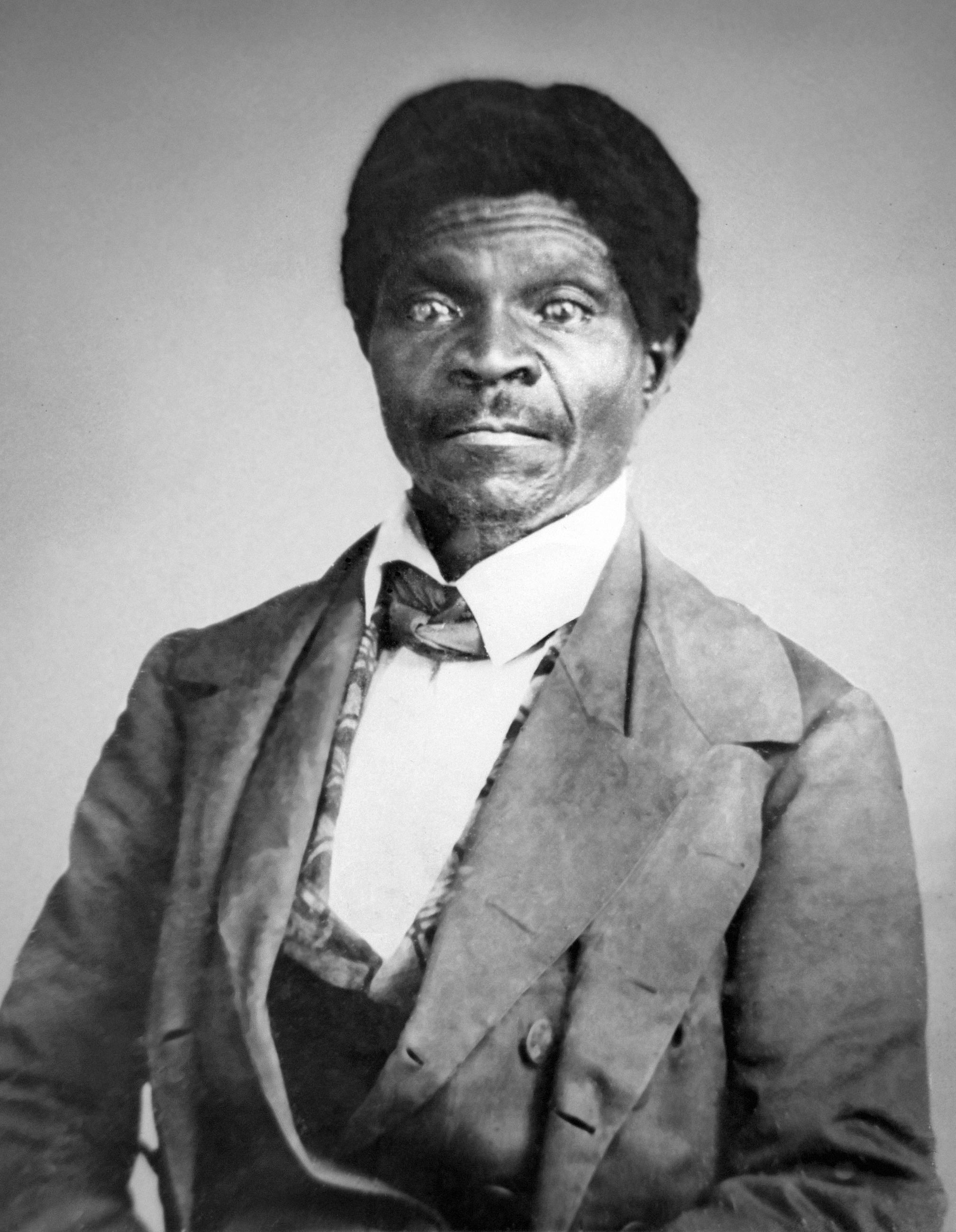
What does Dred Scott have to do with the Alabama gay marriage mess? Absolutely nothing.

What does Dred Scott have to do with the Alabama gay marriage mess? Absolutely nothing.

This summer, the Supreme Court will again take up the issue of the Constitutionality of state gay marriage bans, having left the question open (why, I don’t know) after striking down the Defense of Marriage Act in 2013. Since that ruling, the states have been busy little bees, some passing laws banning same-sex marriage, some doing the opposite, then fighting out multiple appeals at various levels of the judicial system. Three things are certain: the cultural and legal acceptance of same-sex marriage looks unstoppable; all states need to agree on what a legal marriage is; and some faith-based same-sex marriage opponents will not give in until the last dog dies.

Beginning at the end of last week, a messy situation in Alabama involving all of these factors burst into a full-fledged ethics train wreck. The links in this post will let you immerse yourself in the mess if you choose: I’m going to try to be clear. Here is what has transpired so far:

1) A federal judge, District Court Judge Callie V. Granade,  struck down the state’s ban  on same-sex marriages in January and said that Alabama could start issuing licenses last week unless the U.S. Supreme Court stepped in and stayed her order. A stay was immediately requested by the Alabama Attorney General, who properly defended the state’s law.

2.) The 11th Circuit Court of Appeals refused to step in and stop her order from going into effect.

3) The U.S. Supreme Court also refused the stay request, allowing marriages to proceed in Alabama.

4) Roy Moore, chief justice of the Alabama Supreme Court, reminded everyone that probate judges report to him, not the federal judge and not the Attorney General, and do not have to issue marriage licenses to gay couples until he tells them to. He told them not to.

5) Some Alabama probate judges followed Moore, and some went ahead and issued the licenses. Mass confusion reigned.

6) Meanwhile, the refusal of the U.S. Supreme Court to issue a stay pending its ruling on state same-sex marriage laws later this year was widely interpreted as tantamount to SCOTUS deciding the case before it was even argued.

7) Justice Clarence Thomas, in a dissent from the  majority’s rejection of the stay (we don’t know what the vote break was), argued that “This acquiescence may well be seen as a signal of the Court’s intended resolution of that question. This is not the proper way to discharge our . . . responsibilities.”

8) Justice Ruth Bader Ginsberg, meanwhile, appeared to endorse gay marriage in an interview.

9) Attempting to break the impasse, U.S. District Judge Callie V.S. Granade ordered Mobile County, Alabama to start issuing marriage licenses to same-sex couples, paving the way for resistant officials across the state to follow suit, in a decision stating that the state’s ban on same-sex marriage had been struck down and that ­Mobile County’s probate judge had to adhere to that decision.

10) Chief Justice Moore remains unmoved, but now most of the probate judges are following the federal order.

Got that?

Good, now you can explain it to me.

What a mess.

Here are the ethics verdicts on the participants so far: Continue reading

I Can’t Wait To Find Out If Craig Hicks Was Just A Murderer Who Killed Three Innocent Neighbors Over A Parking Space, Or A Bigoted Murderer Who Killed Them Because They Were Muslims.

"EXTREMIST!"

“EXTREMIST!”

I am sitting here, drinking coffee and trying to wake up, and listening to CNN go on ad nauseum about the FBI investigation into whether Craig Hicks’ murder spree is a “hate crime.” No, I personally think he shot his neighbors because at that moment he was overcome with affection.

Sure, it’s important to know the motive for any murder. The “hate crime” scar on our laws, however, is creeping government thought control. After all, the law adds penalties to the punishment for a proven crime according to what the criminal was thinking, and nothing else. That’s thought-crime, by definition. The point is and was —-and this is another gift to the culture from the increasingly fascist-tending American Left, which wants to make it impossible (or painful) not to think as good people (you know, them) think—to use such prosecutions to send the message that it’s not just wrong to be prejudiced, it’s illegal and evil, and those who hold such views must be removed from society like tumors. Thus we are subjected to the interminable blathering that just finished on CNN about what the FBI’s examination of Hicks’ completely legal and Constitutionally protected writings and statements suggested about whether his thoughts should put him in jail for a few more years or decades. The message is unambiguous. Carol’s guest, a human rights expert, explained that Hicks’ act was a hate crime if any part of his motive was hateful.

Boy, Jesus was really ahead of his time: no wonder he warned us to love our enemies. It makes it safer to kill them. Continue reading

One More Time As A Child Finds A Gun And Kills: Prosecute the Parents

DSC_1306

This time the locale was Elmo, Missouri, and it was a five-year old pulling the trigger. The victim was a 9-month-old boy, but it’s basically the same tragic, stupid story….just like in the Idaho Walmart, where the two-year-old shot his mother, or the Albuquerque motel room where another toddler shot both of his parents, who were just lucky and lived. (They have been charged with child abuse. Good.) A gun owner negligently, recklessly, criminally leaves a firearm, loaded, where  young children are and a tragedy results.

Alexis Widerholt, the mother of the children, called 911, and when emergency crews arrived they found that her the baby had been shot in the skull with a .22-caliber magnum revolver.

Somebody has to go to jail for this, maybe several people. Authorities say the gun belongs to a relative, but not the mother. If she knew the gun was in the house, she’s accountable. Anyone responsible for putting the loaded gun where a kid might find it is accountable. Charge them with manslaughter, convict them, send them away. Unless the mother didn’t know about the gun (she originally told the police it was a paint gun, either out of panic, confusion, or ignorance), she needs to lose the right to parent them, at least for a while. Continue reading

Presenting Rationalization #48: Ethics Jiu Jitsu, or “Haters Gonna Hate!”

Haters gonna hate

Because winning makes everything right…

I was enlightened regarding the prevalence of this latest addition to the rationalizations list in the desperate reactions from some football fans on Facebook to my recent (absolutely valid and indisputable) criticism of the National Football League. Thus does conflict expand our wisdom and horizons…

Rationalization #48:

Ethics Jiu Jitsu, or “Haters Gonna Hate!”

This vintage obnoxious rationalization is recently pressed. Its objective is to turn the tables on legitimate critics of unethical conduct by asserting that it is the act of criticism itself that is wrong, thus allowing the object of the criticism to not only escape unscathed, but to claim victim status.

Ethics Jiu Jitsu is similar to the #6, the Biblical rationalizations “Judge not, lest ye not be judged,” and “Let him who is without sin cast the first stone,”  except that those are used (incorrectly) to suggest that nobody is good enough to criticize the conduct of others, not that the act of criticism is inherently hateful. The insidious trick that this rationalization embodies thrives on the modern criminalization of hate in the culture. Hate is just very intense dislike, and as a feeling, it is well within the realm of personal rights.  Hate crime is a variety of thought-crime. The politically-motivated legal monstrosities known as “hate crimes”  have inspired this rationalization  by making it plausible to argue that dislike itself is wrong, even when what is being disliked, criticized or hated is objectively wrongful conduct. All “haters” are lumped together, whether the object of hate is Lance Armstrong’s cheating, the NFL’s conspiracy to hide the effects of concussions, or Barack Obama’s ineptitude, in a linguistic trick that suggests that sincere critics are no different from people who hate the United States, minorities, decency, true love and puppies. They are all haters, hate is bad, and it’s the haters who are the problem, not the corruption, dishonesty, and betrayals they criticize.

In truth, those who don’t have the ethical bearings, the courage or the civic responsibility to criticize unethical conduct in the culture are the real problem as we strive for an ethical culture. They can often be identified by their mouthing of the fatuous accusation, “Haters gotta hate!”

Comment of the Day: “Someone Explain To Senator Tillis That It’s Unethical To Make People Sick On Principle”

hand-washing

Refusing to rest on his laurels, recently crowned Ethics Alarms “Commenter of the Year” texagg04 delivers a helpful, clarifying, erudite examination of the balancing process brought into play with the regulation of businesses for health and safety reasons. Here is his Comment of the Day on the post “Someone Explain To Senator Tillis That It’s Unethical To Make People Sick On Principle”:

Let’s unpackage this.

Purchasing Products and Services

When we buy a product or service, we don’t just buy the end result. We buy a long string of tasks leading up to that final product and sometimes we buy even more things than just the final product*. In this instance, that doesn’t just mean the food on your plate, as tasks, upon deep consideration are actually HUMONGOUS things that are composed of the Time necessary to complete, Material either used up in preparation or as a component of the end item, Personnel Knowledge needed to perform, Equipment which facilitates, and Space needed to complete the task.. You don’t purchase just the food. You purchase the time and care EACH employee puts into the process. From Day 1, you purchase the time a procurer makes a deal with a vendor OR personally hand selects the ingredients of your meal. You purchase the time and quality of the food storage in the pantry/refrigerator. You purchase the chef’s level of knowledge. You purchase the time he devotes to ensuring the burners are a certain temperature. You purchase the manager’s level of knowledge in keeping things efficient and cost effective. You purchase EACH AND EVERY action the server takes that could affect the final, tangible product or service. Continue reading

Wait–What Idiot Thought We Wanted A Sequel To The Idaho Walmart Shooting?

Does this graphic look familiar? It should: I used it only a month ago, and for the exact same reason.

Does this graphic look familiar? It should: I used it only a month ago, and for the exact same reason.

From the Washington Post:

“A toddler reaching for an iPod in his mother’s purse grabbed a loaded gun instead before shooting both his parents in an Albuquerque motel room on Saturday, according to news reports. Police said the bullet hit the father in the buttock and the mother, who is eight months pregnant, in her right shoulder, but did not strike a 2-year-old child who was also in the room, according to Fox News.”

Gee, I guess Monique Villescas and John Reynolds, the lucky parents in this near tragedy, were so amused at the death of Veronica Jean Rutledge at the hands of her toddler that they just couldn’t resist trying the old “let’s leave a loaded gun where a small child can reach it” trick themselves. Or, I suppose, they might just be irresponsible fools.

Observations:

1. Two of these incidents in a little more than a month ?! What are the odds that Rutledge and these boobs were the only Americans leaving loaded guns within the reach of young children? Continue reading

Ethics Quiz: Is It Time For A “Let’s Tweet Insults About Chip McGee Day”?

Meet Chip McGee!

Meet Chip McGee!

At Bedford (New Hampshire) High School, several students were not pleased with Superintendent Chip McGee’s announcement via his Twitter feed that classes would resume the day following the school’s cancellation for snow. They responded with tweets of their own, some that were not especially pleasant. McGee, as one would expect a mature adult to be, especially one overseeing the education of children, was philosophical. saying, “Kids said some very funny, clever things. And some kids stood up and said, ‘Hey, watch your manners.’ That was great. And some kids — a few — said some really inappropriate things.”

Yes, kids will be kids. McGee then suspended those latter students for up to four days.

“It’s been a really good exercise in issues of students’ right to speech, on the one hand, and students’ and teachers’ rights to an educational environment that’s conducive to learning,” McGee explained to the Constitutionally ignorant. “Kids have the right to say whatever they want about me [and] The First Amendment right means you can say what you want, (but) it doesn’t mean that you are free of repercussion. It can’t disrupt what we’re doing in school … If something disrupts school, and it (occurs) outside school, we not only can take action, we have to.”

McGee  hopes that the punished students will learn from this incident about “the line” of decent and appropriate commentary. “You only learn that by checking where it is, and having something happen when you cross it,” he said.

Good ol’, wise ol’ Chip McGee. He has no idea what the hell he’s talking about.

The students are absolutely guaranteed of speech without “repercussion,” if the speech is off school grounds and the repercussion is from a school official who takes offense. The school has no authority to punish students for what they post on Twitter, from their homes, none at all, unless it relates directly to action at school itself, such as organizing a school disruption. A student opinion of the superintendent or his decisions? That’s 100% protected speech. I can find that right to free speech Chip mentions right there in the Constitution, but search as I might, I can’t locate in the Bill of Rights the provision describing the “students’ and teachers’ rights to an educational environment that’s conducive to learning” that extends to what a student says and writes outside of school. Where is that “right,” Chip?

Chip speaks in the measured tones of a caring educator, but he acts like a petty tyrant who is eager to abuse his position and power to punish anyone who dares to displease him in what they say or think.

No merely insulting or uncivil tweet is going to disrupt school, and if that’s Chip’s claim, he has a rather tough burden of proof to demonstrate it. Nor does a public school—that’s the state, you know— have the right to effectively censor speech by punishing content. If the speech isn’t libelous or a credible threat, Chip McGee’s reasonable remedy consists of asking to speak with the Tweeter and express his hurt and disappointment, or perhaps consulting with the student’s parents, who do have a right to limit online speech when their children are the speakers.  As an educator, he might explain to the student that insulting authority figures who you must relate to by flaming them on mass social media is neither wise, civil, nor a good habit. He might even  suggest that an apology is in order. He may not, however, abuse his power and position to constrain the free speech of those students and others by inflicting punishment. Chip McGee, who has the young minds of children within his power to lead or mislead, needs to learn this basic civics lesson, as do other tin god educators, and I’m sure there are many, who similarly itch to punish students for exercising their speech rights in the privacy of their homes.

Thus this somewhat atypical Ethics Alarms Ethics Quiz question to ponders:

Should we declare a “Let’s Tweet Insults About Chip McGee Day”?

Continue reading

Ethics Alarms Mailbag: Is Arguing In The Alternative Unethical?

No, it isn’t, but I understand why it might  seem that way.

 “I didn’t do it, no one saw me do it, and you can’t prove anything!”

“I didn’t do it, no one saw me do it, and you can’t prove anything!”

An email from ethics issue scout Fred calls my attention to the case of  transgendered female Leyth O. Jamal, 23, who filed a sexual discrimination suit in September claiming that managers at a Saks store in Houston  referred to her as a man, made her to use the men’s restroom and pressured her to dress as a man despite being aware of her transgender identity. She also claimed a male colleague repeatedly asked her whether she was a prostitute in front of customers and colleagues, and threatened her. Saks fired Jamal after she brought a complaint to the Equal Employment Opportunity Commission.

In federal court this week, Saks withdrew its Dec. 29, 2014, court filing asserting that transgender workers are not covered by the gender discrimination ban in Title VII of the Civil Rights Act of 1964. The company  still denies that it discriminated, and has made statements about how it “believes that all persons are protected against sex discrimination under Title VII” of the Civil Rights Act of 1964, which prohibits discrimination by employers on the basis of race, color, religion, sex or national origin. It had argued, however that the plaintiff had based her case not on sex discrimination but on the issue of gender identity and transgender status, which Saks believed fell outside of Title VII’s mandate.

Now Saks is only disputing that there was any discrimination, not that such discrimination was legal. The question posed to me: does this U-turn this look bad for Saks? Is it cynical and unethical? How can you simultaneously argue that what the client alleges isn’t actionable because there’s no law against discriminating against someone for gender identity, and that you didn’t discriminate on that basis, or any basis, anyway? Continue reading