The Unethical Opposition To Tennessee’s Fetal Drug Abuse Protection Law

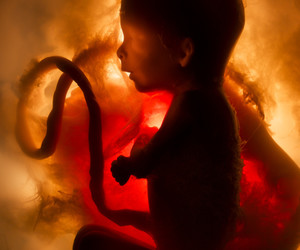
200439961-001Tennessee is one of the most activist states that it comes to protecting children; for example, it has the among most stringent laws in the nation regarding the mandatory reporting of suspected child abuse. It also has a new law that just went into effect this month that allows officials to arrest mothers for assault who illegally use narcotics while they are pregnant if the child is born with symptoms indicating that the drug use impaired the child’s condition.

Predictable and tiresomely, the media and “war on women” scolds are attacking this is yet another incursion on the rights of women to have dominion over their own bodies. Think Progress, dishonestly, calls it a “pregnancy criminalization law.”  This is intentional misrepresentation, a TP specialty. The law doesn’t criminalize pregnancy in any way, by even the most distorted interpretation.  The knee-jerk opposition to the law highlights the problems of consistency and integrity that the women’s rights and pro-abortion forces have in all the areas relating to childbirth. Essentially, their position is that if conduct is related to child birth—or preventing it—in any way, anything they say, want or do must be accepted, and asserting otherwise, no matter what the justification, makes the government an oppressor of women. Continue reading →

A Proposed Guide To Spoiler Ethics

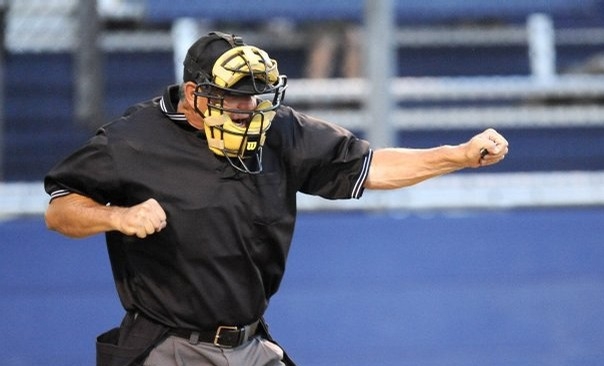
"It SINKS??? You spoiled the ending!!!"

“It SINKS??? You spoiled the ending!!!”

I was just admonished on Facebook by a friend (a real friend, not just the Facebook variety), for referencing the end of the last episode of Season One of “Orange is the New Black.”  He hadn’t finished viewing the season yet, and this was a breach of spoiler ethics. Or was it?

Ever since I encountered for real someone who was angry with me for “spoiling” the end of “Thirteen Days,” ( “Yes, World War III started and everybody died”), I have been dubious about spoiler etiquette. The advent of DVDs and Netflix has made this all the more annoying. If I’m in a group of five, and one individual hasn’t kept up with “House of Cards,” are the rest of us obligated to censor our discussion? As a devotee and fanatic devourer of popular culture, I admit that my first instinct is to say, “Keep up, get literate, or pay the price.” If I actually live by that rule, however, I will be a walking, talking, writing, spoiler machine.

Chuck Klosterman, “The Ethicist” in the world of the New York Times, recently pronounced himself an anti-spoiler absolutist:

“I’m an anti-spoiler fascist. I don’t believe that any conversation, review or sardonic tweet about a given TV show is more valuable than protecting an individual’s opportunity to experience the episode itself (and to watch it within the context for which it was designed). I’ve never heard a pro-spoiler argument that wasn’t fundamentally absurd.”

Even Klosterman, however, excepted sporting events (the question posed involved mentioning World Cup scores to a friend who was annoyed that the game had been “spoiled” for him) from his fascism, writing, reasonably:

“I must concede that live, unrehearsed events are not subject to “spoiler” embargoes A live event is a form of breaking news. It’s not just entertainment; it’s the first imprint of living history. …Because this guy is your buddy, you might want to avoid discussing the games’ outcomes out of common courtesy — but not out of any moral obligation. It’s his own responsibility to keep himself in the dark about current events.”

For once I agree with Chuck. But what are reasonable ethics rules for dealing with the other kind of spoiler, involving literature and entertainment?

Luckily, this is not new territory, though it is evolving territory. The underlying ethical principles include fairness, trust, consideration, compassion, and empathy, which means that the Golden Rule is also involved.

Back in 2010, an erudite blogger calling himself The Reading Ape proposed a draft “Guide to Responsible Spoiling.” That blog is defunct; the promised successor is not around, and so far, I haven’t been able to discover who the Ape is. Whoever he is (Oh Aaaaape! Come back, Ape!) , he did a very good job, though some tweeks might  improve his work, especially in light of the emergence of Netflix.  (I have edited it slightly, not substantively…I hope he doesn’t mind, or if he does, that he’s not a big ape.) His approach is to frame the problem as an ethical conflict, in which two competing ethics principles must be balanced. I think that’s right.

Here is his “draft”—what do you think?

“A Brief Guide to Responsible Spoiling”

by The Reading Ape (2010)

The objective is to balance two ethical principles:

I. The Right to Surprise: The inherent right of any viewer or reader to experience the pleasure of not knowing what’s
going to happen next.

II. The Right to Debate: The inherent right of any viewer or reader to engage in public discourse about the content of
a given work of narrative art.

Part 1: When Spoiling is Fair Game

In the following circumstances, one can discuss crucial plot details and reveal endings with a clear conscience. Continue reading →
Ethics Strike Three And Four Against Facebook In Its Creepy Mood Manipulation Study

Facebook is so out.

"Meh. Look at this neat picture of my dog!"

“Meh. Look at this neat picture of my dog!”

Ethics Strike One was the research itself, using its own, trusting users as guinea pigs in a mad scientist experiment to determine whether their moods could be manipulated by secretly managing the kind of posts they read from Facebook friends.

Ethics Strike Two was the lack of its subjects informed consent for the study, violating the basic standards of human subject research. A boilerplate user agreement that makes a vague reference to using data for “research” in no way meets the requirements of informed consent for this kind of study.

This brings us to Ethics Strike Three.  In justifying the legality and ethics of the research, Facebook’s researchers explained that leave to perform such experiments was consistent with the user agreement (See Strike Two):  “[the experiment] was consistent with Facebook’s Data Use Policy, to which all users agree prior to creating an account on Facebook, constituting informed consent for this research.” As I pointed out above and in my previous post on this topic, this isn’t informed consent as the research field and various ethics codes define it. But even if it was, this statement is a lie. Continue reading →

Independence Day Ethics: Historian Hype, Liberal Bias, And The Great Punctuation Mystery

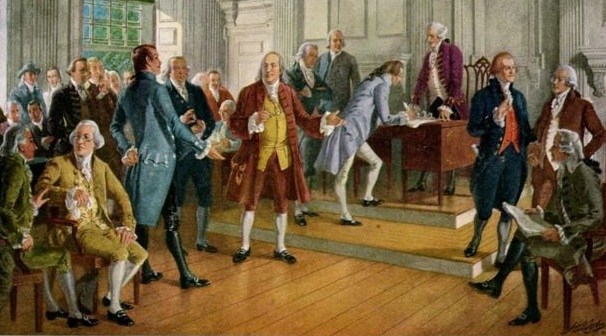
founding-fathers-declaration-of-independence

First, a little background…

I have often found it depressing that historians so often lack the ethical integrity necessary to do their jobs. If there was any profession in which avoiding bias would seem to be paramount, historical research and analysis would seem to be it, but that just isn’t the case. Because historians are academics and scholars, and because academia has become almost exclusively a hot-house of left-ward ideology for more than half a century, too many historians view their duty as using the past to manipulate the present and future.

My introduction to this came early, when I was a fifth grader suddenly fascinated with the U.S. Presidency as the first national election that I could follow approached. I read various assessments of who the greatest of our past POTUSes were, and there was near consensus, it seemed. Washington and Lincoln, naturally, were “the berries,” and they were joined as “greats” by Jefferson, Jackson, Wilson, FDR, and Truman, Democrats all. Teddy Roosevelt was “near great”; Eisenhower was a dud. What a great party this Democratic Party must be! Of course, Jefferson’s racial hypocrisy, Jackson’s lawlessness and persecution of Native Americans, Wilson’s racism and bungling of the peace after World War I and FDR’s complicity in locking loyal Japanese-Americans in prison camps was never mentioned. Over time, I learned that even the most respected American historians were likely to be pursuing partisan agendas. The classic example, of course, was Arthur Schlesinger, Jr., who carefully and unforgivably culled the facts he deemed worthy of revelation in order to add John Fitzgerald Kennedy to that list of brilliant Democratic Presidents. Was I surprised when a large number of prominent American historians signed a petition opposing the impeachment of President Clinton, a Democrat, thus asserting that a degree of dishonesty and lack of trustworthiness that was sufficient in every state in the union to mark a lawyer as unfit to practice was nonetheless not sufficient cause to remove a President from office?

I was not.

This brings us to the Case of the Missing Comma, brought to us by Danielle Allen, a professor at the Institute for Advanced Study in Princeton, N.J., aided and abetted by her left-leaning allies. Allen (who by the purest coincidence has a book out!) claims a major discovery. The iconic sentence in the Declaration of Independence—“We hold these truths to be self-evident, that all men are created equal, that they are endowed by their Creator with certain unalienable Rights, that among these are Life, Liberty and the pursuit of Happiness.–”—was not intended to end in a period, as all current quotations and reproductions show, and the official transcript produced by the National Archives and Records Administration indicates.  Allen claims that her extensive research indicates that the period at the end of that phrase almost certainly did not appear on the original parchment version of the Declaration, and was mistakenly included in later versions. Just in time for July 4th (when Allen’s publicist calculated that her “Eureka!” would get maximum exposure) Allen explained to the New York Times that the extra period contributes to a “routine but serious misunderstanding” of the famous document signed by the Second Continental Congress in 1776. Continue reading →

Unethical Website Of The Month, Sort of: Newsball

image2

I had never heard of Newsball until I read a sneering account of Cole Baritomo’s “news blog” in the Daily Beast, titled “He Bullies Kids and Calls It News,” by DB reporter Brandy Zadrozny. She caught me at a bad time, because I was still gagging from reading an outrageous, incompetent, slanted and useless Daily Beast account of the Supreme Court’s unanimous ruling striking down a Massachusetts law establishing anti-protest “buffer zones” around abortion clinics as a First Amendment violation. Nobody reading this mess could possibly figure out what the ruling was about, what it was, and the distinctions it drew. There were no quotes from the opinion, no discussion of the important disagreements among the justices, not even a clear description of what a buffer zone is, or what the law that was struck down said. The reporter, however, quoted Plannned Parenthood three times—yes, they are certainly the most unbiased analysts of this issue. Then the screed masquerading as news reporting ended with this: Continue reading →

Warped Values and Perverse Incentives: Banning Employers From Asking Whether A Job Applicant Served Time

Sorry Hedley---it's unfair to ask a potential employees if they were rustlers, cut throats, murderers, bounty hunters, desperados, mugs, pugs, thugs, nitwits, halfwits, dimwits, vipers, snipers, con men, Indian agents, Mexican bandits, muggers, buggerers, bushwhackers, hornswogglers, horse thieves, bull dykes, train robbers, bank robbers, ass-kickers, shit-kickers...and don't you dare ask if they are Methodists!

Sorry Hedley—it’s unfair to ask a potential employees if they were rustlers, cut throats, murderers, bounty hunters, desperados, mugs, pugs, thugs, nitwits, halfwits, dimwits, vipers, snipers, con men, Indian agents, Mexican bandits, muggers, buggerers, bushwhackers, hornswogglers, horse thieves, bull dykes, train robbers, bank robbers, ass-kickers, shit-kickers…and don’t you dare ask if they are Methodists!

I was unaware that this was a trend: states and cities making it illegal for employers to ask job applicant’s whether they had been convicted of a crime and served jail time.

It is an unethical, foolish and illogical trend, an example of misplaced compassion being used to justify placing risks on law-abiding citizens for the benefit of those who are less trustworthy.

A news article regarding the problems faced by former prisoners re-entering society quotes Zach Hoover, executive director of LA Voice, a multiracial, faith-based organization working to get such a measure passed in Los Angeles:

“Sometimes people think of someone who’s been in prison and they think only of what they did instead of what they’re doing today. They’ve done their time. They served their sentence, and they’re looking for a job.It’s like double jeopardy. You’ve done your time, and now you get a life sentence of joblessness.”

What utter claptrap: Continue reading →

The Campus Sexual Assault Witch Hunt Ethics Train Wreck, Complicated By The Fact That The Witches Are Real

"Wait...are you raping me, or am I raping you?"

“Wait…are you raping me, or am I raping you?”

There is no question that there are sexual predators on college campuses, or that some colleges let them get away with raps on the knuckles for sexual assault or worse. There is also little question, though various parties and activists deny it, that what constitutes genuine sexual assault and even rape has been so thoroughly politicized and muddled by irresponsible rhetoric, dubious statistics and cynical political maneuvering that addressing the problem of actual campus sexual assault is becoming impossible without harming, indeed destroying, the innocent in some cases.

At Stanford, women are rallying for a more stringent process and harsher punishment after student Leah Francis protested in an e-mail to the campus that she had been “forcibly raped” by a fellow student and he was permitted to graduate. Of course, Stanford didn’t find the she had been raped: her assailant was found guilty of sexual assault. The loose use of “rape” to describe sexual assault for political purposes is one of the reasons universities seem incapable of finding a satisfactory balance in handling such cases. At the risk of getting ahead of the post, I would say this: if it is alleged to be rape, then turn the matter over to the police and the justice system. Schools are not allowed to use internal procedures to investigate and punish murder; it makes no sense to permit them to do so with the serious crime of rape. The fact that the standards of proof and the requirements of due process are less stringent in a campus procedure is what simultaneously leads to inadequate sanctions for the guilty and railroading of the innocent. The solution to this problem has always been available: treat allegations of campus rape like any other kind of rape.

Unfortunately, colleges are often in thrall to the political agendas of feminists and their allies, so “rape” can mean many things, as can “sexual assault.” In the casual, morality-free sexual atmosphere now not merely tolerated but nurtured on college campuses, lines of consent are blurred, and missteps are inevitable. At the same time, the permissive sexual environment is a playground for predators, exploiters and manipulators. How are the genuinely culpable sexual assailants to be distinguished from the clumsy, the confused, the misled, or the drunk and overly aroused? Continue reading →

Unethical Quote Of The Month: Hillary Clinton On Government Control Of Non-Conforming Viewpoints

mind-control-tests

“I believe that we need a more thoughtful conversation, we cannot let a minority of people — and that’s what it is, it is a minority of people — hold a viewpoint that terrorizes the majority of people.”

—-Hillary Clinton, forcefully inserting her leg in her mouth up to the knee during a CNN town hall as she talked about gun control, and, apparently, the new Democratic-progressive goal of government censorship of words, thoughts and beliefs.

Yup, Hillary really said that we cannot allow a minority to hold viewpoints the majority objects to. Oh, I know: she just said “terrorizes.” But if you can stop people from holding terrorizing viewpoints, there will  no longer be any prohibitions on barring other viewpoints that “the majority” believes are unwise.  This is the progressive paradise, I guess: all dissenting thoughts, opinions and viewpoints banished. I can almost feel the electroshock treatments now.

This is just a gaffe, right? I doubt it. I don’t think someone committed to free speech, open discourse, liberty and pluralism makes such a gaffe. The Left has been working over-time to suppress opposing opinion, dissent and non-conforming views for much of this President’s administration. Why should we believe this is a mistake?

Hillary will, and should, have this quote shaken in front of her face from now on. It is disgraceful, and terrifying (but I’m probably not part of Hillary’s “majority,” so what terrifies me doesn’t matter) for a former U.S. Senator and Secretary of State to assert such an un-American sentiment.

And immediately, the news media has begun trying to clean up the mess. The Huffington Post, realizing most people read headlines, not full posts, titled its report this way:

“Hillary Clinton On Gun Control: We Can’t Let ‘A Minority Of People’ Terrorize The Majority”

That is, you will notice, a lie. That is not what she said, and it is not up to journalists to decide for us what she “meant.” She said, very specifically, “holding viewpoints” is what we cannot permit, although the Constitution and a long line of Supreme Court cases says quite specifically that viewpoints are exactly what the government must permit. Later she said,

“I don’t think any parent, any person, should have to fear about their child going to school or going to college because someone, for whatever reasons — psychological, emotional, political, ideological, whatever it means — could possibly enter that school property with an automatic weapon and murder innocent children, students, teachers.”

This is less totalitarian, arguably, but dumber. “Could possibly” enter that school? I guess we have to lock them up, then, right, Mrs. Clinton? Can’t take any chances.

_____________________________

Pointer: Democratic Underground


Five Ethics Observations On The Redskins Trademark Decision

Washington-Redskins

1. Several commenters predicted that the ruling of the U.S. Patent Office cancelling the registered trademark of the Washington Redskins would warrant a “Kaboom!” here, the Ethics Alarms designation reserved for occurrences or statements so outrageous that they make my head explode. Please. Even pre-weakened by previous cranial fireworks, my head isn’t that unstable. The decision was neither a major surprise, nor was it as momentous as the ignoramuses in the media, social media, and Harry Reid pronounced it to be.  (More on the decision here.) The Redskins retain their federal trademark registrations until all appeals have been exhausted, and that process could take years. The registrations will be canceled only if the team loses all appeals, and if I were owner Dan Snyder, I would appeal up to the Supreme Court if I had to. This should be done not to preserve the Redskins name, which is archaic and at this point more trouble than its worth, but to beat back the forces of government censorship of thought and words, of which the anti-Redskins campaign is a significant, if relatively trivial, part.

2. Washington Post sports columnist Sally Jenkins, not a fan of the name, beat me to a column about what is really troubling about the decision, as she wrote… Continue reading →

“What Would Jesus Do?” My Guess: Devote His Energy To Something Other Than Forcing A Free Citizen To Re-Name His Own NFL Team

jesus football

The Central Atlantic Conference of the United Church of Christ, consisting of 180 congregations with 40,000 members from Richmond to New Jersey, voted unanimously to boycott of the Washington Redskins’ games and merchandize at its annual meeting. This decision is expected to pass to the national governing body of the church, which oversees 5,100 congregations with about 1 million members, which is expected to endorse it.

It would be good to know that the world is in such fine shape that this is the most pressing of our earthly challenges as far as United Church of Christ can see. Unfortunately, that’s not the import of this story. The story shows how political correctness, illicitly pursued by the abuse of official power, can and will spread throughout the culture, leading institution and organizations to believe that it is ethical to try to bend others to their will based on subjective views of “offensiveness.” It is not, however. Continue reading →