The Nathan Wade Interview: Apparently Fulton County Lawyers Don’t Get That “Legal Ethics” Thingy…or Ethics Generally

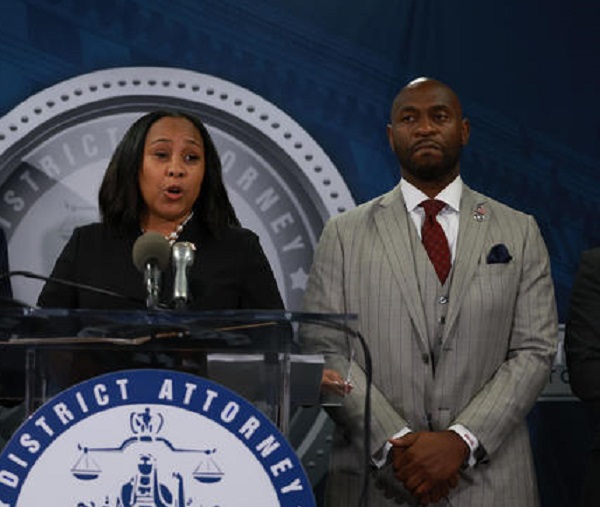
I find the transcript of the interview of deposed Fani Willis prosecutor and loverboy Nathan Wade many things: damning, outrageous, disgusting, shocking. Mostly I find it to be more evidence that I have wasted the last 25 years trying to make the legal profession more ethical. This guy, a “prominent and respected Atlanta lawyer,” not only doesn’t know what ethics is, he’s infuriatingly smug about his ignorance.

These are the people Democrats have placed in charge of “saving democracy” by using the criminal laws to keep Donald Trump from delivering condign justice to the Biden presidency, as in crushing, unequivocal defeat.

On Sunday’s “World News Tonight” and Monday’s “Good Morning America” ABC revealed two segments (here and here) from an “exclusive” interview with former Fulton County, Georgia special prosecutor Nathan Wade. He was, you’ll recall, forced to withdraw from the lucrative gig gifted to him by his girlfriend Fani Willis by the judge in the case, Willis’s prosecution of Donald Trump for “election interference.”

If there are more segments, I think I’ll pass: cleaning up the serial head explosions caused by what I’ve seen already is more than enough for me. Nothing in them could change my mind about Wade (or Willis) at this point. He’s not just an unethical lawyer.He’s a fick. And an asshole.

I’ll just repeat some of the more glaring statements so you get the idea:

  • Asked how he could endanger a high profile prosecution by letting an illicit romance pollute the prosecution: “You don’t plan to develop feelings. You don’t plan to fall in love. You don’t plan to  have some relationship in the workplace that we  you don’t set out to do that and those things develop organically. They develop over  over time. And the  the minute we had that sobering moment, we discontinued it.”

I see: he’s 13 years old, then….just so darned romantic or horny that he couldn’t help himself, even though this was exactly the opposite of professional behavior. Continue reading

Did Oscar Hammerstein Jr. Have an Ethics Problem?

A series of random events have caused my mind to wander over to “Carousel,”the second musical by the legendary team of Richard Rodgers (music) and Oscar Hammerstein II (book and lyrics), following their ground-breaking “Oklahoma!” The 1945 work was adapted from Ferenc Molnár’s 1909 play “Liliom,” and although it is a favorite of most critics (declared by TIME as the best musical of the 20th Century, for example, but what does TIME know?), its plot and characters become more troubling the longer one thinks about them. Rodgers said it was his favorite of his musicals with Oscar, and he was definitely in top form; I think his Overture to “Carousel” may be the best thing he ever wrote.

For the “hero” of the musical, Billy Bigelow, is a thug, a dolt, and a domestic abuser. I found the musical hard to take even as a kid for those reasons. When, in his justly famous song “My Boy Bill” after learning that he is going to be a father, Billy suddenly realizes that he might end up with a daughter instead (this only occurs to the big dummy two-third of the way through), his immediate conclusion is that he’ll rob and steal if that’s what it takes to raise her. Sure enough, that’s what he does: ultimately Billy gets himself mixed up in a dumb robbery scheme that goes sideways, and he is killed. The whole show is about his bad decisions and an ultimate opportunity given to him by God (or someone) to leave Purgatory (where everyone has to polish stars) and go back to Earth for a day to try to clean up the mess he’s made.

Continue reading

How Greedy Parents Pimp Out Their Daughters on the Web

Those are some of the comments that the New York Times found on Instagram in response to the photo of a pretty nine-year-old girl posing in a bikini. Her parents posted the photo to attract attention, and they are not as rare as you might think. In one of the investigative reporting projects that periodically justifies the Times’ existence, the paper found many juvenile “Instagram influencers” whose accounts are managed by their parents. “Although the site prohibits children under 13, parents can open so-called mom-run accounts for them, and they can live on even when the girls become teenagers,” the story reports. “But what often starts as a parent’s effort to jump-start a child’s modeling career, or win favors from clothing brands, can quickly descend into a dark underworld dominated by adult men, many of whom openly admit on other platforms to being sexually attracted to children.”

Ethics Alarms has long taken the position that parents posting revealing, embarrassing or provocative photos of their children on the web without a child’s informed consent (and children cannot give informed consent) is per se unethical, and that was before even considering this disgusting phenomenon.

The Times examined thousands of such accounts with parents operating the sale of their daughters’ photos, exclusive chat sessions and even offering their girls’ worn leotards and cheerleading outfits to followers. It’s profitable, for the parents, and the girls don’t understand the implications of what they have been thrust into. Some customers—pedophiles—- spend thousands of dollars nurturing the underage relationships. A demographics firm hired by the Times found 32 million connections to male followers on the 5,000 accounts examined by the paper.

This is all ethics rot, an unforeseen consequence of the World Wide Web colliding with the same unethical instincts that prompt parents to guide their young children into modeling, acting, gymnastics and other sports for their vicarious pleasure and profits. Here is the worst news in the piece:

“The troubling interactions on Instagram come as social media companies increasingly dominate the cultural landscape and the internet is seen as a career path of its own. Nearly one in three preteens lists influencing as a career goal, and 11 percent of those born in Generation Z, between 1997 and 2012, describe themselves as influencers. The so-called creator economy surpasses $250 billion worldwide, according to Goldman Sachs, with U.S. brands spending more than $5 billion a year on influencers.”

What the Times found is not an internet problem but an irresponsible, incompetent, greedy and abusive parent problem that has been around as long as there have been families. Social media only is giving it a new and revolting place to thrive. I was especially annoyed by the response of one of the mother/pimps whose daughter has been promoted on the web from a young age. “But she’s been doing this so long now,” the mother says. “Her numbers are so big. What do we do? Just stop it and walk away?”

Yes, you stupid, stupid woman. Just stop it.

Do read the whole piece. It is long and horrifying. This link lets you avoid the paywall.
Baseball Ethics Dunce For The Ages: Tampa Bay Rays Shortstop Wander Franco

What’s worse than Ethics Dunce? What Wander Franco, the Tampa Bay Rays sensational young shortstop, has done is so flagrantly destructive to himself and so ruinous to his team and family…and so obviously wrong and avoidable that “dunce” is an understatement.

If you don’t follow baseball, I need to tell you bit about Franco. At 22 years old, he is already in his third major league season. He plays shortstop, the most important and difficult defensive position besides pitcher and catcher, and his team, the Tampa Bay Rays, are a perennial powerhouse in the American League. He is handsome and built like a Greek statue: so clearly does everything about Franco scream “Superstar!” that the Rays took the almost unprecedented step of signing him to an eleven year contract before this season, before he has won a single batting title, Gold Glove or MVP award. He has already made just under $4 million dollars; the rest of his contract will pay him an estimated $176 million more, whereupon he will be eligible for another long-term contract as a free agent conservatively worth more than twice as much.

He has all of that before him, and that’s just the money. He is looking at being a community and national celebrity, a product spokesperson and endorser, a role model for the young, and a legend in his sport. And what did he do?

Continue reading

When Ethics Alarms Don’t Ring: The Congresswoman’s Prayer Breakfast Joke

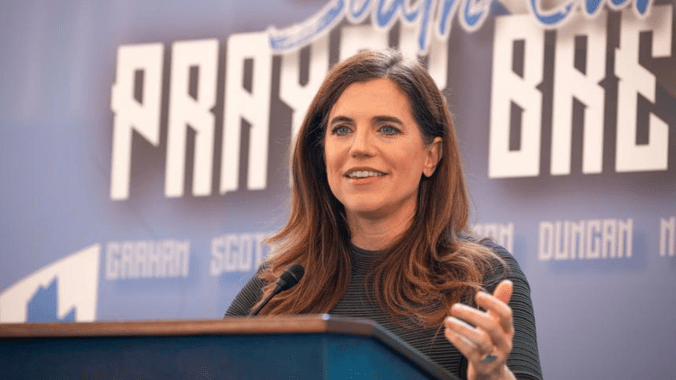
Outspoken freshman Congresswoman Nancy Mace, (R-SC), decided to throw away her prepared remarks and riff at the beginning of her speech at fellow South Carolinian Sen. Tim Scott’s prayer breakfast last week. That was her first mistake.

“When I woke up this morning at 7, I was getting picked up at 7:45, Patrick, my fiance, tried to pull me by my waist over this morning in bed. And I was like, ‘No, baby, we don’t got time for that this morning,'” Mace began. “I gotta get to the prayer breakfast, and I gotta be on time.”

Yes, there’s nothing better to warm up the crowd at a prayer breakfast like a pre-marital sex joke!

Seriously, how hard is it to avoid making comments about sex at a prayer breakfast? She probably embarrassed Sen. Scott thoroughly, who was metaphorically batting second behind the nookie narrative in her remarks as she praised him profusely. Scott is running for President, however futilely, and doesn’t need any silly but completely avoidable controversies. Mace also probably made Seacoast Church Pastor Greg Surratt a little uncomfortable, who had honored both her and Scott as a part of his congregation.

Continue reading

An Ethics Puzzle From “The Affair”…

This would normally be an item in a Warm-Up or the equivalent, but I haven’t had time for them lately, so I’m going to let the issue fly solo.

In “The Affair,” the protagonist’s best friend assesses the problems that have befallen him as the result of said affair, and offers him $50,000. The adulterous husband (his wife and the friend has been an inseparable threesome in college) protests, but the friend, who is rich and just became richer (he’s a hedge fund whiz), insists. He has the money, and he won’t miss it, and what are friends for?

A couple years later, the protagonist, who has a best selling second novel and is suddenly rolling in money, fame and opportunities, has an argument with his old friend and benefactor at a party. The freind, insulted at his treatment, says, “You seem to forget you that I gave you $50,000!” He adds, “And you never paid me back!” The author protests, “That was a gift!” His friend responds, “Yeah, well you have the money to pay me back now!”

Thoughts:

Continue reading

“The Affair”

I’m recommending the Showtime series “The Affair,” now streaming its five seasons (the show ran in 53 episodes from 2014-2019), as a challenging and perceptive ethics show. Covering, as you might guess, a sexual and romantic affair involving two couples and their extended family, and the chaotic consequences the illicit relationship triggers, the “The Affair” reaches into relationship ethics, friendship ethics, marital ethics, parenting ethics, community ethics, legal ethics, academic ethics and artistic ethics, and probably more: I’m finally watching the whole thing after seeing the third and fourth seasons a few years ago. Wrapped up in those larger categories are questions involving honesty, loyalty, conflicts of interest, empathy, and abuse of power.

The one irritant in “The Affair” is the scarcity of genuinely ethical or admirable characters. The closest is probably the primary victim of the affair, the adulterous writer’s wife, played by Maura Tierney (of “ER” fame). One aspect of the show that will benefit many is how awful so many of the parents portrayed in the show are: if you question your parenting abilities, “The Affair” will restore your confidence. (So far, my favorite moment was when a grown daughter finally orders her incredibly over-bearing, toxic and manipulative mother out of her home, saying, curtly, “I hate you.”

Continue reading

“Nah, Colleges Don’t Indoctrinate Students! It’s A Conspiracy Theory!” Brown Replies, “Hold My Beer!”

The Washington Examiner reports that 40% of Brown students now identify as LGTBQ+. The Brown Daily Herald’s 2023 Spring survey revealed that 38% of students, more than five times the national rate, no longer consider themselves “cis.” The gay and lesbian population has increased by 26% and the percentage of students identifying as bisexual has increased by…wait for it!232%. Just eleven years ago, in 2010, only 4% of Brown University students said they were not conventionally heterosexual. Now it’s 38%.

Commenting on this phenomenon at the Victory Girls blog, Lisa Carr writes in part,

The new “cool kids” now are changing their names every other day, along with changing their identities to anything contrary to their biological sex. Joe becomes Joelene who is dating Mary who wants to be known as “Mike”. Mary is nominated for Homecoming King while Joe is the Homecoming Queen; both in their gender-fluid and ambiguous outfits. And yes, they are probably still wearing those filthy, ugly masks because society told them to stay scared. (But alas, don’t be scared to cut off your genitalia.) This is the new cult. This is the trend we are seeing in colleges but I would argue that this seed is being planted as early as elementary school….This is no longer about loving and accepting all. This is about subtle conversion by suggestion.

Apparently a Brown professor, Dr. Lisa Littman, argued that campus culture and peer groups were pressuring students into such epiphanies regarding their true sexual identities, and got herself fired for it. Continue reading

Observations On Washington Nationals “Pride Night”

That’s a photo from last night’s Pride celebration at Nationals Park in Washington, D.C., as Nancy Pelosi threw the ceremonial first pitch. Many conservative wags are enjoying themselves, like “Not the Bee,” which mocked, “The Washington National’s baseball team hosted a Pride Night …of course, they had some buffoonish drag queen show up to toss the first pitch. Oh, wait- I’m being told it’s Nancy Pelosi…Fives of people applauded wildly…”

Observations:

Continue reading

Signature Significance And The Julie Principle Confront “The Ethicist”

Kwame Anthony Appiah, “The Ethicist” of the New York Times Magazine, doesn’t read Ethics Alarms so he isn’t conversant in two core EA concepts: signature significance, the fact that a single example of conduct can be enough to make a definitive judgment about an individual’s unethical nature, and The Julie Principle, which holds that once you recognize an individual’s flaws, you can accept them and continue the relationship, or use them to decide the individual is too flawed to tolerate, but it is pointless to keep complaining about them.A question from a disillusioned wife this week raised both, and “The Ethicist” acquitted himself well without directly acknowledging either.

“Theresa” revealed that her husband had tossed a banana peel out the passenger’s side window while she was driving on a highway. She protested, emphasizing her objection to littering and his setting a bad example for their 13-year-old in the back seat. He rationalized that the banana peel would “biodegrade”, and as if that wasn’t lame enough, defaulted to “I’m an adult, so I’ll do as I want.” After the incident, “Theresa” showed him an article about the dangers of throwing garbage on the street, plus a copy of the Massachusetts law declaring his conduct illegal. Her husband responded with, “Don’t you have anything better to do with your time?”

“He refuses to acknowledge that he made a mistake or change his behavior,” “The Ethicist’s” inquirer wrote, adding that the deadlock on the issue is making her question her marriage.

At the outset, I have to agree that the episode might make me question the character of someone I had just met—not merely question it, in fact, but perhaps make a confident diagnosis: this guy is an asshole, and the sequence is signature significance. The only feature of the story that possibly rescues it from being signature significance is that it can be broken down into components:

Continue reading