Gov. Mitch Daniels’ Self-Validating Decision

"My wife, may she always be right, but my wife right or wrong!"

“Simply put, I find myself caught between two duties. I love my country; I love my family more.”

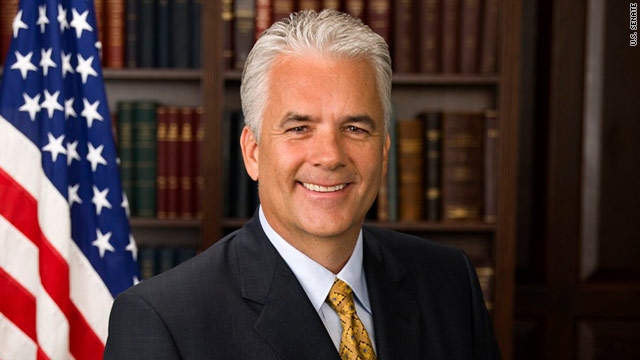
Thus did Indiana Governor Mitch Daniels remove himself from consideration for the 2012 GOP presidential nomination, breaking the hearts of Mitt Romney haters everywhere. Seldom have eighteen words launched so much ethical analysis, or what passes for it in the media.

Washington Post columnist Ruth Marcus, for example, applauded the Governor’s priorities while accusing Daniels of “throwing his wife under the bus.” Her point was that Daniels did not have to make it so crystal clear that his wife vetoed his own desire to run, that he should have simply said that he declined, and leave it at that. Indeed, that would have been chivalrous and kind. For a public servant and politician, however, it would also have been dishonest and wrong. Just as the public needs to know why a public figure is running for president (Gingrich: Because he’s deluded….Trump: Because its good for his TV ratings…), it needs to know why a public figure is not. Continue reading

Ethics Malpractice from “Dear Margo”: The Tale of Witchy, Tubby and Sue

"Well sure---his inner qualities are much more important to me now that he's so hot!"

I read a lot of advice columns, which often involve ethical issues and very often expose the ethical incompetence of the supposed experts who write them. Some advice columnists are ethically spot-on with regularity, like The Washington Post’s Carolyn Hax. Some, like the past and present”Ethicists” of the New York Times, are off-base almost as often as they are on. Then there are the advice mavins like “Margo,” in the Boston Globe. I don’t know how such people get to be advice columnists, but I suspect it either involves picking names out of a hat or the exchange of sexual favors. [Full disclosure: I give out personal ethics advice myself over at AllExperts.com, when a legitimate questioner can find me—ethics isn’t listed as one of the site’s topics—and when the question isn’t a thinly veiled homework question, which it usually is.]

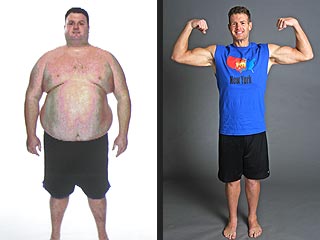
As an example of ethics malpractice, consider this question posed to Margo. “Sue” wrote that she had broken up with her ex-boyfriend over arguments about his weight and eating habits, which “grossed her out.” Eight months later, he’s fit and fabulous, and has a new girlfriend.  “I really would like him back because he’s hot and slim,” Sue writes, plaintively. “How can I step on his witchy new girlfriend so I can get him back?” Continue reading

The Freeland Community School District Law Suit: Just or Joke?

It’s time for another Ethics Quiz!

Freeland (Mich.) High School Marcie L. Rousseau has already been sentenced to prison for committing sex crimes with one of her students, but the matter is hardly over. The student’s lawyer says he is seeking at least $1 million in damages in a lawsuit  naming Rousseau, the Freeland Community School District, Freeland Superintendent Matthew A. Cairy, Freeland High School Principal Jonathan Good and former high school Assistant Principal J. Barry Weldon Jr. as defendants. The suit alleges negligence, and that the three administrators “neither completed a proper investigation nor reported the findings as they had a legal and ethical obligation to do,” despite having sufficient information to alert them that Rousseau was having sex with her student, who was 16 at the time.

This is pretty standard stuff. What is causing some skepticism and hilarity around news rooms, coffee machines and the Internet, however is this: the lawsuit  claims that the young man has suffered and continues to suffer “physical, psychological and emotional injury” because of the illicit relationship with Rousseau, which the law suit claims “was non-consensual”  and which, according to police reports, included at least 100 instances of sexual intercourse and at least 75 other sex acts between May 2009 and February of 2010.

Your question:

Is the law suit’s contention that the young man participated in various forms of sex with his teacher against his will inherently absurd and dishonest when it includes 175 sex acts in a nine month period? Continue reading

Ethics Quote of the Week: Washington Post Columnist Michael Gerson

“In determining who is a “major” candidate for president, let’s begin here. Those who support the legalization of heroin while mocking addicts are marginal. It is difficult to be a first-tier candidate while holding second-rate values.”

—-Washington Post columnist and former Bush advisor Michael Gerson, pronouncing presidential candidate Rep. Ron Paul’s Libertarian endorsement of drug legalization ethically unacceptable.

Gerson’s deconstruction of the all-too-common and increasingly ominous calls for legalizing addictive drugs nicely captures the trio of ethical flaws of the advocacy: it denies the crucial and legitimate government role defining responsible conduct for society, it embraces the myth that recreational drug use “does no harm,” and it is arrogant and selfish, condemning the poor and reckless to problems that their fragile resources cope with, in order to bestow a dubious “freedom” that the drug advocates do not need. Continue reading

Ethics Hero: Washington Post Columnist Carolyn Hax

I’m breaking some precedent here: I don’t usually pick Ethics Heroes based upon writing alone, and I don’t usually reprint long sections from someone else’s column. But relationship advice columnist Carolyn Hax has long displayed a brilliant feel for ethical analysis, and expresses it sharply and entertainingly to the great benefit of her readers. Good general readership ethical analysis is all too rare, and she deserves accolades.

Today she provided as clear and as deft a lesson in how responsibility, honesty, fairness, bias and accountability work as I can imagine, while chiding a man who wants to rescue a younger woman from the relationship he didn’t have the guts to pursue herself. It shows her at her best, and is impeccable ethics as well. Brava!

Here is the inquiry and Hax’s response: Continue reading

Comment of the Day: “The Ethicists, Backing Judge Walker and Gay Marriage, At An Unacceptable Price”

The motion to vacate Judge Walker’s ruling on Proposition 8 has been filed, you can read it here. Since the original post, I have detected some cracks in the formerly near-united front of legal ethicists and journalists deriding Walker’s critics. Some of them are finally, grudgingly, admitting that the Judge might not have handled his potential conflict so well after all, and that the motion is not a frivolous, anti-gay outrage as they originally labelled it.  The most rickety of the rationalizations put forth on Walker’s behalf, advanced by some his most respected defenders, is that he had no obligation to reveal his own sexual orientation by disclosing his domestic arrangement because of its intimate and private nature. Yet the judge voluntarily disclosed it after his decision was in the books, raising a rebuttable presumption that his original silence was to avoid suggestions of conflict, not out of a desire for privacy.

First time commenter Jada adds her Comment of the Day to the discussion: Continue reading

The Ethicists, Backing Judge Walker and Gay Marriage, At An Unacceptable Price

"Oh, all right...as long as we like the decision."

Thanks to the Judge Walker controversy, now have proof that the best legal ethicists in the nation are human. I suppose that’s something.

My colleagues in the legal ethics field are arguing—decreeing, really— that Judge Vaughn Walker’s decade-long same-sex relationship didn’t need to be disclosed before he ruled against Proposition 8 (California’s voter-approved gay marriage ban) because, they say, it created no reasonable doubts about his impartiality. Coincidentally, they also really, really like his decision. But then, so do I. Continue reading

Fake Pregnancy, Real Deception, Real Harm

"How exciting! It's fake, isn't it?"

Gaby Rodriguez, a Yakima (Washington) High School senior, faked a pregnancy for six months as a school-approved senior project. She told no one about the charade, which the school has called a “social experiment,” except her mother, boyfriend and principal. Others, like her siblings, her boyfriend’s family, fellow students, friends and teachers, were led to believe the pregnancy was real.

Thanks to hidden camera shows like ABC’s “What Would You Do?” and various reality shows, too many people have the impression that everyone they meet is a potential guinea pig. On the contrary: using decent, disguise, deception and lies to “see how people react” is no better than lying for any other reason, and often more harmful. Continue reading

Unethical Quote of the Week: Sen. John Ensign

While I stand behind my firm belief that I have not violated any law, rule, or standard of conduct of the Senate, and I have fought to prove this publicly, I will not continue to subject my family, my constituents, or the Senate to any further rounds of investigation, depositions, drawn out proceedings, or especially public hearings.”

Sen. John Ensign (R-Nev.), announcing his resignation from the U.S. Senate about two years late. Ensign’s continuing service in the upper chamber has been a continuing embarrassment thanks to a 2009 sex scandal and sordid cover-up attempt. Interestingly, Ensign maintains that such conduct doesn’t violate any “standard of conduct” for him and his colleagues.

Sadly, perhaps he’s right.

“I didn’t violate any laws or rules” has been Ensign’s mantra since it came to light that he: Continue reading

My Mother’s Funeral and the Kindness of Strangers

Few things are sadder than a long life commemorated by a sparsely attended funeral. The sadness is based more on illusion than reality, I know: the best way to ensure a good crowd at your funeral is to die young. Still, no son or daughter wants to deliver a eulogy to an empty chapel, even if the attendance figures at a love one’s funeral often say little about the richness of the life being remembered.

Most of the mourners at my mother’s funeral yesterday afternoon at Arlington National Cemetery barely knew her. Many had never met her; I doubt that she would have been able to name half of them if she had encountered them on the street. Yet they came, in the middle of a workday, to make sure that my mother’s family, including my sister and me, did not have to endure the sadness of the empty chapel. It was an amazing group. Among those whose connection to my mother was solely that they knew me, there were several whom I had not seen or spoken with in years, and others whose presence immediately made me feel guilty for being out of touch with them for too long. There were colleagues from jobs I had left long ago, and old friends who had, through the relentless roadblocks that family, work and assorted crises and priorities of living, had receded into names on a Facebook list. A former fiancee…a cast member of a show I had directed long ago. They were all expending time, their most precious resource, to be kind.

I’ve been going to a lot of funerals lately, something I once avoided with a passion. I’m going to start going to a lot more, and not merely just because, to paraphrase a line from the last Indiana Jones movie, I’ve reached the time when life stops giving you things and starts taking them away. As Yogi Berra reputedly said, “You should always go to other people’s funerals, otherwise, they won’t come to yours.” I appreciate the joke, but I’m pretty sure what Yogi was talking about was The Golden Rule.