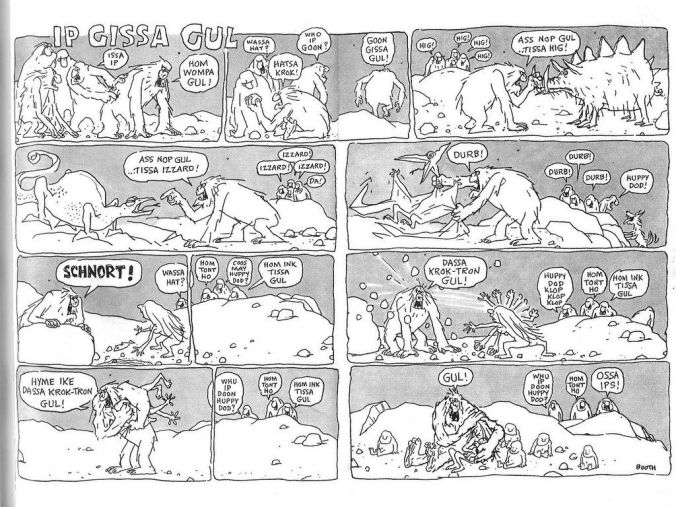
The New Yorker cartoon above, by the magazine’s iconic cartoonist George Booth, first ran in 1975. I remember finding it strange then. I just ran across it again, and it seems ripe for an Ethics Alarms poll.
The New Yorker cartoon above, by the magazine’s iconic cartoonist George Booth, first ran in 1975. I remember finding it strange then. I just ran across it again, and it seems ripe for an Ethics Alarms poll.
1 . Boy, the Pope must hate the U.S. media. ‘Did you hear that four people say the President called our soldiers “losers”? It’s true! They really say that!’
Pope Francis called gossiping a “plague worse than COVID” and risks dividing the Catholic Church. The devil, he says, is the “biggest gossiper.” who is seeking to divide the church with his lies.
Francis was discussing a Gospel passage about the need to correct others privately when they do something wrong. The Catholic hierarchy calls this the “fraternal correction” of priests and bishops to correct them when they err without airing problems in public. You know; like when they sexually abuse children. “Gossip” apparently means “talking about things the Church is trying to cover-up.”
Got it, Your Holiness!
2. Proposition: It’s unethical to buy your dog’s food at the Dollar Store. Sunshine Mills Inc., an Alabama-based pet food company, issued a recall of its dog food this week due to the levels of Aflatoxin, a toxic mold by-product with the potential of making dogs sick, according to a Food and Drug Administration news release. The products recalled are FAMILY PET Meaty Cuts, Beef Chicken & Cheese Flavors; HEARTLAND FARMS Grilled Favorites Beef Chicken & Cheese Flavor; and HAPPY LIFE Butcher’s Choice Dog Food. All are sold exclusively at Dollar General and Family Dollar stores.
I wonder if they sell baby food? Continue reading

I filled in a gap in my history knowledge today, one I’m embarrassed to have had for so long. I remember being creeped out the first time I heard John Hinckley crooning the song he dedicated to Jodie Foster on her answering machine at Yale. “Ohhh Jodie! Ohhh Jodie! My love will turn you on!” All these years, I thought Hinckley had composed that song in his sick infatuation. Today, almost 40 years later, I found out that he just ripped off a John Lennon song called “Oh Yoko,” which I heard for the first time on the Beatles Channel on Sirius-XM. Am I the only one who didn’t know that? My ignorance is my fault: I would no more listen to anything extolling Yoko than I would voluntarily groove on “William Shatner’s Greatest Hits.”
And what was it about Beatles compositions that inspired aspiring killers?
1. Yes, this seems rather irresponsible...Here’s a trailer for an upcoming Netflix series:
Over at The American Conservative, columnist Rod Dreher is disgusted, with good reason. He writes in part,
“Twerking their way to stardom. Eleven years old….These are little girls, and this Netflix show has the acting like strippers as a way of finding their way to liberation. What is wrong with these Netflix people? Do they not have children? Do they think our daughters are only valuable insofar as they can cosplay as sluts who are sexually available to men? ….There is nothing politicians can do about this…I hope sometime this fall a Senate committee calls Netflix CEO Reed Hastings] to Capitol Hill and forces him to talk about how proud he is that he has 11 year olds twerking on his degenerate network.”
Extreme, unrealistic, impractical advice from health “experts” is not useful nor effective, and because it undermines trust in such experts (not that there has been any shortage of statements that do that), it is irresponsible and unethical.
The University of Georgia has told students that they really should wear masks while having sex. Heavy breathing and panting can further spread the virus, after all.
“You are your safest sex partner. Practice solo sex, or limit the number of sexual partners you have,” says the University of Georgia’s recommendations. Continue reading
Yes, it’s time again for Gene, Debbie and Donald to begin the day with the level of enthusiasm that I wish I could muster. A Jack Russell Terrier would also help.
1. “Nah, there’s no news media bias!”The New York Times costs the Marshalls $80 a week. The last two editions were essentially anti-Trump campaign brochures, front to back. Even the sports sections had gratuitous anti-Trump vibes. The Washington Post is worse than the Times, but it’s much cheaper, being a home town paper. Nonetheless, I feel badly enough paying Jeff Bezos for digital access. At least the Times didn’t smear Catholic school boys because an established Native American propagandist told them to.
Yet these are, really and truly, the best newspapers in the country. Think about that. One close relative of the hard-left persuasion subscribes to no papers, and the holes in her basic knowledge of what’s happening would fill the Albert’s Hall. (She relies on MSNBC.)
Newspapers… can’t live without them, can’t have a functioning democracy any more with them. And progressives still tell me to my face that I’m imagining it: the claim that the news media is partisan and biased is a “conservative conspiracy theory.”
2. Fact check! I saw this “fact check” of Barr’s testimony two days ago in my Times today, knew what was coming, decided I didn’t feel well enough to have my temperature raised, and then commenter Dr. Emilio Lizardo was cruel enough to send me a link and a precis.
As with so much of the news media’s fake news and biased analysis, I’d assume that savvy readers can smell the stennch of these things, but maybe not. The good doctor writes,
“This is misleading” – 4 occurrences
“This is exaggerated” – 2 occurrences
“This is false” – 1 occurrence
“This lacks evidence” – 1 occurrenceNothing like using subjective terminology to demonstrate your objectivity.
Here was my favorite:
What Mr. Barr SAID: “According to statistics compiled by The Washington Post, the number of unarmed Black men killed by police so far this year is eight. The number of unarmed white men killed by police over the same time period is 11. And the overall numbers of police shootings has been decreasing.”
This is misleading. Mr. Barr accurately cited a database of police shootings compiled by The Washington Post. But the raw numbers obscure the pronounced racial disparity in such shootings. (The statement was also an echo of Mr. Trump’s technically accurate, but misleading claim that “more white” Americans are killed by the police than Black Americans.When factoring in population size, Black Americans are killed by the police at more than twice the rate as white Americans, according to the database. Research has also shown that in the United States, on average, the probability of being shot by a police officer for someone who is Black and unarmed is higher than for someone who is white and armed.Nationwide, the number of police shootings has remained steady since independent researchers began tracking them — declining in major cities, but increasing in suburbs and rural areas.When Representative Cedric L. Richmond, Democrat of Louisiana, took issue with Mr. Barr’s presentation of the data, Mr. Barr responded, “You have to adjust it by, you know, the race of the criminal.” But some research has shown that even when controlling for the demographics of those arrested, there are still racial disparities in the use of police force.
In other words, “misleading” means “contrary to the narrative Democrats and activists want to push.” Got it. Continue reading
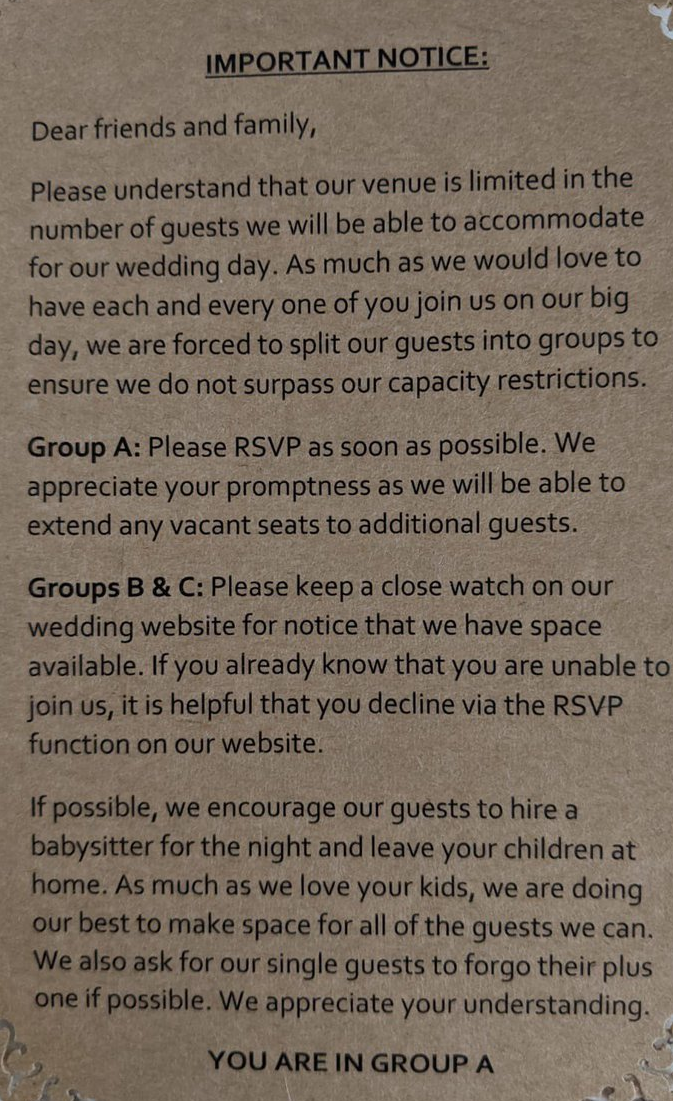
Yes, that’s a real wedding invitation that has “gone viral” on social media.
Your Ethics Alarms Ethics Quiz of the Day is…
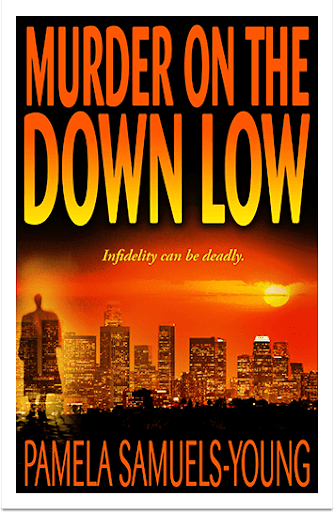
In an essay in The Body, an HIV-AIDS community website, Abdul-Aliy A Muhammad argues that it is unethical and exploitive for writers to use the disease as a plot point in TV shows and movies. His argument is pitched at black writers particularly. (In case you are not familiar with the term he uses, the “down low” refers to apparently heterosexual black men who secretly have sex with males.) He argues in part,
Last week’s episode of the popular show on the Oprah Winfrey Network (OWN), Greenleaf, provided a storyline that’s become all too familiar—the disclosure of HIV status as a spicy and scandalous plot twist.
…During this season, at the end of episode three, a shocking reveal happens: AJ was raped in prison, and the person who raped him transmitted HIV to him. AJ is now suffering from HIV disease and finally tells Grace. That’s how the episode ends. As an HIV-positive Black person, my heart sank, because again, the failure to hold any nuance with HIV emerged, 16 years after the “down low” and HIV plot twists of the early 2000s. It’s as if we’re frozen in time.
… I want to say this to the writers and producers of Greenleaf, and other Black creatives: HIV is not a plot twist device. HIV is not a caricature, and HIV is not predatory. Yes, there are the very real stories of people contracting HIV after being raped, and yes, there are some people who are not fully open to their partners and who may have transmitted HIV. But the narrative of HIV as a hidden monster and prison rape are not what drive the epidemic in Black communities.
…[T]here have been many harmful representations of HIV stories in the media. Let’s start with Tyler Perry’s 2010 film…For Colored Girls Who Have Considered Suicide / When the Rainbow is Enuf. In his film adaptation, Janet Jackson’s character, “Lady in Red,” is married to a man named Carl Bradmore…His character is struggling with sexual desire and can be seen cruising for other men in the film, and ultimately there is a scene where oral sex is performed in a car. Hardwick’s character Carl Bradmore is in a BMW under a bridge and gets head from another Black man.
…Throughout the film, Lady in Red has a scarf tied around her neck, and toward the end, the scarf is red. She coughs frequently and drinks tea, ostensibly to soothe her throat. The drama erupts toward the end of the film, when they are both sitting on a bed and not facing each other. She says something to the effect of, “You can keep your sorry and your HIV”—which is saved as a grand reveal, to provide shock and melodrama to the story. Shange’s original play includes no “down low” men, and it was written before HIV, so these aspects were specifically added by Perry.
I watched this film in shock…. My mother was a Tyler Perry fan; she thought his desire to (and practice of) giving leading roles to Black actors was something to celebrate. I on the other hand felt… here again is another media representation of the [down low] monster as a viral operative to drive the drama of the plot, and to both titillate and disgust. There is data that suggests that Black people aren’t doing anything behaviorally different than white people when it comes to intimacy or other vulnerable ways to become HIV positive. The difference in disproportionate infections comes from anti-Black racism that discourages trust of systems and incarcerates and criminalizes Black people. Our vulnerability is undergirded by the lack of infrastructures of care and the breakdown of food systems in the hood and in the rural South.
Until we truly consider the truth about HIV and not the easily propagated myths, we are doing more harm to our communities and aren’t standing in solidarity with HIV-positive Black people…. Isn’t it time for TV and film catch up and stop with the same tired use of HIV as plot twist or cautionary tale. Continue reading

, the New York Times Magazine’s ethics columnist, just opened a can of metaphorical worms, and I’m going to spread them around a little. It may get messy.
A woman—actually, now that I re-read the post, we don’t know it’s a woman— wrote to be reassured that he or she wasn’t a bad person for wanting to dump a man she had engaged in a nascent romantic relationship after discovering that he had Crohn’s Disease. “I know I’m being selfish, but is it unethical to not date him because of it?” she wrote. ” I don’t know what to do to support him, and I am worried about the future. He said it’s very likely his intestinal issues could get worse, and his life expectancy may be shorter. I want to shield myself from the pain, but I also feel like a terrible person for even thinking about it.”
Hey, don’t feel bad, sayeth “The Ethicist”:
“Once someone is truly a friend or a lover, you have all kinds of responsibilities to them that you didn’t have before. So for example, it would be deplorable to abandon a spouse because he or she has become seriously ill. That’s part of what’s meant by saying a marriage is to endure “in sickness and in health.” Of course, this can turn out to be a promise someone can’t keep. But precisely because a partnership is for the long term, you can appropriately consider what your lives together would be like before you enter into one. When a potential partner is already seriously ill, committing to this person may be committing to a life as a caregiver. (The specific condition you mention has a wide range of severity; it can be mild and well controlled or genuinely debilitating.) You don’t owe it to anyone to accept that burden; indeed, if you think you don’t want such a life, you have a good reason not to enter into the relationship. It doesn’t make you a terrible person to think about the issue. The terrible thing would be to make the commitment and then to be unable to keep it.”
Oddly for “The Ethicist,” he ducked the main question that was asked, and instead answered what he thought was an easier one. The questions he answered were ” Is it wrong to reject a commitment to someone because that commitment may be too burdensome?,” and “Is it wrong to think about the issue?” (It isn’t wrong to think about anything, regardless of what Black Lives Matter says. They should see what I think about them.)
What the inquirer was asking, however, is whether she should end a casual relationship—she had only known the guy through Zoom, after all—because he had Crone’s Disease, before she could form an attachment to him and might decide that he was worth the trouble…make that potential trouble.
I see no distinction between what she wants to do and invidious discrimination in any other relationship, like employment. Discrimination is when you treat someone worse than someone else because of who they are and features they have no control over, rather than what they do, have done, or “the content of their character.” It is also discrimination to make judgments about someone based on assumptions about people “like” them—profiling, essentially. “I don’t want to date him, even though I really like him, because he has a handicap” is, as I see it, indistinguishable from saying, “I don’t want to hire her because she has a handicap/ is likely to become pregnant/ is old/ is black.”
That’s discrimination, and that’s wrong. Continue reading
But thanks for an excuse to play the #2 most stupid psuedo-profound pop song of all time, #1 being, of course, “Imagine.” Take it away, Barry!
1. Mouse in the house. In the 30 years our home was patrolled by Jack Russell terriers, we virtually never saw a mouse (though Rugby literally wouldn’t hurt a fly). Lately, however, we have seen several, including a really, really cute one who is amazingly bold. This tiny mouse has big black eyes and little pink ears, with reddish brown fur. He also seems to like my wife, whom he crept up on the sofa to sit by repeatedly last night while she was napping. Ethically, we are at an impasse. I keep thinking about “Ben and Me,” the Disney cartoon about Ben Franklin’s apocryphal mouse pal, and my wife can’t bear the thought of killing her new fan. But we can’t have mice running around the house.
2. From the Ethics Alarms mail bag: Guess the rationalization! Steve Witherspoon aks what rationalization General Mattis’s fatuous statement, “We must not be distracted by a small number of lawbreakers,” from his attack on the President evokes. Several, in fact. It’s a clear #22. The Comparative Virtue Excuse: “There are worse things,” as well as the suddenly popular #64. Yoo’s Rationalization or “It isn’t what it is.” Riots in dozens of cities, arson, looting and attacks on over 100 police cannot be called “a small number of lawbreakers.” It’s also a neat #59. The Golden Rule Mutation, or “I’m all right with it!” As long as those “small number of lawbreakers” aren’t threatening Mattis or his family, he’s willing to accept what happens…to other people being victimized by rioters. Continue reading
“Hi hon!”
I haven’t seen this before.
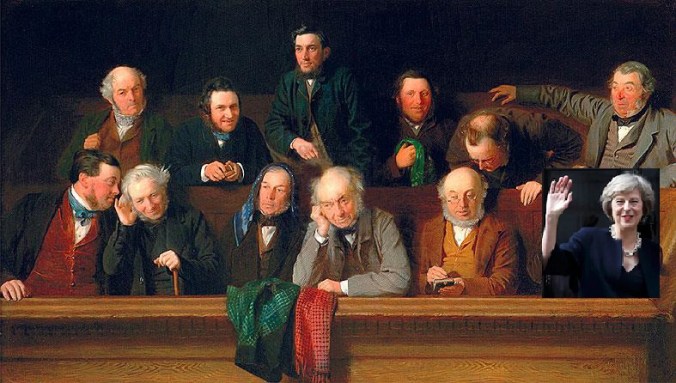
Judge Thomas Ensor of Adams County, Colorado, now retired, sat back and allowed his wife to be empaneled on the jury trying Gary Val Richardson for allegedly firing one or two shots in the direction of police officers during a 2013 standoff.
The judge even thought the situation was funny. He joked during jury selection that lawyers should “be nice to Juror 25. My dinner is on the line.” After the jury was selected and sworn in, Ensor told the lawyers that he had never heard of a sitting judge having a spouse or family member on the jury. “There’s nothing wrong with it,” he said. “I think she’ll be a fine juror. I have not spoken to her about this case.”
One of my rules of thumb for avoiding legal ethics problems in trial is that if you’ve never heard of something being done before, there’s probably a good reason not to be the first to do it. Continue reading

