The Strange, Conflicted, Unethical Holiday We Call Columbus Day

"Yes, it seems like a catastrophe now, but some day creatures called human beings will celebrate this day..."

“Yes, it seems like a catastrophe now, but some day creatures called human beings will celebrate this moment…”

What are we celebrating on Columbus Day, and is it ethical to celebrate it?

When I was a child, I was taught that we were celebrating the life of Cristoforo Columbo, popularly known as Columbus, who was convinced, against the prevailing skeptics of the time, that the Earth was round rather than flat, and in the process of proving his thesis, made the United States of America possible by discovering the New World in 1492. Virtually none of what we were taught about Columbus was true,  so what we thought we were celebrating wasn’t really what we were celebrating. Columbus wasn’t alone in believing the world was round: by 1492, most educated people knew the flat Earth theory was dumb. He blundered into discovering the New World, and by introducing Spain into this rich, virgin and vulnerable territory, he subjected millions of people and generations of them to Spain’s destructive and venal approach to exploration, which was, in simple terms, loot without mercy. The Spanish were like locusts to the Americas; South and Central America are still paying the priced today. Surely we aren’t celebrating Columbus’s complicity in that. Continue reading

Scott Carpenter And Being Unfair To #2

scott-carpenter

Scott Carpenter died last week, at the age of 88. Did you notice? Did you even remember who Scott Carpenter was?

I remember who he was and what he did, but I didn’t know that he had died. The world stops when the actor who played Tony Soprano dies, but an aged American hero and explorer? The news media says “Meh.” If Carpenter was still famous or a celebrity at all, it was only in the vague, foggy sense that obscure rock artists from the 60’s and expired pop icons are famous. I think Tony Dow, Barbara Feldon and Mama Cass are about as familiar to today’s public as Scott Carpenter, if not more. I just asked my son, who is 18 and better schooled in history and culture than most of his contemporaries. He knew Mama Cass was a member of the Mamas and the Pappas. The rest? Crickets.

Yet Scott Carpenter was, unlike those people, important. He was  one of the original Mercury astronauts, and in 1961, he orbited the Earth. After he left NASA he became a different kind of explorer, challenging “inner space,” the ocean’s mysterious depths. He launched an undersea habitation called Sealab II, where he and three other men conducted experiments on how well humans  function in a high-pressure undersea conditions for extended periods. Carpenter was a deep-water pioneer, mining on the sea bottom and harvesting exotic fish and other sea creatures. He salvaged and refloated a sunken jet fighter; he built an undersea petroleum-exploration platform.

Scott Carpenter, however, wasn’t famous by the time he died, because one of his fellow astronauts and good friends, John Glenn, orbited the Earth before him. Glenn went on to become a U.S. Senator based on his fame and heroic reputation (it helped that he was a combat pilot and decorated military hero as well). Carpenter did something important, dangerous, selfless, difficult and heroic, but he did it second, after John Glenn. We don’t remember second, and the distance between the accolades and honors heaped on #1 and the shrugs that follow #2 is disproportionate and unfair. Continue reading

Comment of The Day…And An Ethics Quiz, Too! : “Ethics Quiz: The United Airlines Give-Away”

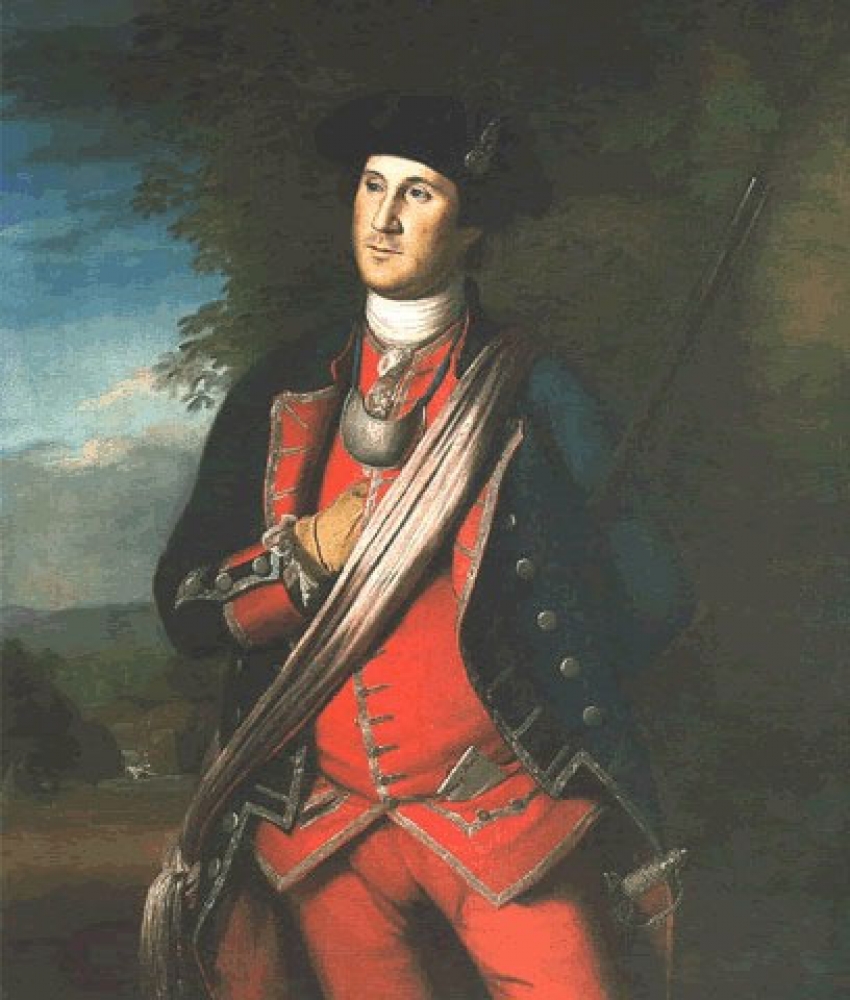
"Oh, this piece of junk? Yeah, who knows who its supposed to be---some guy named Veal or Beale or something painted it, I think. It's been in the attic. Make me an offer!"

“Oh, this piece of junk? Yeah, who knows who it’s supposed to be—some guy named Veal or Beale or something painted it, I think. It’s been in the attic. Make me an offer!”

The Ethics Quiz regarding whether or not it was unethical to take full advantage of United Airlines’  accidental fire sale on tickets spawned several good hypotheticals, including this one, from Tyrone T., an occasional Ethics Alarms commenter who, I happen to know, thinks about these matters as his occupation. I know the answer to this one (I’ve seen it before), so I’ll hold off until you’ve thought about it a while.

Here is Tyrone T.’s Comment of the Day on the post “Ethics Quiz: The United Airlines Give-Away”:

“So, if you are hired by your client to find the cheapest fare, can you act ethically and refuse to take advantage of the error? Consider the following:

“Alexander Mundy is a lawyer and an acknowledged expert in American painting. He has several clients who regularly retain him to negotiate the purchase of museum quality art. Recently, a client hired Mundy to negotiate the purchase of a portrait of George Washington as a young man.

“The client explained, ‘I saw it on a house tour five years ago and tried to buy it then, but the woman who owned it said it was a family heirloom and wasn’t interested in selling. I heard that she died recently and her husband is having an Estate Sale. You have authority to purchase the painting for up to $500,000.’

“Mundy goes to visit the old widower and asks whether he would be willing to sell ‘that picture of the young man there.’ Continue reading

Ethics Quiz: The United Airlines Give-Away

"Hey everybody! Free fights!!!"

“Hey everybody! Free fights!!!”

Via Forbes:

“For fifteen tense minutes on Thursday afternoon, United Airlines’ fare booking engine was operating at full steam. Someone, likely a Flyertalk user, noticed that fares between Washington DC and Minneapolis were pricing at $10 and posted his finding onto the forum. Attention grew rapidly, with over 100 replies in just an hour, and the news spread to Twitter. The glitch in the system appeared to offer $0 fares plus $5 in tax for many domestic flights, and was apparently caused by human error. Some forum readers reported finding $10 flights between Washington DC and Hawaii, while others scooped up over a dozen tickets to destinations all over the country.”

Your Ethics Alarms Ethics Quiz of the Week,

(as if you couldn’t guess), is:

Was it ethical for people to take advantage of this computer glitch and purchase tickets at an impossible discount?

I bet you also know what my answer is. Continue reading

No, Mary, A Cure For Down Syndrome Isn’t Wrong, But Infecting Readers With Your Warped Ethical Reasoning Is

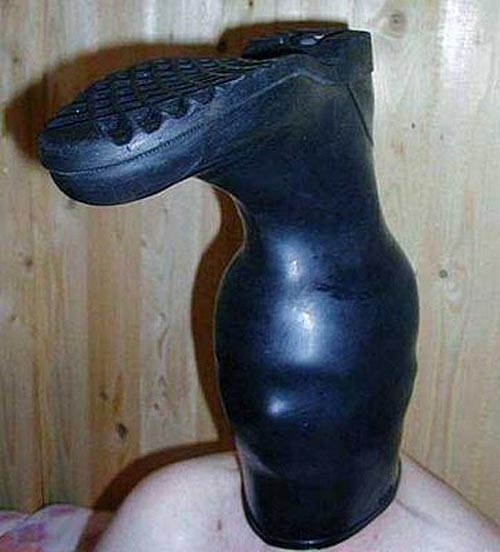
Let me know when Mary's gone and it safe to take my boot off.

Let me know when Mary’s gone and it’s safe to take the boot off.

The internet can carry the contagion of horrible reasoning with astounding speed, especially since so many of us have been slow to accept that being published no longer creates any likelihood that a writer has a coherent thought worth reading. Even knowing this, I was still taken aback by the startling ethics illiteracy on display in blogger Mary Fischer’s post  titled “Possible ‘Cure’ for Down Syndrome Seems So Wrong.” This is the kind of undisciplined, emotion-driven, bias and rationalization besotted thinking about life issues that Ethics Alarms was launched to combat, and yet reading Fischer’s sloppy substitute for thought, I still found myself wondering: How does someone get this way? How do they function in life if their method of determining right from wrong reaches conclusions like this? How many people read posts so devoid of anything resembling legitimate ethical analysis and  allow it to become part of their belief system?

I’m not even sure that I want to know the answers to these questions. Continue reading

Thanks, Lenddo, For A Brave, New…Crummy…World

I hate you, Jeff, and I hate your friends.

I hate you, Jeff, and I hate your friends.

Some ideas that brilliant young people have in the technology field should have remained unthought, and if thought, promptly rejected on the grounds that however clever and profitable, they will make the world a crummier place. This is one of those ideas:

From CNN Money we learn that Lenddo, a new financial lending companies (apparently none of the brilliant young people work in the marketing department—Lenddo???)  has figured out that one’s Facebook friends, and how friendly you are with them,  are a revealing indicator of your credit worthiness. If one of those FB friends is late paying back a loan to Lenddo, their data indicates that it means you are more of a credit risk than if that friend was right on time. Not only that, if the delinquent friend is someone you frequently interact with on the social network, it means you are even more likely to be a deadbeat.

“It turns out humans are really good at knowing who is trustworthy and reliable in their community,” happily crows Jeff Stewart, a co-founder and CEO of Lenddo. “What’s new is that we’re now able to measure through massive computing power.”  Fascinating, Jeff!

You suck. Continue reading

Al Gore, Hustler

Gore Hustler

Al, as he is portrayed by the climate change skeptic community. He has no one to blame but himself.

I have mixed feelings about Al Gore. On one hand, I have great compassion for the man, as one of two Presidential candidates in our history to win more popular votes than his adversary, still lose the Presidency, and fail to take the office in a subsequent attempt. I know that would make me angry, bitter and perhaps a little crazy, and in that respect, Al has handled his misfortune well.

On the other hand, I wouldn’t trust Al Gore to deliver a birthday card to John Edwards. Back when I was running a struggling national health care promotion and education non-profit, Senator Gore was the organization’s patron saint, giving us endorsements, opening doors to corporate contributors, and generally bolstering our efforts. I was warned, though, by one of his staffers, not to get too dependent on Gore’s passion. “The Senator likes to find the hot issue and lead it,” she told me. “But he’s been on health care for a while now, and if history is any measure, he’ll move on to something else soon. Don’t rely on his support.” Sure enough, Gore became the herald of “the information super-highway,” later known as the internet, shortly thereafter, and dropped my organization and the health promotion issue flat, without a warning or a good-bye. He just stopped answering our calls.

Gore finally found his perfect hot issue, literally in this case, as the front man for global warming. He has made millions from the issue and the notoriety it brought him, which is fine; he also greatly contributed to public awareness of the issue, which is a good thing: any public awareness of any real public policy issue is an improvement. On the minus side, Gore failed to follow through on his responsibilities and obligations as a spokesperson for climate change policies. He never educated himself on the science of climate change sufficiently to avoid making embarrassing gaffes, and he has continued to over-hype the topic, making apocalyptic pronouncements, treating projections and models as more conclusive than they are, making irresponsible and factually misleading statements,  and generally imitating the technique of the Bush Administration regarding Iraq’s “weapons of mass destruction.”

He was at it again this week, conclusively affirming that he has crossed the line from advocate to hustler. Continue reading

Exemplary Ethical Conduct I’m Embarrassed I Didn’t Know About Dept.: Jonas Salk and Albert Sabin

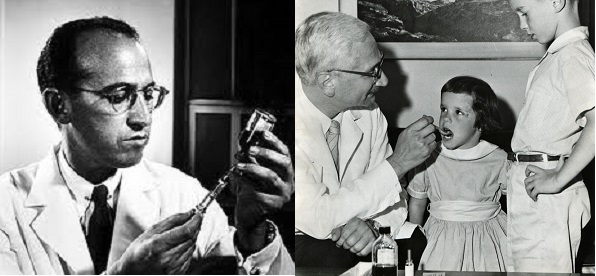
Salk and Sabin

Salk and Sabin, true professionals. Did you know?

You learn the damnedest things in the damnedest places, which is a good reason to keep your ears open wherever you may be.

Last night I found myself listening to Michael Savage, easily the most offensive of all conservative talk show hosts, and he gives Rush and Mark Levine a run for their money in the ego category, too. I only listen to Savage by accident, and then only in bites of five minutes or less; it frightens me that millions of people might be influenced by such consistently hateful commentary.

But Savage (whose real name is Michael Alan Weiner) is no dummy, and not infrequently goes off on learned tangents about philosophy, history or religion in between declaring that the nation is under Nazi rule. Yesterday, just as I was reaching for the dial, he disclosed that one of his heroes growing up was Jonas Salk, not because he invented the first effective polio vaccine, but because he refused to patent it, and gave it to the world for the benefit of humanity. A bit later, Savage noted that Albert Sabin, Salk’s bitter rival who later invented the oral vaccine, also declined to profit from his invention.

Could all this be true, I wondered?  If it is true, why did I not know about it? Why doesn’t everybody know about it? Continue reading

Culture, Truthteller Ethics, And Richard Dawkins’ Tweet

What can a leading intellectual say of value in 140 characters?

What can a leading intellectual say of value in 140 characters?

Philosopher/biologist Richard Dawkins, best known as the world’s most formidable atheist, does not shy away from rustling the feathers of some pretty fierce birds. Recently he even infuriated many of his admirers by tweeting, “All the world’s Muslims have fewer Nobel Prizes than Trinity College, Cambridge. They did great things in the Middle Ages, though.” He was immediately called an anti-Muslim bigot by some, while others chose to challenge his assertion with false analogies. Making a strong statement worthy of a treatise in 140 characters is a tricky enterprise, and perhaps an unwise one, but the politically incorrect observation he was making was not about the Nobel Prize’s perfection as a measure of accomplishment, but rather about how the Muslim culture has strangled human progress, creativity and advancement for centuries. In this he is correct. Continue reading

Mind Control? My Alarm Is Ringing. Should It Be?

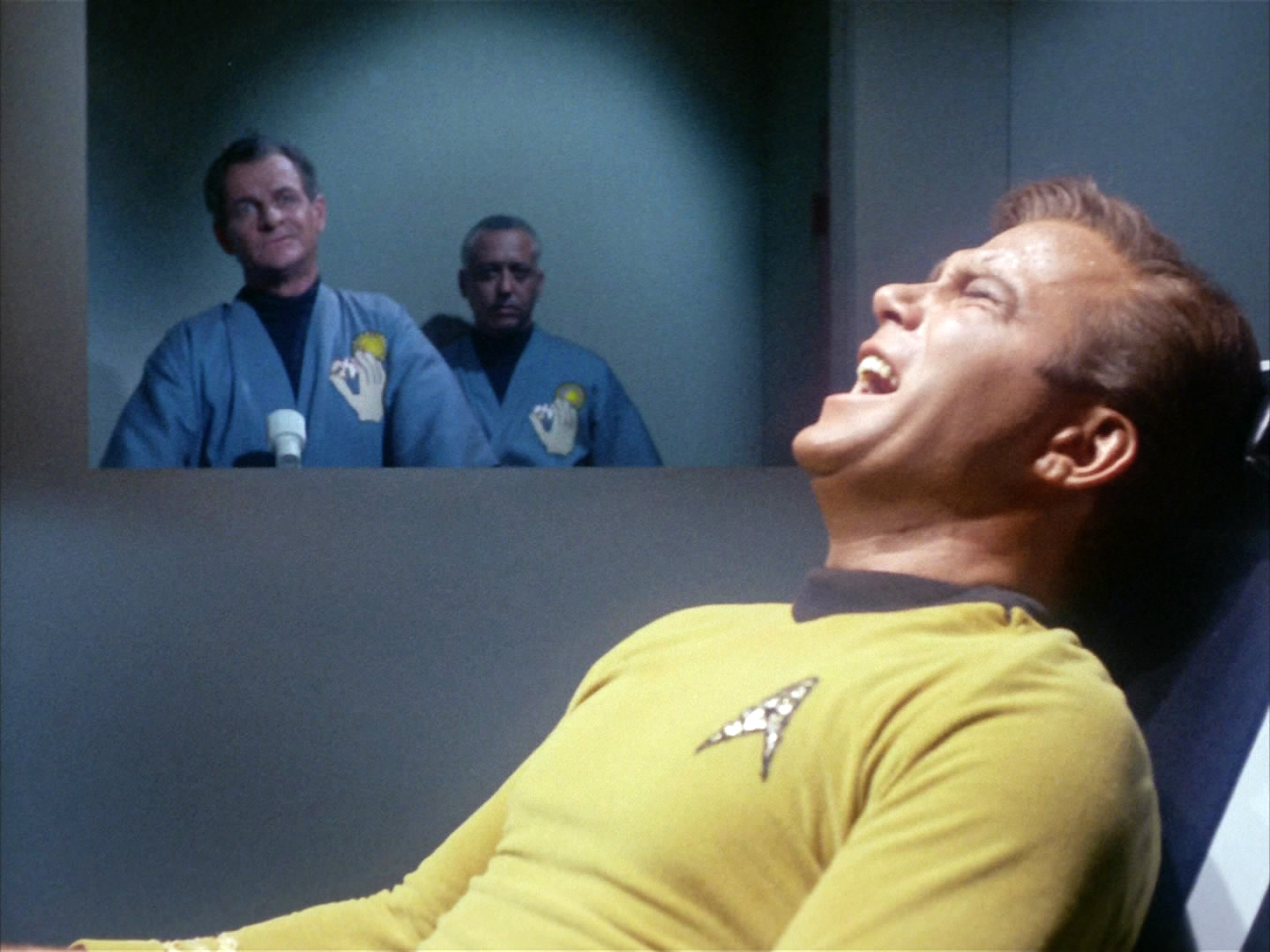
Kirk Mind

Harvard researchers are on the way to perfecting brain-to-brain interfaces, permitting a human to control the behavior and eventually instincts and emotions of other creatures with thought alone. Continue reading