Brief Note: The Hall of Fame Passes Its Integrity Test

Barry Bonds, baseball’s all-time steroid cheat and a blot on the record book, was once again decisively rejected for Hall of Fame membership, this time by a special Hall of Fame committee, the Contemporary Baseball Era Committee, assembled for the purpose of reconsidering eminent but previously rejected candidates who are otherwise noteworthy for one reason or another. There were 16 members on the panel with a 75% (12 of 16) vote threshold needed for induction at Cooperstown. Bonds didn’t come close with only five, and neither did the other two tainted greats, Roger Clemens, whose own trainer testified under oath that he used banned PEDs (performance-enhancing drugs), and Gary Sheffield, who takes the bizarre stance that he did use PEDs once but didn’t understand what he was doing and besides, they didn’t help him anyway.

When I finally saw the composition of the committee I was pretty confident that Barry and Roger (above) as well as Gary were toast, because seven current Hall members were among the 16 participants and I doubted that any of them want to sully their own honor by admitting cheats. There were also non-cheating almost Hall-worthy players on the ballot, and only Jeff Kent, probably the least famous of the batch, received sufficient votes to be enshrined. Kent hit more homers than any other second baseman baseball history and the main obstacle to his election appears to have been an obnoxious personality; I have no problem with his election. Now the Three Cheats won’t have a shot at polluting Cooperstown at least until 2031, and under current rules, if they don’t get at least 5 votes then, they will be permanently ineligible.

Continue reading

Employee Ethics and Professonalism: The Anthony Rendon Saga

The Los Angeles Angels (it’s a baseball team. Sheesh…) are in talks with long-time disappointment third baseman Anthony Rendon about buying out the final year of his contract. Rendon wants to retire, but doesn’t want to forfeit the final year, $38 million bucks of it in his seven-year, $245 million long-time contract that has become an albatross for the Angels and a bonanza for him. Rendon spent the entire 2025 season recovering from hip surgery, as was typical of his Angels tenure. He was paid all the same.

The 35-year-old has been limited to playing in only 205 of a potential 648 games since 2020, due to injuries to his left groin, left knee, left hamstring, left shin, left oblique, lower back, both wrists and both hips. He has never played as many as 60 games in any of the four 162 game seasons. When Rendon was able to play, he wasn’t very good. The Angels had made Rendon the game’s highest-paid third baseman in December 2019, whereupon he performed well in the pandemic-shortened 2020 MLB season (which I don’t think counts) and that was the end of his productivity.

Rendon has famously stated that he doesn’t really like baseball, he just happened to be good at it. It’s just a job to him, not a passionate pursuit that he cares about; he doesn’t care about the accolades or attention either. Did his lack of passion contribute to his failure to suit up and take the field because of all the injuries? Nobody can say.

Continue reading

BREAKING: Ethics Alarms Galore in New Lawsuit: Is The NFL Colluding Against Its Most Passionate Fans?

It sure looks like it.

The mainstream media is terrible at covering lawsuits, and this one is no exception. Attention should be paid, however. The allegations are serious, and particularly ominous for professional sports, which are all in a perilous state right now thanks to their greedy negligence allowing gambling to taint their credibility. The law suit, which has mountains of evidence to support it, alleges a conspiracy among Fanatics Inc., the National Football League and TikTok “to monopolize the sports memorabilia market, suppress competition, and destroy small business sellers.” The specific allegations are:

  1. Violation of Sherman Act §1 (Conspiracy in Restraint of Trade) 
  2. Violation of Sherman Act §2 (Monopolization / Attempted Monopolization) 
  3. Violation of Clayton Act §3 (Exclusive Dealing) 
  4. Violation of California Cartwright Act 
  5. Violation of California Unfair Competition Law (Bus. & Prof. Code §17200) 
  6. Tortious Interference with Contractual Relations 
  7. Tortious Interference with Prospective Economic Advantage 
  8. False Advertising and Unfair Competition (Lanham Act §43(a)) 
  9. Common Law Unfair Competition 
  10. Breach of Covenant of Good Faith & Fair Dealing 

The victims of the conspiracy are passionate NFL fans, collectors, and families who began lucrative businesss selling NFL souvenir items only to be threatened and blocked, costing them dearly.

If you aren’t a sports memorabilia collector, you may be unaware of the extent to which a company called Fanatics dominates the business. One reason for this is that the part of the memorabilia business at issue exploded in activity and profits fairly recently. During the stupid pandemic lockdown, small business entrepreneurs calling themselves “breakers” devised a new approach to sports memorabilia and collectables marketing by livestreaming so-called “box breaks” on TikTok, eBay and other platforms. The result was billions in secondary-market sales and thousands of everyday Americans profiting while retired professional athletes had income from participating in autograph signings and memorabilia events. 

All was well, and everyone profited, until 2021, when Fanatics, backed by equity funding from Silver Lake Technology Management and with the cooperation of the NFL and other sports leagues, decided to monopolize the collectibles and memorabilia industry. Fanatics acquired exclusive licensing rights from the major sports leagues and players’ associations, purchased the iconic trading card manufacturer Topps, and launched new brands such as Under Wraps. The scheme was to take the autograph and memorabilia markets away from independent dealers and breakers, fixing the profits while freezing the small business memorabilia traders out.

Continue reading

No Surprise: Prince Harry Is An Ethics Dunce, and Also an Idiot

On the superb Showtime series “Ray Donovan,” actor Dash Mihok played Ray’s sad, stupid, easily manipulated brother, “Bunchie.” I always thought self-exiled Prince Harry was disturbingly Bunchie-like in appearance and intellect, and he proved the latter resemblance spectacularly in recent weeks.

As I discussed in an earlier post, Prince Harry attended one of the World Series games in L.A. with he and his insufferable wife wearing blue-and-white Dodgers caps. Harry’s father, King Charles, is the official ruler of Canada, a part of the British Commonwealth, and given that the Dodgers’ opposition in baseball’s ultimate series was the Toronto Blue Jays, many Brits and Canadians were upset that a member of the royal family would publicly favor the American competitor over the Canadian one. Of course they were. Imagine the scandal if one of Trump’s sons ostentatiously cheered on a Russian athlete in the Olympics.

Continue reading

End of the Baseball Season Ethics Recap, 11/2/25, Part 1

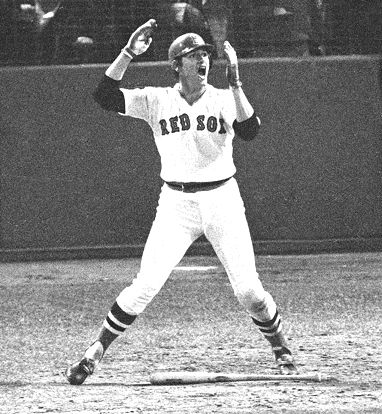
If you missed last night’s Game 7 of the epic World Series just completed, you have my sympathy; if you missed it, or the entire Series really, because baseball isn’t part of your life you have my pity. Let me quote here the late, great Roger Angell, baseball’s Bard, writing about the only better World Series I’ve ever watched, the 1975 edition where the Cincinnati Reds beat (barely) the Boston Red Sox, also in seven games. He was effusing specifically about Carlton Fisk’s famous home run in the 12th inning (I was there!) in his New Yorker essay “Agincourt and After”:

Carlton Fisk, leading off the bottom of the twelfth against Pat Darcy, the eighth Reds pitcher of the night—it was well into morning now, in fact—socked the second pitch up and out, farther and farther into the darkness above the lights, and when it came down at last, re-illuminated, it struck the topmost, innermost edge of the screen inside the yellow left-field foul pole and glanced sharply down and bounced on the grass: a fair ball, fair all the way. I was watching the ball, of course, so I missed what everyone on television saw—Fisk waving wildly, weaving and writhing and gyrating along the first-base line, as he wished the ball fair, forced it fair with his entire body. He circled the bases in triumph, in sudden company with several hundred fans, and jumped on home plate with both feet, and John Kiley, the Fenway Park organist, played Handel’s “Hallelujah Chorus,” fortissimo, and then followed with other appropriately exuberant classical selections, and for the second time that evening I suddenly remembered all my old absent and distant Sox-afflicted friends (and all the other Red Sox fans, all over New England), and I thought of them—in Brookline, Mass., and Brooklin, Maine; in Beverly Farms and Mashpee and Presque Isle and North Conway and Damariscotta; in Pomfret, Connecticut, and Pomfret, Vermont; in Wayland and Providence and Revere and Nashua, and in both the Concords and all four Manchesters; and in Raymond, New Hampshire (where Carlton Fisk lives), and Bellows Falls, Vermont (where Carlton Fisk was born), and I saw all of them dancing and shouting and kissing and leaping about like the fans at Fenway—jumping up and down in their bedrooms and kitchens and living rooms, and in bars and trailers, and even in some boats here and there, I suppose, and on backcountry roads (a lone driver getting the news over the radio and blowing his horn over and over, and finally pulling up and getting out and leaping up and down on the cold macadam, yelling into the night), and all of them, for once at least, utterly joyful and believing in that joy—alight with it.

…What I do know is that this belonging and caring is what our games are all about; this is what we come for. It is foolish and childish, on the face of it, to affiliate ourselves with anything so insignificant and patently contrived and commercially exploitative as a professional sports team, and the amused superiority and icy scorn that the non-fan directs at the sports nut (I know this look—I know it by heart) is understandable and almost unanswerable. Almost. What is left out of this calculation, it seems to me, is the business of caring—caring deeply and passionately, really caring—which is a capacity or an emotion that has almost gone out of our lives. And so it seems possible that we have come to a time when it no longer matters so much what the caring is about, how frail or foolish is the object of that concern, as long as the feeling itself can be saved. Naïveté—the infantile and ignoble joy that sends a grown man or woman to dancing and shouting with joy in the middle of the night over the haphazardous flight of a distant ball—seems a small price to pay for such a gift.”

Caring is an ethical value.

I’ll get to the other ethics news in Part 2…

Breaking Ethics News: There’s a Major NBA Gambling Scandal! (Gee, What a Surprise…)

(Of course, the obligatory…)

Here is the latest report, from the New York Times (gift link!).

Right now I don’t care about the details, which are just emerging. The point is that this was 100% inevitable as soon as the professional sports leagues got into metaphorical bed with the online gambling companies. Ethics Alarms has warned about this many times (here, for example). I couldn’t justify using the “I’m smart!” clip from “Godfather 2” (my usual “I told you so!” introduction) this time, though, because even Fredo would have seen this coming…especially in pro basketball.

Continue reading

Ethics Heroes: The Academy of Classical Christian Studies High School Girls Basketball Team (Oklahoma City)

It’s time for an encouraging ethics tale, and this is one.

(That’s Pandora above, viewing the last, and only benign, occupant of her famous box. Hope!)

The Academy of Classical Christian Studies high school girls basketball team in Oklahoma City won last season’s division championship game. A last second buzzer-beating basket against Apache High School did the job. But something didn’t feel right to Academy head coach Brendan King …perhaps the faint ping of an ethics alarm. He went home that night and watched the game tape.

“As soon as I walked out of the locker room, my stomach kind of turned into knots. And I said, ‘I’m going to need to know if we really won this game or not,'” King told reporters. Sure enough, when he checked the tape and tallied up the baskets, he discovered his team had actually lost. The true score should have been 43-42, with Apache High the victors and the winners of the Oklahoma Secondary School Activities Association girls basketball championship. Somehow 2 points had been mistakenly given to King’s team, making it the 43-42 winners.

League rules state that once a game is completed, it is in the books and the records can’t be changed.  King decided to tell his team the bad news anyway. The girls unanimously agreed what the right course was, and it was to appeal their own victory. In an unprecedented reversal, the league agreed, and King surrendered the championship plaque to Apache High.

Apache girls basketball head coach Amy Merriweather said that more than the championship, she and her team were grateful for the ethics lesson. “It showed us, you know, there are still good people in this world,” Merriweather said. “It’s something we’ll always remember.”

Indeed.

There is hope.

_____________________

Pointer: Jon

For Phillies Pitcher Orion Kirkering, In Compassion and Sympathy

The Philadelphia Phillies, who had the best record in the National league this season are desperate for a World Series championship. They last won it in 2008, and have only won a World Series twice since the team was founded in 1883. Last night the Phillies lost the deciding game of the NL Divisional Series to the Dodgers in a dramatic, extra inning contest (with no stupid “zombie runner” because MLB plats baseball the right way in the post season) on a disastrous final play that is destined to live in Philadelphia infamy.

The culprit was pitcher Orion Kirkering. With two outs and the potential Dodger winning run on third base in the 11th inning, he got the batter to hit a weak grounder back to him. First he fumbled the ball, recovered, and only had to throw to first base to get the third out and end the inning. But he saw the base runner from second running home, and inexplicably threw the ball to his catcher, or tried to. In his panic, he threw wildly. The run scored, the game was lost, and the Phillies season was over.

In baseball terms, Kirkering choked. When the game was on the line and professional athletes are supposed to rise to the occasion and be at their best, he was at his worst. A whole city blames him for the crushing loss: he is now Philadelphia’s Bill Buckner.

All I can do for Orion is to remind him of my father’s favorite poem, by Rudyard Kipling, which he told me gave him hope and solace as young, fatherless boy during the Depression, and later, when having to cope with his own tragedies, failures and perceived shortcomings. I think of it often, and read it again just two weeks ago.

The poem is, of course, “If.”

If you can keep your head when all about you

Are losing theirs, and blaming it on you,

If you can trust yourself when all men doubt you,

But make allowance for their doubting too;

If you can wait, and not be tired by waiting,

Or being lied about, don’t deal in lies,

Or being hated, don’t give way to hating,

And yet, don’t look too good, nor talk too wise:

If you can dream – and not make dreams your master;

If you can think – and not make thoughts your aim;

If you can meet with Triumph and Disaster

And treat those two imposters just the same;

If you can bear to hear the truth you’ve spoken

Twisted by knaves, to make a trap for fools,

Or watch the things you gave your life to, broken,

And stoop, and build ’em up, with worn-out tools:

If you can make one heap of all your winnings

And risk it on one turn of pitch-and-toss,

And lose, and start again at your beginnings

And never breathe a word about your loss;

If you can force your heart and nerve and sinew

To serve your turn, long after they are gone,

And so hold on when there is nothing in you

Except the Will which says to them: “Hold on!”

If you can talk with crowds and keep your virtue,

Or walk with Kings – nor lose the common touch,

If neither foes nor loving friends can hurt you,

If all men count with you, but none too much;

If you can fill the unforgiving minute

With sixty seconds’ worth of distance run,

Yours is the Earth and everything that’s in it,

And—which is more—

You’ll be a Man, my son!

Ethics Dunce: Ethics Villain, the National Football League

The headline raises an interesting question: can an ethics villain be an ethics dunce, since ethics villains by definition don’t care about ethics, so how can they be judged stupid for ignoring them? Ah well, a topic for another day. Ann Althouse would ask Grok to resolve the issue…if I ever start quoting AI here regularly, someone please come up behind me and bash in my head with a brick.

I’ve been putting off the National Football League announcing that its now iconic halftime show during the 2026 Super Bowl in Santa Clara will star Bad Bunny, a performer I was mercifully unaware of before the announcement. After all, I could write this post any time between now and February 9, 2026, the day after the national sports event that I will not watch again because the sport it involves is deadly.

Today, however, I am in a bad mood, so it’s time. The Super Bowl has evolved as cultural phenomenon that is one of the rare yearly American events that unifies the nation, families, races and commerce. It is supposed to be non-partisan, non-political, and G-rated so families can watch the game and its surrounding hoopla with their children. When Janet Jackson exposed a nipple during a halftime performance, you would have thought that she has performed a human sacrifice by the reaction in the news media.

But now it is 2025, the Great Stupid still stalks the land, Trump Derangement reigns in the corporate suites, and thus the National Football League, which happily pays its players to become brain-injured, has chosen as its star attraction during the Super Bowl half-time show…

Continue reading

Baseball, Ted Williams and Ethics Zugzwang

Baseball has an potential ethics problem involving baseball legend (and Red Sox icon)Ted Williams that I don’t think can be resolved.

Williams, or “Teddy Ballgame” as he liked to call himself (He also called himself “Ted Fucking Williams the Greatest Fucking Hitter Who Ever Lived”) is renowned as the Last of the Four-Hundred Hitters, Batting .406 in 1941. (He also lost the MVP vote that year to Joe DiMaggio because Joltin’ Joe hit in 56 straight games, a statistical anomaly.) That .406 average looks especially impressive in 2025, when only one player in the National League, Trea Turner, even managed to hit .300.

But just for fun, let’s imagine that Turner hit exactly .400. Ted Williams would no longer be the last of the .400 hitters, right? But there is a problem. When Ted hit .406, baseball counted sacrifice flies—when a batter makes an out with a fly ball that is deep enough that a runner on third base can tag up after the catch and score—like any other out. They counted against a player’s average. In 1953, though, baseball changed the rule so a “sac fly” didn’t count as an out. If Williams’ sac flies had been hit under the new (and current) rules, his average (he had 8 that year), would have been .413. If Turner were playing under the 1941 rules—-he hit 2 sac flies this season—those two outs would drop him below the .400 mark.

Continue reading