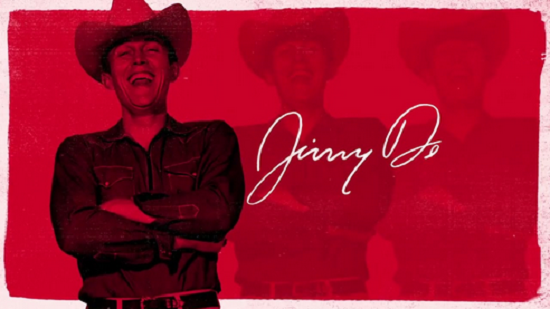
I decided to write about this insidious (but ethical?) phenomenon when I realized that the Jimmy Dean breakfast sausages TV ads are now using an AI-faked Jimmy Dean voice. For decades they only had one brief catch-line from the old ads when Jimmy was still alive (he died in 2010); we would hear the real Jimmy say, “Wake up to the goodness of Jimmy Dean sausages!” in various combinations. Now, AI Jimmy won’t shut up. (The new Jimmy doesn’t even sound quite right, in my opinion.)
NBC announced last week that veteran sportscaster Al Michaels will be doing recaps during the 2024 Paris Olympics. Well, not really Al; a fake Michaels generated by artificial intelligence will re-create the familiar sportscaster’s voice to provide customized Olympic recaps for Peacock subscribers. “Your Daily Olympic Recap on Peacock” will give users a customized highlight playlist, narrated by AI Al.
Al, who is well past his pull-date at 79 (though still younger than Joe Biden), apparently was happy to have AI Al take over for him, and especially happy to receive the check.
Your Ethics Alarms Ethics Quiz for July Fourth is…
Jennifer Sey, once a competitive gymnast on the U.S. Women’s Olympic team, has launched a new clothing line focused on the threat to women’s sports by the woke-driven incursion of “transitioned” or “transitioning” biological males.
Today I'm launching my own clothing brand. It's the only athletic brand to stand up for female athletes and the protection of women's sports.
Regular readers here know about both my passion for baseball and my disgust with how many games are determined by obviously wrong home plate calls on balls and strikes. Statistics purportedly show that umpires as a group are correct with their ball/strike edicts about 93% of the time, representing a significant improvement since electronic pitch-tracking was instituted in 2008. What explains the improvement? That’s simple: umpires started bearing down once they knew that their mistakes could be recorded and compiled. In 2008, strikes were called correctly about 84% of the time, which, as someone who has watched too many games to count, surprises me not at all.
Even 93% is unacceptable. It means that there is a wrong call once every 3.6 plate appearances, and any one of those mistakes could change the game’s outcome. Usually it’s impossible to tell when it has, because the missed call was part of a chaos-driven sequence diverging from the chain of events that may have flowed from the right call in ways that can’t possibly be determined after the fact. Sometimes it is obvious, as in several games I’ve seen this season. An umpire calls what was clearly strike three a ball, and the lucky batter hits a home run on the next pitch.
Before every game was televised with slo-mo technology and replays, this didn’t hurt the game or the perception of its integrity because there was no record of the mistakes. (Sometimes it wasn’t even a mistake: umpires would punish batters for complaining about their pitch-calling by deliberately declaring them out on strikes on pitches outside the strike zone.) Now, however, a missed strike call that determines a game is both infuriating and inexcusable. As with bad out calls on the bases and missed home run calls, the technology exists to fix the problem.
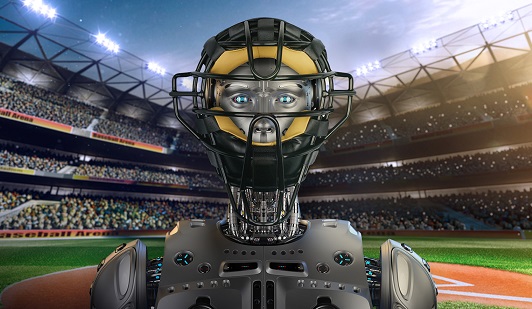
Baseball only installed a replay challenge system after the worst scenario for a missed call: a perfect game—no hits, runs or base-runners—was wiped out by a terrible safe call at first on what should have been the last out of the game. The game was on national TV; the missed call was indisputable. That clinched it, and a replay challenge system was quickly instituted. I long assumed that robo-umps would only be instituted after an obviously terrible strike call changed the course of a World Series or play-off game, embarrassing Major League Baseball. For once, the sport isn’t waiting for that horse to leave before fixing the barn door. It has been testing an automated balls and strikes system (ABS) in the minor leagues for several years now. Good. That means that some kind of automated ball and strike system is inevitable.
McIlroy blew two short par putts within three holes, the last on the 18th, as DeChambeau nailed a tricky shot to finish 6 under par and a single shot better than McIlroy, who had seemed poised to win his first major tournament in ten years with just three holes to go.
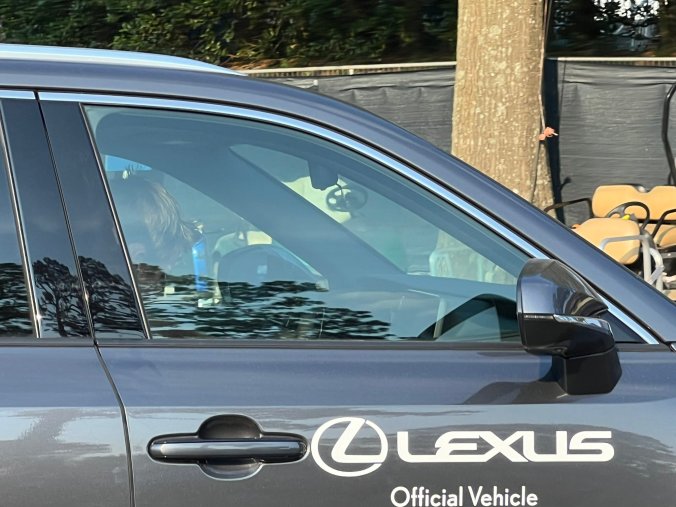
McIlroy disillusioned his fans with his reaction to what ABC Sports used to call “the agony of defeat.” He watched DeChambeau’s winning putt on TV in the scorer’s room, then quickly packed up and sped out the players’ parking lot in a courtesy SUV. He didn’t talk to reporters, who were frantic to hear how he managed to lose. He didn’t even stick around to congratulate DeChambeau on his stunning victory.
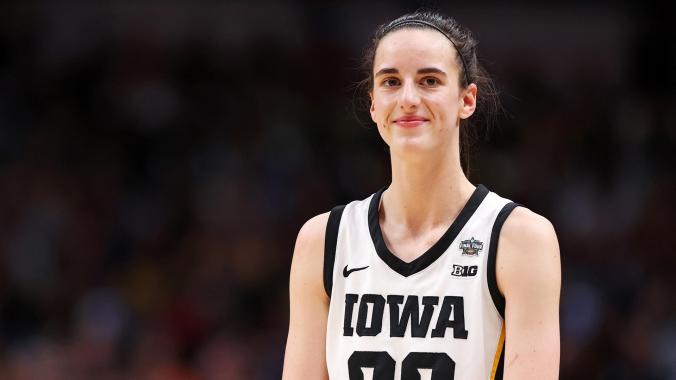
Over the weekend the announcement came out that Caitlin Clark was not on the roster for the USA women’s basketball Olympic team for the games in Paris. This seemed, and seems, strange to put it mildly. Clark, a rookie this season, is by far the most famous, publicized and popular professional women’s basketball player of all time, as well as the most important. Her stellar performance as a college player led her to be the obvious #1 first round draft pick in the WNBA draft, and her presence in Indiana Fever games has led to a significant spike in attendance, TV ratings and public interest. The Olympic Games are mostly publicity for the league and the sport: once professionals were permitted to play, the U.S. women’s team has been unbeatable for decades. It would win the gold if the Olympics team coach picked the names of the team member out of a hat. But having the league’s charismatic rookie play would guarantee more interest in the sport during the Paris Games this summer, which logically should translate into more attention—popularity, TV ratings, money—for the sport itself.
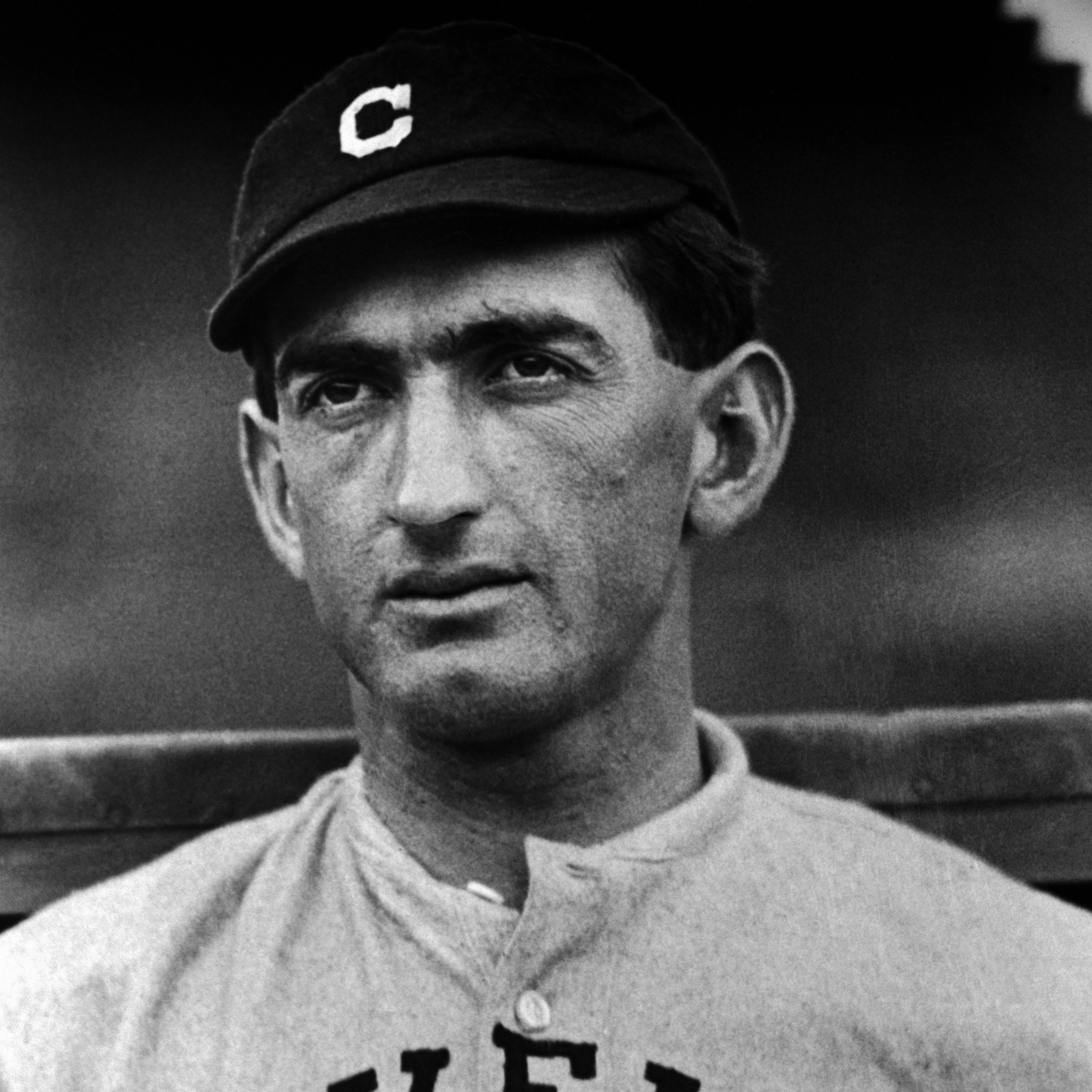
Major League Baseball, almost destroyed by a gambling scandal in 1919, with two of its greatest players, Shoeless Joe Jackson and Pete Rose (its all-time hit leader), banned from the game and exiled from the Hall of Fame for participating in baseball gambling (Jackson helped throw a World Series for gamblers; that’s him above. He was no Ray Liotta, was he?), is suddenly awash in new gambling scandals. How could this happen, you may ask? Easy. Once the Supreme Court opened the door to online gambling, all of the professional sports leaped into the money pit. Now online sports gambling outfits like DraftKings are the most ubiquitous sponsors of televised sports. In the middle of televised Red Sox games, the screen will show the odds on bets like “Will Rafael Devers hit a homerun?” David Ortiz, a lifetime Red Sox hero and icon, stars in commercials for DraftKings. The obvious message is that gambling on baseball is fun, virtuous, harmless, and…
For Major League Baseball, with its history, of all sports, to take this U-Turn was wildly irresponsible and perilous. How can the sport maintain the fan’s trust in the legitimacy of games played in an environment where billions are being wagered on them, openly and without any fear of corrupting the players?
Fay Vincent, the last real baseball commissioner (the first one was appointed because of the Black Sox scandal in 1919) told the Times, “The inevitability of corruption is triggered by the enormous amount of money that’s at stake. When you pour all this gambling money into baseball, or all the professional sports — or for that matter, even amateur sports — that amount of money is so staggering that eventually the players and I think, tragically, the umpires, the regulators, everybody is going to be tempted to see if they can get a million dollars.”
Vincent is an ethical man. The current “commissioner” (he’s the owners’ toady, just like Bud Selig, his predecessor), not so much. In a statement reacting to baseball this week banning one Major League Player for life for gambling on his own team and suspending four more for a year, Rob Manfred ludicrously said, “The strict enforcement of Major League Baseball’s rules and policies governing gambling conduct is a critical component of upholding our most important priority: protecting the integrity of our games for the fans. The longstanding prohibition against betting on Major League Baseball games by those in the sport has been a bedrock principle for over a century.”
Funny that after decades of no gambling scandals, baseball is suddenly drowning in them. What a coinkydink!
Major League Baseball’s absurd and self-wounding decision to lump all of the old Negro League season and career statistics in with those of its own players is impossible to defend logically or ethically. Ethics Alarms discussed this debacle of racial pandering here, three days ago. What is interesting—Interesting? Perhaps disturbing would be a better word—is how few baseball experts, statisticians, historians, players and fans are defending this indefensible decision or criticizing it. As to the latter, they simply don’t have the guts; they are terrified of being called racists. Regarding the former, there is really no good argument to be made. MLB’s groveling and pandering should call for baseball’s version of a welter of “It’s OK to be white” banners and signs at the games. Instead, both the sport and society itself is treating this “it isn’t what it is” classic like a particularly odoriferous fart in an elevator. Apparently it’s impolite to call attention to it.
Happy Mother’s Day. It’s not going to be a happy one at the lonely Marshall house, though my sister and I will be having dinner to celebrate her motherhood as well as the two dead mothers in the family. She talked me out of bringing Grace’s urn to the dinner, as I expected she would. I’m still tempted.
In more dark news, it seems a cruel twist of fate that the major event in U.S. history that occurred on this date was the discovery of the kidnapped Lindbergh baby, dead. Happy Mother’s Day!
On to the ethics inventory…
1. About that Trump trial…I haven’t written much about Alvin Bragg’s blatantly political and partisan prosecution of Donald Trump in New York. I’m not there and it’s not being broadcast; meanwhile, the news media is setting new records for completely slanted and biased coverage: going back and forth among Fox News, MSNBC and CNN is like visiting parallel universes. But even a legal analyst on CNN confessed that the prosecution had yet to prove any crime had been committed, and it seems clear that the judge’s decision to allow Stormy Daniels to testify extensively about the alleged sexual activities engaged in with the former President guarantees a guilty verdict being thrown out. From what I can determine, the judge should throw out any guilty verdict as a matter of law, because guilt beyond a reasonable doubt cannot be legitimately found when the two primary witnesses for the prosecution are as inherently unbelievable as Daniels and Michael Cohen, who is a disbarred lawyer, a disgruntled former employee of Trumps, and an admitted perjurer. Jonathan Turley, who has registered his utter contempt for this case (recent posts here, here, and here), had a funny line about waiting to see if the courthouse is struck by lightning when Cohen takes the oath before testifying.
It is so clear, in listening to the MSNBC and CNN commentary on the trial as well as print and online accounts like Maureen Dowd’s column“Donnie After Dark” that the real objective of this trial is to humiliate Trump and expose his “bad character.” This is not an ethical or legitimate use of the justice system, but Democrats are committed to it. How desperate they are. I was thinking about this even as I laughed at Jerry Seinfeld’s movie sharply tweaking Democratic icon Jack Kennedy’s serial adultery and sex addiction: after JFK, after Bill Clinton, and with a their own current President credibly accused of rape and caught on film sniffing and touching young girls as his own daughter’s diary documents them showering together, this is the best they can muster to impugn Trump? And how many Trump supporters are under the delusion that he has embraced high moral and ethical values in his private life? if anything, Trump’s handling of the lawfare assault on him has raised my opinion of his character. His determination and resilience are amazing. He epitomizes the lesson of “Laugh-In” comic Henry Gibson’s favorite poem (by Frank Lebby Stanton), “Keep A-Goin’.”
And they say baseball isn’t the national pastime, the fools!
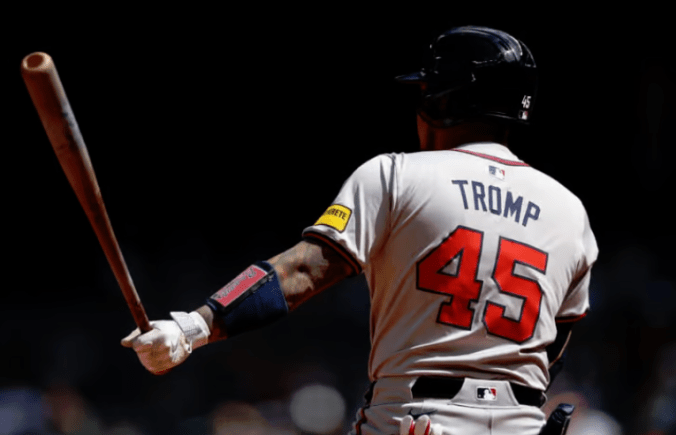
Today the Athletic has the tale of Atlanta Braves back-up catcher Chadwick Tromp. He’s from Aruba. Tromp says he pays no attention to the politics of the nation in which he has spent half the year every year since 2013 and that now supplies him with over a million dollars each annum. For that reason, I have little sympathy for the problems he has encountered because some jerk in the Braves clubhouse gave him uniform number 45 in an election year, making Tromp a walking target and a bad pun. Supposedly this was accidental. Is everyone on the Braves from Aruba?
I wouldn’t trust the NFL as far as I could throw a football, so excuse my cynicism.
The most unethical sports league on the planet announced that its players will be able to choose between 12 new helmets next season. Five of the new helmets, we are told by the league and the NFL Players Association, “performed better in laboratory tests” than any helmet that has ever been worn in the NFL. Quarterbacks will be able to choose choice a helmet made by Vicis and another one made by Riddell designed specifically to reduce a quarterback’s head trauma from hitting the ground, the cause of most quarterback concussions. Other positions have their own specially-designed helmets to choose from.
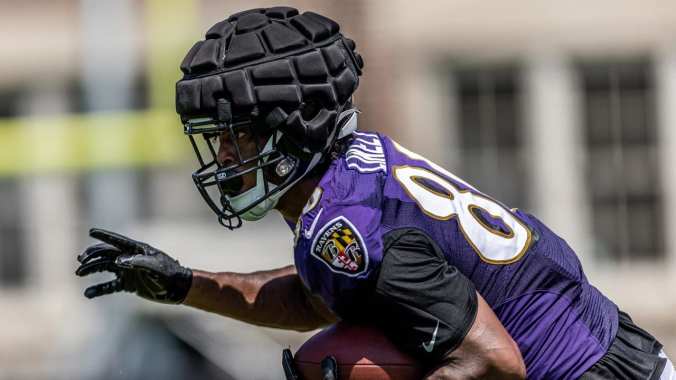
The NFL first introduced position-specific helmets in 2022 for linemen. So far all of the new “safer” helmets are voluntary (except in practice games) and players have not been enthusiastic. The NFL also provides optional “guardian caps,” soft shell covers on top of helmets that provide extra cushioning and enhanced safety for head-to-head contact. These have no been popular with players, perhaps because they look like that thing above.
The NFL and the NFLPA now distribute a poster illustrating how helmets rank based on their performance in lab tests. This season there will be three individual posters , one for offensive linemen, defensive linemen and quarterbacks, supposedly to educate players about their helmet choices.
Now comes the cynicism: why is this so complicated? Why is the choice of helmets left to the players? Why aren’t the safest helmets mandatory during the season? Imagine a seat belt law that gave motorists a choice of a dozen different seat belts, with the option to choose none at all also being in the mix.
It looks to me like a lawyer-devised strategy to reduce the league’s liability for CTE cases. If a player sticks with the old-fashioned helmet and ends up with IQ of a summer sausage in his fifties, the NFL can claims that it was assumption of the risk.

 Ethics Alarms