Ethics Hero/Dunce: Charlotte Dujardin

I haven’t had many of these, as you might imagine. In fact, I’m not even sure that this is one.

British Olympic dressage medalist Charlotte Dujardin holds six Olympic medals, three of them gold, in equestrian events. She just dropped out of the Paris Olympics, however, after a video was uncovered that reportedly shows her repeatedly whipping a horse on its legs.

“A video has emerged from four years ago which shows me making an error of judgement during a coaching session,” she said in her statement withdrawing from the Games. “Understandably, the International Federation for Equestrian Sports (FEI) is investigating, and I have made the decision to withdraw from all competition — including the Paris Olympics — while this process takes place,” she said. The statement continues, “I am sincerely sorry for my actions and devastated that I have let everyone down, including Team GB, fans and sponsors.”

Some have described this as Ethics Hero-level contrition. She did wrong, she has admitted it without qualifications, and has administered her own sanctions. OK, I’m buying that, sort of. Maybe. With major misgivings.

Continue reading

Baseball’s All-Star Game : Another Tradition Rotted

I watched it last night because there was really nothing else worth seeing on TV, but I hate what the All-Star game has become, and have hated it for a long time. Before inter-league play and huge contracts, the “Mid-Season Classic” was a real game, played as intensely as the World Series, for the honor of the two separate leagues. (Ask Ray Fosse how intensely.) Managers would try to get and keep the strongest possible line-up in the game: it wasn’t unusual for several stars to play all 9 innings. Starting pitchers went three innings, not just one. Players slid into bases and dived for balls. It was a real contest. In ethics terms, the All-Star Game had integrity.

For decades now, it has just been a bunch of rich guys going through the motions, joking with each other, making sure no one got hurt. The obvious objective of the managers is to get all 30 players on the roster on the field if possible, not to win. It’s a parade: viewers barely get to see a player display the skills that made him an All-Star. The event has the seriousness of a celebrity softball game…there’s no tension, no drama.

Continue reading

Ethics Dunces: Yankees Manager Aaron Boone and Centerfielder Trent Grisham

You don’t expect me to pass up a chance to chide the New York Yankees, do you? Especially when they really deserve it…and this episode has larger significance, I think, although I always think baseball has larger significance.

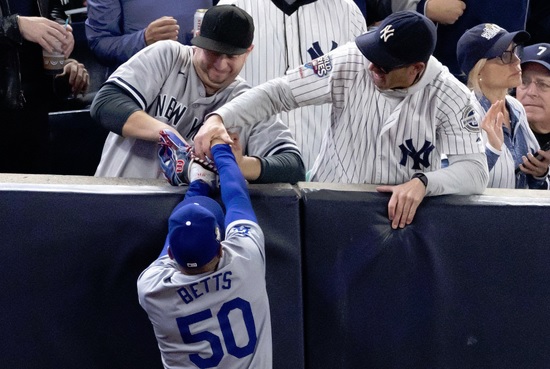
When I saw the video of the play above, I didn’t believe it. I don’t think I’ve ever seen a major league player loaf like that on a play. The culprit was Yankee center fielder Trent Grisham, who is no callow rookie; in fact, he has won a couple Gold Gloves for his fielding. It occurred during the ninth inning of Friday’s eventual 8-4 Yankee loss to Cincinnati; the Pinstripes have been losing a lot lately, indeed they appear to be in free-fall after a spectacular start. (Good.)

Yankee fans noticed, and booed Grisham lustily. Yankee social media commenters, already upset because of the team’s recent losing ways, piled on after the game. Best-selling author and podcaster Eric Sherman probably summed it up best, tweeting, “What in the world was [Manager] Aaron Boone waiting for there in the dugout? Trent Grisham should have been yanked from the game immediately. A missed opportunity for Boone to set an example for a team that has underachieved the last month. Wow.”

Continue reading

Ethics Quiz: Fake Celebrity Voices [Corrected]

I decided to write about this insidious (but ethical?) phenomenon when I realized that the Jimmy Dean breakfast sausages TV ads are now using an AI-faked Jimmy Dean voice. For decades they only had one brief catch-line from the old ads when Jimmy was still alive (he died in 2010); we would hear the real Jimmy say, “Wake up to the goodness of Jimmy Dean sausages!” in various combinations. Now, AI Jimmy won’t shut up. (The new Jimmy doesn’t even sound quite right, in my opinion.)

NBC announced last week that veteran sportscaster Al Michaels will be doing recaps during the 2024 Paris Olympics. Well, not really Al; a fake Michaels generated by artificial intelligence will re-create the familiar sportscaster’s voice to provide customized Olympic recaps for Peacock subscribers. “Your Daily Olympic Recap on Peacock” will give users a customized highlight playlist, narrated by AI Al.

Al, who is well past his pull-date at 79 (though still younger than Joe Biden), apparently was happy to have AI Al take over for him, and especially happy to receive the check.

Your Ethics Alarms Ethics Quiz for July Fourth is…

Is this unethical or just “Ick”?

Continue reading

From the Res Ipsa Loquitur Files: the Woke Shackles Tighten…

Jennifer Sey, once a competitive gymnast on the U.S. Women’s Olympic team, has launched a new clothing line focused on the threat to women’s sports by the woke-driven incursion of “transitioned” or “transitioning” biological males.

TikTok responded to her ad on that platform by banning he company from advertising with this:

Continue reading

Umpire Ethics: Robo-Ump Update and “Oh-oh!”

Regular readers here know about both my passion for baseball and my disgust with how many games are determined by obviously wrong home plate calls on balls and strikes. Statistics purportedly show that umpires as a group are correct with their ball/strike edicts about 93% of the time, representing a significant improvement since electronic pitch-tracking was instituted in 2008. What explains the improvement? That’s simple: umpires started bearing down once they knew that their mistakes could be recorded and compiled. In 2008, strikes were called correctly about 84% of the time, which, as someone who has watched too many games to count, surprises me not at all.

Even 93% is unacceptable. It means that there is a wrong call once every 3.6 plate appearances, and any one of those mistakes could change the game’s outcome. Usually it’s impossible to tell when it has, because the missed call was part of a chaos-driven sequence diverging from the chain of events that may have flowed from the right call in ways that can’t possibly be determined after the fact. Sometimes it is obvious, as in several games I’ve seen this season. An umpire calls what was clearly strike three a ball, and the lucky batter hits a home run on the next pitch.

Before every game was televised with slo-mo technology and replays, this didn’t hurt the game or the perception of its integrity because there was no record of the mistakes. (Sometimes it wasn’t even a mistake: umpires would punish batters for complaining about their pitch-calling by deliberately declaring them out on strikes on pitches outside the strike zone.) Now, however, a missed strike call that determines a game is both infuriating and inexcusable. As with bad out calls on the bases and missed home run calls, the technology exists to fix the problem.

Baseball only installed a replay challenge system after the worst scenario for a missed call: a perfect game—no hits, runs or base-runners—was wiped out by a terrible safe call at first on what should have been the last out of the game. The game was on national TV; the missed call was indisputable. That clinched it, and a replay challenge system was quickly instituted. I long assumed that robo-umps would only be instituted after an obviously terrible strike call changed the course of a World Series or play-off game, embarrassing Major League Baseball. For once, the sport isn’t waiting for that horse to leave before fixing the barn door. It has been testing an automated balls and strikes system (ABS) in the minor leagues for several years now. Good. That means that some kind of automated ball and strike system is inevitable.

Continue reading

Ethics Dunce: PGA Star Rory McIlroy

This one is what the old Ethics Scoreboard (now down again, I think for the count) used to categorize an “Easy Call.”

At Inhurst, North Carolina’s Pinehurst golf course yesterday, Bryson DeChambeau became the PGA U.S. Open champion again after Irish pro Rory McIlroy, to be blunt, choked.

McIlroy blew two short par putts within three holes, the last on the 18th, as DeChambeau nailed a tricky shot to finish 6 under par and a single shot better than McIlroy, who had seemed poised to win his first major tournament in ten years with just three holes to go.

McIlroy disillusioned his fans with his reaction to what ABC Sports used to call “the agony of defeat.” He watched DeChambeau’s winning putt on TV in the scorer’s room, then quickly packed up and sped out the players’ parking lot in a courtesy SUV. He didn’t talk to reporters, who were frantic to hear how he managed to lose. He didn’t even stick around to congratulate DeChambeau on his stunning victory.

Bad.

Continue reading

A Hanlon’s Razor Puzzle: The Olympic Team’s Snub of Caitlin Clark

Incompetence or bigotry?

Over the weekend the announcement came out that Caitlin Clark was not on the roster for the USA women’s basketball Olympic team for the games in Paris. This seemed, and seems, strange to put it mildly. Clark, a rookie this season, is by far the most famous, publicized and popular professional women’s basketball player of all time, as well as the most important. Her stellar performance as a college player led her to be the obvious #1 first round draft pick in the WNBA draft, and her presence in Indiana Fever games has led to a significant spike in attendance, TV ratings and public interest. The Olympic Games are mostly publicity for the league and the sport: once professionals were permitted to play, the U.S. women’s team has been unbeatable for decades. It would win the gold if the Olympics team coach picked the names of the team member out of a hat. But having the league’s charismatic rookie play would guarantee more interest in the sport during the Paris Games this summer, which logically should translate into more attention—popularity, TV ratings, money—for the sport itself.

So why isn’t Clark on the team?

Continue reading

This Isn’t a Baseball Ethics Post, It’s a “Money Makes Organizations Forget Their Core Values” Post

Gee, what a surprise.

Major League Baseball, almost destroyed by a gambling scandal in 1919, with two of its greatest players, Shoeless Joe Jackson and Pete Rose (its all-time hit leader), banned from the game and exiled from the Hall of Fame for participating in baseball gambling (Jackson helped throw a World Series for gamblers; that’s him above. He was no Ray Liotta, was he?), is suddenly awash in new gambling scandals. How could this happen, you may ask? Easy. Once the Supreme Court opened the door to online gambling, all of the professional sports leaped into the money pit. Now online sports gambling outfits like DraftKings are the most ubiquitous sponsors of televised sports. In the middle of televised Red Sox games, the screen will show the odds on bets like “Will Rafael Devers hit a homerun?” David Ortiz, a lifetime Red Sox hero and icon, stars in commercials for DraftKings. The obvious message is that gambling on baseball is fun, virtuous, harmless, and…

For Major League Baseball, with its history, of all sports, to take this U-Turn was wildly irresponsible and perilous. How can the sport maintain the fan’s trust in the legitimacy of games played in an environment where billions are being wagered on them, openly and without any fear of corrupting the players?

Fay Vincent, the last real baseball commissioner (the first one was appointed because of the Black Sox scandal in 1919) told the Times, “The inevitability of corruption is triggered by the enormous amount of money that’s at stake. When you pour all this gambling money into baseball, or all the professional sports — or for that matter, even amateur sports — that amount of money is so staggering that eventually the players and I think, tragically, the umpires, the regulators, everybody is going to be tempted to see if they can get a million dollars.”

Vincent is an ethical man. The current “commissioner” (he’s the owners’ toady, just like Bud Selig, his predecessor), not so much. In a statement reacting to baseball this week banning one Major League Player for life for gambling on his own team and suspending four more for a year, Rob Manfred ludicrously said, “The strict enforcement of Major League Baseball’s rules and policies governing gambling conduct is a critical component of upholding our most important priority: protecting the integrity of our games for the fans. The longstanding prohibition against betting on Major League Baseball games by those in the sport has been a bedrock principle for over a century.”

Funny that after decades of no gambling scandals, baseball is suddenly drowning in them. What a coinkydink!

Continue reading

The DEI-ing of Major League Baseball’s Statistics: Oh. Wait, WHAT?

Major League Baseball’s absurd and self-wounding decision to lump all of the old Negro League season and career statistics in with those of its own players is impossible to defend logically or ethically. Ethics Alarms discussed this debacle of racial pandering here, three days ago. What is interesting—Interesting? Perhaps disturbing would be a better word—is how few baseball experts, statisticians, historians, players and fans are defending this indefensible decision or criticizing it. As to the latter, they simply don’t have the guts; they are terrified of being called racists. Regarding the former, there is really no good argument to be made. MLB’s groveling and pandering should call for baseball’s version of a welter of “It’s OK to be white” banners and signs at the games. Instead, both the sport and society itself is treating this “it isn’t what it is” classic like a particularly odoriferous fart in an elevator. Apparently it’s impolite to call attention to it.

Continue reading