Tom Yawkey, J. Edgar Hoover, Political Correctness and Gratitude

Yawkey TributeIt’s not often that I am called upon to rebut a web post that relies on one of my articles for its unethical conclusions, but that is the position that Ron Chimelis has placed me in with his recent essay, Why the Boston Red Sox should rename Yawkey Way.

To catch you up quickly: Tom Yawkey was a lumber tycoon and baseball enthusiast who owned the Boston Red Sox from 1933 to 1976, making him the longest-tenured team owner in the sport’s history. Yawkey was almost certainly a racist; if he was not a racist, his team’s policies certainly were for many years. The Red Sox were the last major league team to integrate, and blacks did not have a significant place on the team’s roster until the late 1960s, two decades after Jackie Robinson broke the color line. From the beginning, Yawkey ran the Red Sox as a public utility, paying little attention to the bottom line as he tried to build a winner out of the franchise that had been a perennial loser since selling Babe Ruth to the Yankees in 1919. After his death, Yawkey’s wife Jean continued the family tradition, running the Red Sox, except for a few years, until her own death in 1992.

When Tom Yawkey died, the City of Boston re-named Jersey Street, which runs past the entry to Fenway Park where the Red Sox play, Yawkey Way in his honor.

In the unerring clarity of hindsight bias, Chimelis argues that Tom Yawkey is undeserving of any recognition by the city that he devoted much of his life to representing, enhancing, serving, inspiring and entertaining because racism is the ultimate crime, and anyone possessing that vile state of mind should be consigned to shame forever. It is a common point of view, and an unfair one. Continue reading

NFL Commissioner Roger Goodell’s Super Bowl Deception

"Well, I may not remember any of it, but the Commissioner says I'll life a long life..."

“Well, I may not remember any of it, but the Commissioner says I’ll live a long life…”

Today millions of Americans will gather around televisions, partying and cheering the spectacle of young men maiming and killing themselves for our entertainment pleasure during America’s most popular sporting event, the Super Bowl. An unknown but significant number of those athletes, we now know, are likely to be unable to recognize family members by the time they are 45, and several may take their own lives in despair.  Nonetheless, the official position of the National Football league is that all is well, and Commissioner Roger Goodell was touring the Sunday morning news shows to put out the propaganda claim that  pro football is good for everyone, even the players who accumulate concussions like the rest of us collect aggravation.

Presumably to appeal to the large proportion of the Super Bowl audience who know little about the sport, as well as the gullible fans who do, Goodell told Fox News Sunday host Chris Wallace (who, if he had the knowledge, wit and integrity,  should have stopped him and protested) in response to Wallace’s question about the NFL’s ongoing concussion scandal, that NFL players live longer and are on the whole healthier throughout their lives than the general population.

This is deception, and intentionally misleading.

Goodell is taking advantage of the fact that all the measures of the mortality of pro football players are flawed, which is why last year the NFL Players Union commissioned Harvard to do a 100 million dollar study of the health of ex-players and how to improve it.  The union claims that the average age of death of an ex-NFL player is 57 years, which would directly contradict Goodell’s claim.  This figure is supported by a 2011 study by the University of North Carolina, as well as insurance company actuarial statistics.

The figure, however, seems statistically unlikely.  Measuring the life expectancy of any group of adult men, even those engaged in risky behavior, will yield an average life expectancy that is better than the general population. Why? Because men in the general population die as infants, children, young adults, and before they would be old enough to play football. Thus the NFL and defenders of the brutal game continue to promote the 2012 study that found that NFL players outlive the general population. If accurate—and the players find the study difficult to believe, as do I—it can be argued that this study is also flawed. It compares apples—strong, affluent, college educated upper-middle class men—to oranges–everyone else, including the poor, unemployed, uneducated and poorly nourished. Attempting to get around this problem, one blogger compared the deaths of NFL players to other celebrities whose death notices were prominently published. His conclusion: there was no denying the fact that pro football players appeared to die sooner that non-football players from the same general class, but there was no justification to believethe mid-fifties mortality figure.

So do we know how much playing pro football lowers life expectancy, or even if it does? No….and neither does Roger Goodell. The studies are in conflict. However, we do know that a disproportionate number of the players who may live well into their golden years will do so unable to think clearly, remember their children’s names, or care for themselves, because they accepted big paychecks to allow their brains to be permanently bruised and catastrophically damaged. I don’t call that living or being healthy, and Goodell shouldn’t pretend that it is, or cite as fact what is a disputed contention at best.

Playing pro football isn’t good for you, and if the studies ultimately prove that ex-NFL players are really likely continue breathing as long as the rest of us despite their brain injuries, that just helps us understand why they have been killing themselves.

_________________________

Sources: CP24, Boston.com, Lotsa ‘Splaining, USA Today, Forbes

Ethics Alarms MailBox: “Does The Naked Teacher Principle Apply To Bodybuilding Teachers…or Mothers?”

Bodybuilder mom

Since the NTP is back in the news—Kaitlin Pearson, whom Ethics Alarms dubbed the perfect example of the Naked Teacher Principle, was allowed to continue her job as a teacher’s aide—this is a propitious time to address a question I received off-site by an esteemed reader, who sent me a photo similar to the one above (but of another female competitive bodybuilder/mom—who is 50 years old) and commented, “This is a picture of a local soccer mom with a teenage son. Is she setting a good example for her son, and does her conduct trigger the Naked Teacher Principle?”

Let me finish with Kaitlin first. I personally wouldn’t have let her continue, if only because she was not forthcoming about her other pursuits when she interviewed for the job. That doesn’t mean that the resolution of her particular case is in defiance of the NTP. It states, Continue reading

Ethics Heroes: The New York Yankees

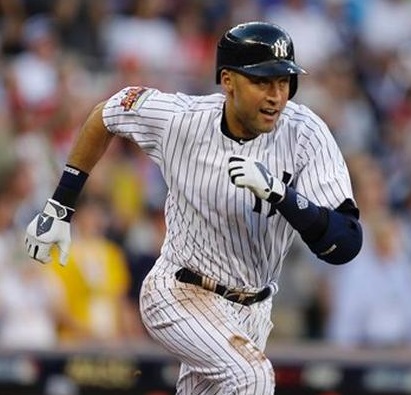
Yankees Wallpaper

You know how hard it is for the co-creator of “Pennant Pursuit, the Boston Red Sox Trivia Game” to write this.

It can’t be avoided though. The New York Yankees have, and not for the first time, upon reflection, demolished the oft-stated accusation that Major League Baseball is no longer a sport, but a business. This was always a false dichotomy, for from the days of rag-tag 19th Century baseball to the present, The Great American Pastime That Does Not Require You To Cheer Young Athletes Guaranteeing That They Will Spend Their Retirement In A Brain-Damage Haze has always been both, with each side constantly yielding to the other.

Coming off a disappointing season (the all-time most successful team in pro sports history missed the playoffs for only the second time in 19 years) and faced with an aging, injured, question mark-filled roster despite the highest payroll in the game ($228,995,945; the Houston Astros, in contrast, spend about 24 million, or less that the Yankees paid their steroid cheating third-baseman), and faced with baseball’s team salary luxury tax, which charges teams with a payroll exceeding 189 million for every dollar over it, the Yankees discarded their announced business plan of cutting back on salaries to avoid the tax threshold, and instead went on a spending binge. They snapped up most of the top free agent stars peddling their wares this winter, committing themselves to a staggering boost in contract obligations that will approach a half-billion dollars by the time the dust clears. Continue reading

Ethics Quiz: The Marriage Mark-Up

Wedding reception

The New York Times published a feature in December exposing how hotels and wedding service vendors typically charge more to couples planning wedding festivities than they do to corporations seeking the same facilities and the same services. Is the result of  gauging, market forces, negotiation inexperience by the happy couple, or something else? Is it unethical?

The article seems to conclude that the vendors are simply taking advantage of purchasers who have no sensitivity to price, especially so-called “Bridezillas.” They want what they want for their perfect day, and will pay whatever it will cost to get it. Are the venders being unethical to take advantage of what is an emotional rather than a rational mindset? After considering whether more price transparency in the wedding industry would help (the author thinks not), the piece concludes,

“Strong consumer preferences — about the flower type, bridesmaid dress, cake decorations, music style, whatever — mean less price sensitivity (what economists refer to as greater demand inelasticity). If the cocktail napkins must be blue, the happy couple will be willing to pay more for blue. So if there are enough brides out there with strong and specific preferences, who want their weddings to be the special day they always dreamed of, that’s going to push equilibrium prices higher, no matter how transparently they are displayed. In other words, the Bridezillas keep prices high for the rest of us.” Continue reading

Ethics Hero: Pro Track Star Lauren Fleshman

Lauren Fleshman

Lauren Fleshman is a 31-year-old track star whose attractive looks have garnered her product sponsorships, magazine covers and fashion show appearances. Thus it represents a noble sacrifice for her to choose to reveal the truth about her beauty and fitness—that she’s human, and is not as perfect a specimen of the species as the media would lead us to believe.

On her blog, Fleshman struck a blow against vanity and for the acceptance of realistic and healthy female body images by exposing the kinds of photos of glamorous athletes like her that the public isn’t usually permitted to see. Images like this… Continue reading

Unethical Essay Of The Month: “Richard Sherman And The Plight Of The Conquering Negro” By Greg Sherman

In case you missed it, being one of the Americans who has decided not to subsidize young men permanently crippling their brains to slake our blood-lust, the NFC Championship game yielded an instant classic moment.  Star Seattle cornerback Richard Sherman first mocked San Francisco wide receiver Michael Crabtree, whom he had just bested, then set a new high for post-game jerkdom when he screamed into the camera during a post-game interview,

“I’m the best corner in the game! When you try me with a sorry receiver like Crabtree, that’s the result you gonna get. Don’t you ever talk about me. […] Don’t you open your mouth about the best or I’m gonna shut it for you real quick.”

I understand that the player was excited and jacked-up over his play and his team’s victory, and I assumed that once he calmed down, he would regret bombarding poor Erin Andrews with a macho rant when she asked a straightforward question. Nonetheless, when you act like that on national television, you are going to get criticized no matter who you are or what the justification. (Sherman apologized later.) Ah, but if you are in the white guilt and race-baiting business, even such an open-and-shut case as this becomes fodder for dark pronouncements about America’s racist culture. And so it was that over at the sports site Deadspin, Greg Howard announced that Sherman’s foolishness wasn’t being mocked far and wide because it was rude, arrogant, uncalled for and certifiably strange, but because he is black.

Wrote Howard, in part: Continue reading

The Unforgivable Conflict of Interest: Sports Agents, Robbing Their Ignorant Clients

The ethical course is to choose.

The ethical course is to choose.

Sports agents are rich, powerful, and ethically handicapped by inherent conflicts of interest. The first two qualities so far have insulated them from dealing fairly and openly with the second. This is wrong, and has got to stop. For it to stop, it would help if the players, their unions, the sports leagues and the sports media didn’t either intentionally pretend not to see the obvious, or weren’t too biased and ignorant to realize what’s going on.

Four years ago, I wrote about this problem in a long piece for Hardball Times, a baseball wonk blog of consistent high quality.  The specific agent I was writing about was Scott Boras, the king of baseball player agents, but the egregious conflict I flagged isn’t confined to that professional sport; it’s present in all of them. In the article, I argued that Boras, a lawyer, is engaged in the practice of law when serving as an agent and was therefore violating the legal ethics rules, which prohibits having clients whose interests are directly adverse to each other, specifically in the so-called “Zero-Sum Conflict” situation.

A lawyer can’t assist two clients bidding for the same contract, because the better job he does for one, the worse his other client fares. A lawyer can’t sue a defendant for every penny that defendant has on behalf of one client when he or she has another client or two that have grievances against that same defendant—if the lawyer is successful with the first client, he’s just ruined his other clients’ chances of recovery. There is some controversy over whether the legal ethics rules automatically apply to a lawyer-agent like Boras, but never mind—whether he is subject to the legal ethics rules or not when serving as an agent, the conflict of interest he is blithely ignoring still applies, still harms his clients, still puts money in his pockets, and still should not be permitted. Continue reading

Here’s Something A-Rod Is NOT Doing Wrong

The Don had his flaws, but he knew the difference between personal and professional.

The Don had his flaws, but he knew the difference between personal and professional.

Alex Rodriguez has done a lot of bad things, but everything he does isn’t wrong. Kudos to lawyer/baseball pundit Craig Calcaterra for flagging a typical bit of pundit idiocy.

Yesterday, the news was that Rodriguez, rather than accept his season-long suspension as a result of the arbitration panel’s final decision regarding the disciplinary action against him taken by Major League Baseball, is suing MLB, and the players union for not properly defending him. This involves allegations that the union’s late Executive Director, Michael Weiner (who perished last year of an inoperable brain tumor) failed in his duty to A-Rod, a member in good standing, though a slimy one.  This, to various sportswriters, broadcasters and bloggers, was the smoking gun proof that Alex’s heart is as black as a Mamba: how dare he impugn the character of a dead man, a beloved family man who died before his time? For example, here is  Yahoo Sports’ indignant Jeff Passon:

“Alex Rodriguez is a sad, desperate man, and sad, desperate men do sad, desperate things like blame their sad, desperate circumstances on a beloved, deceased man. Of the many layers of pathetic A-Rod has peeled back in trying to excuse his own wretched choices, never had he spoken ill of the dead, not until Monday when his failing defense found a new nadir.”

Rodriguez may well be a sad, desperate man as well as a certified rotter, but his treatment of Weiner is not one of his many transgressions. Continue reading

Our Incompetent Media, Making America Ignorant, Case # 58755

Mike Ferrin, making up Constitutional law as he goes along...

Sirius-XM’s Mike Ferrin, making up Constitutional law as he goes along…

Driving along, minding my own business, on the way to picking up some cranberry juice and dishwasher detergent, I chanced to turn on channel 89 on Sirius-XM, where, by no special intent of mine, the baseball show “Power Alley,” with hosts Mike Ferrin and Jim Duquette (the latter a former and probably future big league general manager) was covering the A-Rod suspension story, currently the hottest scandal in sports.  Ferrin is a baseball commentator, and he was railing about the statement of a lawyer, quoted on the show, that it was Alex Rodriquez’s refusal to testify at his hearing before a union arbitrator that sealed his doom and resulted in his season long suspension by Major League Baseball being upheld.

“What about his Fifth Amendment rights?” Ferrin was saying. “I am very disturbed by this. Rodriguez doesn’t have to testify! He has every right to refuse! I find it very disturbing that we are being told that a man lost his livelihood because he asserted his rights as an American! It’s just wrong!”

At this point, my car is weaving all over the road as I try to find my cell phone to call the show (I had left it at home) and scream. The Fifth Amendment, which among other things protects citizens against compelled testimony against themselves under threat of government action, has nothing to do with Alex Rodriquez and his arbitration hearing—-Mike Ferrin, you incompetent, blathering fool. The Fifth Amendment does not apply to private proceedings, of which a labor grievance arbitration is one.  Continue reading