Our Sports Superstars and Their Non-Profit Scams

Hey, don't be cynical! Yes, this is the A-Rod family, and that's the Font of Human Kindness behind them!

Hey, don’t be cynical! Yes, this is the A-Rod family, and that’s the Font of Human Kindness behind them!

Pro athletes who receive insanely high salaries for their unique talents and awe-inspiring achievements often deflect the public jealousy, envy, resentment and criticism their riches inspire by launching charitable foundations aimed at providing assistance and comfort to poor children, disaster victims, orphans, kids with dread diseases, puppies, and anything else that will produce a collective, “Awww! He’s really a good guy!” Some of these athletes really are good guys, like former tennis star Andre Agassi, a true philanthropist, whose Foundation raised and handed out millions while he was playing and continues to do so. Agassi also frequently led all pro athletes in money donated to charity, and he had no scandals that he was trying to make people forget. He’s third on the list now. The first two: Tiger Woods and Lance Armstrong.

Other stars, however, are a different story. Continue reading

Dog Owner Ethics: The Suicide and the Pitcher

Does one of these nice creatures not belong in this picture? Ontario says yes. The correct answer is  no.

Does one of these nice creatures not belong in this picture? Ontario says yes. The correct answer is no.

Our life-changing events often become crises for our canine companions. In the news today: ethical  and unethical responses in such circumstances, by two individuals in the public eye.

The Unethical

Mindy McReady, the troubled country music star, committed suicide Sunday on the front porch of the home she shared with her boyfriend, who had recently committed suicide there as well. She apparently killed the couple’s dog before taking her own life. McReady’s friends insist that she didn’t kill the dog out of malice, but because she didn’t want to leave the dog alone. Granted, McReady deserves consideration and compassion, since her actions that day were not those dictated by a healthy or fully functioning mind. Still, I read of dog owners doing this a lot, and I’ve known a few—not committing suicide, but killing their dogs when they knew they wouldn’t be able to keep them any more, on the theory that the dog would be happier dead than with new owners. Continue reading

Being Clear on Pete Rose and the Hall of Fame

Hall OFLast week, I raised the greasy topic of Pete Rose, in fact defending Pete against the unethical efforts by Topps to avoid invoking his name on their cards, as if he were baseball’s Voldemort. Somehow, the comments morphed into debate about whether Pete deserves to be in the Hall of Fame, and I fear that my position regarding Pete’s qualifications was muddled in the various exchanges.

No, Pete doesn’t deserve to be in the Hall of Fame, for two very clear reasons. His conduct in betting on baseball games, including his own team’s games, while he was a Major League manager requires that he be banned from baseball for life under Rule 21 of Major League Baseball’s official rules, and the Major League Baseball Hall of Fame in Cooperstown has its own rule that makes any player so banned ineligible for enshrinement. Rose is prevented from admission to the Hall by those rules, which were in place when his conduct brought them into play. He doesn’t deserve to be in the Hall, because the rules say so. Pete Rose broke a cardinal rule that potential Hall candidates cannot break. The ethical reason he should not be in the Hall is accountability, or as Tony Baretta used to say on the old TV show, “Don’t do the crime, if you can’t do the time.”

Is there anything at all about Rose’s career record as a player that doesn’t qualify him for the Hall, indeed, over-qualify him? No. Unlike Barry Bonds or Mark McGwire, his statistics are beyond challenge or criticism. He didn’t cheat. He was a great and admirable player in every way.

Was there anything in his conduct as a player on the field, as a player off the field, or off the field as a retired player, that constituted such egregious misconduct that it would justify refusing his admission the Hall of Fame under its so-called character clause? [ “Voting shall be based upon the player’s record, playing ability, integrity, sportsmanship, character and contribution to the team(s) on which the player played.”]

Here is where I want to clarify my position. My answer to this is “No.” Continue reading

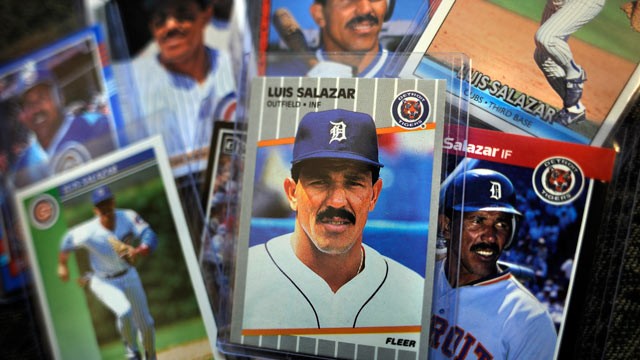
Topps’ Pete Rose Abuse

Pete Rose now, with his Playboy model wife (he calls his marriage "Tits and Hits"), and as a player, when the fact that he was a low-life didn't seem to matter.

Pete Rose now, with his Playboy model wife (he calls his marriage “Tits and Hits”), and as the  player called “Charlie Hustle,” when the fact that he was a low-life didn’t seem to matter.

Baseball season is fast approaching, and with it the usual welter of fascinating ethical issues that sport always generates. Here is an early one, arising out of one of the first signs of Spring Training, the release of the Topps’ baseball cards.

Pete Rose, as every educated American should know, was a wonderful player on the baseball field and a certifiable low-life off of it. Though he is the all-time leader in career hits, the former Cincinnati  Reds icon has been banned from baseball for two decades, the result of defying baseball’s “third rail” by gambling on the game after his playing career, when he was a manager. (Rose also lied about his conduct, helped send a Commissioner of Baseball to an early grave, and has served time for tax evasion…and even without all this, he would still be an insufferable slime-ball. Trivia note: Pete was in the very first group of “Ethics Dunces” in 2004, along with Bindi Irwin‘s dad, and Fox.  See? Nothing changes!) Never mind, though: Rose’s records have never been regarded as anything but legitimate, unlike those of baseball’s other living major miscreant, lifetime home run champ, steroid cheat and ethics corrupter Barry Bonds.

Yet as Aaron Gleeman reports on NBC sports, Topps is now, based on the evidence of its 2013 line of baseball cards, going out of the way to purge Rose’s name from all honor and memory: Continue reading

If Only The Profession Was This Strict AFTER Admitting A Lawyer To The Bar…

No, surprisingly in light of last week's revelations from Cambridge, the applicant who cheated on her bar exam did NOT go to Harvard. I'm as stunned as you are!

No, surprisingly in light of last week’s revelations from Cambridge, the applicant who cheated on her bar exam did NOT go to Harvard. I’m as stunned as you are!

One of the legal profession’s ethics anomalies is that its character standards for entering legal practice are far more unforgiving than the standards for keeping one’s license to practice after being admitted. For while John Edwards continues to be a North Carolina lawyer in “good standing,” an Ohio bar applicant was held to lack the requisite good character to be a trustworthy lawyer (Ohio Supreme Court opinion here) because of the following set of facts.

When Jasmine Shawn Parker of Covington, Kentucky was taking the Ohio bar exam, a test monitor reported that she had continued to write for up to 30 seconds after “time” was called on a set of two exam questions, and then again for 45 to 60 seconds on two sets of two exam questions. The Board of Bar Examiners investigated, and asked Parker’s tablemates about their observations or her actions, if any, after time had been called. They reported that Parker had continued writing for maybe a second or two past the declared deadline on Day 1 of the exam, and on the second day, had continued to write past the stopping point “long enough to get at least two lines of writing on paper.” As a penalty after these findings, the Ohio Board of Bar Examiners gave Parker no credit on the exam question with the highest point value. Never mind: Parker’s score was high enough to pass the bar exam anyway. Her alleged cheating, however, led the Board of Commissioners on Character and Fitness to recommend her license be denied, with the opportunity to reapply.  Continue reading

Cost of Rick Curl’s ‘Stay-Out-Of-Jail-And Keep-Molesting-Girls’ Card: $6,250 a Year

I hope it was worth the cash, Kelley.

I hope it was worth the cash, Kelley.

All in all, you would have to say that renowned Maryland swimming coach Rick Curl made a pretty sweet deal for himself. True, he’s headed to jail now, after pleading guilty to charges of child sexual abuse as a result of the testimony of Kelley Currin. Currin, now 41, was a former swimmer coached by Curl, and was molested and ultimately raped by him over six years beginning when she was only 13. But Curl paid Kelley’s parents, Gerald and Pamela Davies, $150,000 to keep his secret from police, the community, and the swim team (the Davies had read about his abuse in their daughter’s journal and confronted him) in 1989.  Kelley, who was 19 when her family got paid off, waited until last year to finally alert authorities, so Curl kept his freedom, reputation, and most important of all, his opportunity to be trusted with the yummy, young, nubile daughters of other, unsuspecting parents, for a bargain yearly rate of only $6,250.

Not bad! Not bad at all. Continue reading

Soccer, Sports, Corruption, and Cultural Rot

Bitter rot After a moment’s reflection, I realized that it was inevitable that international soccer would be rocked by a match-fixing scandal. If I should have seen it coming, and I care as much about soccer as George S. Kaufman cared about Eddie Fisher’s social life*, then the officials of the sport should have seen it coming too.

From the New York Times:

“…A European police intelligence agency said Monday that its 19-month investigation, code-named Operation Veto, revealed widespread occurrences of match-fixing in recent years, with 680 games globally deemed suspicious. The extent was staggering: some 150 international matches, mostly in Africa, Asia and Latin America; roughly 380 games in Europe, covering World Cup and European championship qualifiers as well as two Champions League games; and games that run the gamut from lower-division semiprofessional matches to contests in top domestic leagues.”

Thus soccer, the most played, most followed, most passionately cheered of all major team sports has been rigged. It doesn’t matter that all the games weren’t rigged; what matters is that now nobody can be sure that a game isn’t rigged. How can a fan care, deeply care, about the outcome of an athletic contest when there is always a lurking, justified suspicion that victory is undeserved and that defeat is unfair? In the span of just a few weeks, we have heard the golden boy of American and international cycling admit that he was at the center of a cheating conspiracy, and that he used lies, influence and financial power to make his sport a contest of which competitor could break the rules most effectively. New revelations from Miami, meanwhile, indicate that Major League Baseball’s so-called steroid era, which supposedly had been vanquished forever, may never have gone away at all: several current stars, like the Yankees’ Alex Rodriguez and 2011 National League MVP Ryan Braun, have been linked to treatments at a clinic known for human growth hormone therapy. Big sports mean big money, and where there is big money, there will always be clever, dishonest people willing to crush laws, ethics, sportsmanship and public trust in order to get more of it. Continue reading

Sending in the Kids To Swim With “Jaws”: Roger Goodell, Mayor of Amity

Jaws-boy

One of the most disturbing moments in “Jaws,” at least for me, is the scene where the mayor of Amity island, whom we know is  in possession of strong evidence that a Great White shark is cruising the waters of his town’s beaches looking for snacks, persuades an elderly couple to take their grandchildren into the surf to show everyone else on the beach that the water is safe. The scene leapt immediately to mind yesterday morning, when NFL Commissioner Roger Goodell, in a Super Bowl Sunday interview on “Face the Nation,” emphatically told CBS’s Bob Shieffer that unlike President Obama, he would unhesitatingly allow his son to play football. I’m sure he would, too. After all, Mayor Larry Vaughn (Murray Hamilton) sent his own kids into the Amity surf.

Like his role model, Mayor Vaughn, Goodell has a terrible problem, as well as a conflict of interest. He is paid to do what is in the best interests of the National Football League, and admitting that the game the league plays and the way it play it kills or mains a significant number of its players would be seen by his employers as a breach of duty. So despite mounting evidence that every single NFL player is putting his brain, health, and life at grave risk by allowing the relentless head trauma that is an unavoidable part of the game, Goodell feels he must claim otherwise, which, assuming he is basically a good man (I was never sure about Larry Vaughn), means he must convince himself that what he says is true. This led Goodell to make a series of statements yesterday that will haunt him some day as much as Mayor Vaughn’s infamous interview quote on the day the little Kintner boy (above) became chum: “I’m pleased and happy to repeat the news that we have, in fact, caught and killed a large predator that supposedly injured some bathers. But, as you see, it’s a beautiful day, the beaches are open and people are having a wonderful time. Amity, as you know, means friendship.” Continue reading

Be Very Afraid: Why Fake Statistics Become “True”

"Those nachos were COLD!!!"

“Those nachos were COLD!!!”

Last week, I wrote about how fake statistics become “true,” after Gabriella Giffords’ husband Mark Kelly asserted as fact that “85% of all children killed by gunfire worldwide die in the U.S.” while ABC’s Diane Sawyer tut-tutted approvingly. Credible advocate, shocking statistic, passive, lazy and biased journalist, politically correct objective—all the elements were in place. We will hear this lie for decades now, probably in a future Presidential debate.

Now the perceptive and watchful James Taranto of the Wall Street Journal has found a smoky gun that tells us much about why we get so many bad statistics, and why the media supports them. A U.S. World and News Report article combined the recent passage of  the Violence Against Women Act with the upcoming Super Bowl, to get this:

“Urban myths rarely have a useful purpose other than to confound, outrage, and frighten people into passing them along. But there’s a silver lining to this one—the idea that Super Bowl Sunday is linked to the highest incidences of domestic abuse in the country. While experts in the field dismiss that theory, they value the increased attention paid to domestic violence on the occasion.

“‘The Super Bowl does not cause domestic violence, and it doesn’t increase domestic violence, but it does increase the public’s awareness of the issue, which will help victims learn about help and resources,” says Cindy Southworth, vice president of development and innovation at the National Network to End Domestic Violence.'”

Oh. Well then the lie is all right then! Continue reading

Today is Jackie Robinson’s birthday. He would be 94, but he lived only slightly more than half that long. He was one of our greatest ethics heroes, and I’d like to honor Mr. Robinson by reblogging a post from April 16 of last year.

Jack Marshall's avatarEthics Alarms

Yesterday, the media, history buffs and Kate Winslet fans were obsessed with remembering the Titanic, sometimes even with proper reverence to the 1500 men, women and children who lost their lives in the North Atlantic on April 15, 1912. A strong argument could be made, however, that the most significant event that occurred on April 15 took place in 1947, in Brooklyn, New York. For that was the day that Jackie Robinson ran out to his position at first base as a member of the Brooklyn Dodgers, and became the first African- American to play baseball in the Major Leagues since the earliest years of the game.

With that act, and his epic heroism for the rest of the season, Robinson changed baseball, sports, American society and history. It was a cultural watershed in a nation that had been virtually apartheid since the end of the Civil War, a catalytic…

View original post 781 more words