Why Your Child Should Watch “MLB Now”

…other than the fact that teaching your child to understand and enjoy baseball is one of the greatest gifts a parent can give, that is.
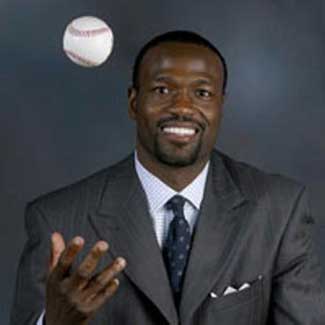
Don't be like Harold, son.

Don’t be like Harold, son.

No, the best reason to watch “MLB Now,” a program on the cable MLB channel, has nothing to do with baseball. It does have to do with preparing your child for life, showing him the danger of bias, and teaching her that remaining open to new ideas and information is essential, not only to ethical conduct, but to rational conduct as well.

The show features two commentators, Brian Kenny and Harold Reynolds, debating various baseball questions while coming from different disciplines and perspectives. Reynolds, a former player of some note with the Seattle Mariners, is “old school,” meaning that he belongs to that dwindling cadre of people, in the game and out of it, who rely on traditional wisdom, misconceptions, myths, false assumption and, most of all, their own gut level observations to interpret the deceptively complex game and evaluate its players. Thus he extolls doing the “little things that win,” like bunting and stealing bases, talks a lot about “protection” in the line-up, prattles on about clutch hitting and “pitching to the score,” and other similar thoroughly debunked nonsense that was regarded as cant back when John McGraw was managing but now is about as outdated as the assertion that women can’t drive. Kenny is thoroughly versed in the art of sabermetrics, the statistical measurements of baseball pioneered in the 1980’s by Bill James and others. Sabermetrics has transformed how baseball is watched, operated and played, greatly aided by the availability of computers. They can show how a pitcher with a losing record is both better and more valuable than one who wins twenty games, the traditional measure of excellence. They can prove that a batting champion is actually less of a positive offensive force than some obscure, .270 hitting player few have ever heard of. Sabermetrics can prove that managers with the reputation of being geniuses were really lucky dimwits. They can, that is, if you are willing to learn and pay attention. Continue reading →

Still A Jerk After All These Years: Jimmy Connors Takes Revenge On Chris Evert

"Chris! Chris! Run away! What are you thinking?"

“Chris! Chris! Run away! What are you thinking?”

Why anyone would want to read the autobiography of former tennis bad boy Jimmy Connors is beyond me. When he was playing, Connors personified poor sportsmanship and a confrontational attitude toward authority and the world in general. The only cause women’s tennis icon Chris Evert ever gave me to doubt her character was the fact that she actually was romantically involved with such a creep. She’s paying the price now.

In his new tell-all memoirs “The Outsider,” published this week, Connors decided to settle scores with Evert for the reason for the disintegration of their engagement. He writes, vaguely but pointedly, that Evert became pregnant during their relationship and had an abortion without consulting him, though, he says, he was prepared to “let nature take its course.” “Well, thanks for letting me know. Since I don’t have a say in the matter, I guess I am just here to help,” is what Connors says he told Evert over the phone, shortly before they broke up.

As despicable celebrity breaches of confidence and privacy go, this may not be the worst, but it is cruel and ugly. Continue reading →

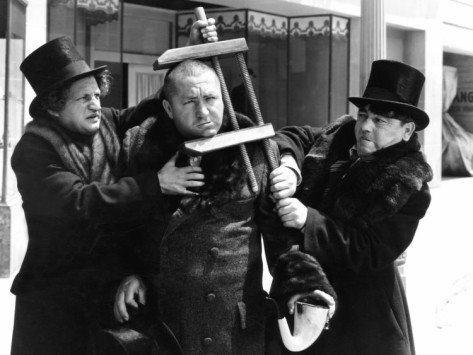
“Hello, Hello, Hello…Hello!” An Ethics Dunce Trio: Newspaper, Sportswriter, President

the-three-stooges

I have a lot of catching up to do with ethics issue backed up as far as the eye can see, so I will try to deal efficiently with the three Ethics Dunces that confronted me this morning:

Ethics Dunce #1 : The Washington Post Continue reading →

Ethics and “Casey At The Bat”

casey-at-the-bat-1888-granger

Today is the 125th anniversary of the publication of “Casey at the Bat,” arguably the most popular and famous of American poems, the creation of humorist Ernest L. Thayer in 1888.

The poem carries many  lessons relevant to ethics and life within its tale of the hometown hero who fails spectacularly just when heroics are most needed and anticipated, such as…

  • Don’t promise what you cannot be sure of delivering.
  • Good faith failure isn’t unethical, a sin or a crime, but it still carries with it the need for someone to accept responsibility for it.
  • The focus of disaster is always on the last individual who might have prevented it, but that is neither fair nor logical. The Mudville Nine lost the game, not Casey.
  • Expecting miracles, last-minute rescues, heroic intervention and infallible rescuers is foolish and irresponsible.
  • Respect your adversaries, for your own sake as well as theirs.
  • “Pride goeth before a fall.”

Today, however, I am struck by how neatly the poem reminds us that in baseball there is no spin, no rock to hide under and no Fifth Amendment to claim. When a player fails, or makes a mistake, or misbehaves, it is usually all out on the field, watched in person by thousands, seen on TV by millions, and recorded forever. There is usually no way to deny or hide responsibility, and indeed part of the professionalism of baseball is accepting that, facing the media and the public, and saying, “That was on me. I failed. I’ll do better next time.”

Most of the time, that’s all the crowd asks after failure. Honesty and accountability.

As long as Casey doesn’t keep striking out, that is.

Here’s the poem, recited by the now-forgotten Bob Hope sidekick Jerry Colonna, he of the rolling eyes:

________________________________________

Spark: Craig Calcaterra

Graphic: Fine Art America

Oh, Shut Up, Kate: Let’s End The Obligatory “God Bless America” Rendition

kate_smith-sings_god_bless_america

My father hated “God Bless America.” He particularly hated jumbo 40’s singer Kate Smith’s rendition of it, which he believed exploited patriotism and combined it with sentimentality and schmaltz to get ratings and sell records. Smith had an unadorned clarion belt that particularly suited Irving Berlin’s blunt melody, and for 30 years she used the song as her signature, as much as Judy Garland used “Somewhere Over the Rainbow.” Whenever Smith appeared on a TV variety show like The Hollywood Palace, he would order me to change the channel (yes, I was the family remote) for fear that he would have to hear her sing that song.

I assumed that was the reason why I have felt queasy about Major League Baseball’s 7th inning stretch ritual, installed in 2001, of having a recording of Kate or a live singer ring out the Irving Berlin standard at every major league baseball game since the Twin Towers fell.  In today’s Washington Post, however, a Methodist minister—my father was also a Methodist, as much as he was anything—explained why he refuses to stand for the song. He nailed it.

James Marsh writes, Continue reading →

Renée Richards, Fallon Fox, and Déjà Vu: Transgender Ethics In Sports

MMA-Fighter-Fallon

I think I’ve seen this movie before.

On May 24, Mixed Martial Arts fighter Fallon Fox moved to 3-0 in her MMA career, beating Allana Jones and earning a spot in the finals of the Championship Fighting Alliance’s featherweight tournament.  Her victory was accompanied by a chorus of jeers. Why? Fallon Fox is a transgendered male, now fully female—except for the unremovable Y chromosome—thanks to gender realignment surgery. Her rise through the female martial arts ranks has been greeted by a mixture of horror, ridicule and revulsion. When she came out for her most recent bout, some wit had the Aerosmith song “Dude Looks Like a Lady” blaring  over the loudspeakers. Some of her MMA competitors have declared that they will not fight her, and here’s sports commentator/pundit/personality Joe Rogan opining on her qualifications to compete:

“You can’t fight women. That’s fucking crazy. I don’t know why she thinks that she’s going to be able to do that. If you want to be a woman in the bedroom and you know you want to play house and all of that other shit and you feel like you have, your body is really a woman’s body trapped inside a man’s frame and so you got a operation, that’s all good in the hood. But you can’t fight chicks. Get the fuck out of here. You’re out of your mind. You need to fight men, you know? Period. You need to fight men your size because you’re a man. You’re a man without a dick.”

How quickly they forget. Continue reading →

“Who Cares?” Ethics: The Key Question…Was This Employee Fired?

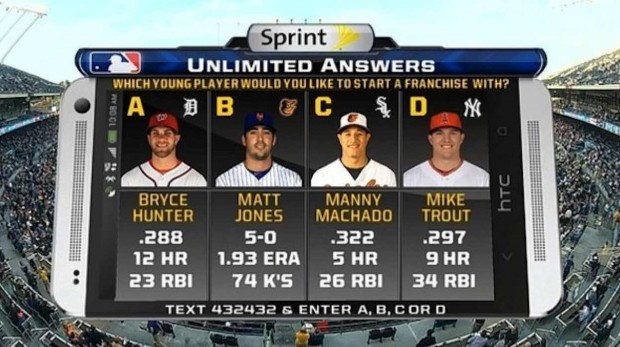
During a Kansas City Royals broadcast this week, the following graphic was displayed for the TV audience:

Mistake Screen

It has the following mistakes: Continue reading →

Rick Curl, The University Of Maryland, Penn State, and Moral Luck

The Rick Curl case is the ethics alarm that won’t stop ringing.

Could Joe be the rule rather than the exception?

Could Joe be the rule rather than the exception?

I’ve written about it twice, both times focusing on the devil’s deal made by the victim and her family, who allowed Curl, a renowned D.D. area swimming coach, to get away with sexually molesting a 13-year female swimmer under his supervision and escape either official detection or legal punishment for decades, as the victim’s family decided to accept $150,000 in hush money/ extortion/ settlement from the rapist-coach instead. Curl went on his happy coaching, and maybe child-molesting way—we don’t know if there were other victims or other pay-offs—even to the Olympics, until the girl he molested, Kelley Currin, had a belated attack of conscience at 40 and finally told authorities about what a trusted coach in close contact with girls on a daily basis had done to her, leading to Curl’s arrest last year.

Rick Curl was sentenced to seven years in prison for child sexual abuse at a hearing this week. At that hearing, we learned for the first time that the University of Maryland had been informed about the abuse more than 25 years ago, and probably knew about it before that. Continue reading →

Ethics Dunce: An Ex-Nurse With Something In Her Craw

angry-womanSeemingly nice and good people still fall prey to habitually unethical thinking. This was illustrated to me vividly just now when I heard a call fielded by Rush Limbaugh while I was driving to the cleaners. Today, like every Friday, was a free-for-all in Rush’s domain: callers get to pick the topic.

A middle-aged woman called Rush to announce that something was “stuck in her craw,” namely, that former NFL players with serious cognitive disabilities were suing the NFL, because they had not known the extent of damage the repeated head trauma their football careers entailed would cause them later in life. She was indignant because, we learned, she had suffered a concussion when she was a nurse (due to a violent patient), and now, years later and well into retirement, she suffered vertigo and the loss of the use of one arm as a consequence of that injury.

She said. in essence, “These football players were paid millions to bang heads, and they are complaining. I wasn’t paid millions, and I didn’t agree to get hit on the head. All I did was help people as a nurse, and nobody’s going to pay me for my disability.”

“So you don’t support the NFL players being compensated?”Rush asked.

“No! They got their millions. Why should they get more when people like me get nothing?”

And there you have it. This is what passes for fairness among a large number of our neighbors, colleagues, relatives and friends, even though it makes no sense, has no relationship to fairness, and is as mean and self-centered as a the revenge of a four-year-old.  The attitude is also at the root of a great deal of political advocacy. The underlying thought: if I have to suffer, it is unfair that everybody doesn’t have to suffer too.

This is ethics fatally tainted by non-ethical and unethical motivations like jealousy, envy, bitterness, anger, bias, hate and frustration. It is the exact reverse of the truly ethical impulse, which is “I don’t want anyone to have to go through what I have.” From that misbegotten vantage point, it metastasizes into thorough bile and illogic: Continue reading →

Angel Hernandez’s Botched Home Run Call, Continued: Now THIS Would Justify Over-Ruling It

"You blew that call deliberately! Didn't you? DIDN'T YOU???"

“You blew that call deliberately! Didn’t you? DIDN’T YOU???”

Yesterday I wrote about the terrible, tomato-worthy botch of a home run call by Angel Hernandez in an Oakland-Cleveland baseball game, and how as bad as it was, the rules of the game don’t permit such rules to be over-turned, and thus over-turned they must not be, lest the game’s integrity be damaged. But on the Dan Patrick radio sports show today, renowned baseball writer Peter Gammons theorized that Hernandez may have refused to credit Adam Rosales of the A’s with a home run, despite the instant replay proving to anyone with eyes that it was not a double as he had ruled, because he, like many if not all major league umpires, hates the concept of allowing instant video replay to over-rule umpire judgments.

And, of course, Hernandez has a well-earned reputation as a spiteful jerk.

Hernandez would never admit to so unprofessional an act, but I think Gammons’ speculation is fair, and also very possibly correct. The alternative is to conclude that Hernandez literally can’t see, which seems unlikely. What seems far more likely is that he and his umpiring crew decided to register a nasty and unprofessional protest over the gradually expanding trend in Major League Baseball of letting technology do better what umpires have traditionally done well. Continue reading →