Curmie’s Conjectures: Court Storming and the Absence of ‘Sprezzatura’

by Curmie

After the Wake Forest Demon Deacons beat the Duke Blue Devils 83-79 in basketball Saturday afternoon in Winston-Salem, hordes of Deac fans stormed the court .  Actually, the previous sentence isn’t quite accurate.  Video footage shows that several fans who had gathered under one of the baskets ran onto the court and were already at the free throw line before the game even ended.

These incidents are increasingly commonplace, abetted by television coverage of the events, even as the networks pretend to be appalled by the potential for injuries resulting from the practice.  Court-storming may be part of the culture of the sport, but there are—or at the very least should be—limits.  I have no problem with displays of post-adolescent exuberance, but the safety of players, coaches, and officials must be paramount.

The inevitable finally happened, and Duke star Kyle Filipowski was not merely jostled, but injured, in the melee, seriously enough that he had to be helped off the court.  As the recipient of a degree from the University of Kansas, I am morally and ethically obligated to despise all things related to Duke basketball 😉, but whereas I want them to lose every game, I don’t really want anyone to get hurt.

The exact extent of Filipowski’s injury is still unclear, but it certainly could affect both the Blue Devils’ chances for the rest of the season and post-season, and, importantly, Filipowski’s future.  He’s projected as a first-round draft choice, possibly even a lottery pick, in the upcoming NBA draft.  He stands to make tens of millions of dollars over the course of his career… assuming he can play.  There is such a thing as a career-ending injury, especially when we’re talking about knees, and that’s what this is; if this injury wasn’t severe, that’s only because of what Jack would call “moral luck.” 

The video shows that at least three different Wake Forest fans made contact with Filipowski as he was trying to leave the court.  Whether or not the bumping was “intentional” and “personal,” as Filipowski alleges, it was at best reckless and at worst criminal.  Let’s face it: the man is seven feet tall; it’s not like he couldn’t be seen.  The ethics of the situation, of course, would be the same if it had been a bench player, a student manager, a coach, or a referee who was injured.  The incident attracts more headlines because it was Kyle Filipowski who needed to be helped off the court, but the rationale for banning court storming would be the same. 

At least two other visiting players have been bumped into by opposing fans in court stormings this season.  One of them is Iowa’s Caitlin Clark , probably the most famous women’s basketball player in the country—even more so than WNBA stars.  She was “blind-sided” and actually knocked to the floor by an Ohio State fan in a court storming in Columbus. 

Imagine if she’d been seriously injured.  She wouldn’t have broken the NCAA scoring record for the women’s game, and she wouldn’t be closing in on the real record, held by Lynette Woodard.  (The NCAA wasn’t the organization in charge of the women’s game when Woodard played, and they’re being predictably petty, narcissistic, and anal retentive about recognizing Woodard.)

Oops.  Once again, I indulged in a little inaccuracy.  What I referred to above as “the inevitable” had long since happened, as ESPN’s William Weinbaum reports:

 In a 2004 court storm, Tucson H.S. star Joe Kay suffered a stroke & was partially paralyzed. “It’s way too long that we’ve been putting up with this,” Kay told ESPN Sat. after Duke’s Kyle Filipowski got hurt. “I’m completely in favor of banning court storms & field storms.”  Now 38, Kay said, “The police should arrest people for going places they are not allowed to go… enforce the rules as they do at other places. It’s exactly the same thing.” “Hopefully people will now come to their senses.”

The only thing that’s changed is that Filipowski is known by virtually all college basketball fans across the country, whereas Kay may have been a local celebrity, but folks like me in East Texas weren’t saying “OMG, Joe Kay got hurt in a court storm.”  Now, maybe, something will happen… but not unless the powers-that-be actually want it to, and that, despite the copious tut-tutting from the NCAA, conferences, universities, and the media, doesn’t seem to be the case.  Indeed, statements of concern and promises of future action from the likes of ACC commissioner Jim Phillips seem very much to be what my mom would call “balloon juice.”

Among those who have engaged in court storming this season, both in games in which their team beat Kentucky, were LSU women’s star Angel Reese and South Carolina President emeritus Harris Pastides, who even took to social media to boast about his participation.  The problem isn’t going to go away, even in the wake of an injury to a star player, unless there are real, enforceable, guidelines designed both to allow celebrations and to protect the visiting team.  And by “enforceable,” I mean sanctions that will be felt, not petty fines of a few thousand dollars to multimillion-dollar programs.

Jay Bilas, probably ESPN’s best analyst (and a former star big man for Duke himself), is outspoken about this issue:

“It’s got to stop but it’s not going to.  There’s no appetite in college basketball to stop it. The SEC has a rule against it but the institutions are happy to pay the fine because they like the visual. And the truth is, we in the media like the visual too.  We put it at the end of every highlight. Years ago, when people used to run out on the field or on the floor, we wouldn’t show it. That was our policy. We don’t have that kind of policies with court stormings. We like it. It’s not stopping and it’s a shame.

Duke coach Jon Scheyer said after the game that when he played, “at least it was 10 seconds and then you could storm the court. Now, it’s the buzzer doesn’t even go off and they’re running on the floor.” 

Ten seconds isn’t enough, but 30 probably is.  It wouldn’t be difficult to institute a rule that no fans are allowed onto the court, ever, until 30 seconds after the final buzzer.  The mechanism already exists in the 30-second clock; let it serve another purpose.  The home university can forbid court storming altogether, but they must enforce the ban for 30 seconds.  If fans want to celebrate on the court and the home team doesn’t object, so be it, but not until the officials and the opposing team are out of harm’s way.

And if fans are on the court before the game clock has expired, that should be a technical foul on the home team in addition to the other penalties.  Would it have mattered this weekend?  Duke would have had two free throws and the ball with about a second left in the game.  Could they have forced overtime or even won in regulation?  It’s extremely unlikely, but the chances wouldn’t have been quite zero.

Whatever the exact rules become, violations must be punished severely.  At present, neither the NCAA nor the ACC (in which Wake Forest and Duke play) have any specific sanctions at all in place for court storming.  The home university must be responsible for enforcing the rules; failure to do so should be punishable by a significant fine even for the first offense.  I’d suggest $500,000 for the first offense, with half paid to the NCAA or the conference and the other half to the opposing school.  Subsequent offenses within a 36-month period would involve stiffer fines, loss of scholarships, and perhaps a prohibition against post-season play.


Continue reading

Alan Page, Esq.: Role Model

After being so critical of the NFL’s ethics and business practices, I feel obligated to highlight the impressive example of Alan Page, a Pro Football Hall of Fame inductee (in 1988) who does not suffer from CTE and who exemplifies the kind of role model American youth should know about and emulate. I’m embarrassed to admit that I had no idea that Page had gone on from his NFL exploits with the Minnesota Vikings to, among other things,

  • Establish and oversee the Page Education Foundation, which award Page Scholarships to black students who are then obligated  to mentor younger children. The foundation has awarded nearly 9,000 scholarships and taken in approximately $16 million in grants.
  • Earn a law degree from the University of Minnesota in 1978, while he was still playing football.
  • Practice employment law in a law firm,  join the Attorney General’s office, and eventually became assistant attorney general.
  • Get elected to the Minnesota Supreme Court four times,  sitting for 22 years on the court before  hitting the mandatory retirement age of 70.
  • Write inspirational children’s books with his daughter, Kamie Page.

Continue reading

Helpful Ethics Alarms Tip For Girls’ and Women’s Athletes and Sports Team: Refuse to Compete Against Biological Males BEFORE Someone Gets Hurt

The KIPP Academy girls high school basketball team includes a (“transitioning”…or not, reports are unclear) a male player who “identifies” as female, which is all that the increasing wokeness-crippled Bay State requires. Section 43.3.1 of the Massachusetts Interscholastic Athletic Association handbook states that “a student shall not be excluded from participation on a gender-specific sports team that is consistent with the student’s bona fide gender identity.”

And what, you may ask, is “bona fide gender identity”? The player in question is six-feet tall, appears to have facial hair more consistent with a teenage male, and is much stronger than the average drum majorette. The Daily Item reported that “KIPP officials refused to confirm the player’s gender identification,” but if she (he?) is playing on the girls team, presumably he (she?) identifies as female. Now, the Massachusetts Interscholastic Athletic Association also says a student like that one can’t be included on a roster “solely for the purpose of gaining an unfair advantage.” The key word there is “solely,” a weasel word all lawyers are familiar with. It literally means that having a boy who will seem like a superstar in a girl’s sport on a team supposedly for females will be acceptable no matter how unfair it is and no matter how much of an advantage it gives that team if there is any other reason for letting him (her?) change locker rooms. Maybe the newly minted female needs a boost in confidence!

Continue reading

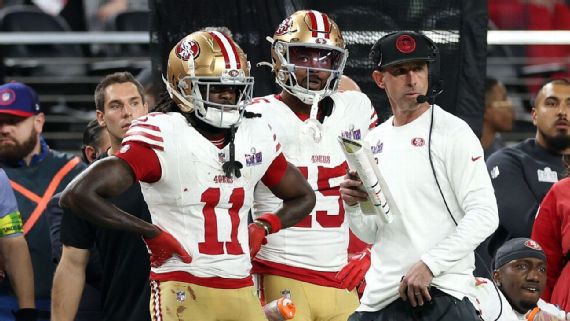
Super Bowl Ethics Dunces: The San Francisco 49ers

To be fair to the losing Super Bowl team’s players, it is quite possible that the brain damage they have suffered by their repeated concussions while collecting millions to entertain US gladiatorial combat fans and enrich NFL owners, sponsors and conspirators was responsible for the fact that they didn’t know the rules of the game they were playing (!). Nonetheless, the term “professional” in “professional football player,” in addition to meaning that the Super Bowl participants are compensated monetarily, is generally taken to also mean that they know what the hell they they are doing.

Apparently, they did not. That’s unforgivable.

Continue reading

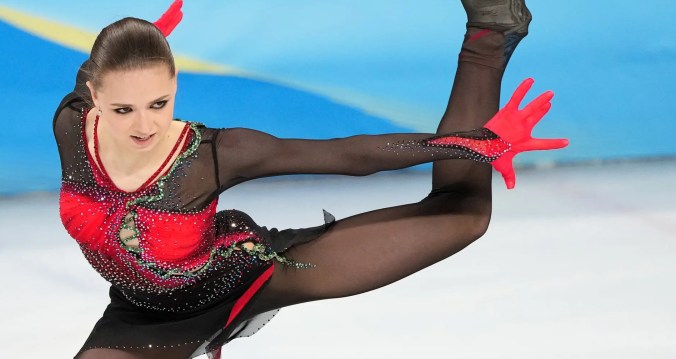
The Russian Figure Skating Olympics Scandal Finally Is Resolved After Everyone Stopped Paying Attention.

I’m thinking about establishing an organizational version of The Julie Principle. When an entity, company, organization or government has shown that its culture is sufficiently corrupt and unlikely to change for the better, maybe it’s a waste of time and ethical analysis to keep complaining about the inevitable misconduct. “Fish gotta swim, birds gotta fly.” Either just give up on trusting that entity, company, organization or government, or resolve to live with its flaws. Like Hollywood. The National Football League. Or, as in this ridiculous episode, the Olympics and Russia.

Kamila Valieva, the teenage Russian figure skating star, was banned from competition for four years yesterday by a three-member arbitration panel at the Swiss-based Court of Arbitration for Sport. The reason was her positive doping test that messed up the 2022 Beijing Winter Olympics beyond all reason, confusing everyone and keeping more than a dozen other athletes from receiving their medals.

Continue reading

Ethics Quiz: The Innocent-Until-Proven-Guilty College Basketball Star

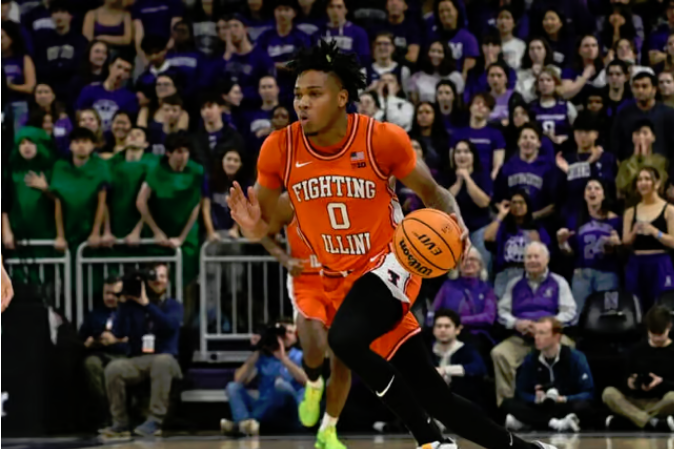
Illinois guard Terrence Shannon Jr. 23, was arrested in Lawrence, Kansas on Dec. 28 and charged with rape. While he visited Lawrence last September, he grabbed a woman and sexually assaulted her at a bar, or so the woman claimed to police. The Illini suspended Shannon following his arrest, but the player’s attorney requested a temporary restraining order against the school this month to force Illinois to let him resume playing basketball. A federal judge granted the request on January 19.

Shannon has been playing with the basketball team ever since. Last week, playing against Northwestern in his first road game since the arrest, he was taunted by fans chanting “No means no!” and “Guilty!”

Your Ethics Alarms Ethics Quiz of the Day is this: Continue reading

From the “Res Ipsa Loquitur” Files…Ethics Dunces: Parents Who Allow Their Daughters To Be Subjected to THIS

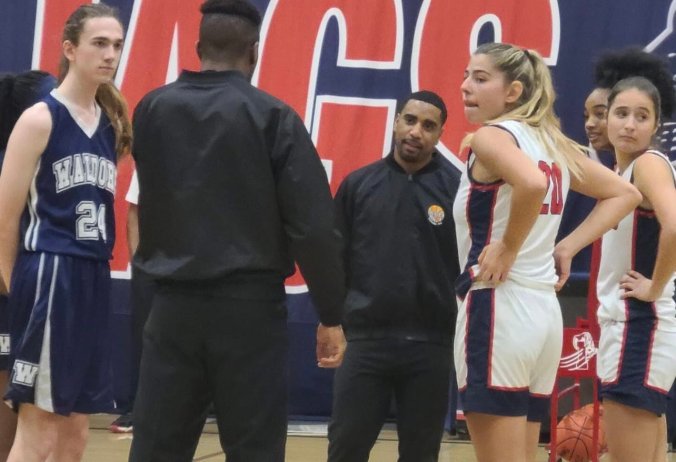
That’s Henry Hanlon, apparently a male basketball player who “identifies” as female. Clearly, it’s good for his ego. (Can’t tell who I’m talking about in the photo? Guess!)

The San Francisco Waldorf high school girls basketball team is on a roll, thanks to its court domination by team captain Henry Hanlon. No, he doesn’t even bother to carry a female name. California’s Interscholastic Federation (CIF) established “Gender Identity Participation” rule in 2013, and it is bats.“All students should have the opportunity to participate in CIF athletics and/or activities in a manner that is consistent with their gender identity,” the policy states. As CIF’s Associate Executive Director Brian Seymour explains, “All of our athletes, all the eligible athletes, are afforded the opportunity to compete with the gender they feel most comfortable with.” Oh. I can see where a high school athlete might be “most comfortable” with a fanciful gender ID that allows him to feel like the Harlem Globetrotters playing against their eternal patsies, the Washington Generals.

Continue reading

Ethics Dunces: The Chicago Bulls and Their Fans

That went well, don’t you think?

The NBA’s Chicago Bulls celebrated their “inaugural class” in the team’s new Ring of Honor ceremony during halftime of its game against the Golden State Warriors last week. The first Ring of Honor class included 13 men and the entire 1995-96 team, which went 72-10 and won the NBA championship. It didn’t help that the current Bulls gave up a season high in points in a 140-131 loss, but that was the least of the night’s low points.

The most popular and famous stars of that team, Michael Jordan, Scotty Pippen and Dennis Rodman, didn’t show up. The team wasn’t expecting them to, because all three declined, but it allowed the fans to believe otherwise, at least the fans who didn’t research the matter beforehand. Continue reading

“Baseball Super-Agent Scott Boras Has Another Super-Conflict And There Is No Excuse For It,” The Sequel

Sharp-eyed Ethics Alarms readers who pay attention to my baseball posts might recognize this one. It is like the most inexcusable lazy Hollywood franchise film, a sequel that is nearly identical to the original. I’m going to see how much of the post’s predecessor I can duplicate without having to change anything

Twelve years ago, Ethics Alarms began a post about baseball agents in general and Scott Boras in particular engaging in a flaming conflict of interest that harmed their player clients this way…

Baseball’s super-agent Scott Boras has his annual off-season conflict of interest problem, and as usual, neither Major League Baseball, nor the Players’ Union, nor the legal profession, not his trusting but foolish clients seem to care. Nevertheless, he is operating under circumstances that make it impossible for him to be fair to his clients.

I could have written that paragraph today. Nothing has changed. Literally nothing: as baseball general managers  huddle with player agents in baseball’s off-season and sign players to mind-blowing contracts, the unethical tolerance of players agents indulging in and profiting from a classic conflict of interest continues without protest or reform.

I may be the only one who cares about the issue. I first wrote about it here, on a baseball website. I carried on my campaign to Ethics Alarms, discussing the issue in 2010, 2011 (that’s where the linked quote above comes from), 2014, 2019, and in 2019 again,  and last year, in 2022. There is no publication or website that has covered the issue as thoroughly as this one, and the unethical nature of the practice is irrefutable. But I might as well be shouting in outer space, where no one can hear you scream. The conflict of interest, which is throbbingly obvious and easy to address, sits stinking up the game. Continue reading

Ethics And The 700 Million Dollar Baseball Player

In Mike Flanagan’s latest horror epic, the Poe mash-up in which “The Fall of the House of Usher” is repurposed into a nightmare scenario for the Sackler family of Oxycontin infamy, the avenging demon named Verna, who sometimes appears as a raven, lectures a soon-to-be victim on the evils of greed:

So much money. One of my favorite things about human beings. Starvation, poverty, disease, you could fix all that, just with money. And you don’t. I mean, if you took just a little bit of time off the vanity voyages, pleasure cruising, billionaire space race, hell, you stopped making movies and TV for one year and you spent that money on what you really need, you could solve it all. With some to spare.

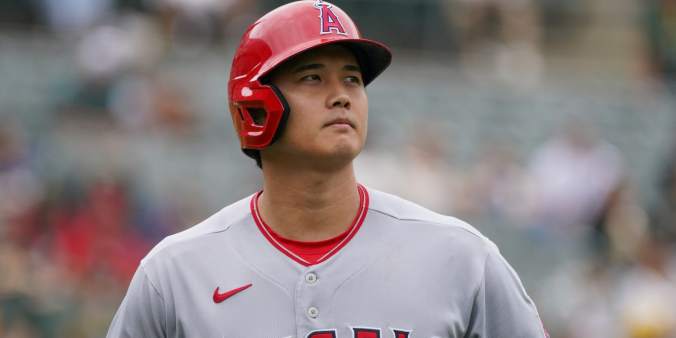
Yes, Verna is a communist and deluded, but it was impossible to read about the $700 million ten-year contract the Los Angeles Dodgers just gave baseball free agent Shohei Ohtani without that speech creeping into my thoughts. $700 million dollars?

Continue reading