Ethics Hero: The Boston Red Sox

Hold onto this one, Derek.

They can’t play baseball very well right now, but the Boston Red Sox*, my home town team, currently in last place in the American League East, knows how to make an ethical and generous gesture of respect and gratitude.

It has been largely forgotten now, but pitcher Derek Lowe was a big disappointment to the Red Sox during the regular 2004 season, barely winning as many games as he lost and pitching to a high earned run average. In the play-offs and World Series, however, Lowe was as good as good as a starting pitcher could be, going 3-0 and winning the clinching games of both the team’s stunning comeback play-off series win over New York and it sweep of St. Louis to win Boston’s first World Championship since 1918.

Tired of Lowe’s inconsistency and unpredictability (he had a reputation of partying too hard, especially on road trips), the Red Sox let him leave as a free agent after the 2004 season. Since 2004 he has been for the Atlanta Braves what he often was for Boston: a sometimes brilliant starting pitcher with a deadly sinkerball, and for the Red Sox, a distant memory. Last season Lowe’s home was robbed, and among the more than $90,000 of baseball memorabilia that was stolen was his Championship ring from that 2004 season. His insurance covered the monetary loss, but the ring, Lowe’s personal symbol of his key role in a Historic sports event, was lost forever.

Last week, when he was in Boston with his latest team, the Cleveland Indians, Lowe beat the Red Sox as a starting pitcher, and later received a message from the Red Sox owners that they wanted to give him something. Then John Henry, Larry Lucchino and Tom Werner, the trio of tycoons who have owned the team for a decade,  personally presented him with a 2004 World Series ring to replace the one that was stolen from his Florida home. Continue reading

Ethics Dunce: Sportswriter Jason Reid

I really don’t care how bad you feel, Jason.

In designating national sportswriter Jason Reid an Ethics Dunce because of his sensitive, thoughtful, brave but ultimately unethical column this morning, I don’t intend to suggest that his ethical failing is unusual, or noteworthy for any reason other than the fact that it is universal.

Sometimes we are all like Jason Reid, I think. We all engage in conduct that we suspect is wrong, but we enjoy it. Gradually, truth breaks through our denial and we cannot avoid the conclusion that the conduct is wrong; still, despite the fact that we do not believe human beings should willfully do wrong, we persist in the conduct.

Because we enjoy it.

Reid’s column is titled “Seay’s Death Forces Uncomfortable Questions For Football Fans,” referring to the recent suicide death of former NFL star Junior Seau, the second suicide of a former pro football star in recent weeks. The uncomfortable question is the same one I raised on Ethics Alarms in November of 2009, which tells you how many NFL fans read ethics blogs. I wrote then,

“Simply put, it is wrong to pay money to persuade people to permanently damage themselves for our entertainment. No fight fan can watch Muhammad Ali today, recalling his nimble wit and amusing patter, and not feel complicity in his current near-mute condition, the result of being induced to box after his skills were eroded by time. When we know, and players know, that playing football in the NFL is going to lead to premature dementia for a significant number of players who will accept the risk if the money is right, can we ethically continue to provide that money?”

Sportswriters don’t read ethics blogs either, so in May of 2012, Reid has decided that this and related questions need asking. So he writes.. Continue reading

Comment of the Day: “Is Buzz Bissenger Right? Should College Football Be Banned?….”

You’ve read the Comment of the Day….now read the book!

In his Comment of the Day, Michael elaborates on the ethics of college sports generally, going beyond the original topic of major football programs. The expenditures on student athletes is an ethics scandal all by itself, as Michael makes clear. When the headlines in the D.C. area were all about Maryland cutting eight varsity sports, I was stunned to learn 1) that the university spent a whopping $67, 390 per student athlete, and that this was the lowest amount in the the ACC (as opposed to Florida State’s $118, 813).  What possible justification could there be for this, when tuition costs are already crushingly high? Michael’s post makes the answer clear: none.

Here is Michael’s Comment of the Day, on Is Buzz Bissenger Right? Should College Football Be Banned? Is He KIDDING? Of Course It Should…:

“What is shocking is how big an impact this has on college student lives and how little anyone actually cares about learning and how little people actually care about the college students.

“If you have seen the news recently, there is a debate going on about college loans. There are also stories every few days about the high costs of college and skyrocketing college loan amounts that are the next big bubble to burst in the economy. It is obvious that this is going to end badly, with devastating consequences for the students, the education system, and the whole of US, but no one wants to actually do anything about it. Everyone wants to just stick their fingers in their ears and hope it will all turn out OK like that mortgage-backed-securities thing did. If you want to get to the bottom of the problem, you first need to start looking at where the money goes.

“How much does college actually cost?” Continue reading

Is Buzz Bissenger Right? Should College Football Be Banned? Is He KIDDING? Of Course It Should. And Everybody Knows It.

Scholars all, I’m sure.

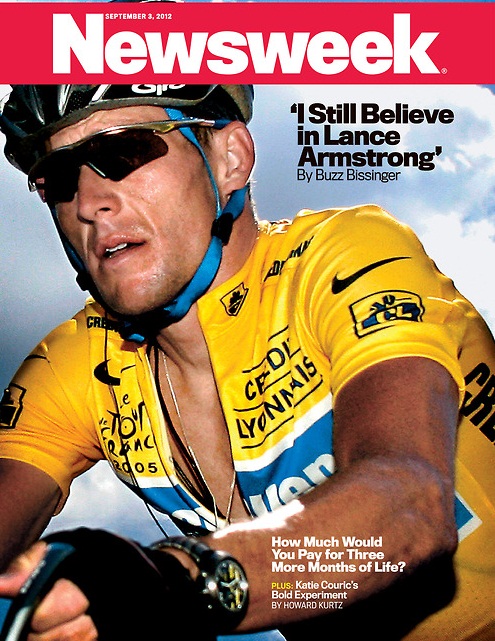
Not for the first time, sportswriter and commentator Buzz Bissinger has everybody buzzing about one of his frank opinion pieces, this one launched in the Wall Street Journal. His provocative title: “Why College Football Should Be Banned.”

Bissinger deserves credit for being willing to bite the hands that feed him: he is the author of “Friday Night Lights,” and many of Bissinger fans, at least up to now, tend to be football fans too. His article, however, is also one of those periodic slaps in the face of cultural apathy that occasionally causes a shift, as when Harriet Beecher Stowe wrote a little novel that alerted a lot of people to the obvious fact that a system in which human beings were bought, sold, and bred like cattle might not be consistent with civilized morality. It doesn’t take a genius, a revolutionary or a careful analyst to conclude that big time college football is corrupt and corrupting to the core. It only takes a willingness to brush aside rationalizations and face the truth.

Here are the arguments Bissinger presents to support his thesis:

  1. Football has nothing to do with academics.
  2. It is a distraction from both the purpose of higher education and attention to the serious problems facing the university system.
  3. With college tuition reaching outrageous levels and the college loan system teetering, university expenditures on pricey football programs are unconscionable.
  4. The major beneficiaries from college football are the NFL, which uses it as its minor league system at minimal cost; pathetic alumni, who wrap their self-esteem up with the fortunes of their alma mater’s football fortunes; and obscenely-compensated football coaches.
  5. Football programs, contrary to what the public might think, often lose money and become a drag on tuition funds.
  6. Colleges like Maryland have cut other varsity sports (eight of them, in Maryland’s case) to allow it to pay for football.
  7. The representation that the athletes are students is largely a sham, with many of them failing to graduate and the majority spending minimal time on substantive course study.
  8. The athletes are exploited.
  9. The game entails serious health effects, primarily head trauma, that are only now being recognized.

I’m sure we can come up with a #10, too. Oh! I have one: Penn State. We were just given a front row seat to a frightening display of how even a “model” football program could warp the priorities and ethical values of an entire campus culture.

Of course Bissinger’s attack has college football supporters scrambling into a defense formation. What can they come up with? Not much, but it’s a fascinating study of how rationalizations rush into voids caused by the lack of substantive arguments. One college football-hyping blog’s first response was this: Continue reading

New Passengers on the Roger Clemens Ethics Train Wreck

Hey Andy! Listen to that guy behind you…you won’t believe what he’s saying about you!

First, an Ethics Train Wreck recap, before we get to yesterday’s developments:

The Roger Clemens ethics train wreck officially started rumbling down the tracks in 2008, when Major League Baseball’s Mitchell Report, itself something of a train wreck to begin with, revealed that Roger Clemens’ trainer, a rather shady character named Brian McNamee,  had told the investigative commission that he had injected the pitching great with banned performance-enhancing drugs, or PED’s. In rapid succession there was ethics carnage everywhere. Clemens, under the pretense of inquiring about the health of his former trainer’s child, who was gravely ill, tried to get the trainer to admit he was lying. Congress, absurdly, called a special hearing on the matter. Clemens visited select Congressional offices beforehand, which tainted the objectivity of questioning. The Congressional committee, rather than seeking to illuminate the Clemens dispute or the status of PED’s in baseball, instead decided to take sides, with Republicans defending Clemens (a Bush-supporting Texan) and the Democrats seeking his scalp—facts had nothing to do with it. Clemens, meanwhile, made several dubious statements, and showed his class by telling the world that his wife, not he, was the PED-user in the family. A few months before, Clemens prevailed upon his friend Mike Wallace, then in his late 80’s and semi-retired, to tarnish his reputation as a tough and objective truth-seeker by tossing soft-ball questions to Clemens on CBS, so the pitcher could deny his drug use to a famously skeptical interviewer who was, in fact, thoroughly conflicted. Continue reading

More On The Ethics Of Watching Football From Malcolm Gladwell

And NO,Malcolm is NOT Art Garfunkle's son!

I don’t generally post “See? Someone famous and respectable agrees with me!” links, because 1) somebody agreeing with me doesn’t validate my argument, 2) I’m trying to promote ethical awareness and analysis skills, not to be “right,” and most of all, 3) if I did, I’d feel I had to hide when the famous someone is Glenn Beck, Joy Behar, Ozzie Ozbourne or Dinky, the Pet Rock.

However, I found the comments of Malcolm Gladwell on the topic of football interesting, and I link to them here. Gladwell is the author of “The Tipping Point,” and like Jacque Barzun, Bill James, George Will, Judge Richard Posner, blogger Rick Jones and some other perceptive thinkers I admire, always worth paying attention to, even when he’s wrong. I had suggested that the increasing evidence that football-related head injuries were routinely crippling players implicated the ethics of being a football fan here, and have periodically revisited the issue on this blog  and as a guest on Michel Martin’s NPR show, “Tell Me More.” As a result, I have received a good amount of hate mail from football fans, telling me that I’m a baseball-biased idiot. I may be that, but I don’t think Gladwell is. I think that he ( and I) may be right: ethics and insurance premiums may eventually  send football the way of pro boxing.

______________________________________

Spark: WTVR.com, on Ray Easterling’s recent suicide.

Source: Slate

Ethics Alarms attempts to give proper attribution and credit to all sources of facts, analysis and other assistance that go into its blog posts. If you are aware of one I missed, or believe your own work was used in any way without proper attribution, please contact me, Jack Marshall, at  jamproethics@verizon.net.

A Worm In The Culture: Warped Competition Ethics

I'm sorry, Serena, but you're just too good to be on the tennis team. We've decided that you should be on the chess team.

It is difficult for me to comprehend the kind of thought processes that Southampton (New York) High School to ban student Keeling Pilaro, the only boy on  the school’s field hockey team, from playing this season because he is too good at the game, which he learned as a child in Ireland.  I do know their logic is unethical, un-American, and unfair, at least as unfair ought to be defined in the land of the free and the home of the brave.

“They told me I wasn’t allowed to play because I had advanced skills that I learned in Ireland,” Keeling told  local TV reporters. “They told me because I have an ‘adverse effect,’ but they didn’t even explain what the adverse effect was, so that’s what I’m kind of confused about.”
The executive director of the Suffolk County field hockey organization told the local Fox affiliate that the boy was being banned because field hockey “is a girl’s sport.” “When a boy plays,” he explained, “it leads the way for other male players to come in and take over. “[Keeling is] having a significant adverse effect on some of his opposing female players. The rules state he would be allowed to play if he wasn’t the dominant player.”

“Adverse effect,” in field hockey-speak, apparently means an unfair physical advantage, danger to opponents,  keeping a girl from getting more playing time or taking away from a female’s ability to garner postseason awards.

Ah. So we’re talking about discrimination, then, are we? Just so we have our terms straight.

If the woman’s movement has integrity, and it often doesn’t, we would see women protesting this indefensible treatment of the sole male player on a female team. The only field hockey team in the school is the girl’s team: Keeling, by the same principles of fairness and equal opportunity that have been enforced to allow girls to try out for boy’s wrestling, football and baseball teams in high schools and colleges around the country if they have the skills to make the team, should have every right to play on the only field hockey team there is, and not be penalized for his superior skills. Have authorities ever kicked a girl off a field because she was too fast, too strong, too skilled, too good? Would they? I certainly hope not.

Imagine if Ted Williams, LeBron James, Joe Montana, Bobby Orr and Serena Williams had been kicked off their high school teams because they dominated. What kind of Maoist, mediocrity-rewarding, excellence-stifling values is Southampton High trying to infect the nation with by penalizing high performance and achievement? Apparently they don’t understand the nature of competition, which is a serious handicap for a school, and a malady that should not be passed on to a single student. The outstanding competitors make every other player better, unless a player doesn’t want to make the effort, doesn’t have the character to accept that one doesn’t have to win to achieve something important in a contest, or is playing for the wrong reasons. I remember that I was once admonished by a stage director of an amateur production that I was too skilful and experienced for the rest of the cast, and was making them look bad. I was aghast then, and that conversation makes me angry even now, decades later. “Tell them how to be better, then, ” I told her. “Because I’m sure not going to try to do any less than my best.”

We have to decide if we’re really serious about gender equality or not. Keeling is not bigger than the girls on his team, and he doesn’t have a beard and 18 inch biceps. There are two things different about him, and two things only: he is really good, and he has male genitals. I thought the lesson of the women’s movement was that one’s genitals shouldn’t matter, that what mattered was whether you could do the job. Or does that rule only apply to female genitals?

I can certainly understand, if not the logic that is stopping Keeling Pilaro from playing the sport he loves, where the seeds of such illogical logic come from. The seeds come from the bizarre regulations that allow women to be firefighters with upper body strength that would disqualify male recruits, and female soldiers to be certified as combat ready without having to meet the same requirements as a male soldier. They come from affirmative action. When equality doesn’t mean equality in our nation’s increasingly warped, discrimination-is-fairness culture created by regulators, activists and bureaucrats, “Through the Looking Glass” decisions like this one, telling a player he’s too good to be eligible for the team, can begin to make sense.

It doesn’t make sense. It’s not fair, it’s not healthy, and if one applies Kant’s Rule of Universality to it, we end up with a nation of gray, where, as the old Chinese proverb cautions, “the protruding nail will he hammered down.” No more Babe Ruths, no Dana Torreses; no David Beckhams, no Michael Jordans, no Carl Lewises, no Muhammad Alis, no Tiger Woods. And also, as this infection spreads, no Meryl Streeps, Thomas Jeffersons, Thomas Edisons, Eugene O’Neils, or Barbra Streisands. After all, we mustn’t make the less talented and accomplished look bad, feel bad, or make them have to aim higher and work harder to achieve their dreams. It’s wrong to excel. It has an “adverse effect” on those who can’t or won’t.

We all have a stake in whether Keeling Pilaro gets to play field hockey this fall.

Umpire Accountability, As The Day of the Robots Fast Approaches

If Robby replaces you, Larry, it's your own fault.

Are baseball’s umpires trying to get themselves replaced by machines? Or perhaps baseball’s brass are conspiring to allow incompetent and lazy umpires to do themselves in, as their miserable work wins over the traditionalists and the Luddites to mechanical ball and strike-calling and their overseers refuse to take decisive action against the worst officials they have. Whatever the explanation, today’s debacle ending the Tampa Rays-Red Sox game in Boston showed an appalling lack of accountability and professionalism in a segment of the game that is critical to its credibility and integrity. Continue reading

Ethics Hero Emeritus: Jackie Robinson (1919-1972)

Yesterday, the media, history buffs and Kate Winslet fans were obsessed with remembering the Titanic, sometimes even with proper reverence to the 1500 men, women and children who lost their lives in the North Atlantic on April 15, 1912. A strong argument could be made, however, that the most significant event that occurred on April 15 took place in 1947, in Brooklyn, New York. For that was the day that Jackie Robinson ran out to his position at first base as a member of the Brooklyn Dodgers, and became the first African- American to play baseball in the Major Leagues since the earliest years of the game.

With that act, and his epic heroism for the rest of the season, Robinson changed baseball, sports, American society and history. It was a cultural watershed in a nation that had been virtually apartheid since the end of the Civil War, a catalytic moment that served notice that racism was no longer the future of America. Robinson’s dramatic debut in 1947 was more than a year before President Harry Truman desegregated the military, and seven years before the Supreme Court ruled that “separate is inherently unequal” in declaring public school segregation unconstitutional. Further down a difficult road that has not ended yet were the crusade of Rev. Martin Luther King, the Civil Rights Act, Bill Cosby, Oprah Winfrey and Barack Obama, but it was Jackie Robinson who led the way.

And no one should ever think that he just happened to be in the right place at the right time. It wasn’t merely the opportunity. It was him. Continue reading

Were The Marlins Right To Suspend Ozzie Guillen for Loving Fidel Castro?

And imagine...Media Matters had NOTHING to do with it!

‘”I love Fidel Castro,’ blurts Ozzie Guillen, the new manager of the Miami Marlins, in his Jupiter, Fla., spring-training office before an early-March team workout.”

And with that spontaneous utterance, quoted in a Time magazine feature, Guillen, who was hired during baseball’s off-season to lead the long-languishing Miami baseball franchise to elusive community popularity and on-the-field success, suddenly found himself at the epicenter of a career-threatening controversy. Cuban groups in the Miami area were horrified, and demanded that Guillen be fired. Guillen immediately went on an apology tour, arguing that he had “mistranslated in his head from Spanish to English,” and that he emphatically did not “love” the Cuban dictator, but in fact hated him. Even though he said he loved him. That’s some bad translating.

“I feel like I betrayed my Latin community,” Guillen said to one Miami group, according to ESPN’s translation of his comments in Spanish. “I am here to say I am sorry with my heart in my hands and I want to say I’m sorry to all those people who are hurt indirectly or directly. I’m sorry for what I said and for putting people in a position they don’t need to be in. And for all the Cuban families, I’m sorry. I hope that when I get out of here, they will understand who Ozzie Guillen is. How I feel for them. And how I feel about the Fidel Castro dictatorship. I’m here to face you, person to person. It’s going to be a very difficult time for me.”

He got that right. Today the Marlins suspended their manager for five games, saying in a statement, Continue reading