Ethics Dunce: NBC

You tell 'em, NBC...

NBC cut the words “under God” from the Pledge of Allegiance in its lead-up to its coverage of the U.S. Open at Congressional Country Club in Washington, D.C., an audacious and inexcusable unilateral kowtow to political correctness. Why did the network do it? What gave them the idea that NBC has the right to redact the official Pledge, as passed by Congress? Who are the arrogant idiots who would dare to do such a thing, and think they could get away with it?

Nobody knows, or at least, nobody is saying. The NBC brass, watching Twitter burst into flames with fully justified criticism, issued a classic non-apology apology, saying, Continue reading

All-Star Election Cheaters: The Boston Red Sox and the San Francisco Giants

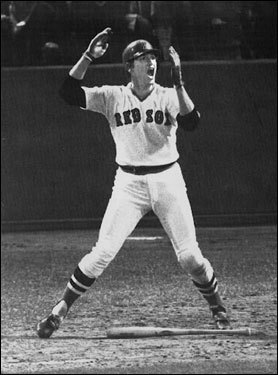
The Major League Baseball All-Star Game team voting by the fans is hardly a model of fair democracy. Most fans vote for their favorites rather than the best qualified players, and are not very informed even about their favorites. They also are guided more by loyalty than analysis, choosing local heroes over more accomplished players from another team. In other words, it’s basically the same as political elections.

Well, there are other factors that make the All-Star Game voting less than admirable. You can vote up to 25 times from each e-mail address, giving an edge to computer geeks. The teams in the biggest cities and with the best attendance have an advantage over the rest, because there are more of their fans voting. And players on teams like the Phillies, Dodgers, Red Sox, and Yankees that are on national TV a lot, along with last season’s World Series adversaries, the Texas Ranger and the San Francisco Giants, have more name recognition nationwide, giving their players another unfair edge.

Still, it is an election, the votes count, and the various franchises should be trying to uphold whatever minuscule smidgen of integrity the current system has. The Boston Red Sox and the San Francisco Giants, however, don’t think they have enough advantages in the  All-Star voting already, and have found a loophole in the rules that allows them to cheat. Continue reading

Andy Murray, Tennis Corrupter

That's nice, Andy: rub his nose in it.

Once upon a time, like, oh, a few years ago, tennis was a sport in which the ancient values of mutual respect between adversaries, honesty, fairness, and sportsmanship were paramount.  The periodic talented boors  like Connors, Nastase and McEnroe were aberrations, and their conduct was derided, colorful though it might be.

I am pretty sure that Scottish tennis star Andy Murray has put an end to this, unless the international tennis body or a public uproar puts an end instead to his bringing the tennis equivilent of NFL taunting and NBA showboating onto the court. Murray is a trick shot specialist, and at the London Queens Club tournament leading up to Wimbledon, he created a viral YouTube moment  when he hit a winner against opponent Wilfried Tsonga by swinging his racket under his leg. It was spectacular, flashy and fun. It was also rude, disrespectful and obnoxious.

Guess which the public cares about. Continue reading

Batter Up! The Hypocrisy of Bigotry Victims Discriminating

If there is something dumber than gay-only softball leagues, I don't want to know what it is.

This is a story rife with such mind-melding stupidity and hypocrisy that I really don’t want to recount it in all its nauseating detail. To be brief, there is an organization called The North American Gay Amateur Athletic Alliance, and it oversees gay softball leagues in dozens of U.S. cities.It also runs an annual tournament called the Gay Softball World Series. Now it is in court, as three men filed a lawsuit complaining that their team’s second-place finish in the 2008 Series  was unfairly nullified because they are bisexual, not gay, and thus caused their team to exceed the limit of two non-gay players.

Fascinating. And why, oh why, are there athletic teams in the United States of America that restrict their roster according to who the athletes have sex with? Why are not all self-respecting, intelligent, ethical gay Americans telling these organizations that they are an embarrassment and a disgrace to the very values gay rights advocates are fighting for in more substantive realms, like marriage, the priesthood, and corporate America? Continue reading

Ethics Train Wreck at the French Open: The Saga of the Over-Eager Ballboy

John McEnroe slams a player for not being an exemplary sportsman. Wait...WHAT?

Sparking a mini-ethics train wreck at the French Open, an overenthusiastic ballboy, thinking a point was over when it was not, ran onto the court in the middle of the tennis match between Andy Murray and Viktor Troicki, forcing a replay on a point that appeared to have been won by Troicki.

Crash!

  • Andy Murray happily accepted his good luck and won the replay. He was wrong. The tradition of tennis, unlike most other sports (but like golf), is for the competitors to be gracious in such situations, as when a player knows that an umpire mistakenly called a good point by his opponent out of bounds. True, these days that tradition is observed less and less frequently. It would still have been the right thing to do, the ethical response.
  • Commenting on the match on The Tennis Channel, John McEnroe criticized Murray for not giving Troicki the point. This may win him the Gall of the Year Award, sports division. Yes, people can change, and it is not strictly hypocritical for one of the most unsportsmanlike players in tennis history to criticize a current player for not being an exemplary sportsman, now that the brat has mellowed and learned the error of his ways. At very least, however, if Mac was going to criticize another player for not doing something he would have never considered when he was competing himself, McEnroe was obligated to admit that he was advocating a standard he didn’t embrace when he had the chance. Continue reading

Comment of the Day: “Schadenfreude, Ethics, and Those Fanatics Inside Us All”

Maybe "The Broadcaster" was all Harry had inside...

Rick elaborates nicely on the theme of my post on handling those fanatic personas that reside in each of us, and in the process takes the ethical measure of an iconic baseball broadcaster whose charms always escaped me…the late Harry Carey.

“It strikes me that there’s another part of the equation, which you only hint at here, but which you have mentioned in other posts. That’s the “ethics alarm” (to coin a phrase) that goes off, or should, when the director or the Red Sox fan or whoever That Guy is says or does something unethical. Part of it is “heat of the moment” stuff: the egoism that slips out in a moment of excitement. No, of course you didn’t want Thurman Munson to die, but yes, he did play for the hated Yankees, and their team just got worse. You’re forgiven the fist-pump. Once. And provided you (Jack, as opposed to Red Sox fan) didn’t mean it.

“I was watching a Cubs game on WGN sometime in the mid-1980s when news came over the wire that Montreal Expos infielder Hubie Brooks had suffered a season-ending injury. Brooks had been a favorite of mine when he’d played for the Mets (“my team”), and I continued to follow his career with some interest, so the news was doubly sad for me: a player had been seriously injured, and that player was Hubie Brooks.

“In contrast, Cubs announcer Harry Carey proclaimed “well, if it helps the Cubs win, it’s OK by me.” I remember the exact words 25 years later. What struck me was not that they were uttered, but that no one—not Carey himself, not his broadcast partner, no one—made the slightest attempt to walk them back. That was the official verdict: a season-ending injury (Brooks was never the same again, by the way) was a good thing if it happened to somebody in a different uniform. I mentioned the incident to a couple of friends—Cubs fans—and they laughed and said “oh, that’s Harry.”

“Everyone understood that Carey was a Cubs fan first and an announcer second. That was, I am told, part of his charm—I never saw it, but others did. Still, I was sort of hoping that there would be a human being in there somewhere. On that particular day, at least, I was disappointed. We lived in WGN country for another seven years. I never watched another Cubs game without turning off the sound.”

Schadenfreude, Ethics, and Those Fanatics Inside Us All

NBC baseball blogger Craig Calcaterra recently raised the sensitive issue of sports fan Schadenfreude*, something that I have been afflicted with from time to time. The occasion was the recent injury to San Francisco Giants catcher Buster Posey in a particularly gruesome collision at home plate. His comments made me think about the obsessed and narrow personas in all of us, and how we should regard their occasional callousness.

Posey was the 2010 National League Rookie of the Year; he is also a cornerstone of the Giants’ recent success: the team is the reigning Major League Baseball World Champion. The collision with Florida Marlins’ Scott Cousins simultaneously broke Posey’s leg, ended his season, jeopardized the career of an exciting young player (players often return from such injuries permanently diminished) and dealt a serious blow to the Giants’ chances of returning to the World Series in 2011.  Reacting to a blogger who suggested that the injury caused most non-Giants fans to  give “a little fist-pump”… because “their team’s chances of dethroning the Giants as World Series champions just got a little bit better,” Calcaterra wrote… Continue reading

Murder House Ethics and the Validity of Feelings

We last visited the issue of the ethical selling of murder houses in February, when  the Jon Benet Ramsey house went on sale. I opined that even though Colorado doesn’t have a legal requirement that a seller must reveal the history of the house as long as it has no structural implications, there is an ethical obligation to let prospective buyers know about house-related events that might cause them to reconsider their decision to buy it:

“The truth is still this: there is something about the $2,300,000 house that makes it undesirable to a lot of prospects, and that means that even if the law doesn’t require the seller to tell interested house-hunters the story of the little dead girl in the basement, fairness and the Golden Rule do.”

The debate over this issue was unexpectedly intense. Ethics Alarms’ resident rational humanist “tgt” objected strenuously, writing,

“I don’t see how you can avoid the slippery slope question. Your basis is 50% of the population having a desire. Is that the cutoff? I think over 50% of people would prefer to live in a house where there hasn’t been child abuse. Go back a few years, and I bet a significant portion of the population would prefer to live in a house that had never had black occupants. Back in today’s world, more than 50% of the population doesn’t want to live in a haunted house. If a previous tenant thought the house was haunted, does the complete nonexistence of ghosts make not mentioning this a material representation? If an event is uncommon, does a realtor need to take a poll before deciding what is material and what isn’t?”

Karl Penny, however, bolstered my position:

“…the question is, does the realtor have an ethical obligation to fully reveal the history of this house. Well, the funny thing about behaving ethically is, it often requires us to act in ways that are not in our own immediate best interest… this may give a potential buyer a leverage point to negotiate a lower price for the house, to the detriment of the realtor, who could end up taking a lower commission as a result. No surprise, then, that the realtor would love to find a reason not to opt for full disclosure. But, if that realtor successfully conceals the house’s history from an actual buyer, one who would not have bought had they known otherwise? The realtor had a simple, human duty to disclose, even if it cost him money (and, yes, even if it cost me money, were I the realtor)….Jack’s right: this is Golden Rule time. If I am willing to treat with someone else in a way that I would not want anyone to treat with me, is that logically consistent (much less ethically consistent)? And would any of us want to live in the resulting society should everyone behave in that fashion?”

Now another house with a Hitchcock-worthy past is on the market: 9337 Columbia Boulevard in Silver Spring, Maryland, a state that also doesn’t require its realtors to disclose when a house has been the scene of a murder…or, in this case, three murders in the last decade. Continue reading

No Excuses and No Mercy For Lance Armstrong

Sorry, Lance…good guys don’t cheat.

Back when Barry Bonds was still playing baseball, a sportswriter mused about why it was that everyone assumed  Bonds was a performance-enhancing drug cheater despite his protestations to the contrary, while most Americans and sports journalists brushed away similar allegations regarding Lance Armstrong. Both competed in sports with acknowledged steroid abuse problems; indeed, the problem in bicycle racing was presumed to be more pervasive than in baseball. (A few years later, with the banning of multiple Tour winners, the presumption became a certainty.) Both athletes had improbable late career improvements in their performance to reach previously unimaginable dominance in their respective sports. Both had to explain or deflect multiple credible accusations of cheating and circumstantial evidence that suggested that they were doping. Both claimed they had never failed drug tests, and there were good reasons to doubt the denials.

So why was Bonds a villain by consensus and Lance an untouchable hero? The sportswriter explored many theories (Apologies: I cannot locate the article. If someone can, please send it), among them the greater popularity of baseball over cycling, Bond’s startling physical transformation into a behemoth while Armstrong remained cyclist-sinewy,  Armstrong’s inspiring story as a cancer survivor, Armstrong’s philanthropic work,and the fact that Bonds, unlike Armstrong, was black. The biggest difference, however, and to the writer the key one, was that Armstrong acted the role of a hero, while Bonds refused to. Armstrong was friendly and accommodating, while Bonds was angry, intimidating and antagonistic. Armstrong seemed like someone who played by the rules, and who lived his ethical values. Bonds seemed like a rebel, one who wouldn’t hesitate to break the rules for his own benefit. In short, the public wanted Armstrong to be the hero he seemed to be, so they ignored the evidence linking him to performance-enhancing drugs.

After last Sunday, the disparate public perception of Bonds and Armstrong, always illogical, became unsustainable. Continue reading

Unethical Quote of the Month: Tim Gannon

The choice came down to Greg Anderson or Jack the Ripper...

“Some parents have a problem with him being a coach, but it’s not like he was caught stealing or did some bad things with children.”

Tim Gannon, a real estate broker and father, explaining why he has no problems with Barry Bonds’ steroid-pushing trainer, Greg Anderson, serving as an assistant coach for his son’s Capitol Electric team in the Burlingame Youth Baseball Association, according to an article in Sunday’s New York Times.

It’s seldom that one sees in print a more perfect example of my least favorite rationalization for unethical conduct, “It’s not the worst thing.” This popular and despicable rationalization seeks to excuse bad conduct by comparing it to worse conduct, an intellectually dishonest device that can be used to try to minimize the seriousness of literally any behavior, no matter how heinous. (“Sure, Jack the Ripper did some bad things, but he was no Hitler!” ) It is the ethics embodiment of the dishonest rhetorical technique of the false choice. Continue reading