Sports
The Replay and Integrity: Baseball at an Ethics Crossroads
On the final day of baseball’s regular season, the San Francisco Giants were playing the San Diego Padres in a contest with post-season implications for both teams. Had the Padres won , it would have forced two one-game playoffs, with the loser of a Giants-Padres showdown today facing the Braves on Tuesday to determine the National League Wild Card team. In the bottom of the first, the Giants’ Andres Torres smashed a Mat Latos pitch down the left-field line. The ball clearly landed right on the chalk-marked foul line, kicking up a cloud of white dust as undeniable proof that the ball was fair,and the batter destined for second base or beyond. Third-base ump Mike Everitt called it foul, however. Broadcasters, the Giants managers, everyone protested and pointed, but to no avail.
The Giant’s won anyway, so it only mattered to Torres’s batting average. But a time-bomb is ticking. Baseball, which was embarrassed last season into adopting video replay for home run calls, allows no videotape mandated reversals on other blown umpire calls. As the game heads into its period of highest visibility, when casual baseball fans start paying attention to the best teams playing for the title, the likelihood of an obviously wrong call by an umpire leading to an undeserved win in a crucial game is unacceptably high. Why does baseball’s leadership resist a solution? Continue reading
Thomas Boswell’s Outrageous Ethical Breach
In the first installment of Ken Burns’ latest addendum to his epic documentary “Baseball”, there is a considerable discussion of baseball’s steroid problem, and its effect on the game, its image, and integrity. Washington Post sportswriter Thomas Boswell is one of those interviewed, and caused quite a few PBS watchers, including me, to drop their jaws when he volunteered this:
“There was another player now in the Hall of Fame who literally stood with me and mixed something and I said ‘What’s that?’ and he said ‘it’s a Jose Canseco milkshake.’ [ Note: Star outfielder Jose Canseco was widely believed to be a steroid user from early in his career, and he finally admitted it after retiring.] And that year that Hall of Famer hit more home runs than ever hit any other year. So it wasn’t just Canseco, and so one of the reasons that I thought that it was an important subject was that it was spreading. It was already spreading by 1988.”
Boswell, who knew exactly what the player meant by “Jose Canseco milkshake,” never reported the apparent use of steroids—illegal in 1988, as it is now— to the team, Major League Baseball, or the public. Continue reading
Stupid Ethics Tricks: Buns, Mascots, Mottos and Maher
Advertising Ethics: KFC is marketing its new “Double Down” chicken sandwich by paying college co-eds—who must meet some secret standard of butt-comeliness—to wear sweat pants with “Double-Down” printed on the seats. The National Organization of Women objects: “It’s so obnoxious to once again be using women’s bodies to sell fundamentally unhealthy products,” says Terry O’Neill, NOW’s president. What an odd comment: is it all right in NOW’s view to use women’s body to sell healthy products? Is O’Neill saying that (not to give KFC any ideas) paying buxom co-eds to wear tight T-shirts advertizing fried chicken breasts would be wrong, but the same campaign for healthy, broiled breasts would be just fine?
I am tempted to say that any ethical condemnation of the “buns as billboards” method is attributable to the “Ick Factor,” not ethics. Continue reading
The Reggie Bush Affair
The Reggie Bush affair, in which the NFL star was stripped of his 2005 Heisman Trophy as the year’s outstanding college football player (to be more accurate, he was about to be stripped of it and chose to relinquish the award voluntarily), is one of those periodic incidents that exposes the media’s rudimentary and flawed ethical instincts, as well as the public’s. Baseball’s steroid scandal is another example. At its core, the Bush situation is infuriatingly simple: he was not eligible for the Heisman in 2005, because he had accepted gifts from alumni and other benefits and amenities forbidden by NCAA rules. It doesn’t change the correctness of the decision to rescind Bush’s award to note that the NCAA is corrupt, that college athletes are exploited by the system, that anyone would be tempted by all the people trying to throw money, cars and other trinkets at them, that the mess of big time college football isn’t cured by punishing Reggie Bush, or any of the other dozen excuses, rationalizations and irrelevant arguments bleated into cyberspace by various sports pundits who lack the skills to decipher a basic ethics problem. Continue reading
Ethics Quiz: What Do the Gulf Oil Spill, Pearl Harbor, Bernie Madoff, 9-11,Tyler Colvin’s Chest Wound Have in Common?
Answer: They all are the inevitable consequences of the human conduct known (on “Ethics Alarms,” at least) as the “Barn Door Fallacy”—the irresponsible and unethical tendency to allow a dangerous situation to persist until it actually causes catastrophic damage, thus giving the decision-makers sufficient support to spend the money or cause the systemic disruption necessary to address the problem, too late, of course, to save the victims of the catastrophe. They lock the barn door, but after the horse is gone, and perhaps has trampled someone to death while leaving.
Who is Tyler Colvin? He is a major league baseball player in the employ of the Chicago Cubs. His season, and almost his life, ended yesterday: Continue reading
Darek Jeter, Rob Neyer, and Baseball’s Traditional Deceptions
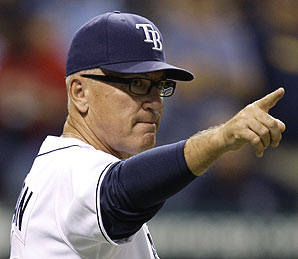
ESPN blogger Rob Neyer has once again called for baseball to punish “cheaters” which he defines as, among other things, “lying to an umpire” and faking an injury, though there are no rules against either. His impetus was an incident in last night’s Rays-Yankee showdown, in which Yankee shortstop Derek Jeter convinced the home plate umpire that he had been hit by a pitch, when replays showed that the ball actually hit his bat. The subterfuge led to two runs for the Yankees and the ejection of Rays manager Joe Maddon, who argued the call to no avail. Jeter later admitted that he had fooled the umpire, and seemed to be rather pleased with himself.
This has Neyer rather confused. He writes that Jeter ought to be punished for his dishonesty, because ” it wasn’t fair that Jeter was awarded first base. It wasn’t fair to pitcher Chad Qualls, or to Qualls’ teammates or his manager or to the thousands of Rays fans watching and listening to the evening’s dramatic events.” Yet then Neyer immediately points out that Jeter did “nothing wrong.” So Jeter should be punished because he did nothing wrong? If what Jeter did is in fact dishonest and unfair, of course it is wrong.
But it’s not, any more than bluffing in poker is unfair and dishonest. Continue reading
Manny, Kanye, and the Farce of Self-Serving Apologies
Two habitual bad actors in the world of entertainment apologized this week, for similar reasons and with equivalent credibility.
First, baseball slugger Manny Ramirez issued an apology to his former team once removed, The Boston Red Sox, for forcing the team to trade him in the middle of the 2008 pennant race because Manny was faking injuries, refusing to hustle during game, assaulting employees, and poisoning team morale and discipline. “I think everything was my fault,” Ramirez said. “You’ve got to be a real man to realize when you do wrong. Hey, it was my fault, right? I’m already past that stage. I’m happy. I’m in a new team,” Manny told reporters. He was with a new team, all right: the Dodgers, his previous team, let him go to the Chicago White Sox for nothing because, well, he was faking injuries, dogging it in the field…same act, different stage. So what was the apology about?
Manny, or more likely his agent, realizes this most recent break with a team as the result of his habitually juvenile and unprofessional attitude might cost him a lot of money at contract time—Ramirez is a free agent after all. So contrition was called for—two full years after he laughed off any suggestions that he was at fault for the Boston debacle, and proved that he had been loafing on the field by playing in L.A. like he was on fire. This isn’t an apology; it’s damage control, and thus is a deceitful and dishonest apology that has nothing whatsoever to do with genuine regret. The big tip-off is that Ramirez felt he had to explain why his apology was so admirable. Yes, Manny, you have to be a real man to admit you’re wrong; a real jerk to fake an apology to fool a future employer into believing that you’ve turned over a new leaf, and real fool to believe anyone will fall for it.
Then there is rapper Kanye West. Continue reading
Well, If The Washington Post Won’t Fire A Reporter For Intentionally Publishing Lies, At Least It Gets Angry At Him
Mike Wise, a Washington Post sportswriter and columnist deliberately posted a phony scoop (about Pittsburgh Steelers quarterback Ben Roethlisberger) on Twitter, as an experiment to see how widely it would be picked up. His plan, he now says, was to correct the lie with a follow-up tweet. Due to bad luck or the intervention of the God of Journalism, however, his Twitter account froze, and what was supposed to be a near immediate correction took almost forty minutes. Several internet sites, from the Miami Herald to NBC’s ProFootballTalk, passed on the original tweet, attributing it to Wise.
Faced with a staff reporter who intentionally published a lie for no other reason than to see what would happen, the Post reacted according to its concern regarding the seriousness of his conduct—that is, deceiving those who trust him, as a member of a legitimate media organization, to report only the truth and to respect the trust of his and his paper’s readers—and suspended him for one month. Continue reading
Revisiting the Obligation vs. Charity Issue in Baseball Retirement Benfits
In a recent post, Ethics Alarms discussed that demands of a group of former Major League baseball who receive inferior retirement benefits, because the changes made to the game’s pension and health insurance qualifications in 1980 were not made retroactive. The group has argued that it was unfair for the baseball clubs and players union to have voluntarily extended benefits to pre-1947 players—players who played before there were any retirement benefits at all—and not them. The post argued…
“…The inclusion of the older players, from before 1947, was not the same: the group included many of the game’s greatest players, who could legitimately say that they were essential in building the industry that had made the current players so wealthy. Leaving all the older players without any pensions or medical plans from Major League Baseball looked like ingratitude toward the men who, quite literally, helped make the teams and players rich. The sport owed them, and it was right for them to help the veteran group…[The 1948-1979 group], by definition, were not stars; for the most part, they were…journeyman spare-part players who barely held on to their jobs…The fact that players with one day of service in the big leagues today qualify for a health insurance no more entitles the Moonlight Grahams of the Seventies to the same than the million dollar salaries of today’s second-string catchers entitles retired catchers who made $30,000 a year to insist on retroactive pay at today’s pay scales. Baseball players are paid what their rarified talents are worth, and those who create today’s multi-billion dollar industry are worth much more than the players who toiled before the big cable contracts and merchandising kicked in…The fair thing is for people to live with the deals they freely agreed to as conditions of their employment, and when a future employee negotiates a better deal for the work you once did, the fair thing is to say to him, “Good for you!” It would be generous and kind for the Major League teams and players to close some of the disparity in benefits; I hope they do it. Nevertheless, they have no obligation to do it, and it is not a breach of fairness if they don’t.” [You can read the entire essay here.]
The post attracted a strong comment from Craig Skok, one of the players in the 1948-1979 group. He is an excellent representative of the plight of this group, because he just barely missed the cut-off for full benefits. He wrote… Continue reading